In this video
I move from rhythm to soloing by introducing the four note diatonic arpeggios for each chord in the 2-5-1 progression. These arpeggios sit in a similar area of the neck to the rhythm chords and teach you to follow the chord tones, which is the core principle of jazz improvisation.
What you will learn:
D minor 7 arpeggio — pinky on the fifth fret of the D string, middle on the third, index on the second fret of the G, and pinky on the fifth fret of the G
G7 arpeggio — middle on the third fret of the low E, index on the second fret of the A, pinky on the fifth fret of the A, and middle on the third fret of the D
C major 7 arpeggio — middle on the third fret of the A, index on the second fret of the D, pinky on the fifth fret of the D, and ring on the fifth fret of the G
Alternative C major 7 shape — a variation that includes the fifth of the chord for a fuller sound
Upper neck positions — relocated arpeggio shapes based around the eighth and tenth frets for a more traditional soloing range
Octave based G7 arpeggio — a higher position using the tenth fret on the low E as the root
Following the changes — playing the correct arpeggio over each chord to sound like you know what you are doing
2-5-1 Arpeggios in Key of C
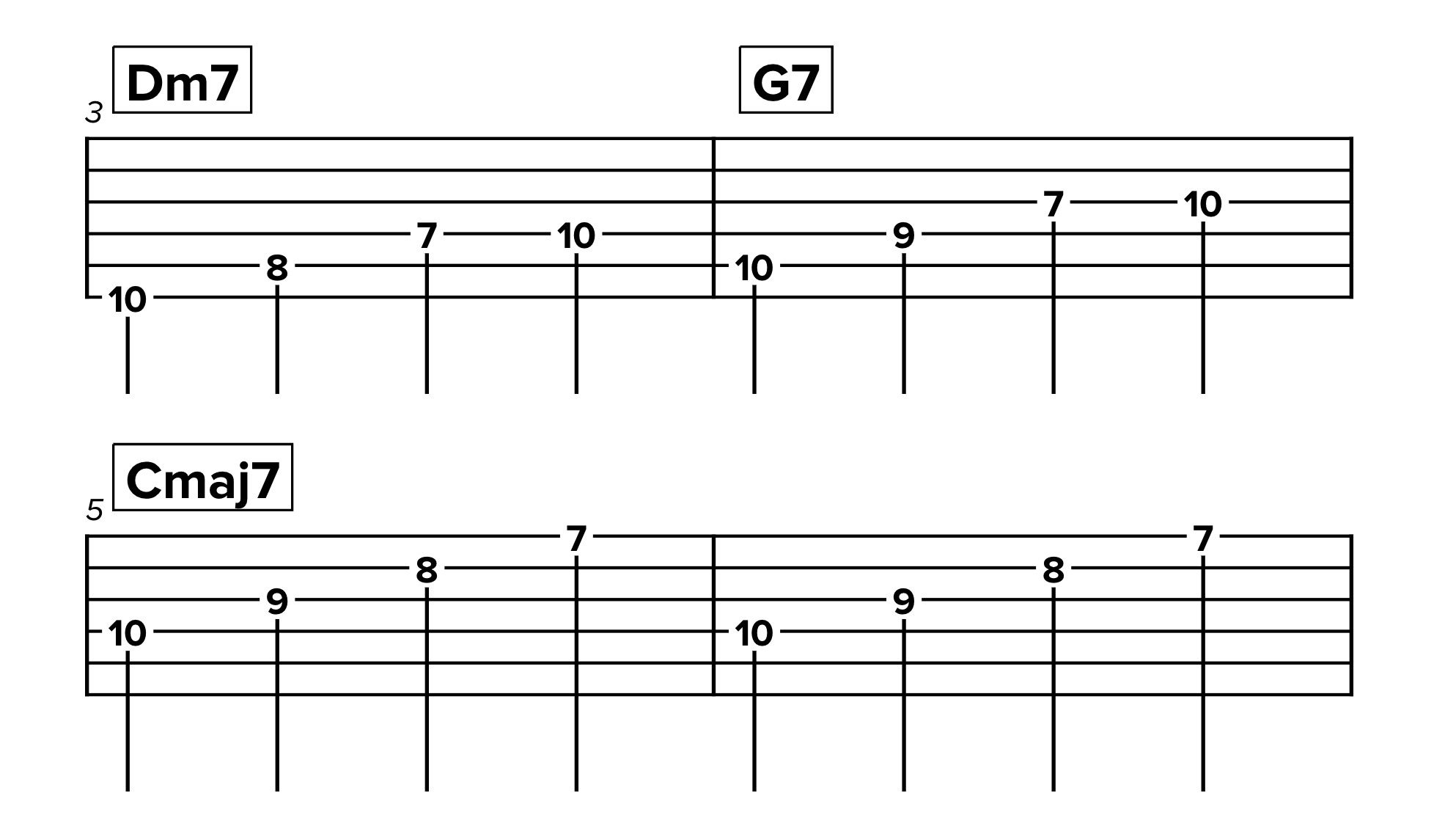
The Tab above shows the notes for the Arpeggios that fit with our 2-5-1 in the Key of C. In the next lesson you can put all of this to the test in the Jam Tracks! See you over there. 🎸👉