
E Minor Pentatonic Superhighway - Full to The 15th Fret
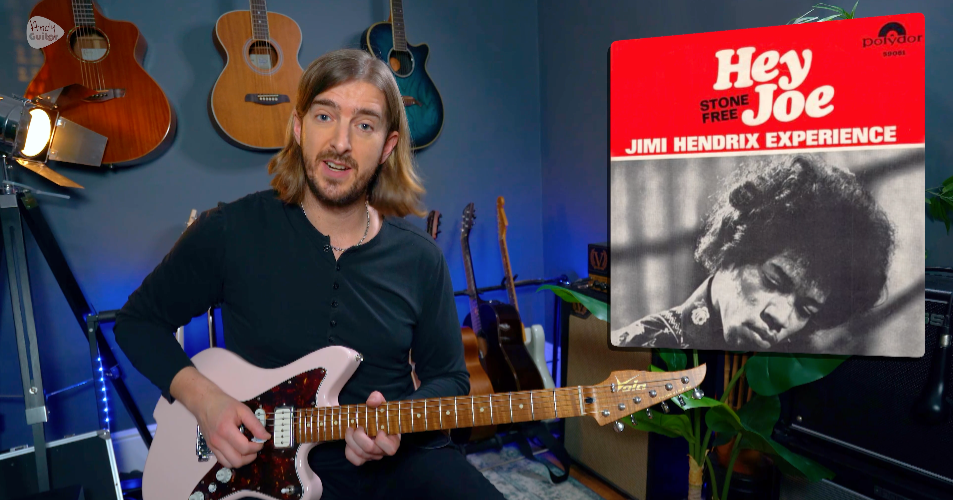
In this video
You've already covered the lower part of the E minor pentatonic superhighway. At Level 5, we're extending it across the full neck — four E notes, from the open string all the way up to the 15th fret, with the option to push even higher with a bend. This is the scale that Jimi Hendrix mapped out and that every serious electric guitarist needs to know inside out, because it gives you the full length of the fretboard in your most guitar-friendly key. The notes are three per string for most of the journey, with a key slide that happens when you hit the octave at the 9th fret of the G string. Once it flows under your fingers — and it will — you'll have the technical foundation for Hey Joe, Purple Haze, and a huge range of Hendrix-influenced lead playing.
What you will learn:
• The full note sequence of the E minor pentatonic superhighway across four octaves
• Where the key slide happens and why it's there
• How to practise both ascending and descending versions cleanly
• Song examples that demonstrate the full range of the superhighway in action
• Why this is one of the most important scales for learning the neck in E
Key Recommended Songs:
Voodoo Child
E minor pentatonic "Super Highway"
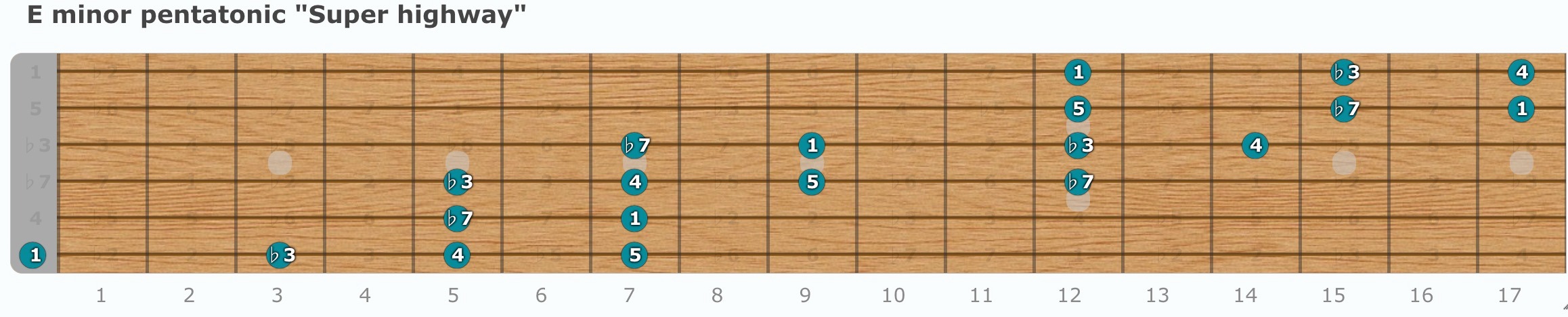
The Full Note Sequence
Runs as a three-note-per-string groups diagonally across all six strings
We're familiar with the pattern on strings 6 - 4, the lower octave
Frets reference: G string: 5, 7, 9 — B string: 7, 9, 12 — high E: 10, 12, 15
At the 12th/15th fret on high E you're back in shape one territory
Four complete octaves of the same minor pentatonic shape, connected across the whole neck
The Key Slide
At the 9th fret of the G string (the octave E), slide with the third finger up to the 12th fret, then drop to the B string (feels like a big gap but it works!)
Without the slide you'd have four notes on one string — this disrupts the pattern and kills the flow
The slide is what keeps the superhighway fluid and connected — practise it slowly until it feels like a natural pivot point
Ascending and Descending
Learn ascending first — slow tempo, clean notes, controlled slides
Descending is significantly harder — every positional shift happens in reverse, the slide goes the other direction
Descending fluency is what separates players who know the scale from players who can actually use it in solos
Song Examples
Hey Joe — Hendrix — definitive example, solo covers the upper octave range with bending and vibrato
Purple Haze — Hendrix — uses the lower range more prominently
The goal isn't to learn solos note-for-note immediately — learn to hear where the superhighway lives in the music and you'll start navigating the neck by feel, not by box shape
Why E Minor?
E is the most guitar-friendly key — open strings ring sympathetically, power chords sit naturally, pentatonic falls under the fingers easily
The superhighway extends that advantage all the way up the neck — full range of the instrument in a key you'll use constantly
This is one of the most direct routes to seeing the neck as a connected whole rather than a series of disconnected boxes
Intermediate Electric Level 5
Recommended Songs
Enjoying this course? Want to test out your new skills? Find out my recommended song tutorials that accompany this course and get total access to the site by signing up today!