
Major Scale Position 1
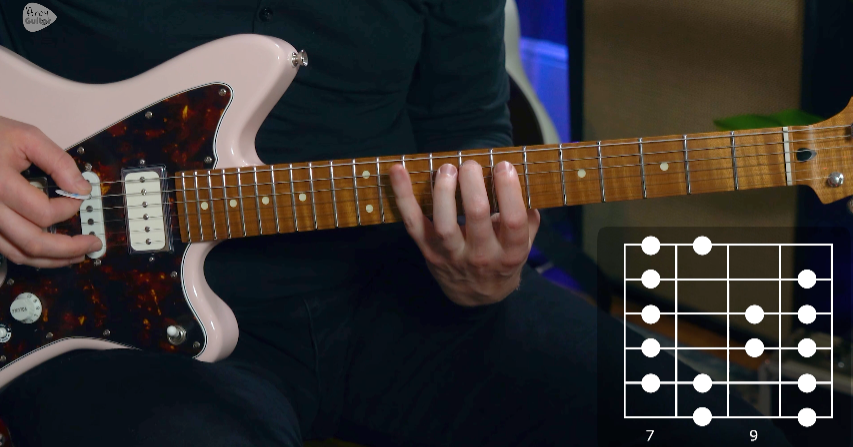
In this video
The pentatonic scale is a five-note reduction of the major scale. It's useful, it's everywhere, and you've been using it throughout the earlier levels. But the major scale has seven notes, and those extra two notes are the ones that make your playing sound musical rather than just pentatonic. More than that: the major scale is the foundation of all Western music theory — chords, keys, intervals, modes — all of it refers back to this scale. Learning shape one in two octaves, in the keys of C and G, is the most important single piece of scale knowledge at intermediate level. The little finger gets a serious workout here, and that's intentional. This is not an easy scale to play cleanly. But once you have it, the rest of the level's theory content starts to connect.
What you will learn:
• The full major scale shape one across two octaves, in C and G
• The role of the little finger in making this shape work
• Memory tricks for learning which strings share the same fret patterns
• How to loop the scale cleanly for practice
• Why the major scale matters more than any other scale at this level
The Full Shape Across Two Octaves
Root note (C) sits on the low E string (8th fret), played with the middle finger — this is why it's called shape one
Runs from the lowest C on string 6 to the highest note on string 1 — two full octaves
The little finger is required on every string — this is what makes it more demanding than the pentatonic
At the top, add one extra note on the little finger, then come back down — that's your loop point
The Role of the Little Finger
In the pentatonic, the index finger does most of the work — in major scale shape one, the little finger takes that role
It appears on every string — if your pinky technique is underdeveloped, this scale will immediately expose it
Keep the little finger close to the strings when it's not fretting — don't reach from the knuckle
Keep the hand relaxed throughout
Memory Shortcuts
Strings 6 and string 1 (both E's) are tuned to the same notes — identical fret pattern on both
Strings 4 and 3 share the same two notes, moved to the adjacent string
String 2 is the exception — uses middle and ring finger instead of the usual middle-pinky pair
Option: Learn strings 6 and 1 first, then 4 and 3, then tackle string 2 separately
How to Practise
Standard to move on: four consecutive passes — ascending and descending — without a note mistake
Start at 50 bpm, two notes per beat
Use a metronome — record yourself if you can
Accuracy first, speed second — speed comes from accuracy repeated at gradually increasing tempos
Why This Scale Matters Most Right Now
Chords are built from it, intervals are named from it, modes are derived from it — it's the reference system all music theory is written in
Everything in Level 5 that follows builds on this shape
Learn it in two positions: C at the 8th fret and G at the 3rd fret
This is the single most important technical achievement of Level 5 — don't rush past it
Intermediate Electric Level 5
Recommended Songs
Enjoying this course? Want to test out your new skills? Find out my recommended song tutorials that accompany this course and get total access to the site by signing up today!