
Bonus Video 4 - Fingerstyle 6ths in A
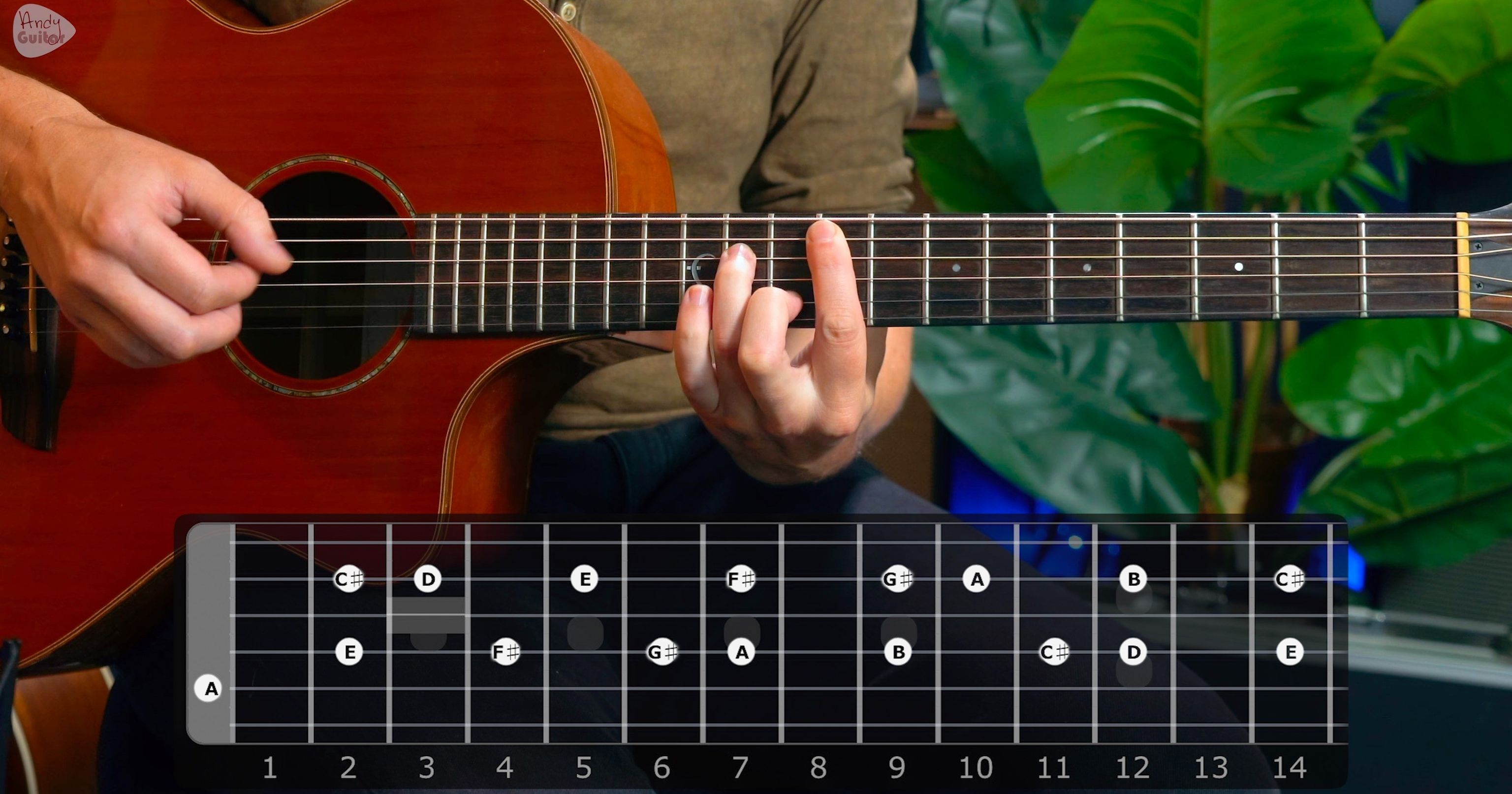
This is a lesson I like to call singer-songwriter sixes, because it's using 6 intervals on parallel strings. Kind of take an inspiration from what people like John Martin used to do. On songs like May You Never and countless other ones, we are using a few licks. From the John Martin back catalogue, this is also a very kind of classic rock thing, that's the all right now, A. To D over A chord there, it's using a, a real mix of stuff, but the core thing that we're looking at in this video, is that we can play every chord in the key of A major, or at least imply every chord in the key of A major. A major. B minor C minor. D major. E major F minor. G diminished. And A major, which are all the chords in the key of A major, and we're even gonna cover how to imply those chords. On strings 1 and 2 as well. And we can change the route now, especially when we go up to E. And then we can play the root notes in different fashions as well. There's a demo there. But let's have a look at what we're doing here, let's break this down. Again, this actually all falls back to being able to play the major scale on one string, which is a previous lesson of mine. It's in my intermediate course, and if we play the A major scale on one string, that major scale formula. Whole tone, whole tone, semitone, whole tone, whole tone, whole tone, semitone. If that's something you can't do yet, then it's gonna be tricky to go whole tone, whole tone, semitone, whole tone, whole tone, whole tone, whole tone. It's gonna be hard to do that on different strings when we go out of order, for example. Um, but what we need to be able to do is play it, um, first of all on string two. So, uh, with string two, it would actually start, here's the root n and string 3. That's kinda the first note of the image scale, 2nd, and now everything's on the 2nd string. 3rd, 4th, 5th, 6th, 7th, 8. So, whole tone, whole tone. Semitone, whole tone. Whole semitone, that pattern of 2 and 3 that we covered before. We can also do that here, but this is the fifth note, so this is 12345678. So that's, that's the 1. Whole step, whole step, semitone, whole step, whole step, whole step, semitone. That's the kind of thing you want to be able to do on, on any fret before this will fully make sense to you, because we're just playing notes from the major scale, but where from any start note basically. To memorise these shapes, hopefully this fretboard diagram will really help you because this is far more visual than it is helped by something like tab. These are fretboard shapes that we want to memorise really. So we've got the rune note on the A and then we've got the C and the E making that A major chord. Then a D and an F. Implies a B minor chord, then we go up to two frets again with those, play an E and a G sharp. At fret 5 and 6. Even over the A that still implies a C minor chord. So 123. Then I like to play, uh, this is the D chord essentially, uh 7 and 7 with the little finger and third finger so that I can still add a root note there if I want to, but we're actually gonna keep that A string open at the moment, so that's a D chord, 7 and 7, an F sharp and an A note. 2 frets up to fret 9. That implies an E-chord. And then we go one fret difference. For the F, which also doubles up actually as uh the A chord, depending on. What the root note is, if the root note is at the 9th fret here. That sounds like an F minor, if the root note's on A, it actually sounds like an A cos we've got an A note and a C note. So you've got some duplication there. And then one more, at the same fret, this is at 12 and 12, would be like a G diminish, that's our G diminish chord. And then uh to the A major. Like the. So playing around with that, with this. Simple finger style pattern. Kind of like an You know, a common finger style thing, kind of like a here there Delilah thing I guess. Just step in between them. We're gonna go to 7 To 9, which is the E. Then separate 12 and 12 is G sharp. 14 Do that at your own pace, but then try and go between them and slide. We can also go to the open string, which is like a duplication of this. And finally, just as a bonus thing. We can do this at 5 and 6. Which implies R A major chord, like an A bar chord. B minor 7 and 7 on string 1 and 3 implies a B minor chord. This could imply a C minor. Like this, but with an A root note. It's just an achord really, it kind of implies an chord. D is like D major here. E And that's really kind of as high as you want to go. And I've composed a little piece that walks around the fretboard showcasing all these chords with an implication of a melody in a very singer-songwriter fashion. But as with previous jam tracks really at this level, I encourage you to have a play around with this and come up with your own little riffs, change the fingerstyle pattern, do something, do something different, do something else, um, see what other songs you can kind of find in this cos there are so many, it's such a common technique, but please experiment with this, once you've got the basics down. That these are implying diatonic chords, in this case, in the key of A, we can use the same technique to change key, but that A string, and then go to the open D string and E means A major, um D major. And E major Are the common chords that we can use in this key very easily because we've got the open strings as root notes.
In this video
This is a bonus lesson taken from my Intermediate Acoustic Guitar course. We look at what I like to call 'Singer-songwriter 6ths' which can also be seen as the 6ths intervals on parallel strings.
This technique is used in many genres, from Jazz, Fingerstyle playing or Country guitar and in Pop and Rock styles.
Key ideas explored:
Implied chords, in the key of A, using the 6ths
How this translates on different strings pairs
How this relates to the major scale
6ths in A - D and B strings

6ths in A - G and E strings

All the chords in A major, played with 6ths
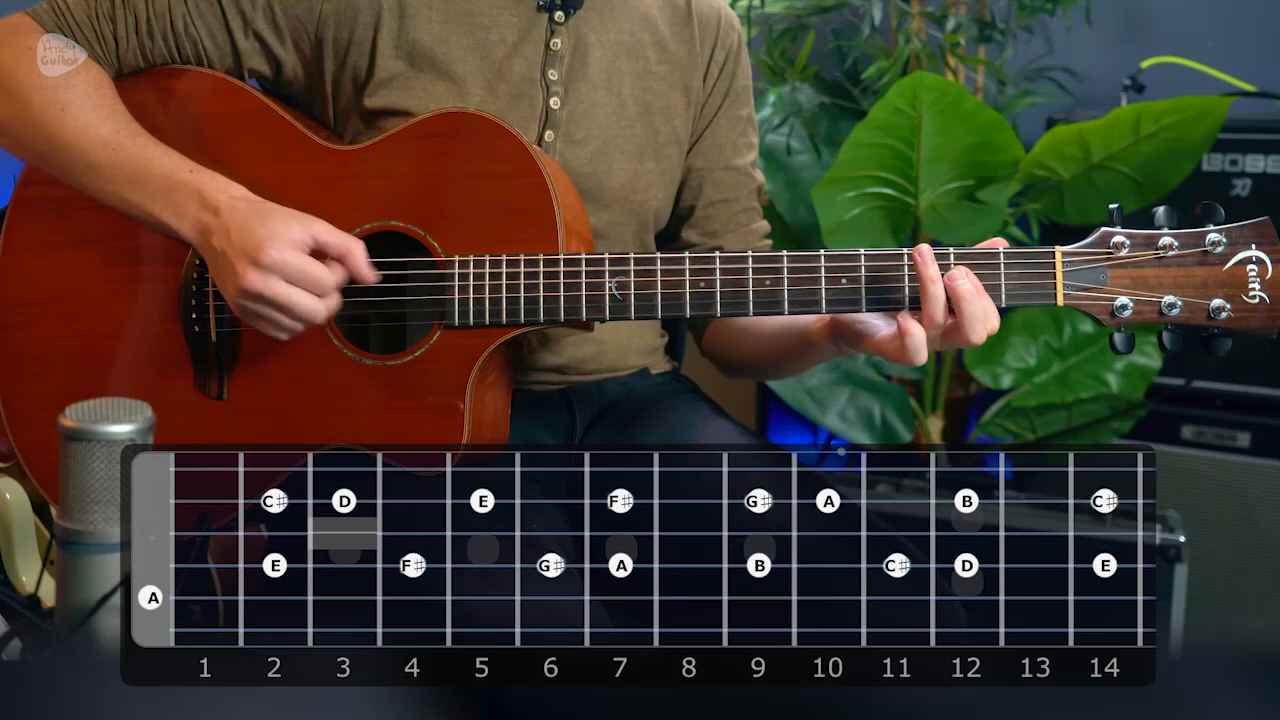
If you feel lost following the diagrams, try to also listen to how the implied chords sound to help navigate across all the chords.
What you might find is the 'major scale sound' of 'do, re, mi, fa, sol, la, ti (or si), do', which really is a fundamental part of western music and something we often experience quite early in life and then internalise as a complete sound. Call upon that knowledge to help your ear follow these chords and your hands will, eventually, follow as the shapes become more familiar.
10 Day Beatles Guitar
Recommended Songs
Enjoying this course? Want to test out your new skills? Find out my recommended song tutorials that accompany this course and get total access to the site by signing up today!
