
Day 1 - Free Ukulele Starter Course

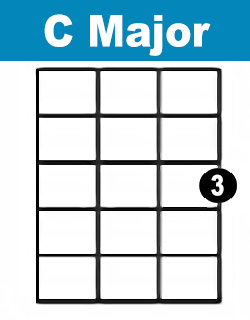
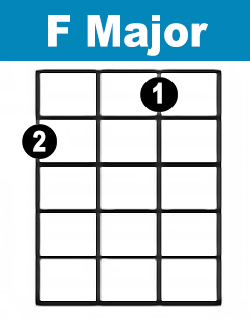
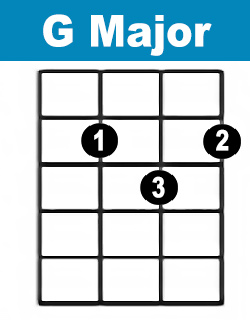
How's it going guys? Welcome to this free 10 day starter course for ukulele, where we're gonna be learning the easiest chords that you can play on ukulele and get started with some real songs right from day one. I've got my recommended first song that you should learn on ukulele coming in just a couple of minutes. And at the end of this video, I'll show you my top five with chords she's linked to in the description that you should start to learn, uh, as soon as you've got a little bit of experience and you've learned these 3 easy chords. But first of all, let's talk a little bit about the ukulele itself. This is a concert ukulele, and most ukuleles that you probably have, if you do have one with you now, um, are likely a soprano, concert or tenor ukulele, which are all absolutely fine for this course. It is just a baritone ukulele, which is quite noticeably bigger, and we have different tuner notes for that one. But the tuna notes for your ukulele here are G, C, E, and A. And we can check those, and I recommend that you do check them by getting yourself a tuner that can just clip onto the edge of your ukulele here. And this particular ukulele is an Aklot ukulele, which I'll link to in the description. It comes with a gig bag, it comes with a tune. selection of picks, and even a little sort of starter guide, which is really cool to have all your chords laid out, a few easy songs, how to read chord diagrams, a lot of the stuff we'll be looking at in this video. But, you know, there's there's a great little free booklet in that one, and it's a good, affordable option. If you already have a ukulele, do not upgrade until you realise there's a reason that you need to upgrade. For example, you know, yours is going out of tune all the time, or it's particularly hard to play or you don't like the sound of it or the look of it. Those things are good reasons to get yourself a new. Ukulele if this is something that you're wanting to do and you're wanting a nice portable instrument that's really easy to play and you can have loads of fun playing some new songs with. Now other than a tuner, there are no other accessories you need at all to be able to play ukulele. You can grab it and get started right away. You have the option of getting a strap if you find it easier to hold and your strap would clip onto here. And here are the two pegs, and then you can put it around your neck and that will support it and can make it easier. However, the easiest way to do it is to support the ukulele neck with uh the side of the palm of your hand and then just resting your. thumb almost on top, but just round the back like this. And then supporting the body of the ukulele with the inside of the forearm here, if you're sitting or standing, or if you prefer, just rest it on your lap and keep it a little bit lower like this and it can be more secure in that fashion, if that's what you prefer. The first chord that we're going to be learning is a C major chord, and it just takes one finger to be able to play. Uh, I would prefer if we could use the third finger, and this would be at the 3rd fret and holding the ukulele in the fashion that I described before, that would sound like this. When we hold the ukulele in this fashion, we want to really curl over our fingers like kind of a claw hand like this. Um, that just means that when we're playing any other chords that we go for, we're not muting any strings and just getting this sort of dead sound. Keep your fingers right on the tips and curled over and don't touch any other strings at all, and then it should sound really good and ring out exactly how we want. The chord diagram that's on the screen now is written this way round, so uh the top of the chord diagram is actually the end of the ukulele here. Every line is a fret going horizontally, every line vertically is a string, and that is what this particular chord would look like, this C major chord. The second chord we're going to be going for is the F major chord. Now any guitarists among you must be thinking, oh my word, the second chord we're going for is an F. That's really difficult. Well, on ukulele, it isn't, it only actually uses two fingers. Um, and the fingers that we will need are fingers 1 and 2 on the first fret of the second string, and the middle finger on the second fret of the 4th string, so counting at 1234, the one nearest to you. And there. Is our much easier F chord than it is on guitar, where hey, this is a good thing. Now it's with the F chord that you may wish to experiment a little with having the thumb a little bit higher or a little bit lower, so we have these two ways which we can support the ukulele with this hand. This tends to be more secure with the outside of the palm of the hand and the thumb just here. Though some of you may prefer to have that thumb lower. And particularly children. May prefer And may get better results and a cleaner sound and a better sound ringing out. It takes up quite a bit of pressure when you're not used to it, but ukulele strings are much more uh fingertip friendly for anyone, children and adults alike. So this is a great gateway into learning stringed instruments and perhaps one day getting yourself a six string guitar and being able to rock out, but we're gonna rock out on the ukulele at the moment. We want to strum all the strings on the ukulele unless there is a little cross over a certain string, in which case you wouldn't strum that one. But it very rarely happens, most of the time we're going to be strumming all four strings just with our first finger and kind of using the nail a little bit. So let's just change between those two chords now for around 10 or 15 seconds, just to get some experience of doing it before we look at our first song. So the C chord. 3rd finger, 3rd fret. And then the F chord, chord number 2. F major. The C major Code number one. The F major, chord number 2. And the more practise we have, the more repetition. The easier it is going to get, and the faster you will get playing real songs. In fact, that is how we can play most of the song that we're going to be going for today, right now, and this is You Are My Sunshine. I'm sure everyone watching this video knows how the lyrics go to this one. Let me give you a quick demo and then I'll show you how to do it yourself. Just strumming, every time that a chord is written, and the chord sheet is linked to in the description below, we want to play. You are my sunshine, my only sunshine. You make me happy when skies are grey. You'll never. Hear how much I love you. And it's just the final line, please don't take my sunshine away, that we need a 3 chord for. So there's so much of this song we can play with two chords, let's do it right away, let's not delay at all. So ready, with that C chord. The changes are nice and slow and we're just strumming every time a chord is written, starting with the C chord on sunshine. Ready, play along with me. You are my sunshine, my only sun. Shine. Here's where we need to change to that F chord, the second chord that we did. Do that for me now and ready? On the word happy, we strum again. You make me happy. We need to get straight back to C now, so that first chord with the 3rd finger here. And it's on grey. When skies are grey. It's the same as that again, so back to the F. You'll never know, dear. Back to see how much I love you. So hopefully now you see how important it is to get those changes down. You need to be comfortable changing, not super quick, but quick enough to be able to do it at that sort of speed. So I invite you one more time, you can skip along if you've got it. But just change between the C and F. And try and figure out, can you hold the ukulele like this? Or are you going to go for this method, which is perhaps a little bit more advanced. And I'd encourage you to try it if you haven't yet, where we're using the thumb at the back of the neck and just the tips of the fingers to support the ukulele. Or you have this. The third and final chord we're gonna go for here is the G major chord, but it, we actually make the shape with our fingers of a D major chord, if you're familiar with that, on the uh on the guitar. And uh that is played, if you're not familiar with it, with the 1st finger at the 3rd string, 2nd fret. Middle finger, 2nd fret on the lowest string on the bottom string, and 3rd finger, 3rd fret, making a little triangle. Now it's this chord that is really handy to get used to the method of gripping the guitar between the side of your palm and the thumb, because that puts your fingers on this angle, which can be really handy and just really helps as support. Going between the three chords that we have, the C, the G and the F. But that G major chord uses the shape of a D. And although we're using 3 fingers, should be OK for most people. And the final line of our song is please don't take my sunshine away. That was, please don't take, that's the C chord. G shaped like a D, my sunshine away. So if we're comfortable with those changes, we can have a go at this song now and then add some strumming to it. If you're not, you just need to drill those changes a little bit more till they are there. But I'm sure most of you will be able to change at least between those first two chords to do the bulk of this song and really get, get going with your ukulele straight away. So from the top, we're gonna start with the Secords. And just stay there for 2 strums. Ready? Play along with me on sunshine, strum on sunshine. You are my sunshine, my only sunshine to the F, the second chord, which was this You'll make me happy. Back to a sea when skies are grey. You'll never. Oh dear How much I love you. Please don't. The G major chord, my sunshine and on C away. One last time, let's go for broke, let's do it guys, you ready from the top? You are my son. shine my only sunshine you make me. Happy when skies You'll never Dear, how much I love you. Please don't take my sunshine away. Now I'm gonna be suggesting another 5 great songs that are super easy and use these same 3 chords, um just in a second, but the last thing that I want us to do with this song is just try strumming on what we call the beat. So when we play, You Are My Sunshine, my only sunshine. We're playing on what's called the first beat of the bar. And a bar is where some adults choose to have a drink, but also it is a count of 4 beats. OK, so 4 beats to a bar to a regular pulse of 1234. OK? And while we're currently strumming, You Are My Sunshine, 341234. What we want to try and do, if we can, is strum on every one of those beats and just change chord on the word where you already know where to change to because you've had a few goes at it. So just as a, as an example, and just to go for broke with you guys because I've got confidence in you, is to start with that C chord. And strum on every pulse, on every beat, you are my sunshine, my. Sunshine, you make me happy when skies are. OK, sounds really good, right? Um, but it does make it harder for those chord changes and it makes it harder if you're strumming and singing at the same time. So let's try and take it back to just what's happening on the ukulele for now. We're gonna start with a C chord, and we're gonna strum it 2 rounds of 4. We always count to 4 in music. There's a running joke that musicians can only count to 4. Um, somewhat that's true, especially for me, but we can start off with that C chord and we need to count 4 twice, but stay on the C chord. For example, 12341234, OK? And it's after that last one that we need to lift off as soon as you've strummed and changed to that F chord. Strum it for 4 and back to C for 4. OK. Let me shout it out now you've got the gist of it, and we'll have a go at playing this together. I will shout out those changes as we do them. Ready on the C chord in 1234, C, 23. Stay on the C chord. 34, F, 23, and back to C. F again And see And here we just have two strums of a C, G, G, and C. You are my son I My only sunshine you make me. when skies are grey. You'll never Oh dear, how much I you. Please don't Just to my son. And that is a really simple way of playing You Are My Sunshine. We're gonna learn some cooler strumming in tomorrow's lesson, um, but that's a great way to get started and I wouldn't do the strumming more complex than that. If you're used to more complex than that, get onto the other days, we're gonna learn some really cool stuff. The other 5, songs that I would recommend at this kind of level, um, if there's chord sheets that I'll linked to below, just use those chords C, F and G. Um, but many of the songs will work with just these three chords, in fact, there's kind of hundreds really, um, that you can follow chord sheets of. The first one is Happy Birthday. Happy birthday to. Happy birthday to you. Happy birthday. Happy birthday. Happy birthday to you. We also have Amazing Grace, again, linked to in the description of the chord sheet, and I'm looking forward to filming some tutorials for these soon. This is Amazing Grace. How sweet the sound that saved us. Like me. So on and so forth. There's Lean On Me by Bill Withers as well. This is a simplified version just using these three chords. Lean on Me. When you're not strong, and I'll be your friend. I'll help you it won't be till I'm gone and Somebody to. And finally, something a little bit more rock and roll. We've changed the key, which we'll be talking about in later days in this 10 day course, but this is how to play Twist and Shout by The Beatles, played in this fashion. See. FG FFG and just repeating that and uh singing along and rocking out. Shake it up, baby, shake it up, baby. Shout to stand shout. and Lots of fun to be had there, alright. Just a little bit to get started, but if we start with real songs, and those are great choices, uh, we can start to get more experience under your belt of how songs work and how you can go on to learn any song that you want, even without a YouTube video tutorial. Thank you so much for checking out this video, please check out day two if you have enjoyed this 10 day starter course so far. And please subscribe to Mandy Guitar YouTube channel, which is where you will find more ukulele videos as soon as we have them uploaded. I will link to some more on the screen now. Thank you so much for watching. Bye for now.
In this video
Welcome to day 1 of this free Ukulele starter course!
This course presumes no prior knowledge of Ukulele. The video below begins with choosing an Ukulele and getting your Uke in tune etc, if you need help with that, see this page here.
Day 1 Chords
 .
. 
Strumming a Ukulele - With pick or without?
We mostly strum a pick with the nail and tip of the first finger. Only use a pick if you really don’t want to damage your nails at all or because of your personal preference. Ukulele picks are thicker and softer then guitar picks to get a better sound from the nylon strings.
Day 1 Song - You Are My Sunshine (6:40 in video above)
Unfortunately, for copyright reasons I cannot display the chords and lyrics to any commercial songs on this website. However, I can link to external sites where you can view the chords and lyrics to songs in this course for free!
You Are My Sunshine - chord sheet link
I will try to link to Ultimate Guitar as much as possible, as that is the preferred choice of chord sheet website for most people. Guitar and Ukulele chord sheets look exactly the same, so don't be afraid to look on guitar chord sites for chords to Ukulele songs! The only thing to double check is the key, which we'll be talking about throughout this course :)
Other recommended songs
The following songs just use the chords C, F and G. Try these out if you like the songs or you feel you need more experience before moving on to day 2. I have also linked to chord sheets you can use below.
if any have numbers such as '7' next to the chords, just play the normal version you know and it will sound fine!
These songs are played in the video above from 15:36 in the video above.
- Happy Birthday chord sheet
- Amazing Grace chord sheet
- Lean on me by Bill Withers chord sheet
- Twist and shout by The Beatles chord sheet transpose down to -2 to make chords C, F and G! (play G instead of G7 if you prefer)