
Day 2 - Free Ukulele Starter Course

What's going on guys, thank you so much for joining me for day 2 of this 10 day ukulele starter course. In this video, we're gonna be learning a new chord, a new strumming pattern, and getting straight on with learning a fantastic song, Riptide by Vance Joy. Now I've chosen Riptide because it's one of those classic ukulele songs that is very well known and. It's done a lot to popularise ukulele over the last few years, and there's something magical that happens when you start to learn any instrument and suddenly, uh for the first time perhaps, you play something on the instrument and it sounds like the recording. It sounds like what you wanted it to sound like, and it sounded like what you've heard before. That is a fantastic feeling and it's such an amazing achievement for anyone that's experienced that. And I just wanted to try and share that with you guys as soon as possible, so even if you're not super familiar with this song, it's going to be a fantastic choice for you. Um, let's look at our new chord first of all. So our new chord that we're going to be going for is the A minor chord. Played with our middle finger at the 2nd fret, so 1st fret, 2nd fret of the string nearest to you. This is the 1st minor chord that we've gone for, and it sounds distinctly sad compared to the major chords. That we learnt in day one. And if you haven't learned the F chord, the G chord, and the C chord on ukulele, then do check out day one, but we'll have some helpful links on the website. The links are in the description to the lesson pages that you'll need. So with that middle finger at the second fret, we could support the neck like this, or have the thumb a little bit lower. It is entirely up to you. But the three chords that we'll be needing for the most of this song. Are the A minor chord to the G chord, which is like a D shape if you're used to practising guitar, but that is a G major chord, and to the C. A minor G. And C. Last time, A minor, G, and C. And the first of two strumming patterns that we're gonna be going for, they sound really cool, uh, the first one is down, down, up, down up. Very recognisable as the song. There's a real trick to this where ideally if we just look at that A minor chord and strum on that as our example, we want to really get two ghost strums in there. Down, down, up, down. Down, down, up, down. OK? And then finish off as normal. Down, down, up. And it can feel a little bit weird to be strumming with your first finger um if you're doing the up strums for the first time in particular. Uh try not to catch the skin at the uh lower part of the nail here, um, otherwise, you know, that that can start to sting a little bit. But if we stay to the tip of the nail on the down strums, and then the tip of the first finger on the up strums, you should be totally fine with this. And we want to use down, down, up, down, up, down. Down, up, down, up to that rhythm da da. Down, down We would do that once per chord on the A minor. On the G chord. And then twice on the Secord. One last time, As a demo OK, that's what we're gonna be going for, there's a real trick to this, we're on that last upstrum. We lift off at the same time as strumming. And then we arrive on the down strum uh at the same time as we put our fingers down for the next chord. With these faster strumming patterns, that is my number one tip. Down, down, up, down, lift, down, down, up, down, lift. And if you struggle with chord changes in general, a good rule of thumb to try is to lift off a little bit early, either, uh, you know, on, on the last beat on beat 4, or on the end of 4 like we're doing here, you know, if, if we think about it as the last beat of the bar. There, but make sure you're down, your fingers are down on the next chord that you're changing to, on beat one. That early lift is important, it's even what the pros do, and it's just getting the sync, getting the, the two hands in sync to work together, doing it at the right time, that is important. That is the strumming pattern for the verses. As an example. was scared and the That strumming pattern takes us through the verse and the pre-chorus, um, and then it is slightly different strumming pattern for the chorus, if anything, even easier, but it is a change. In the chorus, it's the same three chords, lady running down to the riptide, taking away to the dark side. Wanna be your left-hand man, OK? But we need the strumming pattern, down, down, up, up, down. Down, down. Up, down. It is the most common strumming pattern ever on ukulele and guitar. And we're gonna be going for it here, just a one quick demo on the ear minor chord. down, up, up down, up, up. Play that along to me now and join in, in 234. Down. Up, up, down, just using that first finger. And changing chord after one bar, after 1 bar, and then remember to stay on the C chord longer, that would sound like. If you can't do that one or you just keep accidentally playing the first strumming pattern, it's totally cool at this point. Um, if you can't sing along, this one's a really tricky one to sing along with. So the 6 songs that I talked through one in-depth in day one and then gave you uh 5 other options which will have tutorials coming in really. Soon, um, they'd be the ones that I would be playing and singing along to first before this one. This day two is all about increasing that strumming, but let's have a playthrough of the verse to the chorus of this song now and try and put those together. Then I'll talk you through the structure of the rest of the song, and that's what we're gonna do for the rest of day two. So from the top of the song. Would be that strumming pattern. We're ready? 234. I was scared and scared girls in a Unstuck. One strum of the sea on come unstuck. And then we're on the new strumming pattern, down, down, up, up, down from the chorus in a 1234. down to to and when you're singing you're sing the words wrong. Which I probably did, and I'm sorry if I did. OK, so the only other section other than those, so verse, pre-chorus, chorus, yeah, verse, pre-chorus, chorus again. And then we've got this bridge, which in the UK and Europe, we tend to call a bridge a middle eight. It happens in the middle of a song just after the second chorus, it's sort of something different, something new. Um, in America, in the USA you guys call this a bridge, and this is the same chords just on the A minor and G for twice as long, so it goes like this. And this is the I just wanna, I just wanna know. And we had The only chord that we know that we've not covered yet, which is the F, and I just. OK. Let's go for that bridge just once together in a 1234, I just. I just Name again? Then at the end of that, a. See strum once and just hold each one, each chord down. And then we finish on a chorus as we've done already. Down, down, up, up. And that is how to play Riptide, which is our song at day 2 of this free 10 day ukulele starter course. If anything wasn't coming together for you there, I encourage you to not only, you know, check out video one again of this series, but I'm aware you might have seen it already. It's really imperative though that you get a little bit more strumming and song experience in the extra songs that were demoed quickly in day one. I'll have tutorials coming for those really soon. I'm sure if you're watching this, you know, in the future at some point on the interwebs, you will see those in the link in the description and uh you know, we've got songs like Happy Birthday, Twist and Shout, Amazing Grace, sort of those ones that you can have a little easier play and sing along with before you go for something a little bit more challenging like this one. Again, you can do this 10 day course at your. leisure, you can take a little bit more time, you know, just cover one day and then practise that for a few days and then get to the next video. Or of course you can binge watch them all, uh, all in one go, which I would love you to do now, it would be great. And subscribe if you want more ukulele tutorials. Let me know what songs you want me to teach. And I really hope to see you again in day 3 of this free ukulele course. Bye for now.
In this video
Welcome to day 2 of this free 10 day Ukulele starter course!
In this lesson, we're wasting no time and learning a modern Ukulele classic song, Rip Tide by Vance Joy!
This song uses just three chords for most of the song, which most people will have no problem changing between. It is the strumming that will be more challenging for many people. Follow my guidance in the video and you should be fine. If you struggle, try more of the suggested songs at the end of my day 1 video to get your confidence up, then come back to this to give it another shot!
New Chord for Day 2!

The A minor chord is sometimes written Am for short.
Other chords needed
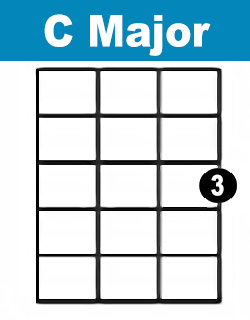
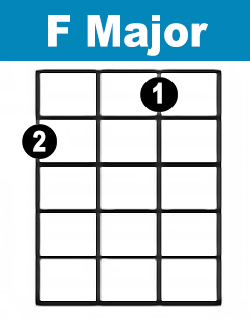
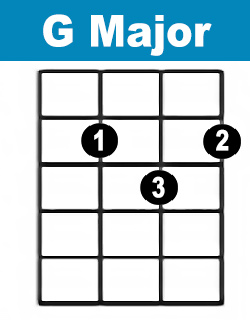
Day 2 Strumming Patterns
See animated strumming patterns via the chord sheet link below! But as a reminder;
Pattern 1 (Intro, verses and pre chorus)
D D UDU
Pattern 2 (Chorus and bridge)
D DU UD
Day 2 Song - Rip Tide by Vance Joy
Unfortunately, for copyright reasons I cannot display the chords and lyrics to any commercial songs on this website at this time. However, I can link to external sites where you can view the chords and lyrics to songs in this course for free!
Rip tide by Vance Joy chord sheet link includes strumming help!