
Day 4 - Free Ukulele Starter Course

How's it going guys? Welcome to day 4 of this free 10 day ukulele starter course. And first of all, just thank you so much. If you're watching day 4 of this course, I'm really aware that the, the amount of views each video gets really tails off between each video, from day one to day 2 to day 4. Not many people make it to day 4 proportionately, so give yourselves a real pat on the back and you know, well done for taking this serious. I know you are pretty committed to learning ukulele if you've made it this far. With that in mind, we're gonna be doing the sort of last video on what we've done so far on the key of C. And uh the concept of learning fewer chords, but getting the most out of them and learning the most songs with them before we start to expand our sort of chord repertoire, as it were. The next video we're gonna be changing key and learning some different chords and all that. Kind of thing, but this video, I wanted to just really cover um the most important concept when it comes to chords in general on any instrument, but especially on ukulele where we're playing loads of simple songs or harder songs. And this is uh something called cadences. Now cadences are the tension and release that we hear in any music that kind of makes music fun and interesting to listen to. Without this. Everything sounds kind of boring and uh it lacks any life. The reason that you like some songs and that songs have a power over your emotion and make you feel something has a lot to do with the things that we'll cover in this video. And this is also a greater explanation of what keys are before we start changing key and learning more chords in the the later days in this course and in other song lessons. So, without further ado, so far we have learned 4 chords. In this course, which are the C chord, the G chord. A minor and F. In the previous video we learned loads of songs with those chords, but it's a lot easier to learn a lot of songs when you're used to the sound of these chords and you know what to expect, and you can hear and even preempt chord changes when they're going to happen. Makes you ahead of the game. And a great way, or the way that I like to communicate this so that everyone can understand it, is by explaining cadences. A cadence is how a musical phrase ends. So for example. When I played that phrase that I just played, it sounded finished. It sounded resolved, like, akin to throwing a ball in the air and then it landing on the floor and it being like, ah, done, OK, done, finished. It sounds resolved. If I play uh a second sequence. It's kind of like We're waiting for a resolve, but there's a tension until. We finish it, OK? That is the idea of being in a musical key, which is the most important music theory thing to learn in any stringed instrument and even on piano as well, but especially on stringed instruments like guitar and ukulele, you need to know about keys and how chords go together before you learn too many chords. And it doesn't matter what chords are in your song, this same sound is happening. So if you have a song which has totally different chords to CF and G, this same thing is going to be happening, and you can hear it straight away because it sounds the same proportionately. But, we need to know what we're listening out for, and what we're listening out for. Is a resolve. And in this case, we're playing CC. CC resolved, perfect cadence. And uh imperfect is going to see. It sounds unfinished, it is unresolved, and that is imperfect. So now uh we're just gonna have a quick example without you being able to see my ukulele, so we'll hold it down here and uh you're gonna tell me whether it's perfect or imperfect. OK, ready? Nice and easy. Does it sound resolved or unresolved? Ball in the air. Ball in the air, yeah? So it is imperfect. Imperfect cadence, and then. Ball up, ball down, resolved, that is the key of our song. When you hear the resolve. You know that is what we call the one chord, the key of the song, and that makes, you know, when we're talking about the key of the song being really important during this course, it's great if you can hear that, especially when you're learning your own songs and things like that. And you know other songs from chord sheets. It really helps when you can hear the keys so that that you uh uh can get some. Get away ahead in your musical ability. Um, while we're on this topic, I just want to cover one more kind of music theory thing, uh, before we learn a couple of fun songs. Um, this one is called a plagal cadence, not very cool sounding name, however, it is called the Amen cadence as well as a nickname, because this one goes ah. You were expecting it, right, as soon as I said, amen, you thought. Yeah, that is a musical phrase which is used all the time in popular songs that you love and what it's doing is in this case, going from the F chord to a C. And you could start on the C. OK. And that is um going from what we call the 4 chord to the 1 chord. The perfect was going from the 1 to the 5 to the 1. If you're not familiar with calling chords as numbers or Roman numerals, don't worry about it at all, I totally get it. Uh, the important thing is that you can hear that resolve when we come back to what we call the key of the song, which with these chords is C. Um, and we've covered the key of C so much so far, so we're gonna change things up now and we're gonna learn songs in a minor key. Oh my God, does this mean we have to learn loads more chords or something tricky? No. What matters is typically that we start on a minor chord. And uh in this case we've got the A minor chord. So if we play any of the chords that we've learned so far. But start and finish on A minor, typically, that means that your song is in the key of A minor rather than C, even if it's using the same chords. And uh there's a trick with kind of the key of the song, um to, if you have no idea what key your song's in at all, but you want to try and work it out just from looking at the chords on a, a uh chord sheet on a song sheet, first chord, last chord, most common chord. If the first chord, if that's C, and the most common chord is C, and uh and the last chord that happens in a, in a line or the song is C, then you're 100% sure your song is definitely in the key of C. Those same things happen for A minor, from the top of my head, something like Losing My Religion by REM is a great example of a song in A minor. Also some of the others that we're gonna look at here, that's a great example, OK. And the sequence that we're going to be going for is the same sequences we did in the previous video. But starting on the A minor chord. And it just changes the feel. Let me give you some examples. I don't OK. Entertainment OK, that was Other Side by the chilli Peppers. uh You and Your Hand by Pink, Kids by MGMT, and we've also got Poker Face written down as well. Hay, hairy. me Alright, that's just with the down, down, up, up down, the same thing that we were doing in the previous video, but starting on the A minor, and suddenly it's just like. We're singing about this epic struggle. There's this feeling to the cause that everything's a struggle, that when we finish on see, no more struggle, OK. That is cadences at work, my friends. Um, one thing that I'd like to do just before we get on to day 5 as well into the next video, just looking at some quicker changes with those same chords, so really working the fingers as well as your ears. Um, and we're gonna be going the same order, but just 2 strums of each chord. And this is the final thing we'll be doing. With these same chords. So we've got A minus. And this is But if God was Just a And if uh I think If I Were A Boy by Queen Bee, Beyonce. And also my favourite song, one of my favourite songs ever, which goes save tonight. Fight the break of dawn. Tomorrow I'll be gone safe tonight. Fight the bright What I And that is Save Tonight by Eagle Eyed Cherry. That is one of my favourite songs to sort of play and sing, perhaps at an open mic night or a barbecue or something like that. Definitely check that one out, it's so much fun to play. That is the last thing that we're gonna do in day 4. Thank you so much for checking this out. Please make sure that you've got plenty of songs under your belt, say perhaps 3 to 5 songs. That you kind of know just by glancing at your chord sheet before you move on from this point, it is so important, if those chords are tricky for you or um the songs aren't coming together, learning more chords isn't going to help. Stick with those same chords and get the principles of how songs work and try and get your ear around, you know, learning songs and things like that, before you move on. If you can't sing along, don't worry about that, we're just looking at really. The skills of the fingers and the coordination and stuff like that, following song sheets as an example. Thank you so much for watching guys, please subscribe if you like this. Let me know any song requests in the description below, and I will see you for day 5 when you're ready.
In this video
Welcome to day 4 where we'll be using the same chords we already know to play loads more songs!
The songs in this lesson are all in the key of A minor (sometimes written Am for short).
Day 4 Chords - Key of C major continued
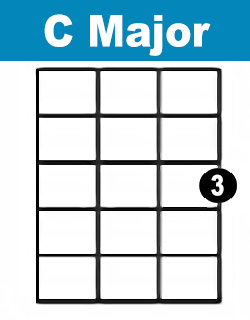
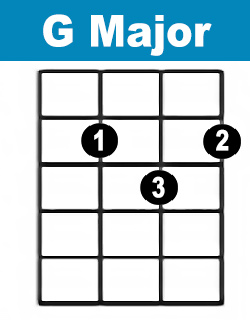

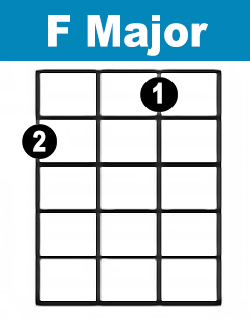
Day 4 Music Theory
A great way to understand musical keys is to understand cadences. A cadence is describes the feel of how a musical phrase finishes. At it's most basic, chord progressions can sound resolved or unresolved. This goes a long way to explaining why music and songs have such emotional resonance with us. Understand cadences and you'll understand how musical keys and songs work. Here are the main examples of cadences that you need to know;
Perfect Cadence; C - G - C
Imperfect Cadence; C - C - G
Prefect Cadence aka 'Amen Cadence'; C - F - C
The key of C also has the same chords as the key of Am
Key of A minor (same chords as key of C)
Songs for Day 4
Red Hot Chilli Peppers - Otherside chord sheet link
Eagle Eyed Cherry - Save Tonight chord sheet link
More four chord song examples in the next lesson!