
Day 5 - Free Ukulele Starter Course

Welcome to day 5 of this free 10 day starter course for ukulele, where we're learning a new chord. Boop boop boop. Uh, this chord makes changes a little bit harder, but it's so important. Uh, so far in this course we have been in the key of C. and now we're changing to the key of G, which means we'll learn, I'll be playing some of the chords that we played before, but learning a new one, which is the D major chord. Now this sort of feels like, to me, as a primarily a guitar player, there's an A major chord. Remember that ukulele is basically the same as a guitar with a capo at the 5th fret, if I just give you a quick strum. There's my A chord on guitar with the cappa, 5th fret, and my ukulele. It's basically the same thing, that can really help increase the sort of transferable skills when you think about it like that. If you've never played guitar in your life, you do not need to, don't worry about it at all. But if you ever get the feeling that you might want to, you might want to check out my free 10 day guitar course on YouTube, if you feel like it. As the ukulele frets are smaller, I wouldn't really recommend any other way that you know how to play an A other than 3 fingers in a line. Perhaps some of you may find it easier. To go for uh fingers 23 and 4 in a line, but most people, 123, like this, not pressing down on the first string, but 23 and 4 like this is the best way to play that D major chord. We're also using the G major. And the C major that we used from the previous videos in this course. And then a little bit later, we'll be adding another chord to that, but we've added one more here. With the d and then straight away. If you took on board the points from the previous day, from day 4 about cadences, you'll start to hear that G chord now sounds like. That resolve that we talked about before. So when we were going C, G, A minor, and F. That resolve is suddenly unseen. And see, it feels resolved, but here we've changed key and we're going GC. D. And that resolve is on the G chord now, so we're in the key of G. That doesn't make sense to you, it's the biggest one bit of music theory that I want you to take from this 10 day course that I'm gonna be hammering later, but do watch day four to really understand that concept. It is so, so important, especially as you start learning more and more chords. The, uh, chord sequence that we're gonna be going in for in this song that will really help you play loads of songs, and I'll link to some songs that you can play in the description below. Is this That is a down, down, up, up, down strumming pattern, that's the most common strumming pattern on ukulele and guitar, especially for beginners. And we have a G chord. To a sea cod G. And a D G. And the song example of this is Brown Eyed Girl by Van Morrison, uh which uh blasted the chorus goes like this. OK. That's also all of the verses as well, like the vast majority of the song is just playing G. See Andy. OK, sir Hey, where did we go? when the rains came. So they're the core components of it, if you need a bit more time and practise changing chords from the G to C. to D. Just do one strum per chord and that will really enable you to do it, so you can kind of think of this as sha la la la. La di da, and work through the chord sheet that I linked to in the description, sort of that way, that's the best way to go about it. But the other chord that we have um in the pre-chorus, which as Brits sometimes call a bridge, really, the bit before the chorus, here it would go with you. My brown-eyed girl. We have this new chord, which is the E minor chord. And that is played with our first finger at the 2nd fret, middle finger at the 3rd fret, 3rd finger on the 4th fret, so 123. On strings, 123, frets, 234, like this. You can strum all four strings, as you can do with all chords in this course, in this course in particular. And that bridge would go with you. Brown-eyed girl, the new E minor chord. Brown-eyed girl OK, that's the whole bridge, that's the only other part of this song. The chord sequence was C. DG. E minor, the new chord. You Brown-eyed girl. Really cool song, I hope to do a full tutorial on that for people who want it. Um, there is another chord that really happens so often in the key of G, which you will want to learn. It's the A minor chord that we're already, should already be familiar with, but just putting it into this context, a great song example of that is Knocking on Heaven's door. So we'd have G. Again for the whole song, so G. too. And see. Mama, take these bags from me. Just repeating that same chord sequence, and the chorus of a beat. Heaven's And if you're Axl Rose from Guns N Roses and doing the Guns N Roses version. Hey, you can put on any funny voices you want, it's all cool. But those are the core chords and sequences, and just two really recommended songs that I highly recommend learning if you're at this level and you're starting to expand your ukulele song range. Looking at just a little bit more. kind of music theory, I guess. Um, these chords in the key of G are the same as chords that are in E minor. So G and E minor, same palette of chords. Like a painter's palette, these are the chords that are used in certain songs. Um, so we'd have E minor. B, G, and D is my example, just to sort of give you one last bit of bit of theory in this before we start to do, uh, vary and and increase the amount of chords. Not substantially, but we'll be increasing it from, from uh the next video. Uh, this would be E minor, the new chord. C. G and then D, that's a great chord sequence to practise, uh, specifically with that down, down, up, up, down, again, really worth consolidating skills and looking at this one chord sequence just quickly. And this is basically the same as a lot of songs that we looked at in day 4 of this course, where we've got kind of Other Side by chilli Peppers, You and Your Hand, Kids by MGNT. Um, but it just gives us it in another key. So we're getting that same sound with different chords, but it's the same sound, which is the idea of keys, 100%. So for example, um. If A man me Change the chords. with me. It's kind of like using a capo on guitar or a capo. We're transposing the chords, and if you can get your head around that concept of keys, you'll be way ahead of the game when you are learning songs, and you'll know what to practise. Thank you so much for checking out this day 5. You can check out the chords of the songs that I've looked at and shown examples of in this video, which are in the description below. And on the website andy guitar.co.uk where this video is also embedded with a full write-up of all the chords, all the songs that we've looked at, and all the help you will need, along with, you know, beginner's course on guitar and loads of cool stuff on guitar if you choose to learn guitar as well. Thank you so much for watching, leave your ukulele song requests in the description and I will see you in another video.
In this video
Welcome to day 5 of this free 10 day Ukulele course where we're learning a new chord and we're changing key!
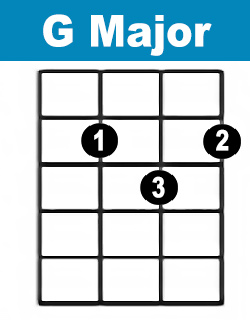
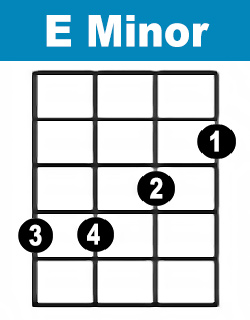
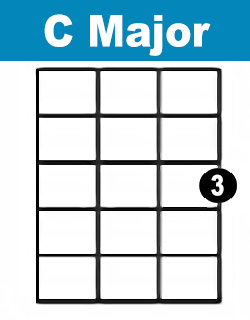
This lesson is all about the key of G. This means that songs in the key of G use the chords G, D, Em and C major for the majority of the song.
Day 5 chords - The Key of G

Song 1 - Brown Eyed Girl by Van Morrison
Main chord progression |D |C |G |D |
Brown Eyed Girl chord sheet link
Strumming pattern
The pattern used here is the most common strumming pattern EVER - useful when we want to play 100s of songs!

Song 2 - Knockin' On Heavens Door by Bob Dylan
Knockin' On Heavens Door free chord sheet link
Key of G has the same chords as the key of E Minor
Key of G is also the same as the key of E minor, they are the relative major and minor and have the same chords.
Key of E minor example
|Em |C |G |D |
Other songs with the same chords
These songs are all in the key of G or the key of E mino
'Four Chord' Songs
MGNT - Kids chord sheet link
Pink - U and UR hand chord sheet link
What If God Was One Of Us chord sheet link