Day 7 - Free Ukulele Starter Course

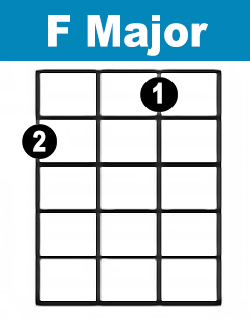
How's it going guys? Welcome to day 7 of this free 10 day ukulele course. Uh, where we're checking out our first single note melody. This is Happy Birthday, of course. We're also looking at the chords to play this, and our first case of barring where we're holding down a couple of notes together for one of the chords here, but we're mainly focusing um on the melody, and the melody here is exactly the same as in basically my guitar too. Tutorial for Happy Birthday on acoustic guitar. So all the notes and and frets that you're hitting are exactly the same for both. Only in this case, because of the tuning of a ukulele, I will let you know that we are in the key of F. But that is quite a ukulele friendly key, especially when it comes to single notes. Let's get in for a close-up and show you how to play this. So this is the F major chord that we covered in day one of this course. And the notes of Happy Birthday in this case that that we'll be using uh are all from the major scale and the F major scale. Which we'll be looking at as well, and you can see tabbed out on the website where this lesson is embedded. But we actually start here on the third string up from the bottom one. So 123, we're gonna hit this one with our first finger and you can pluck everything here just with your first finger if you would like. Uh that's totally fine. That's where we'll be starting. Or you can choose to assign, if you like this style of single note playing and you want to do more of it, you may wish to assign a finger, fingers 12 and 3 to the lowest three strings here, the uh the uh the the ones nearest the floor, so 123. Assign them to those strings and then whichever one you pick, you use that finger. If that's, you know, too much technique for you at the moment, just use your first finger, it's totally fine. You could even pluck with your thumb. If you prefer at this stage, we're just getting started. So we pluck that string 3 twice. 124, happy, OK. And then it's your middle finger has to go down on that same string at the 2nd fret. OK, so we pluck that. And then to the open string again. So that is 4 notes and it's in tab, uh, which is short for tablature, which is how we typically write ukulele and guitar and stringed instrument music. We will play open, open, second fret, open, which on tab would be written 002 0. Couple of pointers we want to pluck. Uh, Without holding our finger on the string too long, cos if we press the string, it will stop it, so we try and pluck. Pluck, without there being too much of a gap, rather than. You know, it just sounds better if it's ringing out more. And then when we put our finger down, we hold that finger down and then again we try not to get any space or silence before we play the next note, so. Open 0, open. We're going for that sound rather than. Rather than it being sort of short and staccato is the word for that really, staccato, you know, very, very short and sharp. We actually want it to be uh ringing out more often, and that is with the first finger. Getting a good support of the ukulele, holding it here and here. And then keeping that middle finger down. Until we pluck it er again, so just a recap, final time, open, open. Second fret, open. To finish the phrase for the to you, that is the first finger, a string down. And then to the open string. So that was 10. And I've chosen to pluck that with the middle finger here. Though again, I'll, that's the last time I'll mention it cos you can just use your first finger or your thumb for everything here. That first line, happy birthday to you. And remember to pluck it how you would sing it. You would not sing Happy birthday to you, you would sing it Happy birthday to you, so play it with that same rhythm, and that's all on your plucking hands. So as an example, 12. OK, so just a count of 2 and then we would play together this time, nice and slow. 12. OK, very good. The second line is almost the same, but it ends with 3rd finger to 1st finger. OK, so happy birthday is the same. 3rd fret, 3rd finger. 1st fret, 1st finger on string 2. To you. That second line in total. Let's go for that one more time. 12. Happy. to OK, very good. Uh, from here it is a little bit more complex, and I want to make sure we've got that so far. Let's not forget that. So let's go from the top and do them both one after the other. Like the first half of Happy Birthday. So I'll count you in and then we'll play together. From the top. 12. 10 And 31 OK, one last time, and the next bit is a bit more complex, so let's go for this one more time. Ready? 12. OK. The third line where we have the big happy birth, that is open, open, as we've started so far. And then 3rd fret on the string lowest to the floor. OK. This is where it can be really handy to plug this one with your first finger and then the little finger. It just makes it easier to do that big jump and to do to to skip out this string. Then it's open. Birthday. Then, 1st fret, open on string 2. And then 2nd fret on the 3rd string, 123. So that's a a lot, a large run of notes, so let's go through that again. Open, open 3rd fret. Open. First Open 2nd fret on the 3rd string. Last time, together. 12. OK. Just rewind that section if you need more help with it, watch it a few times. I'm sure you will get it, I've got confidence in you. The last bit uh has just 23456 notes, 6 notes to go guys, we can do this. It starts with the first finger on the first fret on the first string. What could be easier? OK, pluck that one twice, happy, and then open. E. Happy birth. OK, just 3 more notes to go. 1. That's the first fret. On string 2. finger. And first finger. to happy. to Really good to kind of sing the melody in your mind so that you can uh associate it with what you're playing. It's really important. That last line is. Da. And that would finish as well on the F chord. With a quick down and up strum, that's what I did in the demo. Let's just do the second half of that because that is a lot more challenging. I, I can totally appreciate that. Um, and again you can get the tab on the website, it is free, it's printable. And you can, uh, we'll also look at how we can, uh, improve our single finger dexterity, uh, in one second. But let's just go through that second phrase one more time. That was the 3rd line, so let's go from that and then straight into the last bit, which was that? OK, so let's go for broke, let's try and do it. 12, open, open, 3, open. 1. 3. Then 11 OK, one more time, just for that second half, exactly the same again. In 12. OK, before we go for the full thing, remember you can always rewind this video if you need more help with it. And slow down the YouTube video by clicking the little cog in the bottom corner to slow the video down to 0.75. If you need it slower, that's really handy with any lesson, not just mines or any song that you're ever learning. Um, slowing it down a little bit more can help many people. And er but I don't wanna go too slow so as to bore you, you know, I'm trying to keep it a little bit entertaining. So let's go from the very top and then we're gonna cover an exercise that's really gonna help you play this, especially if you've struggled, but it's also just some good background knowledge. A single note playing from the top, starting with. OK, that was the start of it. Let's go from the top in. 12. Second line. And third line. There we go, that's the full thing. Now there was one extra technique-y thing that I'm doing, especially at the start, which makes it sound a lot better that I haven't talked about yet. And that is when we change string, I'm muting the string that we've just come off of. So this is extra, this is not essential. If you want to just practise Happy Birthday, how you've been doing it, just to learn the notes first. That's totally cool, use the tab on the website, use the video earlier. But this it will make it come alive a lot more and sound a lot neater and a lot better. And what it is, is if I play it this first way. You can hear the strings kind of bleeding out into each other, and then if I play it the second way. You can hear we only had one note playing out at each time. OK, rather than. Now for the trickier sections, it's not too important, and even for this bit, it's not overly important, but a great way to get used to that concept and and actually get used to doing it, is just to look at the the notes that we're playing, and if we go 13, open 13. They're the 1st 5 notes of the major scale, essentially do re mi, do re mi fa sol. Paul, OK. Very handy to know those notes and also allows us to look at the quality of the notes as we're doing it, and it's literally just starting from here. 13, open, 13. And the trick here is to when you lift off of the 3rd finger here, don't lift off too quickly. So that we get an an open string ringing out. Lift off a little bit slower. And the note will stop on its own. And when we come back down, we're touching the string that we've just come off of. When we play this note, I'm actually hitting the string underneath to mute it. So that doesn't happen. So with a lot of single note playing it helps to just be a little flatter than we are with chords. With chords we tend to be right on the tips and our fingers are just a little bit flatter here when we're when we're playing these notes. OK, very handy, and uh what we can do when we're doing this is actually hit the note above it with the first finger and sort of sort of hitting the notes like this purposely to mute this string and this string. That's just something else to think about. Now if you're a kid with, you know, if you're if you're uh 6 years old, 8 years old to 12 years old, your fingers may just be a bit too small to do that at the moment, so I wouldn't worry about it. Uh, any adults learning or teenagers, it's a good thing to get used to. And the last thing that I wanted to look at in this lesson is just the chords to Happy Birthday, so you can literally have a strum along to it as well. So the three chords that we have are F. And C, which we've covered already. But then we've also got this new chord, which is B flat. Blues riff and B flat, watch me for the changes and try and keep up, OK, Marty McFly. Um, but we, we could play this, and we really want to play this with a little bar. And this is the first time we've done it, but it's a really cool technique where again this first finger is a little bit flatter. And hitting normal notes with your first finger a little bit flatter is a good introduction to that. You know, actually having your fingers more like this, and we can still grip the ukulele rather than supporting it with the side of your palm, you support it. More with the side of your first finger and it curls round like this. I know we're getting very techniquey, but this is the extra stuff that's gonna make your playing really come to life and and not be a beginner anymore, this is the extra stuff, OK? And this cord, the B flat uh cord. Is a great gateway where we learn that that first finger curls round, it curls round the neck to bar or hold down, all barring means is just to hold down the thinnest two strings, but we tend not to do it like this, as we might do often on guitar, we actually curl it round. Like that so we can support the uke and. And change a lot more comfortably. So the chords are happy birthday, that's an F chord. 2. C and a C chord, back to F. An F chord, the new B flat bar chord. Happy birthday, that's an F. So the tricky bit is, is that new cord, and it is a lot more taxing. So we're curling around with that first finger, my palm, or at least this side of the palm, is up against the back of the the uke here. To again aid and give a bit more contact, my elbow is also right in to again support that, and that should really help you to. Play Happy birthday and you know you can do whatever strumming pattern you like really but um you can either strum 3 times uh per chord kind of so happy uh basically strum every time that you sing. Happy birthday to you. Happy birthday to you. Happy birth Happy birthday, because it could be any name there. Happy birthday. OK. Or you can get a kind of do one of the strumming patterns that we've done already. Happy birthday. Happy birthday Happy birthday, happy birthday, happy birthday. Just as an example, um, there are lots of strumming patterns that work, so don't get too precious over it, just try and have a play and sing along. That is everything that I wanted to cover in day seven. Thank you so much for watching. Please subscribe and let me know your ukulele requests, any songs, techniques, anything like that in the comments section below. And I hope to see you again for day 8 of this 10 day ukulele starter course.
In this video
Welcome to day 7 of this 10 day Ukulele starter course where we're looking at the c major scale and how it relates to the chords in the key of C.
Day 7 Chords - Key of C in total
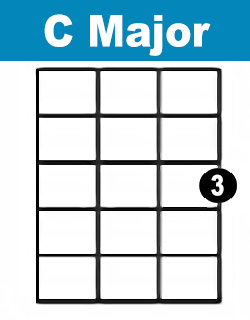
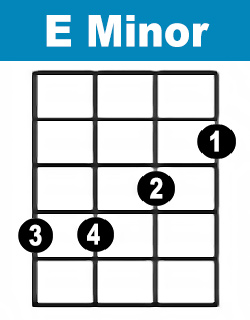
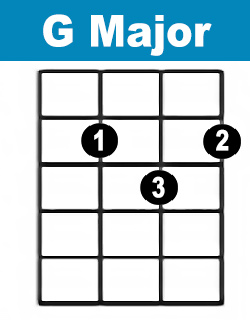
Here is the complete list of all the diatonic chords i.e. all the chords in the key of C major. It's important to memorise and practice the changes between these chords if you want to learn songs easier. While real songs in the key of C may use a different chord here or there, they will always come back to these six chords!