Band Song 10 - I Won't Back Down by Tom Petty
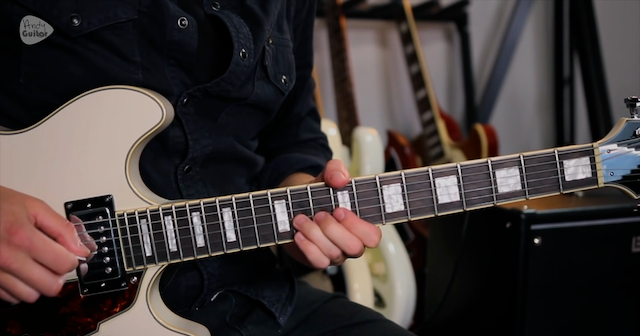
What's going on guys? Welcome to another video from the Andy Guitar Band programme. This video is a tutorial for I Won't Back Down by Tom Petty and the Heartbreakers. I've done a tutorial for this before with open chords, so if you're more used to just strumming, you know, open E minor, D, and G, you can check out that tutorial if you prefer. In this video, we're gonna be going for the power chords. In this fashion. I'm also gonna show you how I played the solo. Now the original has a slide for the solo. Um, uh, this slide guitar is not the intention of this series, so we'll be staying away from that and I'll be showing you how I would play this without a slide and with many beginner lead guitar techniques, just such a simple string bending. Let's have a look at the main riff first of all for the verses. AM settings wise, I'm on my Victory Sheriff 22, and I've got my Fender Stratocaster here. It wasn't needed really, but I just fancied um using it seeing as I have it. Um, I'm on volume 2, so the heavier channel. Um the EQ on this one is the base and middle are up and the trebles down. That is simply because this Strat is super, super bright, um, as many of them are, the single coils. Chime, it's a beautiful sound, but it needs taming a little bit. Um, that could be done on the Boscatana just the same chords wise, we have. E power cord at the 7th fret, little finger at the 9th fret, that's a route 5. We then For a D power cord at the 5th fret, 5th fret here. And a G power chord. is the key. E minor could be considered the key for the verses, soon as it starts on E minor, but they're both essentially. They are both the relative major and minor of each other, so it doesn't matter too much. And I'd say the key of the song's G. And we're employing a palm muting technique where we have the outside of the palm of our hands. And for this you need to find the sweet spot just here. If you're too far this way, it'll be um too muted, and if you press on too hard it will be too muted like this. And if you're too far this way. It, it doesn't sound any different or sounds really twangy, so. There it is. Find it. that. Now, um, I'm using two fingers, first and little finger, and then all three fingers here. That's just for ease of changing because the little finger stays on the same string. You could do this. Or just 1st and 3rd finger. Entirely up to you, as is half of the point of this course. Um, you choose your way you want to play these, cause we're doing covers of famous songs, but we can do our versions of them, that's absolutely fine. As an example, 1 and 2 and 3 and 4 and 1. Then the 3rd time. It wouldn't go Third fret power cord Um, on 5. And then back to June. And that would always be on the lyric, you can stand. It's pretty much always one. house. When we have that. Won't bat down happens a lot in this song. Those are all the verses until the chorus, which I would recommend that you play. OK, that's with big open cords, you could do it all with power cords. OK, um, you could do that, that was with a C power cord, G power cord, and a D power cord. But I would be using the chime. The chime, the wonderful chime. Of open strings. Uh, I wouldn't be playing, uh, the first finger on the G. I will be muting the underside with the underside of my middle finger here. And then going to Adesis 4, so the three chords are G. CA 9, with or without the first finger, just if it's without, just make sure you mute there. And then a D sus 4. That's what I played. You choose your way of playing these chords. But that's what we went for for that, that chime of the song. All I'm doing with the strumming is downs and ups with 8 strumming every time, 1 and 2 and 3 and 4 and. That's all this right hand is doing, and all I'm doing is changing chord at the appropriate time to to the correct rhythm. There, we'd need a mute. So just to put this in context. down There, just a quick parmute here. That's the only difference in the strumming pattern other than doing downs and ups, OK? One more time, 34. With the band, um. When I played this I did that. And, or you could It, and it didn't sound as good in the mix. When I was mixing this song I was like, ah, that was a mistake listening back to it, so I would definitely recommend. Going for that rather than going for the power chords, and that's what I'll show in the play along version. Um, as I say, if that's too much for you, I have a separate tutorial, another video on YouTube and on my website, with just an open chords. Back down. You know, just using open E minor, D and G. Check out that one if you feel it may help, that will be a more beginner friendly and give you some of the concepts of of strumming and stuff. Talk you through the chorus as well if you need more help with that. And check out the intro verse and chorus. The rhythm parts, but playing them along to the Andy guitar band, which will be coming up here in a second. You know what's happening now, this is gonna be slightly slower, and then check out the full band play along at the end of the video, which will be up to tempo. Here it comes, I won't back down. Alright, so the lead part at the very start of the song is very easy, it's a bend up. Um, from the 10th threat. Supporting that bend, 10th fret on the B string. So an A note up to a B. Keeping it up there. Pick it again. I'm bent. And then 88. So at it at its essence. That's all we have. Notes wise, that's all it is. However, it's a fantastic opportunity to work on your vibrato, but what we'd be adding as higher level content is bending this note up. And then just subtly dropping the note and coming back to it without it sounding out of tune or bad, which when you know what you're listening for, is really difficult. It can be something that instantly makes kind of. As long as your first bend is in tune, a bad vibrato. You know, really makes a, a good lead line suck, so. It's something that I play a little bit safe by not doing a lot. That was decent, that's something to aim for. Thumb over the top, fingers on an angle. Ooh, not bad, it went at the end there, OK. That's what you're listening out for, it's Baboon tune. It's got to sound like this note, and then just a little bit. Just a little bit. Just a hair down and then with the first finger, so we keep that first. So we keep that bend high. Let it go. And then the same 1st finger motion as if we're going for 3rd finger, and it's the inside, this is something that I was never taught growing up, it's such a shame. Um, 1st finger vibrato needs to be done with the inside of the 1st finger if we're using this technique. They're just some thoughts on a couple of things to add. 4 is essentially a very easy line. Uh, played on a slide, I believe in the original recording, of course. Um, so we're doing our interpretation of it here. The main solo. Most of this is based in minor pentatonic. Position one. So minor pentatonic position one, good amount of practise of getting confident with those notes should precede this, as should a confidence. With string bending. This is the 15th threat bent up to the pitch of the 17th. And then 14th, straight up to the pitch of 16. Both whole to bends. Then to the first finger. Same move again. In total, 341234123. That's the first half, then just some sliding, all on one string, all on the D string. 12, 9, 14. 17. Then this move So little finger is down already when I press and pick this note, which is supported by the middle finger and the first finger. This string moves up, this string does not, that little finger tries to keep still. So recap up here and then we'll go on to the final part. 34. And then That's a slide from the 2nd fret to the 4th fret. On string 3. String 2 at 3rd fret. 20. Let me take some overdrive off. And then uh slide to the 7th fret. a 3rd threat. Probably 3rd finger to 1st there actually. Um So those are all the solo sections, you know what's coming out. It's the full band play along. This was a really, really cool one, it's a, it's a lovely uh break of pace perhaps. We have some frantic songs coming up. So this is a nice chilled one, doesn't make it easy, but at least the components are simple and you know what to practise. You know, power chord changes. And string bending and things. This song really identifies a few key things that you might need to work on to be able to play all the songs in this set, really. So here it comes, the full band play along, this is up to tempo, and you'll be able to see the parts that I play under the screen as well, or what I'd recommend that you play. Here it comes, Won't Back Down by Tom Petty. So I hope that was enjoyable for you, I hope that was something you can do. Let me know in the comments how this course is, is going for you. If you, if it's going really well, that'd be fantastic. If you're struggling, let me know what you're struggling with and what you need help with, cos I can make more videos on exactly those things to help you guys. Give this video a like, give it a share, and of course you can check out more videos from this series right now.
In this video
Here's how to play Won't Back Down by Tom Petty and The Heartbreakers!
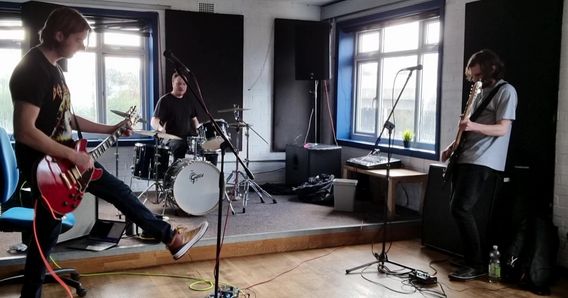
This video is party of the Andy Guitar Band Program where after following the tutorial below you can jam along to a full live band with Andy in the video!
This aims to help those who struggle to jam along to full songs and to also help those who have the ambition to play in a band one day. I hope it helps!
Let's get started!
Song breakdown
Verses - chord progression includes the E5, D5 and G5 power chords
Chorus - chord progression includes the Cadd9, G major and D major open chords, ending with the verse chord progression
Solo - Uses notes from the G major pentatonic scale. the original uses a slide, but the video above shows how to play the solo without using a slide, which is perfect for those still new to lead guitar.
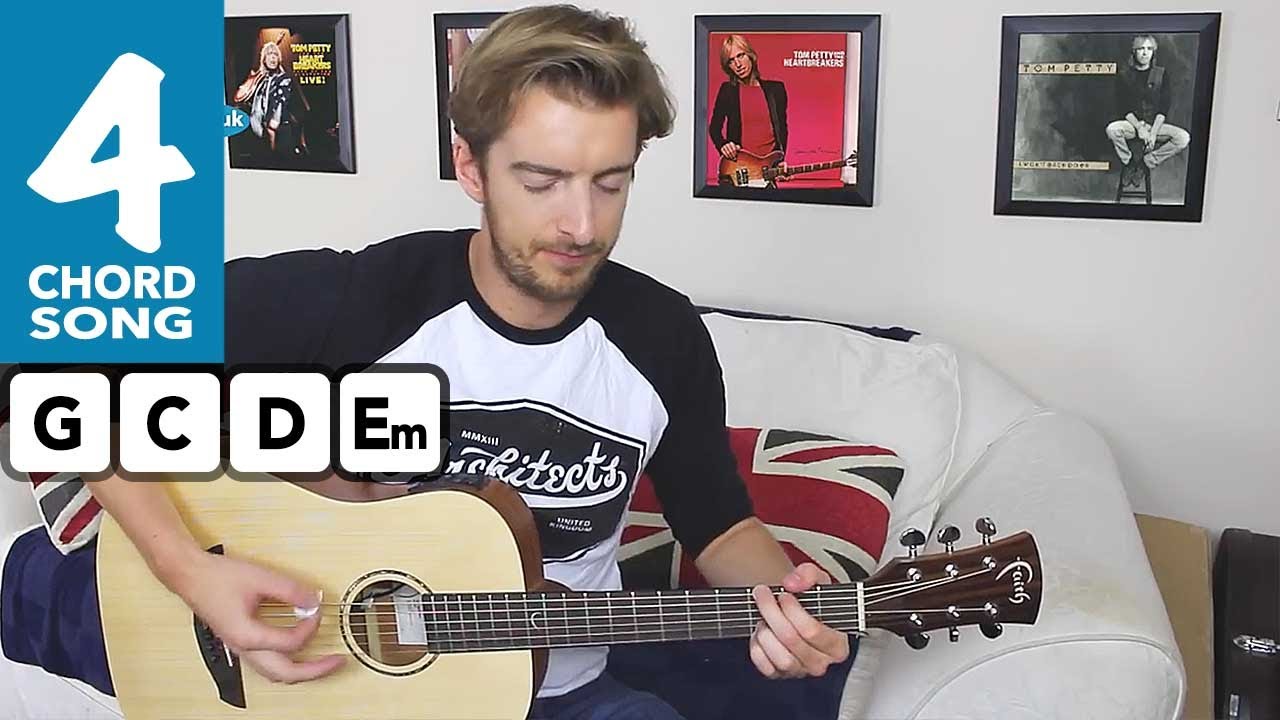
Here's a different tutorial showing how this song can be played using open chords on acoustic guitar, which may be of interest to some of you!