
How to Read Guitar Chord Boxes
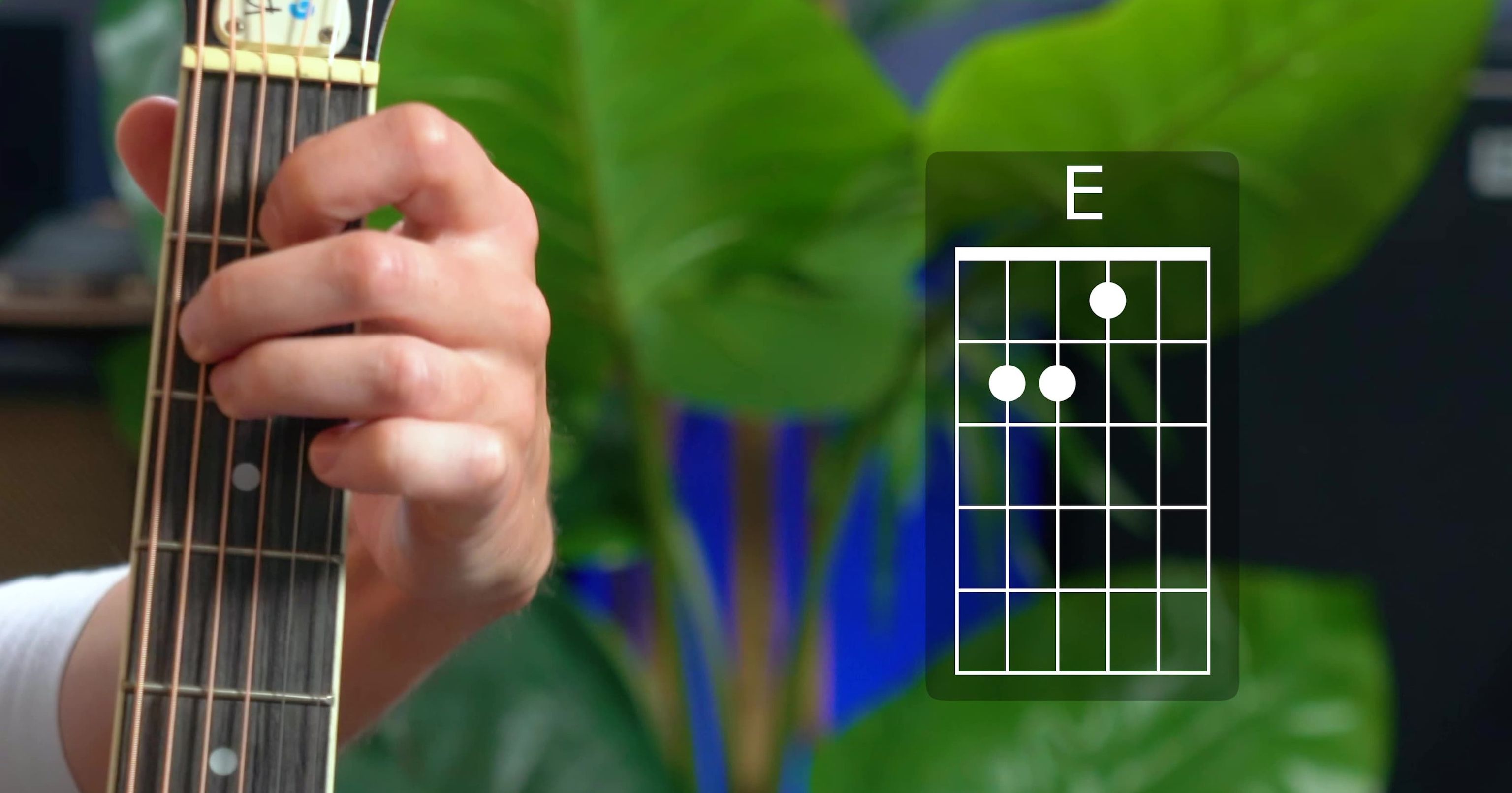
In this video, I want to cover any questions you guys might have about how to read chord boxes. These are the shapes that we use to learn the chords on a guitar, and I use them throughout all my videos on YouTube, all my song tutorials, and it's really useful if you can learn to read these and know some things that you're looking for. Even beyond where you're currently at, which might be currently, I don't know any chords on guitar, and that's totally fine. But here's the first chord that we're gonna be looking at, uh, in my beginner programme. It's an E major chord, for example. It's one of the first chords I think any guitarist is going to learn, and it is played like this. That's what it sounds like, how do we translate what's going on here to the fretboard? The first thing you want to do is identify where the nut is on your diagram, and on all the diagrams that we currently now put out on the website and elsewhere, they are vertical, like this, and that is so that there's no which way round is it back to front business happening, especially for the left-handed guitarists. Amongst you, we find it best to have the chord diagrams vertical to keep it even, and so you know which way the nut is always pointing. The strings 123456 are written 123456, and the first finger is down at the third string, so 123, at the first fret, which is the fret area just here. Practically, I want to place that finger right on the tip and at this side of the fret as opposed to where it's actually shown in the diagram. That is just for demonstration purposes, for clarity. We want to be leaning right up against the fret wire, just here. The diagram then shows that we need a finger at the 2nd fret of string 5, and also at string 4. This makes our E major chord. The diagram also shows that strings 6. 1 and 2 should be open, therefore they should be played. Any string that has an X against it either shouldn't be played, so you strum from string 5, or you can have, especially when you get later on in as a late beginner, you can start to move that thumb over the top rather than at the back of the neck and muting that string. That is what's needed to get an A major chord, which is the second chord I typically teach beginners, sounding absolutely great, without having to miss string 6. We can either have the thumb sitting on top like this, or if any notes are ringing out, especially when we bring that thumb over the for the first time, sometimes some some of the thinner strings start to be muted, have it lower and just don't strum strings. And sometimes even if you do. It doesn't sound the worst thing in the world, it is fine at a beginner level. The chord charts don't always tell you which fingers to use, and that can be for good reason, sometimes multiple fingers work. For example, the E minor chord is a perfect, uh, beginner chord for everyone to learn, and it can be played with the first two fingers or the middle two fingers. I don't quite know anyone that would play it with the thinnest two fingers, but it is possible, and that's the same for any of our open chords. There are reasons to play them with thinner fingers or weaker fingers. Namely, that reason is to get ready and prepare for a barcode. This is the F bar chord, this is an early intermediate level chord or a very late beginner level chord. It gives a lot of people many problems, but it doesn't have to when we follow the right methods of learning our open chords in the first place, and being aware of the fact that we can do a full bar with that first finger, which looks like this on the diagram. But also, we can do a mini bar where, hey, or a partial bar. Where we just hold down two strings rather than all six, and when we do hold down all 6, we only actually have to sound the notes at string 6 and 1 and 2. They're the most important ones, and we can adjust that first finger. To make that ring out fine. Any other questions about how to read a chord diagram, or play a certain chord, tend to end up being quite specific about that chord or about that chord change, why do we use certain fingers or another one, why doesn't this chord. Diagram tell me which fingers to use, because multiple options are available, and it depends on where it is in that chord progression, in the, in the song, for example. So hopefully that demystifies chord boxes a little bit for you. I hope that really helps you make progress on guitar.
In this video
We learn how to read chord diagrams or chord boxes. Let's take a look at the E Major Chord. We have the chord shown vertically so you can see where the nut is and therefore everything else aligns itself with the string and then the frets!
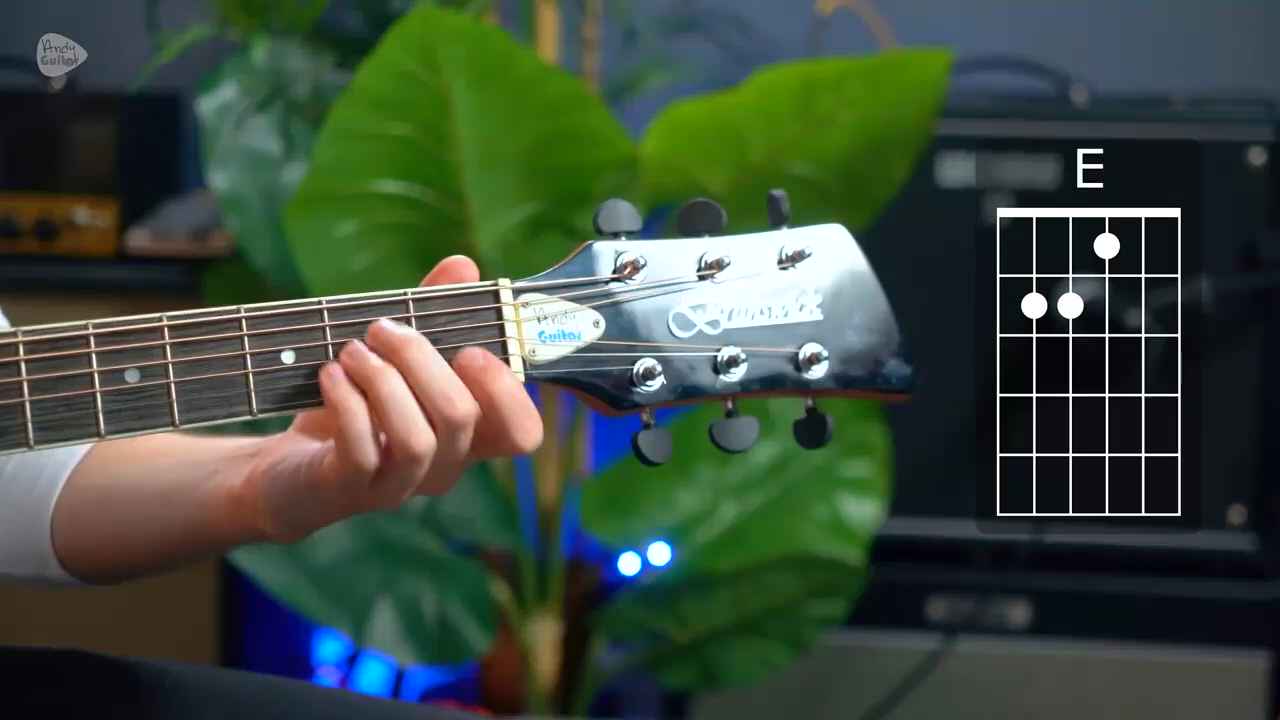
Learning how to translate these chord boxes to the fretboard is very useful as they are used as standard in my videos, across chord books or other materials to learn from. You want to know what details to be looking out for on the chord even if the chord itself is beyond your current level.