
How to Read Guitar TAB for Beginners
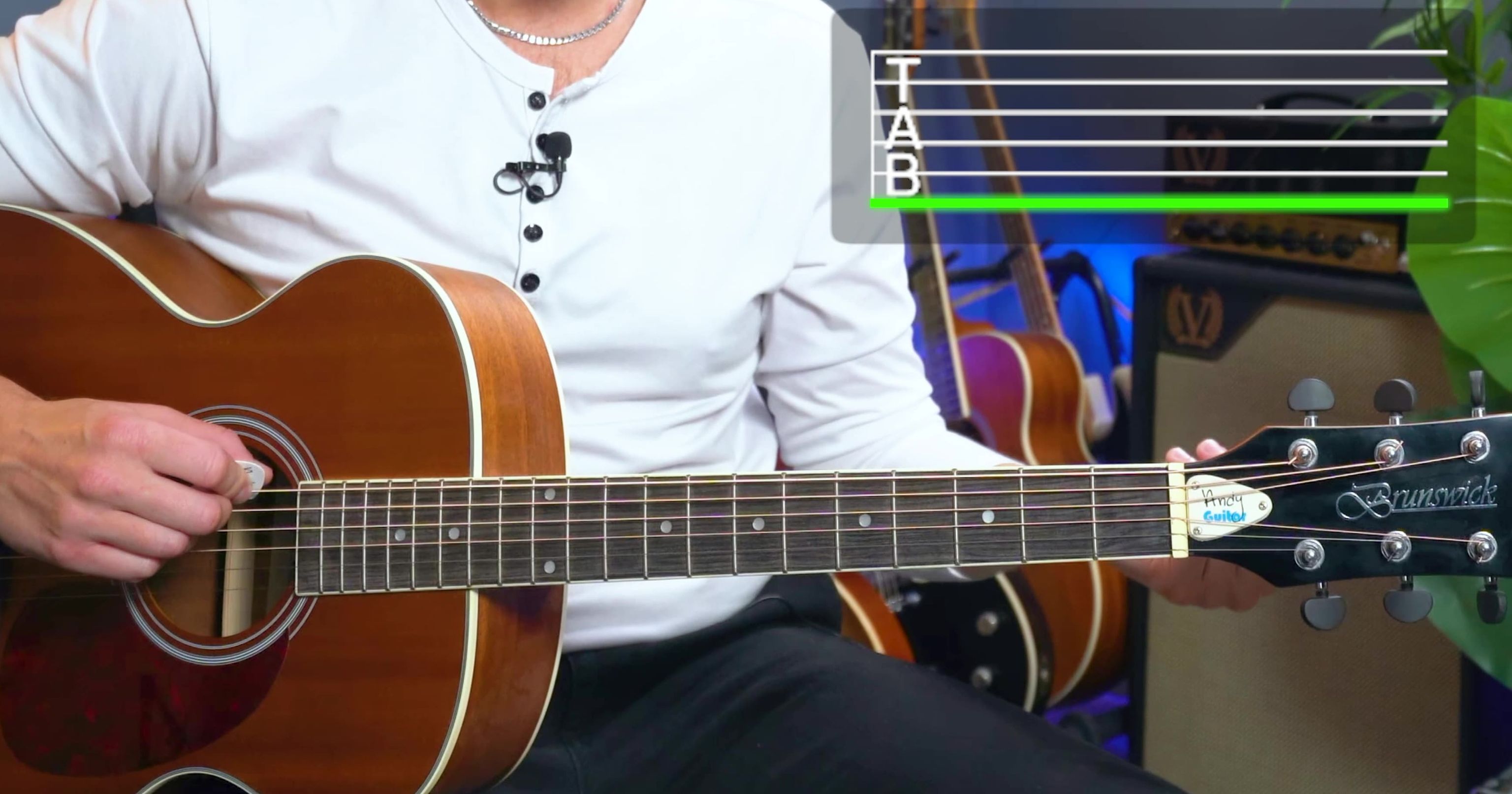
In this video, I just want to cover some of the basics about how to read guitar Tab. I remember getting given a guitar book for uh Christmas one year full of some greater rock songs and mole songs that were popular at the time, and it had a fantastic, colourful colour with all my favourite bands on it. And then I opened this book and I was. Like, what on earth is this? I couldn't make head nor tail of it at all. If any of you have felt like that, I have absolutely been there. And sadly for me, I put that book down and didn't look at it for like a year or something until I'd started to learn this stuff. Thankfully, you don't have to wait that long. I want to demystify it for you now without hopefully over. Overwhelming you and giving you loads of things you have to remember, cos anything we cover here, once you know a couple of the basics, it will be covered in whatever song, tutorial lesson that you're doing. You will be shown as well as have to read it from a book. That's the miracle of the internet and videos, I guess. But let's start off with the basics. What even is tab? Well, tab is short for something called tablature, and it is an alternative to traditional notation, which you might see shown as with a treble clef and with crochets and quavers and all that kind of thing. Now a lot of that still applies to uh tablature, especially when rhythm is shown. But often rhythm isn't even shown and all we get are numbers on lines. Simply, every line on guitar tab is a string. String 6, even though it's at the top of our guitar, is actually the lowest note or pitch that we can play in standard tuning, for example, that's an E. So that is on the bottom of guitar tablature. And the thinnest string, which is on the bottom, is actually on the top of guitar tablature, so it kind of looks the wrong way around, but if you have it in front of you and then you look at your guitar neck kind of like this, it's like, ah, they actually look the same, so that should demystify that a little bit for you. The numbers are just fret numbers. So 0 fret on string 6 would be written like this, just as a 0 on that bottom string. If I wanted to fret the first fret. That would become a one. A 2, a 3. An 11, anything at all, and that's the same on every other string. We can therefore write a chord as tab, and the E major chord would be written in tab. Like this Now because that's a less shapes-based way of learning, that's not as optimal for beginners to learn chords from. This gets a lot better when learning anything with single string picking. For example, if we were just to play the thinnest three strings of an E chord, but pick them 321. That is how that would be written on tab, and those notes. Go higher incrementally in pitch, and we can see that that's reflected in how that's written as well, the three notes going up the page as they go up in pitch. The best, most correct tab also has the rhythm notated with it and any silence. Uh, this doesn't always happen with sites such as Ultimate Guitar, but any good sites or any good parts of Ultimate Guitar. We have this, and it's just using exactly the same notes and anything that you've learned from traditional music notation. So a quaver, a crotchet, ties, uh, mutes, having silence for a bar or half a beat or uh two beats. All of that will be covered in context as you get to it, as will anything such as other things that can get uh written in tabs such as a slide. Vibrato Or something like a string band. Everything we've covered in this video should be enough to get you 95% of the way there for anything you are wanting to learn, uh, when it comes to reading tab or reading any kind of single string picking. Anything else we will cover when it crops up at the right time so as not to be overwhelming, but feel free to come back to this video at any point in case you need a reminder of, oh actually, what, what does that symbol mean? What does that mean? There will be more materials that I'll leave in the description below, but I hope that really helps you.
In this video
Here's how to read TAB! At first, you may find it confusing and overwhelming, but we're here to demystify all of that in order to show just how useful it is for us lucky Guitarists! (We don't have to used standard notation!)
TAB;
Each string is represented as a line on the TAB
The lowest note E, the thickest string, is at the bottom of the TAB lines and simply goes in order until the thinnest string at the top
The numbers simply show the frets on the guitar neck
Chords can be shown in TAB, you'll see the numbers stacked in a straight line down each string