
Improve Your Single String Picking
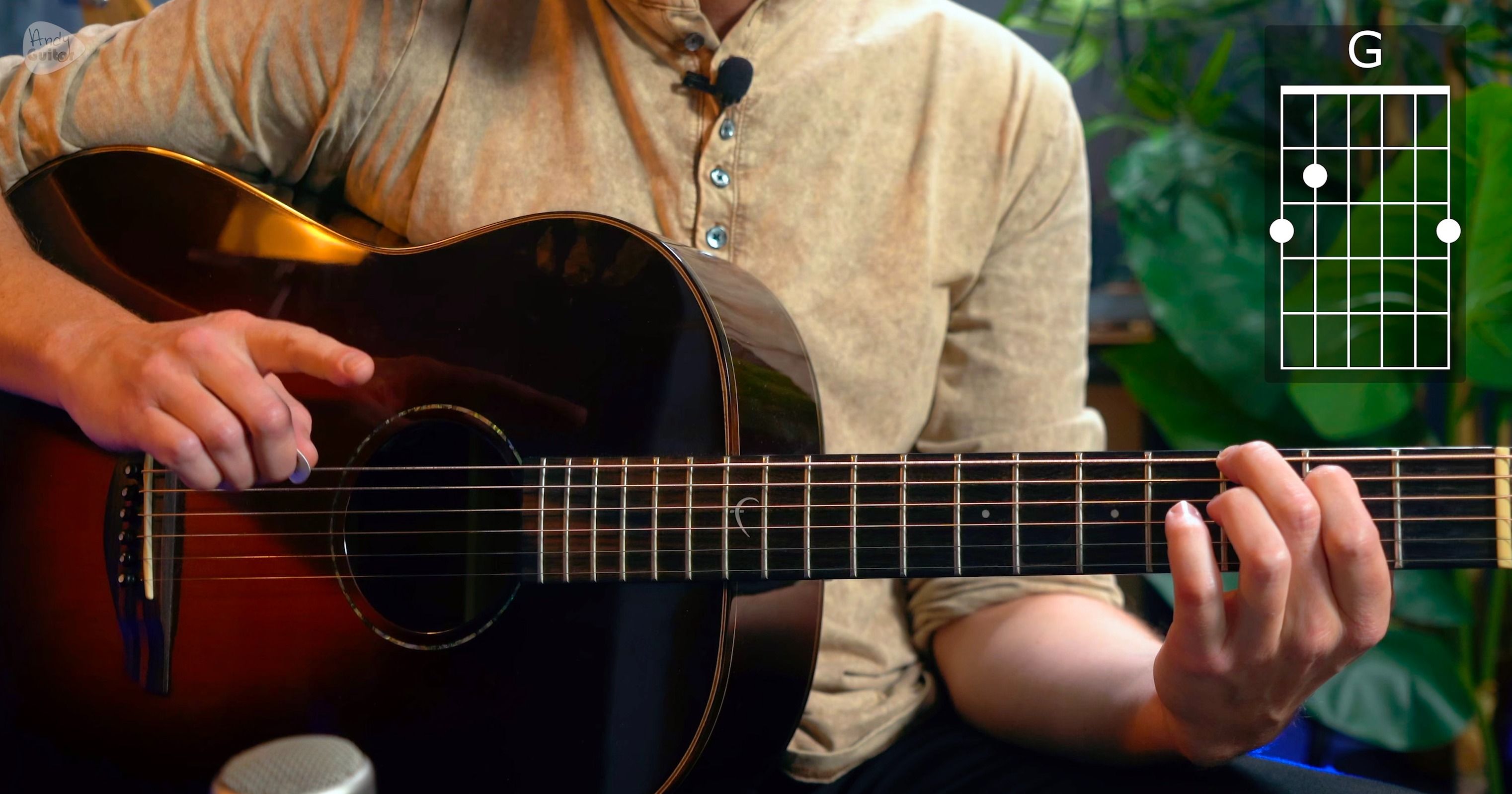
Let's make a start with the intermediate lessons now, and this first lesson is all about the picking hand. Why the picking hand? Well, in short, if you learn any intermediate chords like bar chords, often they don't sound better or higher level than just our open chords. For example, that E major chord sounds exactly the same as an F bar chord to someone who doesn't play guitar. It doesn't sound any better. But if we can get your picking hand more up to speed, and you can start to add single note embellishments to your chords, you're gonna sound more intermediate right away. An example of this is when a learned guitarist says, I can do the strumming and chords in this song, but I can't do the picking. For example, Good Riddance, Time of Your Life is a very common song that people are comfortable strumming and playing the open chords. But the intro picking is very difficult because it's at more of an intermediate level than the other things in that song. So let's have a look at two exercises that might really improve that. And let's go for the G major chords as our example, because this is the most common chord that you will be doing lots of picking with, it covers all six strings, and we perhaps know at least one scale that we can play, uh, that works for the G chord, the G. Major pentatonic, but we won't need that scale just yet, we're just gonna be focusing one hand at a time, starting off with the picking hand, and we're just gonna play the thickest two strings of the G major chord, so just using finger one and two, but making sure the thickest three strings, 65, and string 4, all ring out and they're not being impeded by any strings. And what we're gonna do is pick each string 4 times 1. 234. And then come back And that is exercise one. I'd like you to have a go at doing that now. 4 times through each string from string 65 and 4. Let's do it together now, make sure you've got your guitar with you and let's do it. Aiming for around 70 or 80 BPM is absolutely great, but you can increase the speed as soon as you're ready, you're in control, you push the boundaries, but pull it back from when it starts going wrong, and what we want to do to limit this going wrong and for us to really know. Where the end of our pick is. I have that pick on the side of the first finger. If you're still holding a pick like this, for example, you can still do this technique, but your pick might not be on a good angle and we want to cross across the strings, otherwise you pick a string and this happens. Like we flick against the string rather than going across it. That angle, which is provided by being on the side of your first finger, is a fantastic way which we can also use for strumming. To go across the strings. And we can still move just our wrist a little bit, we don't have to move the fingers too much. That is a great thing to get used to, let's try and do that together. For single string lines, you can rest your pinky here if you wish, but I advise against that and let's try and have a free floating right arm, but actually keeping the arm still, just moving the wrist and moving the hand as little as possible, as small a motion as possible. Let's go together. 234. That's once round, let's do that in a loop or a cycle and aim for doing it 4 times all the way through. Let's go together, this will be tricky if this is new, but let's go together, even at that tempo. 2. 34. That's 2. Final time Now that is likely something that you'll have to build up to over a little bit of time, but it should be doable. Let me explain one more thing that I was that time demonstrating with all down picks. We can do the same exercise with down and up picks, that's called alternate picking, and any even number picking on each string does lend itself. To alternate picking As opposed to all down picking, because it's more economical. However, both are useful, and we are wanting in this exercise, all strings to be ringing out and bleeding into each other at all times. And what we're actually playing there is an arpeggio, the root, the 3rd, and the 5th of a G major chord that is a triad, and picking them one at a time is an arpeggio, doing this kind of thing. A triad arpeggio. Any single string picking exercise we look at in this entire course, you can choose to do with finger style, and I'd like to talk you through that quickly, this can be a really fun option for many people. We can just pick with the thumb. Trying to limit the time. That the thumb's actually touching the string for, otherwise when we touch, we stop the string. So rather than this. We're wanting Like that, for example, and we can also go thumb. And then first finger for the others. That first finger, just coming back into the hand. For example, Whether you're using a pick or using your fingers, even tone, even tempo, even volume, all around the middle is what we're wanting, just a middle even tone for everything, and you're in charge of the BPM you can do it a little bit slower, a little bit faster. As you advance through this course, you're in control of pushing the speed where you can still get the notes correct and it's still sounding good, and we have to. Push ourselves, we have to do it slowly, but then also push ourselves to be able to get uh the speed that we're after. Here's a second exercise that we can do that's a similar thing but a bit more of a fun arpeggio to play, and it's going to be based around a C major chord. Here's a C major arpeggio that we can use a pick or finger pick for, and some of you may recognise this is sounding a little bit similar to Unchained Melody. Here it is. That's the arpeggio that we're going for, it's just a C major chord, picking each string at a time. With this pattern, what's a fantastic thing to aim for is playing the 1st 3 picks with a down pick. And then playing the next ones with an uppick. So we go down 3 times and up 3 times. That is using something called directional picking. We covered alternate picking already in the last pattern, and that was just going alternate, downs and ups. No matter what String is being played no matter what happens. The second most common picking at intermediate level is directional picking, moving in the direction of the next string. So when we pick the root note of the C major chord. The next string we're gonna hit from string 5 is string 4, and that's below it, so we have to move down. We do string 5 with a down pick. Down, we go down again. But when we get to string 2, we're not gonna pick string 1 after that, we're gonna pick string 3, so we go up. Up until we go to string 4, and then the next one is down. So down 3 times, up 3 times. Many people are all fingers and thumbs when it comes to directional picking if you've never covered it before. But here's that difference that we're wanting to get at intermediate level, here's that devil in the detail. If we can get this here and persevere through it, it will have knock-on effects to your picking and playing that you can't even imagine. Otherwise we're just so limited to down strums and down picking that the fastest I can do downpicking is. Like not that fast, but the fastest I can do down and up picking. Very fast, like more than twice as fast it always feels like anyway, I don't know what the math is there, but that's what it always seems like. So if we can get these downs and ups in our command, that's what we're after, and that's how to do that with alternate picking. 4 times per string is a good one to aim for so that we can build speed with it. And directional picking with that unchained melody. If you want to do that same pattern. And with finger picking, we'd use the thumb and then the first three fingers, fingers 12 and 3, thumb assigned to string 5, fingers 12 and 3 assigned to strings, 43, and 2. So if they were all to pluck together. That would be like that, but the pattern is done. Thumb first, middle, ring finger, middle, index, thumb. Or pulling into the hand, and when you do that with finger style, try and do it with your thumb ahead of the fingers, kind of like not a thumbs up, more like a thumb on the side, where you get a much sweeter tone. Like this, then we do. Like this, we just can't kind of grab the strings or pluck with the finger moving into our hand on a right angle to hit the string. That's how to do this same pattern with finger picking. Or also, what else can we do this with? Everybody hurts, doing that with directional picking. Same picking pattern, fantastic thing to do, of course with Everybody Hurts or on a D major arpeggio, we would be starting from string 4. And then C major, because the C root note is here, we do a similar thing. And anytime you do these arpeggios, we want to be quite aware of where that root note is, we'll be looking at that more in the next video, but that's just an introduction to just the picking hand stuff that can really elevate your playing to or beyond an intermediate level.
In this video
A common question I get from learner guitar players is “I can do the strumming, but I can’t do the picking, how do i improve that?”
A great song example of this is "Good Riddance (Time Of Your Life)" by Green Day - The strumming and chords are achievable but the picking is tricky and when introduced in the intro to that song it sounds great.
Exercise 1: Picking Hand (or fingerpick)
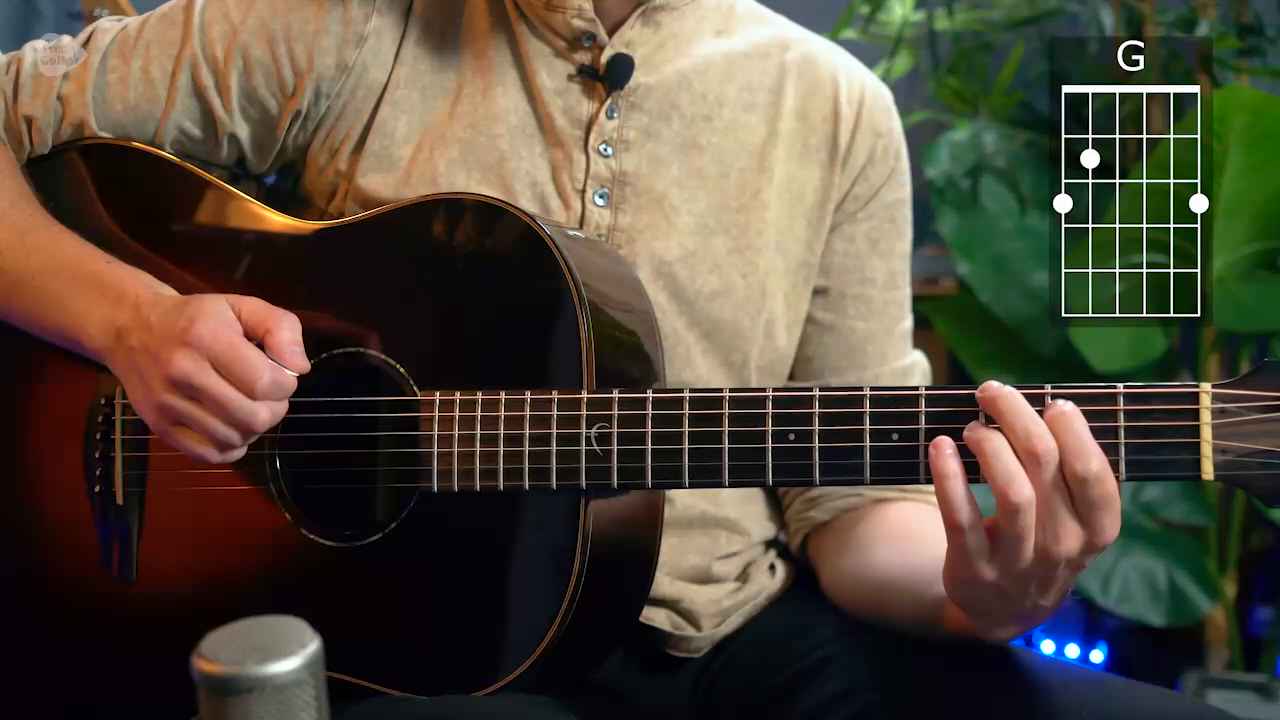
Fretting the G major chord
Pick strings 6, 5 & 4 and back, 4 times each string
Picking motion small
Have each string ring out
Even tone, even tempo
Pick all down or try alternate picking
Exercise 2: Directional Picking (or fingerpick)
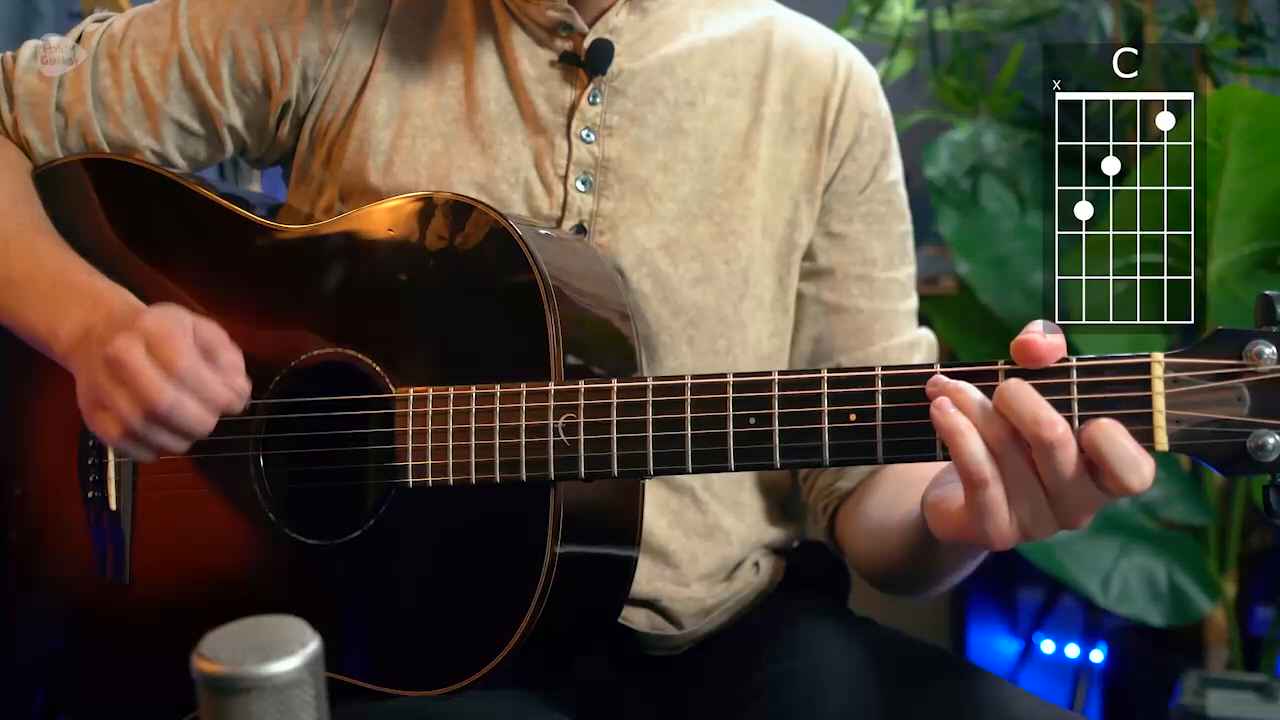
Directional Picking means to pick in the direction of which ever string is next
Fret a C chord
Pick all down from strings 5, 4 & 3
Then pick going back up from strings 2, 3 & 4
Repeat by picking doing from string 5
Tip is to think Down 3 times and up 3 times
The arpeggio is in 6:8 time - Song example "Unchained Melody"
Why is this picking important?
Complex chords don't always sound 'better' than even the simplest Open Chord if we just strummed all the strings and notes of that chord; when we're playing we can isolate a single note while strumming and this can transform how 'good' or even how Intermediate our playing sounds right away.
Level 1 Intermediate Acoustic
Recommended Songs
Enjoying this course? Want to test out your new skills? Find out my recommended song tutorials that accompany this course and get total access to the site by signing up today!