
Finger Gym 4 - X Up the Fretboard Warmup
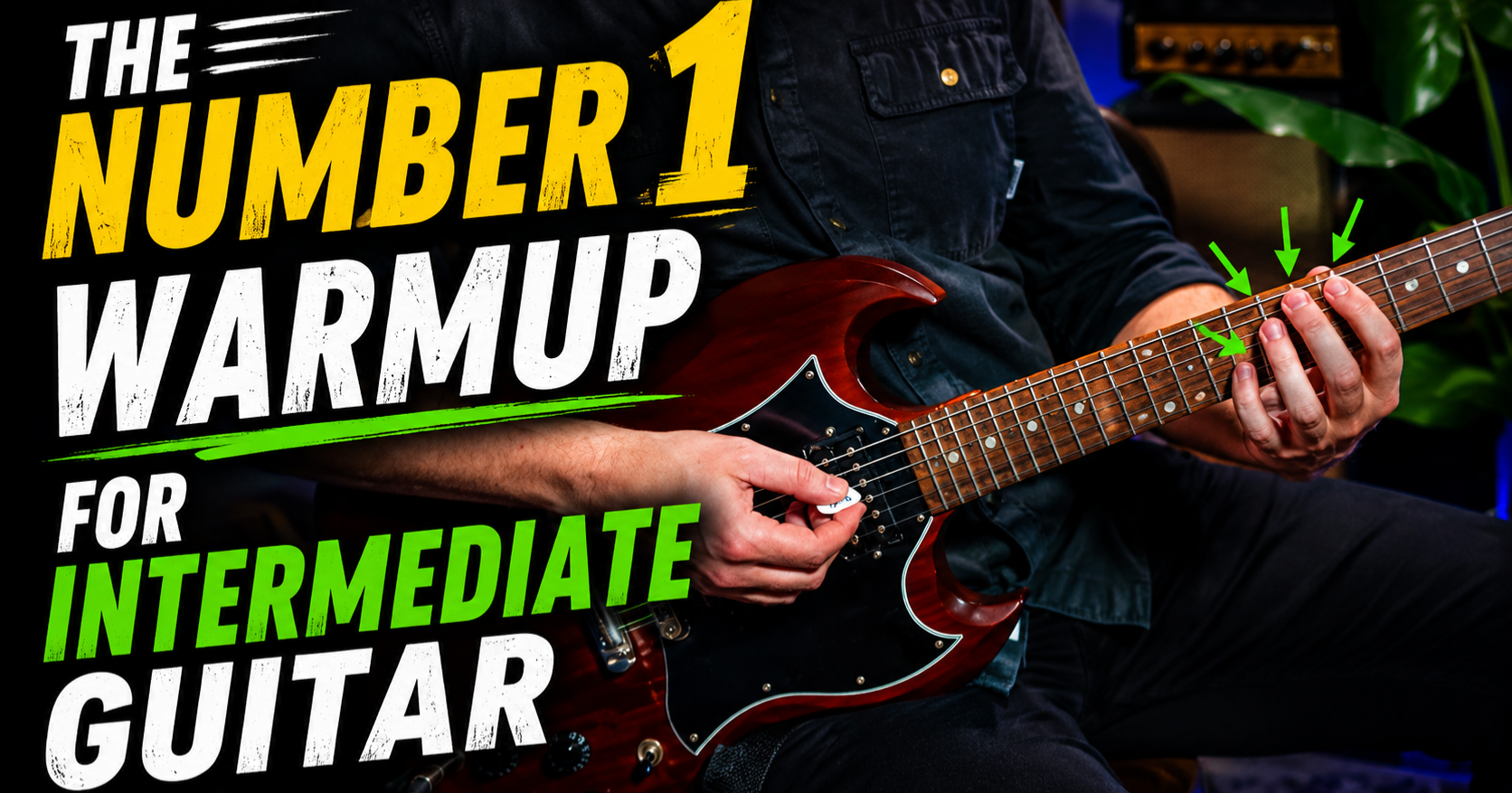
In this video
This is the warm-up that should become the first thing you play every time you pick up your guitar from this point onward. Known as X's up the fretboard (and also as the Joe Satriani warm-up from the 90s), it involves fretting diagonal patterns across four strings, making an X shape, then moving up one fret and repeating. It's deceptively simple — and if you find it difficult, that's a sign it will benefit you the most.
What you will learn:
The X's up the fretboard diagonal warm-up pattern
How to minimise finger movement for cleaner, faster playing
Why this exercise matters more at Grade 4 than earlier levels
How to scale the difficulty by changing position and string group
The X's up the fretboard diagonal warm-up pattern The exercise works by fretting diagonally across four strings in one direction, then crossing back the other way to form an X shape. You then shift everything up one fret and repeat. The key focus is on making each finger travel the shortest possible distance to reach its target string and fret. Start on the middle four strings around the fifth fret where it's most comfortable, then expand from there. If you want a song riff that uses this same shape, the James Bond theme chord (an E minor major 9) is built from exactly this pattern.
How to minimise finger movement for cleaner, faster playing At Grade 4, refinement becomes essential — it's no longer enough to roughly get to the right place. Every finger should move as little as possible between notes, with no flying fingers lifting away from the fretboard unnecessarily. The little finger is usually the biggest offender here. You can even practise the pattern without strumming at all, just watching your fretting hand and focusing purely on efficient, compact movement. This transfers directly to faster chord changes, cleaner scale runs, and tighter riff playing.
Why this exercise matters more at Grade 4 than earlier levels Earlier levels focused on building strength and learning shapes. At Grade 4, the priority shifts to refining the details of everything you play. This warm-up trains exactly that — precision, economy of movement, and control. It's also a diagnostic tool: if certain finger combinations feel clumsy or slow, that tells you where your technique still needs work. Even players with 20 years of experience can struggle with this exercise, so don't be discouraged if it takes a few sessions to feel natural.
How to scale the difficulty by changing position and string group Starting at the fifth fret on the middle four strings is the easiest version. To increase the challenge, move down to fret one where the stretches are wider, or shift to the outer string groups (strings 6-5-4-3 or strings 4-3-2-1). The hardest version is at fret one on the thickest four strings. You can also work the exercise back down the fretboard after going up, which adds a different coordination challenge. A few minutes of this each day will produce noticeable results within a week.
Intermediate Electric Level 4
Recommended Songs
Enjoying this course? Want to test out your new skills? Find out my recommended song tutorials that accompany this course and get total access to the site by signing up today!