
The AC/DC Rhythm Guitar Trick Most Players Miss - Malcolm Young
In this video
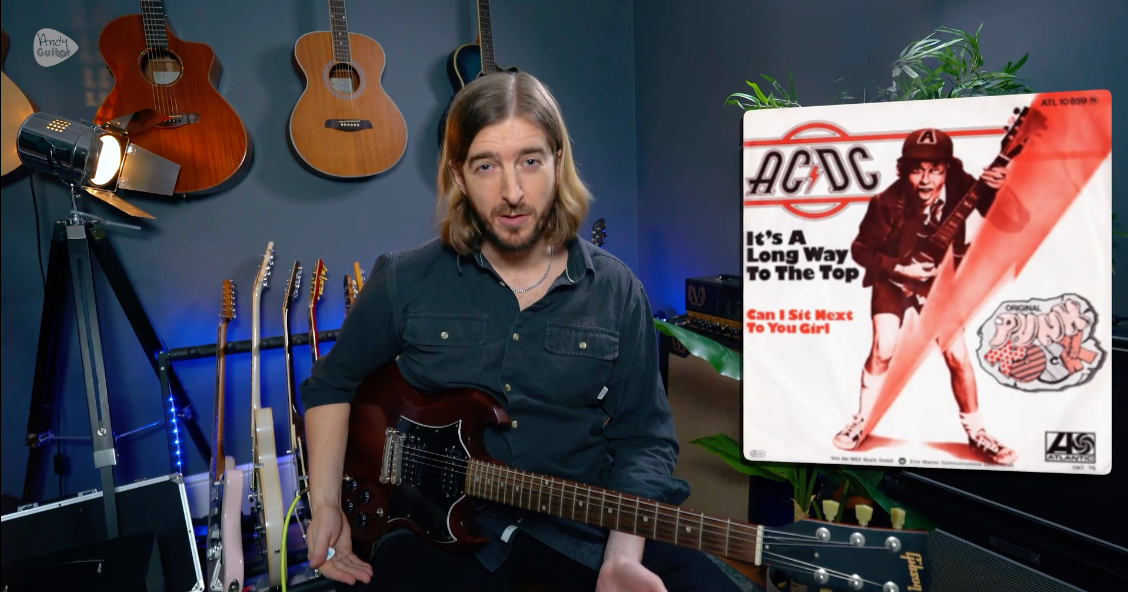
This lesson breaks down the rhythm guitar approach that defines AC/DC's sound — specifically the Long Way to the Top style of playing. It's closely related to the tresillo rhythm from earlier in this level, but applied through the lens of rock rhythm guitar with a focus on dynamics: the ability to go from barely audible clean picking to full-volume open chords without changing any settings on your amp or pedals. This is where the details of your right hand attack become the instrument.
What you will learn:
The AC/DC rhythm pattern and how it crosses the main beat
Dynamic control — playing loud and quiet with picking attack alone
How to get the AC/DC tone with minimal gear settings
Using octaves and blues curl licks between rhythm parts
The "All Right Now" chord and G-shape voicing
The AC/DC rhythm pattern and how it crosses the main beat The core rhythm crosses over the barline in a way that's very similar to the tresillo — the accent pattern doesn't line up neatly with beats 1-2-3-4, which is what gives it that driving, urgent feel. The chords are simple (A, G, and D power chords), but the rhythmic precision required to make it sound right is anything but simple. This is one of those patterns that sounds easy until you try to play it accurately along to a recording, which is exactly the test at Grade 4.
Dynamic control — playing loud and quiet with picking attack alone Malcolm Young's genius was in his right hand. The volume and intensity of AC/DC songs come almost entirely from how hard the strings are hit — not from pedal changes or amp settings. In this lesson, the challenge is to go from barely touching the strings (a near-whisper) to digging in hard (full rock volume), all with the same amp setting. If your gear doesn't give you that range of dynamics when you change your picking pressure, that's a sign your tone setup needs adjusting — a good amp or amp model should clean up when you play softly and break up when you dig in.
How to get the AC/DC tone with minimal gear settings The recommended approach is deliberately simple: one amp channel (lead, but with gain very low — around 3 out of 10), neutral EQ, no pedals. This forces all the expression to come from your hands, which is exactly the point. The tone should clean up almost completely when you play lightly and get gritty when you attack. This simplicity is what made Malcolm Young's rhythm playing so powerful — and it's a great discipline for any guitarist at this level.
Using octaves and blues curl licks between rhythm parts Between rhythm sections, you can add interest by finding the A note at different octaves and playing small licks around each one. A useful shape to know is the triangle pattern: the root note in the middle, the dominant seventh one fret below, and the minor third (which you can blues curl) one fret above on the next string. This same shape appears at every octave position, and it's the foundation for improvising tasteful fills between rhythm parts without leaving the key or getting lost on the fretboard.
The "All Right Now" chord and G-shape voicing A bonus chord covered in this lesson is the A major chord played using a partial G shape — essentially a power chord with the major third added from a different position. This is the chord from All Right Now by Free, and it adds a fuller, more complex sound to your rhythm playing without requiring a full barre chord. It's a preview of the G-shape triads that become more important at later levels, and knowing it now gives you an extra colour in your chord palette for rock rhythm contexts.
Intermediate Electric Level 4
Recommended Songs
Enjoying this course? Want to test out your new skills? Find out my recommended song tutorials that accompany this course and get total access to the site by signing up today!