Why You NEED to Learn Triads
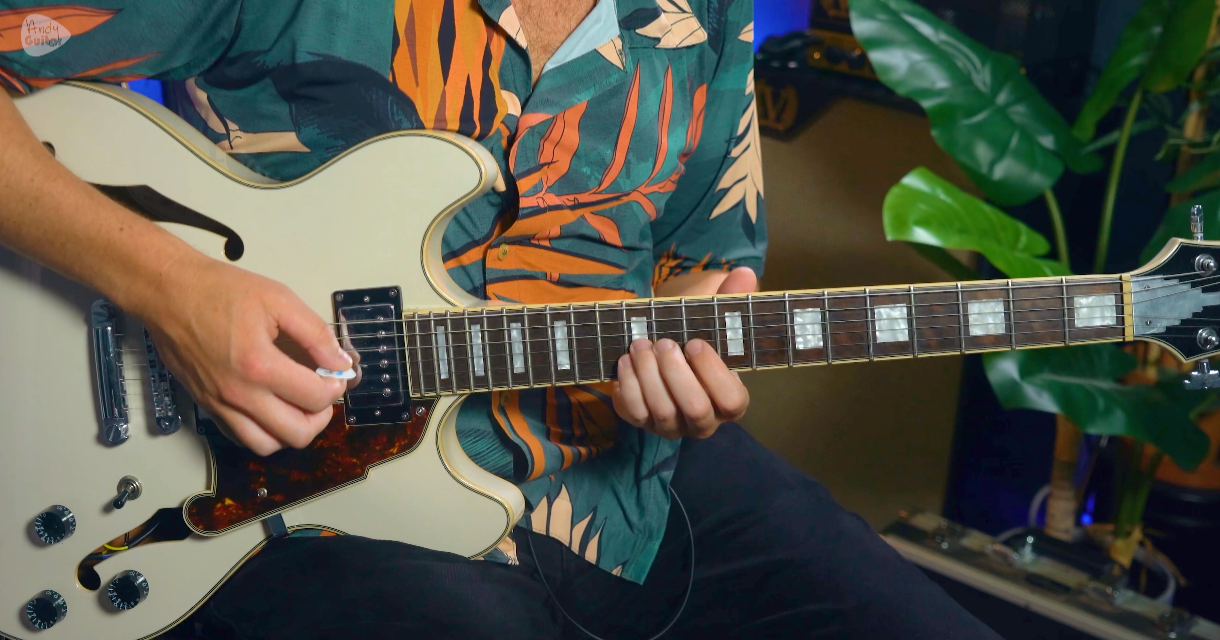
In this video
If your goal is to be an excellent guitarist, triads on the top three strings are one of the highest-return things you can learn. Not because you'll play triads all the time — but because you'll start to see the neck properly. Great rhythm and accompanying guitar is often triads and partial chords, not full barre chords: think Roxanne, think Little Wing, think This Charming Man, think countless songs by The Who. And your solos improve too, because you finally start seeing chord tones instead of being stuck in pentatonic prison. This lesson makes the case, shows you the song evidence from easy to hard, and lays out the four-step plan we'll follow to round off Grade 4.
For more in-depth lessons on triads also check out Level 6 Intermediate Acoustic which covers the same content but with a bit more detail. The next few lessons have corresponding lessons from level 6 on acoustic which are linked to on each page.
What you will learn:
• What triads actually fix: better rhythm playing, and solos that reflect the harmony
• The honest truth: what happens if you skip this — and why it's the gateway to advanced playing
• The song evidence, from Hole Hearted to Substitute, Under Pressure, Roxanne and This Charming Man
• The four-step plan: circle of fifths, three inversions, playing in a key, and real songs
• The big reframe: these aren't little chords — this is how to learn the guitar neck
What triads actually fix
Two things transform when you learn these shapes. First, your rhythm playing: great accompanying guitar is very often triads or partial chords rather than full barre chords — it's the sound of The Police, The Smiths and The Who. Second, your solos: pentatonics are fantastic and we all lean on them, but if that's all you know, your solos never reflect the harmony of what you're playing over. Triads are how you start seeing chord tones on the neck, which is where the more emotional, more musical lead playing lives.
What happens if you skip this
Honestly? You can still become a very good guitarist. Plenty of players get a long way on pentatonics, plain barre chords and a good ear. But if you've hit a ceiling with your rhythm or lead playing, this is almost always the missing piece. Starting with triads, and then learning to play through chord tones rather than only pentatonic shapes, is in my opinion the gateway to higher-level, advanced guitar. That's exactly why it sits here, rounding off Grade 4 at Level 6 of the course.
The song evidence
Don't just take my word for it. The easy entry point is Hole Hearted by Extreme — a beautiful, mostly acoustic song and one of the first ways I used triads myself. Substitute by The Who was the one I had to learn when I joined a function band, and it uses all the shapes we're about to cover; Under Pressure works the same territory. At the higher end — late Grade 4 into Grade 5 — Roxanne uses triads exclusively for the verse rhythm part, and This Charming Man looks like pure Johnny Marr genius until you realise it's built on G major and D major triads. That underlying fretboard knowledge is what lets riffs like these exist — and what lets you play in that style freely, not just copy them.
The four-step plan
Here's how we learn them fastest. One: learn the major triads on strings one, two and three, working through the circle of fifths — C, then G, D, A and E. Two: learn the three inversions per octave — the three essential positions for each chord on the top three strings. Three: learn to play in a key, not just to grab isolated shapes, using sus2 and sus4 embellishments to make it musical. Four — and this one matters: learn songs that use these shapes, and jam them yourself, ideally with a loop pedal for some simple backing. I'll demo that as we go through each video.
These aren't little chords
The reframe that makes this all click: we're not learning small chord shapes, we're learning the guitar neck. So far you've mapped the fretboard mostly from the thickest strings — power chords, pentatonic roots. This is the same job from the thinnest three strings; put simply, it's the top-three-strings version of power chords. One note: these videos run with fewer on-screen graphics than usual, because the intermediate acoustic course covers the identical topic at Level 6 with full graphics — we'll link those videos below, and the two courses work perfectly as a pair if you get stuck.
Intermediate Electric Level 6
Recommended Songs
Enjoying this course? Want to test out your new skills? Find out my recommended song tutorials that accompany this course and get total access to the site by signing up today!