
John Mayer - Why Georgia
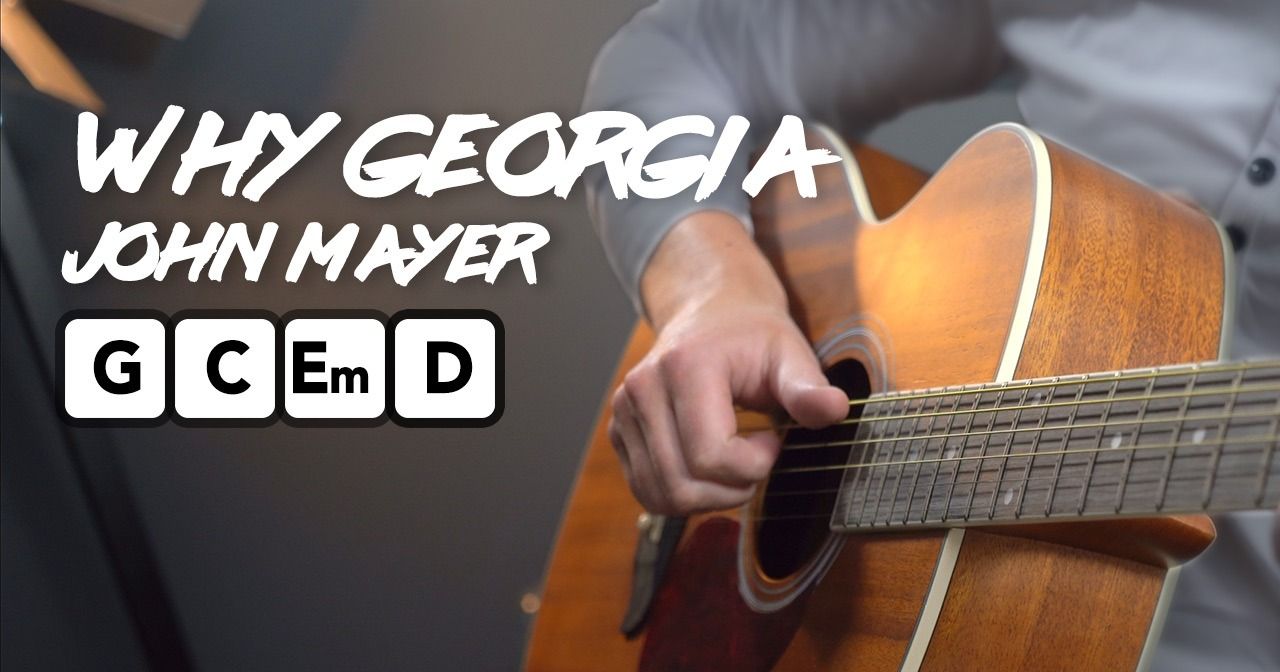
Alright, why Georgia? Why this song? Why Georgia, why? Um, this is a cool little one which we both kind of just quickly worked out, we should say. That whole percussive thing, which I suppose in the early 2000s got very popular, didn't it? Big style, obviously it's post Oasis strummers, isn't it? So yeah, that kind of Damien Rice eventually kind of picked up that baton of like. No, we wouldn't have had Ed Sheeran without a uh a Price and then David grey and I was kind of guy, yeah, exactly, the big scene for that. Who's the other uh uh what's his name? Big band, the Dave Matthews Band, I think very influenced by that. Because I remember how I. Got into doing stuff like that was through teaching. I started teaching when I was like 17, and it was just literally, you know, people would be learning chord or something, so I'd just be keeping a beat for you're tapping all the time. And then so they're, so they're doing G to C like this, you'd be like no you're kind of. And this aggression is G to D. Yeah. C major played like C major slid up. I think of as the Def Leppard go. Yeah, man. And D with this riff, which is a 2nd, a uh octave or a 1st and then um. Like the major sevens. Mhm. Again, quite a piano melody actually. How I learnt it through just kind of teaching, it's probably a good place to start actually. Just kind of taking a G chord. And then so say we just our thumbs on the base, and then my, any fingers at work, and it's, I'm using 2nd and 3rd, you might want 1st and 2nd, but just getting used to thumb, strum, uh, hit those two strings, and just get used to slapping. And the, the snare tap, which this is always happens on 2 and 4. That's a huge thing to remember. So if you're like, where, where are we doing it? 12 and 3 and 4. Yeah. Which is the thing, snare's part of drum kit and it's also, it's the beat that tells us the tempo of the song. Yeah, yeah. So 1. 234. It's the beat that we said before, you should clap on if you're clapping along. A lot of people, 1 and 3. No, no, no, 2 and 41234. The thickest string or the thickest couple of strings and that means you can even do the John Mayer thing of. Oh right. Keeping some strings ringing out. Yeah. Is in that. Still only between the first two thumb first two fingers. And Yeah, it's kind of like a major, uh, I guess the correct would be like a C major 9. So actually, it'd be a 69 chord. So it's getting used to that kind of pivoting with your little finger, um. And then that's coming off, you only do it that once. What does he do? What does Why is he so good? Who are saying we're not John Mayer fanboys, and now we're working out his stuff. Absolutely, cos it's. It's all KFC major. You can add all this up with a pick as well records more, but. And Minor minor D over F sharp. of all the Yeah, 9. Yeah, so the chorus is going. A of a C# in the bass. So it's, it's going to the 5th. OK, that makes, that makes some musical sense. A C to E minor. with an E in the base. And Man it or a game, you know. Very cool, very cool weaving of chord tunes. Yeah, yeah, very much so. He's the one that I learned this phrase of folding one song into another, having two song ideas. Yeah. Probably out of many, let's be honest, maybe out of hundreds. And kind of going, OK, let's take this one and make it a verse. Take this other song that I, other progression I came up with years later, days later, none at the same time. Kind of think how we can go from one to the other, and that gives you ideas like that, that's where that comes from. And again, you know that. That's a harm, that piano idea. As opposed to you don't have to play it, you have to know what a piano would sound like. What would a piano do then. But if you didn't do the C into the sea. And then there's a different kettle of fish, where it's that strumming mute. That's basically what the right hand's doing, if I try and slow it down. But you're kind of strumming. And then muting it with the side of your, your, your palm like a palm. you know. And that's an octave shift. It's a very common thing to somewhere the rainbow, isn't it, you know, so. That's a songwriting technique when you want to write a melody and you think, I want this to be memorable, I want it to stand out. It's a huge amount of intervals. And it makes it literally stand out cos you're asking you, you know, if you think of Robin Williams' angels and through it. Yeah, of course, yeah moment so I'm over that it's a, it's a hook. Again, the piano thing of playing an echord but changing the root note. Mhm. Going for an open string, which is a very guitarist thing to do. I mean, imagine if you. Went to your bandmates and you said here's my little song, they'd probably go. Alright Michael, alright Michael. I think I think we're not gonna go for that. Yeah, yeah. It's actually probably the best, a good one to really start that stuff with, cos it's not much going on. It doesn't have the role. Yeah, yeah, that's what I've got Def Leppard in my head now when you. I imagine he was 20 years old or something when he wrote this. He's at home on his, in his bedroom, you know. Whereas the other one, is it Neon? That's, I don't know that at all, it's Drop C, I think, and he's some, he's got massive, he's a big boy, isn't he, he's about 66 or something like that. I wouldn't know, ask, ask his long line of miss. Yeah, exactly, right. But, um, but yeah, he's, he, he does like that stop this train. The thumb and also for me, a little bit there on that bit, you know. But it's always 12, and 34. That's what you don't wanna get rid of at all. Yeah, one and feel how it sounds like a slow hand clap. Yeah, exactly like a one and. With all my favourite chord progressions they always have. Just to kind of quickly do this without a copyright strike one. You gotta, you know what I'm saying, OK, so. It's gone down by 1 Melody stayed the same. Nice, yeah, yeah. Something like that, yeah, yeah. Yeah, he's following his ear, isn't he? Chromatic moves. If you can get that down, you're sorted. You'll you'll always, you'll use it in everything, right? Diatomic thoughts. I've got a song, you know. A minor. Same thing, or I would say it's probably one of my favourite John Mayer songs. It's a really beautiful song that is. I think that one unites a lot of people. Yeah. He's a polarising character, but um, that one's like, there's nothing not to like. Yeah, absolutely, you listen to the lyrics and uh, you know, we all have it, you know, talk to my old man, you know, if you think you're getting older, you know, talk to your parents or your grandparents, you know, themes. And, and a melody that this sort of more focused style does connect with. Well, as soon as you, when I hit that, I was like, oh. Yeah. strings. Essentially a minor force. Look at you getting all fancy. With all the hammer on Mike. But stuff like that though sounds cool, that's what I meant by it. Yeah. It only takes a little bit of it, and the rest of it is often these kind of bits of chords. Amazing. John Mayer, but yeah, hopefully that helps. All we need now is a full er stop this train tutorial. Just that one out, shall we? OK. I'll, I'll give it a go. It's a beautiful song.
In this video
Andy and Mike discuss and teach the John Mayer song 'Why Georgia' from his first album Room For Squares.


Enjoying this video?
Try this course - Solo Acoustic Blues & Solo Fingerstyle Methods
Part 8 of the Intermediate Acoustic Guitar Pathway empowers you to become a complete solo performer with two essential styles: acoustic blues and fingerstyle