
Rock Rhythm 01 - Introduction
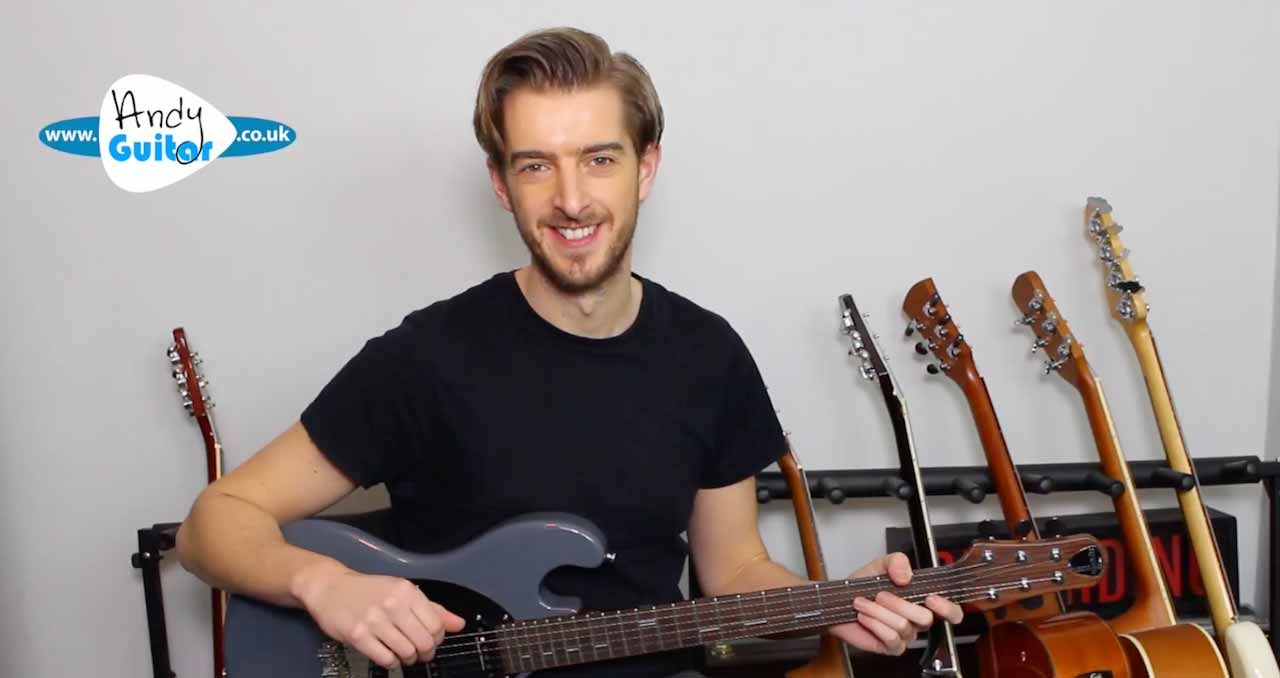
How's it going guys, Andy here, and welcome to my rock rhythm guitar course, which is the direct follow-on from my electric guitar starter course. So this is kind of an improver to intermediate level. And then the direct follow on from this is going to be my lead guitar course. So we have this direct rock guitar pathway to teach you guys right from being a beginner, all the way to a proper intermediate. To advancing guitarist in all rock styles of electric guitar. The first half of this course is going to focus more on techniques, but I'm gonna be showing you techniques uh through little riffs and little rhythm guitar ideas and concepts, looking at the sounds, looking at the components of riffs, and covering all the essential skills of rock rhythm guitar. We're then gonna test those skills by learning 12. Rock style backing tracks, now this is in various different genres within the rock genre, so uh we have some bluesy tracks, we have a couple of very heavy tracks, one's quite metal style and uh everything in between, so we're getting the complete spectrum of all the rock genres from a rhythm guitar point of view. But many of these audio tracks are the same ones that we then learned to improvise over in the lead guitar course. So the idea is we'll learn how to play those tracks first of all in this course, and then you'll learn how to improvise over them and play rock lead guitar solos over these same backing tracks so you get the complete picture and really have a complete understanding of all the rock genres from a rhythm and lead guitar point of view. Now in my opinion, rhythm guitar is the most important role in the entire band. Especially when it comes to the rock genres. To communicate what I mean by that, if you imagine, think of now any rock guitar song in any of the, the, you know, genres that can encompass rock, from a classic rock song to uh blues or country or anything, think of that song in your mind now. And my example would be Back in Black by AC DC. That's one of my favourites. If we think of that song, take away any of the other. Instruments, including the singer. And the song still kind of works. If we take, if we imagine Back in Black and we take away the drums, the song still functions, you can still listen to the song and understand it as that song. If you take away the singing, we can still rock out and and it still sounds like a very good rock track, of course. Back in Black by AC DC. If we take away the bass, many people might not even notice that it's missing. But take away the rhythm guitar part. And you don't even have a song anymore really. It's not only the the rock rhythm part isn't just the bit that you want to learn cos it has the cool rock riffs in it and stuff. The song just sounds empty. It it's, it's no longer really functions as a song. The League. The guitarist can be doing what he's doing and that can sound great, but without a song to play over, and without a rhythm guitar part to play over, typically, the song is just totally empty. So that's how important the rhythm guitar part really is, especially in all rock styles of music. So the rhythm guitar part basically holds the entire song together. And the best way that I've heard this described by one of my favourite guitarists is um that the all the rhythm instruments, including rhythm guitar, bass, and drums set up an open goal. For the lead guitarist and the lead singer to score, and that is what we want to do with rhythm guitar, we set up an open goal so that the song can come across as good as possible. The lead guys, lead guitarists could make up a different solo every time that they play. The singer can sing the lyrics slightly differently, and use a different melody and and go higher or lower, and the song still sounds like the song, but the rhythm guys, and rhythm guitar, when we pause, it's gotta be purposeful. It's got to be for effect and it's got to be on purpose. If we change anything about how we're playing a riff or a rhythm guitar part, it has to be on purpose. Dynamically, it's not just not just notes wise, does the rhythm guitar part have to be the same. Um, if we play louder, it's got to be to build the song and build everything towards, you know, the big ending or the solo or something, or the chorus. And if we bring it down and we're luring people in, again, we're, we're telling the rest of the band that everyone is to play quieter, and that could maybe for a verse section, for example. A great example to show you exactly what I mean by this is by demonstrating a blues which would sound something like this. This is something that we did cover in my beginner's course. Uh, those lessons are totally for free that teach this at level 3 of that beginner's course, so this is quite easy, but being able to, um, play what I'm about to demonstrate for you now is basically a minimum requirement for this course. It's ideal if you've done the electric guitar starter really, to, to get a full concept of this. But this one I'm covering now is really the minimum requirement. And what we're going to play is the standard blues riff in A. And we're going to play the ear power chord, otherwise known as an ear 5, and put the 3rd finger then down at 4th fret of the 4th string in the following pattern. down. Now if I played that at exactly the same volume, it would just sound like what I've just played in a loop. But we can really affect the whole mood and and sound of the song um by how loud or quiet we play it. And and that can be done by just literally strumming quieter or by slightly palm dampening, so this is the standard riff. And then played quieter. Alarm muting slightly. And then also by building it up and playing it not faster, but louder and picking harder without changing anything on the guitar or the pedals, we go from this. To a much heavier sound which has been built up on purpose because that is the control that the rhythm guitar has over the whole mood of the song. So really important stuff and uh a great example of that would be uh many 12 bar blues songs and we'll be covering more about the 12 bar blues as we go throughout this course. But let's get straight on now to learning more about rock rhythm guitar techniques. And thank you very much for the support. I will see you in the next video.
In this video
Welcome to this Rock Rhythm guitar Course!
Part 1 of this course includes 12 lessons give you all the essential Rock techniques with short riff examples every step of the way.
Part 2 includes 12 jam tracks with full tutorials that you can play along to to test and demonstrate your new rock rhythm playing abilities!
These are the same audio tracks that are included in my Lead Guitar Course. The idea being, here we learn how to play them, and there you learn how to improvise lead guitar solos over them in this newly structured Rock guitar learning pathway.
The role of rhythm guitar
Rhythm guitar is most important role in a band. Choose any favourite rock song, take away the drums, take away the bass, even take away the solos or the singing, the song still works. Take away the rhythm guitar, and often you just don’t have a song any more.
Rhythm guitar holds everything together. The rhythm instruments, bass drums and rhythm guitar. The best way I have heard this said is that the rhythm instruments (guitar, bass and drums) set up an open goal for the singer and lead guitarist to score!
A lead guitarist can make up a different solo every time they play or stop any time he likes.
The rhythm guys can’t. Everything we do is purposeful and impacts the entire dynamic of the song.
If you stop or play quiet, it has to be to intentional to add effect. If you repeat a riff or chord progression, it must be played exactly the same, not just notes wise but sonically, and if you play louder or quieter, it is purposefully to bring the whole band and the whole mood up.
Keep this in mind when you learn any rhythm parts, especially when playing along to a recording, jam track, or jamming along with other musicians!
Rock Rhythm Intermediate
Recommended Songs
Enjoying this course? Want to test out your new skills? Find out my recommended song tutorials that accompany this course and get total access to the site by signing up today!