
Day 15 - Major Key Weaving
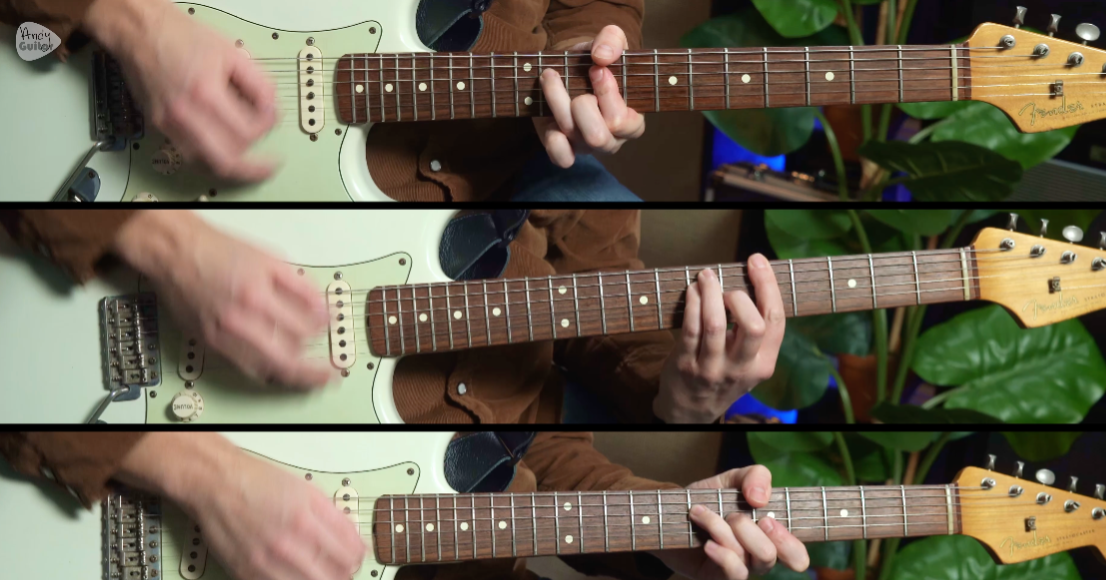
Welcome to the final lesson in this play guitar like the Rolling Stones, when we're finishing off with a nice chill one. This is in the key of E major, this is Beast of Burden. The basic chords are E major. B, C# minor, and A. So a four chord song in the key of E. Almost the equivalent of under the bridge. And like Under the bridge, the chords are actually played by the Rolling Stones, quite similar, where we're not playing full bar chords and strumming all the time, we're giving little indications of chords, sometimes just with one finger. So if we play them as bar chords up here. We have an E major firing at the 7th fret, A string root note, that's our E. B string 6 root note, C minor no middle finger down. And then So they're our basic shapes. Now we wanna play it, if we're really gonna study the guitar neck and be able to get everything out of it, we wanna play every chord in as fewer frets as possible so that it's in one position. And then it sounds like basically the same riff and the Stones do that here. By that being an Echord, just 999. This being the B chord, just 789. This Being the C minor, the root note is here but also here. Put the middle finger down, that's then an A chord, using the cage system idea. So we have E B C minor. And then A And that's how we get this riff, the only extra bit we add to that. Strum in the B chord. And just flatten off that third finger. That's how this riff kind of gets its signature. But that is using to fill out the rest of the chords, we could even play the uh Echord like this is one that's not often used, basically using a G shape. Basically stepping up, I mean this stuff the Stones probably got from Hendrix cos they didn't really do it in their playing before then, they were far more bluesy, it was only afterwards, after Hendrix of influence of, you know, playing Little Wing and people getting used to that sound and a lot of people copying it. So if we bed that basic loop in 234. That's now in the loop pedal. Let's have a think about what we can do. E major pentatonic. Which is again that G shape. Which is an E chord but played with a G shape, it's the shape that's the important. Stealing This from Only Rock and Roll. Even Oasis, isn't it? And that's not a strict, you know, it's not a solo, it's not like. It's not playing a solo, it's just embellishing. And that is where we'll leave this, cos if we can do this in open G in open E, do it in a rock and roll standard tuning thing, and do it in a more chilled kind of John Mayery Hendrix, then you've got every bit of skill that you need to be able to do this Rolling Stones weaving style, no matter what song you're playing over. You can add this vibe to anything, and there's no one, as discussed before, there's no one. With better vibe and feel than the Rolling Stones, it's like what they're all about. And often, most of the chords we've played in this entire course have been either G, C, and D. Perhaps played in open G tuning though, or like here, just, you know, E, B, C minor, and A. There's so many Stones songs that just use those basic. Cowboy chords really, but they're never played in a cowboy chords way it's, we're rarely, never in this course have we played G, C, and D in the traditional fashion. We have been experimenting with all these caged system shapes, which would be, if this is really the style you're after that would be where I'd send you, look at my cage system programme. Uh, on the website exclusively, you've also got the five shapes that are major and minor pentatonic to really solidify this stuff with loads of song examples in my lead guitar course and also, you know, that all that lead guitar programme is where you can get loads more of this player study style study stuff. I hope that's been a really enjoyable journey for you. I hope you enjoy jamming along to. The Rolling Stones, plenty, both the original recordings and live versions, you will always learn something. And also be your own jam buddy. Get a loop pedal, jam along um with your own loops, weave between them. Don't rely too much on the tab. Follow your ears, if it sounds good, it is. That's how you learn. Thank you so much for watching, I'll see you next time. Thank you for watching, bye bye.
In this video
The perfect finale to your Rolling Stones guitar journey. 'Beast of Burden' brings together everything you've learned – but in a chilled, major key context that showcases the more refined side of Keith and Ronnie's weaving style.
What You Will Learn:
The 4 chords: E, B, C♯m, and A played in a shared fretboard position
CAGED system chord voicings for efficient movement
The signature riff using partial chord shapes
E major pentatonic embellishments in the "G shape" position
How to weave tastefully without playing a full solo
Hendrix-influenced chord techniques the Stones adopted
How to apply everything from this course to any song!
The Chord Voicings
Rather than jumping between full barre chords across the neck, the Stones play Beast of Burden in one compact position - pretty high level stuff for sure! These shapes are partial chords or borrowed from the CAGED system and this economy of movement is what makes the riff flow so smoothly.
The Signature Sound
The riff gets its character from one small addition – when strumming the B chord, flatten off your third finger to create that distinctive melodic movement. This technique of implying chords with minimal fingers rather than strumming full shapes is central to the Stones' sound on this track.
The Hendrix Connection
This chord-melody approach likely came from Hendrix's influence – think Little Wing. Before Hendrix, the Stones were far more blues-based. This style of stepping through partial chord shapes while weaving in melodic ideas became part of their vocabulary from the late '60s onwards.
E Major Pentatonic Embellishments
For lead ideas, use E major pentatonic in the "G shape" position and in some ways it resembles 'Minor Pentatonic Shape 1' here, frets 9-12/10-12 area. BUT! The goal isn't to play a solo – it's to embellish. You're adding colour between chord shapes, borrowing ideas from all the Stones knowledge we've gained so far and anything outside of that that gets you ear going!
Course Conclusion: Your Weaving Toolkit
You now have everything you need: open G weaving, open E weaving, rock 'n' roll standard tuning, and this Hendrix-influenced major key approach. Whether you're playing over Stones classics or applying this vibe to any song, you've built a complete toolkit. Remember – most songs in this course used simple chord progressions, but we never played them as basic cowboy chords. That's the Rolling Stones difference: familiar chords, transformed through position, feel, and that 'ancient art of weaving'.
10 Day Rolling Stones Guitar
Recommended Songs
Enjoying this course? Want to test out your new skills? Find out my recommended song tutorials that accompany this course and get total access to the site by signing up today!