
Top 5 Tips To Stick With Guitar!
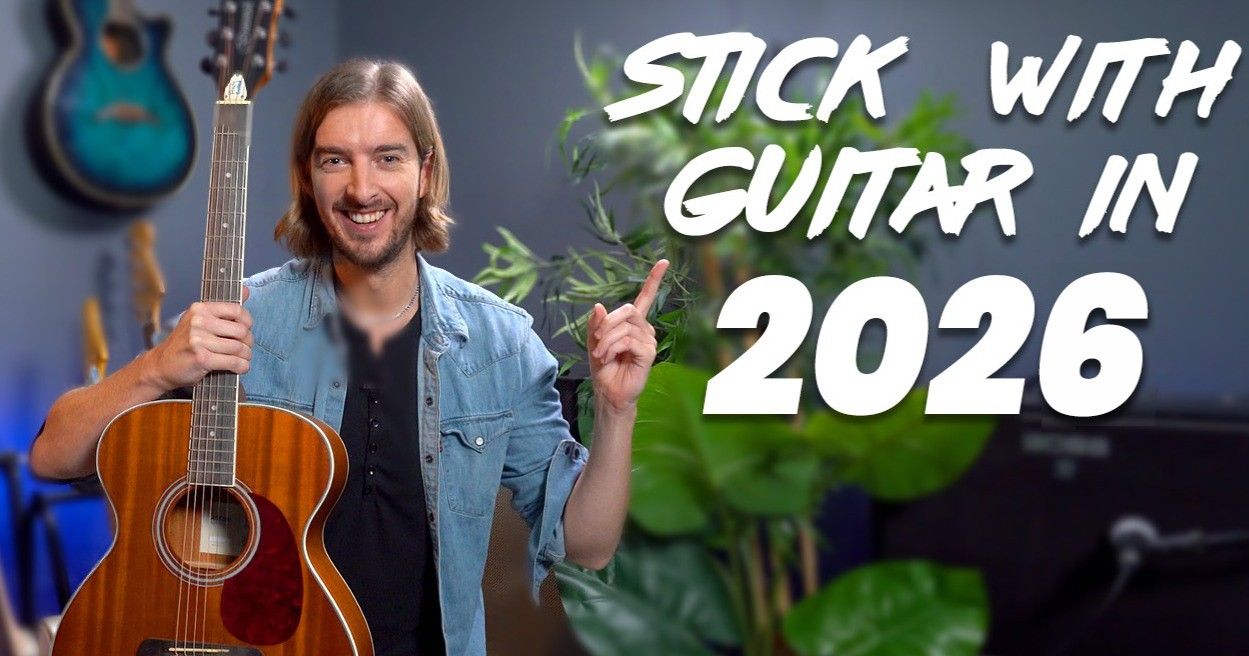
In this video, I want to offer you all my best tips for sticking with learning guitar. So many people attempt to play the guitar and find it too difficult or something doesn't connect with them, and I want you to avoid all those common pitfalls because they are so easily avoidable. Tip one is that motivation is perishable and that you need to act right away whenever inspiration and motivation strikes. Motivation can sometimes only last a few minutes if you don't. Act on it, but if you act on it, it can last much longer and really power all your practise time and your playtime when you're learning guitar. Ways to maximise this include remembering why you wanted to learn guitar in the first place, what are your primary inspirations, what do you see yourself doing with this? These can include favourite bands, favourite songs, highlights for myself include when it involves friends and family and singing and all that kind of good stuff. Having those images and music. Old and bright in your mind at the start of when you're practising guitar can really motivate you to make the most of your sessions. Tip two, while motivation is perishable, a vision can be unstoppable. Now this is something I truly believe in, is that a vision of something you see yourself doing that you can imagine yourself actually doing is a bigger pull towards doing it than any kind of motivational push I or anyone else can give you. What do you see yourself doing that learning guitar will enable you to do? Is it playing something on guitar that wows your friends and they just think, wow, look at what this person can do. Is it getting up on stage and at an open mic night or at a gig and being that person is part of a band? Is it that joy of playing with other musicians and like making music and connecting with the music on a whole different level? Is it recording yourself and having that recording, Basically be immortalised that you can listen to forever and show other people forever, which is how you've enjoyed many classic recordings of your favourite bands. Whatever it might be, keep that vision big and bold in your mind, and then decide on all the little goals that will move you towards that direct vision. Tip 3 is to play as frequently as possible, but never for too long in one sitting, and one of the main reasons for that is to prevent finger pain and also any other aches. And pains that come, come from learning any new physical skill. We've gone a long way to preventing finger pain in the layout of the Andy guitar beginner's course, where we have a lot more single note playing as opposed to just chords, but it's imperative to know that you should only press down on chords when you're going to strum it as well and therefore get a sound. But you can also practise any of your common chord changes without actually pressing down too hard at all, and just practise. practise the movements of this new skill. We also look at single note playing as opposed to just chords to give fingers a break. But even with that in mind, don't be playing longer than 30 minutes as a total beginner, otherwise your fingers are gonna hurt so much before they've calloused that you won't be able to play tomorrow and maybe not even the next day. And we actually want to supercharge your progress by playing on as many consecutive days as possible. Within reason, 4 or 5 days a week is absolutely plenty, but never for too long in any one sitting. Tip 4, try and keep the time you spend with a guitar on your knee, 50% learning and 50% fun. This is just the simplest way that we can divide learning new stuff with actually making sure you can do something new with it, and you're enjoying playing while all this is happening. An example of that is if you have 20 minutes to spend with your guitar today. You could spend 10 minutes learning something new, practising a new chord progression or practising a new chord change or a strumming pattern, and then spend the remaining 10 minutes playing a song from your repertoire, which is a song that you enjoy. Put that song on and playing along with it, slowing the song down using YouTube or Spotify, all of these technologies that have. Uh, a way to just slow down songs a little bit and play along to them, super, super helpful. The jam tracks we have available in the Andy guitar beginner's course, with all the on-screen visual help you need, should hopefully be a really fun experience playing. Make the most of them and make that the second half of your practise routine. And my final tip, tip number 5, try and. Play guitar more than you're practising guitar. Don't overthink it. I think there's a tendency for a lot of people, especially older learners, they want to understand everything they're doing cos they're used to understanding things, and everyone enjoys learning new things at any age. But then sometimes we can spend a lot more time trying to theorise the why. And understand what's happening rather than just doing, and guitar is a physical skill, music is a physical skill, it just takes repetition and practise of the right things, so if we spend more time doing, you're going to make more progress, no matter actually what you're physically doing in many ways. As an example, in the past year, I've had the opportunity to interview a whole bunch of bands at various levels from. Level bands to absolute headliners. I asked all of them, what was the first song they learnt on guitar, what was their advice for anyone learning or wanting to join a band or start a band, and the advice of every one of them was to just start. Start before you're ready and just do it, just do the thing. There is nothing holding you back than you just taking action and doing the thing. That can be counterintuitive to. So many other areas of life where you have to get a degree, get qualified, you know, learn to drive before you can drive a car. We can't just get in a car and drive it, you have to be taught a lot of things. In music, in some respects, once the basics are learned, they are your tools to do with whatever you want, and some of the best artists can't tell you the names of half the chords they can play. They. Can't tell you what scale they're using when they're soloing or when they're improvising. They certainly can't tell you why some of the songs they've written are more popular than others. They often can't even spot it themselves. But those are the same artists that you and I absolutely adore and just think are the best musicians and best artists in the world. They're also our primary inspiration, so whoever those primary inspirations are for you. Keep those close to your heart, keep them as inspiration, and also try and walk your own journey. Don't compare to others, as much as there's a tendency to, only compare against your previous self, against your old personal best. Here's where we can help at Andyguitar.co.uk with the membership, which involves a community support and also live streams with myself. Here's your opportunity to get done. Direct feedback from me on your guitar journey, and even better, get feedback from like-minded learners, some who might be more beginner than you, some who might be a lot more experienced, and everyone helping each other. And some of these learners are teenagers who are wanting to perform on stage and start their own band or play for their friends. Some of these learners are people in their 60s, 70s, or 80s struggling with things like arthritis. Finger pain, struggling to find time in their day, and we're helping each other learn and keep each other motivated. And of course everyone in between, male and female, this is a fantastically inclusive community that's available as part of the membership, and I really hope you check it out and make the most of all these community and life aspects. I wish you all the best on your guitar journey, and I look forward to seeing where it takes you.
In this video
I share some top tips to keep you motivated and playing for as long as possible. Plus, it doesn't stop there, as we have a whole community already actively keeping each other going with more shared tips they've learnt along the way!
Motivation is perishable, act on it right away!
Motivation speeches etc. give super short results even minutes later.
Remember whatever made you want to play guitar in the first place, songs, bands, stick those on just before you play.
A vision can be unstoppable
Anything you can visualise yourself doing as a result of learning guitar will be a bigger pull than any single push of motivation.
Wowing your friends at a BBQ, playing an open mic or gig, recording yourself.
Don’t over play the same thing to avoid finger pain
50% fun, 50% learning
50% on learning new stuff.
50% on song practice, consolidation, jamming along to music/ jam tracks/ real songs.
Play more than practice and don’t overthink it
Many students get stuck in the “but why?” camp, spending so long trying to theorise or understand what they should be doing, and not enough time just doing it.
In the past year I’ve interviewed so many bands, all of them said they started playing or gigging before they felt ready. The advice “just do it” cannot be overstated.
Feeling stuck?
Andy Guitar is more than just a courses website. It is a thriving online community of like-minded learner guitarists. Some folks have been here for years and are achieving new guitar goals all the time.
Get involved in the community aspects of this website.
All the best on your guitar journey!