
The Virginmarys - 2000 Trees Interview
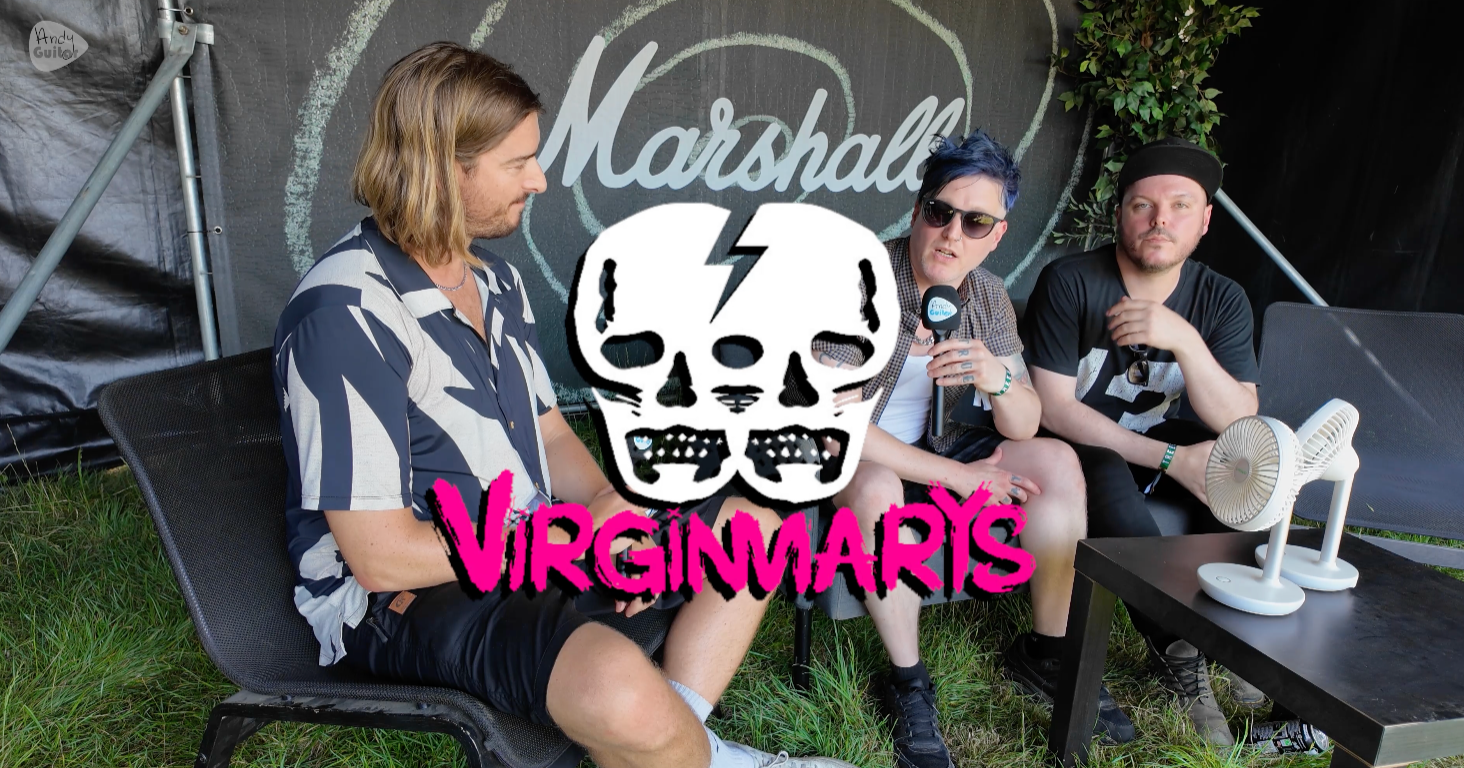
Hi, I'm Ali and I'm Danny, and we're from a band called the Virgin Marys. Yes, we're at 2000 Trees. I'm looking forward to seeing you guys later, but I've seen you guys before. Are you looking forward to tonight? Yeah, absolutely. I'd say that 2000 Trees is one of the best, uh, British festivals. If not, you know, the best. It's nice vibe every time that we come here. Anything else that that makes you say that? You must have played many times. I don't know mum. It's hard to nail it down, is it? I think it's the vibe, the um. There's a nice atmosphere here, it's a good size, uh, you know, great bands, so. Totally agree. Is this the start, are you playing more festivals this summer? Yeah, we're playing the Major Stone Festival and Fire vault festival. I'm sure there's other festivals that uh I'm not prepared, uh, I can't remember to be honest. That's all good. Uh let me ask you though, what's a favourite song on the set lists at the moment? What, what's your favourite that you're playing tonight? Uh well, it probably varies for me and Dan. I know that Where Are You Now is one of my favourites to play. Um, it's probably about 3 years old now, but, um. We kind of improvise a little bit through dynamics each time that we're doing it and um. I think generally yeah it's just one of my favourites that we do. How about yourself? er yeah I mean any anything of the newer album really um it's always kind of um, yeah, you get bored of playing the older stuff, so um, and like I said, you know, you always, when it's new stuff you're always finding little nuances, little things, little between us, yeah, that's um. Keeps it really interesting and stuff, so but yeah where are you now it's definitely a good one. Absolutely, and you guys have been going since about 2009 or so. It's been, it's been a a story for my for my uh from my uh opinion of like resilience, relentless touring, and also just filling out the sound with two of you. Of course you know White Stripes became huge with just two of them, you know, a guitarist and a and a drummer on stage. But from hearing you, when you hit. the White Stripes live from back in the day. You can tell there isn't a bass player there. They hadn't quite figured out how to fill it out. You guys are filling it out both from your, how you connect together and, you know, amps and pedals. You guys seem to have got it figured out. Was that a conscious decision? Was it a step you need to go, right? How do we fill this out with two people? Uh, I think that we're both perfectionists, and originally when me and Dan started playing, we played in a 4 piece band, and it was a massive step for us to go with 2 or 3. And you could hear the um you know there was a hole there that needed to fill in, so then you start playing in a different way. In the last say 54 or 5 years we decided to go as a 2. And um it was a real learning curve, we weren't sure. I think it was a bit of a a trial at the start, but then playing around with, er different pedals and speaking to um. A friend in Hyena Kills kind of suggested to split the signal so that um some of it goes to the guitar channel but er you have a separate bass channel, that's kind of the game changer really on like a a low end so if you can get that into an octave pedal. And then I use a sands amp as well, like I need some compression. And I started kind of becoming a bit of a geek to be honest, where it was never, yeah, it was never something that interested me in the slightest when I first started playing guitar, but now I actually take a lot of kind of, I get the most enjoyment out of playing with frequencies and making uh, but 90% of it really is how you play together, how you strike the guitar and how you use dynamics and take a song to a certain place. And then you know hit it wide open, you know, rather than just a punk kind of er which is great, you know, just to kind of keep it the same but. Yeah, there's tricks. There are tricks, I, I've, I'll be honest, there's a lot of drummers that give us a lot of tricks too cos uh a lot of drummers always double up as like wannabe sound engineers cos obviously you've got all the frequencies there as well from the lowest to the highs. Is there anything about when you're in a two piece, I've heard you guys live and you seem to play about with like BPMs or being a bit like behind the beat if anything to make you hear heavier. Yeah, um, that was something. I've done for ages really, yeah, where you kind of, you're behind, you're lazing it off for the verses or you know, and then obviously for the choruses you're hitting and stuff and sometimes as well just. Just to get that lazy kind of feel to it, you know, like, um, it's just a, it's a totally different thing, yeah. It makes it hip better, especially when you're playing heavier in the bigger rooms that you end up playing at fest especially at festivals, I've heard the hives are probably the best at doing it of anything like this genre, but you can hear what they're doing. just the learning slightly, it makes such, such a difference. Um, can you tell me about when you were first learning, I obviously when people are first learning they're just trying to play in time at all, right, they're not playing about with this stuff. So what were the first songs you learned when you were learning your instruments and was there anything, was there any gateway to when you were like, oh now that something that made you a lifer with with playing your instruments and learning music. Yeah, I think like at the start, it's best to kind of keep it fun, um I started. Uh, when I first started high school and, um, you know, it was just kind of doing like the old school Batman kind of da da da da da da da da, um, Oasis were kind of around and, um, you know, you started playing stuff that you knew and um, I think a game changer is really when you start to, um. realise how important playing in time is which came to me probably a lot later I think like, was that when you played with others more? Probably yeah and like, I, I don't think I could ever understand when me and Dan started playing the band with in a band, I thought it was. Perfect straight away maybe and then but then you go and see other bands and it sounded really solid and tight and um I think that's generally a thing that they call locking in, which I didn't really get until maybe 10 years down the line but um. Main thing is just kind of learning your craft at the start, keeping it exciting and that you want to pick up a guitar, I guess, you know. And you're saying you learned a lot of things 10 years in, but there's a lot of that kind of confidence of youth and just oh no I'm I'm great at this now, I'm gonna do it, I'm gonna be a musician. You need a bit of that start a band. Oh definitely yeah you need a bit of that bravado, you you need um. Yeah, uh if you don't have that as a kid I think and then and like I said as well, keeping it, it's gotta really interest you, you know, like, um, that was the biggest thing for me really. I, um, I only had lessons for like a year and it probably could have died off, but it was more about going to gigs and being excited about seeing something that. You couldn't kind of work out how to do it in your head, but and then you'd go home and you just, and you're just relentlessly practise and practise until you do it, you know that was, that was the excitement about it, you know, and I kind of still have that which is really great, you know, it's like when you see a, a new band you've not heard before and it just blows your head, you just kind of like, you get that same buzzer again, you know, totally, no it's exciting, and then of course you know you've been through many different, um, you know, different um lineups with with this band, now it's just the two of you. How is that, how are you writing songs now, are you coming out with most of the stuff or is there, is there anything that you've written that's actually been inspired by something you've played on the drums, you know? Uh, I mean it's great to be in a practise room and Dan plays what's come into his like what's inspired him that minute, and then I join in and we create something that way, uh, more often than not now, because it's, we're an independent band that's kind of um. Dealing with all aspects and you know to even distribution and the rest of it, there's not so much time to kind of be in a room together so um, I will play about on logic and just hit a bass drum like bom bom bom, you know, and send it to, do the idea, send it to Dan, see what he thinks back and forth and then we um, I kind of hash it out a lot more before I kind of. It's just to save time. No, of course, it's practical. I've got to mention your voice too you, you are one of the best rock voices that you're gonna hear around in my opinion. I just love that when you can get in that frequency range, it's just exciting and it cuts through a BA and you can really do it live, do you. You remember when you first discovered that Jesus I can do this? I mean it's it's very different to, you know, the sort of a a lot of people from up north like me, we do the more of the crooner thing, we can't, we can't do that edge to your voice, you know what I mean? Yeah, you know one of my favourite singers I think is actually um. Frank Black from Pepsi's and um band right and he will scream a lot on those early but it's the versatility like he can kind of go deep and um he can go kind of high and he's got one of the best screams that's going, I think when me and Dan first met, I, I was a lot younger, I kind of felt, That there was some, there was some potential in my voice, but it definitely wasn't, as it is now and I couldn't sing that well in tune and um people would tell me that um. And I've just kind of ground it out each time and it's the same with guitar, you kind of understand timing and dynamics and all sorts of kind of importance of the performance. I still remember as well when we were first starting out, that was one of the things people used to say about Al's voice. And there'd always been people coming up to him and going, I had a mate like that, he used to sing just like that and he just total his voice out, you know, you can't keep doing that, you can't keep doing that. And touch wood, I was just. Kept going. Look, some people have just got, I lose my voice straight away as soon as I've done a couple of nights in a row, um, and some people it's just have no sleep, rock up and then just good to go. And that's how you know you're you're born to do it basically, you should be doing this. I is there anything you want to give a shout out to any upcoming gigs or any, are you, are you writing something new? Yeah, writing a new album right now. The last one well the last. Real album is called The House Beyond the Fires, um, came out a couple of years ago, we're kind of following that up with, um, a new one should be coming out next year. Um, apart from that we're on tour with a punk band called Lag Wagon in Europe and we're doing festivals throughout the year. Happy days, well, all the best to you, we're a big fan of your band. Virgin Marys, check them out. Thank you so much for talking with us.
In this video
Andy speaks to Ally and Danny from The Virgin Marys at 2000 Trees. Topics include their early guitar experiences (Batman riffs, Oasis), how the importance of playing in time only really clicked when they started playing with other people, the concept of "locking in" as something that took years to truly understand, why going to gigs and obsessively trying to recreate what you'd seen was the biggest motivator early on, and news of a new album following 2022's The House Beyond the Fires, plus an upcoming European tour supporting Lagwagon.