
Learn The Fretboard: Chromatics
In this video
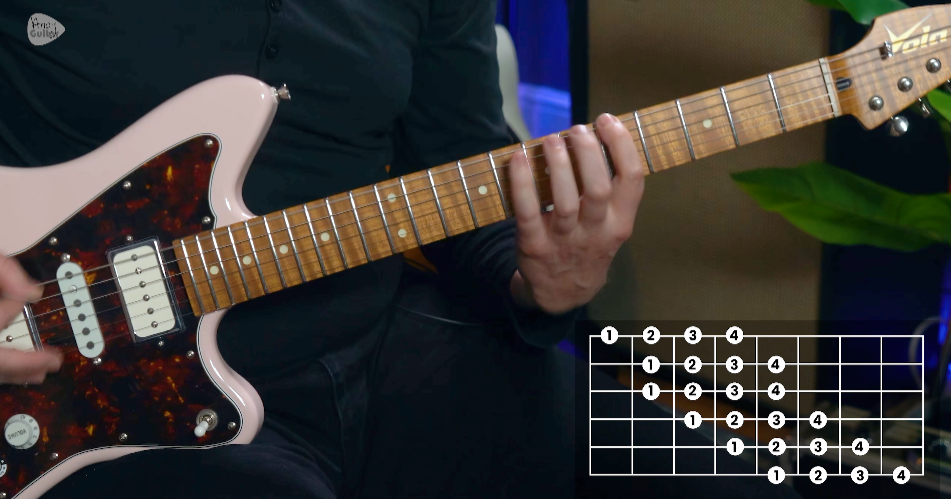
The chromatic scale is the simplest concept in music: play every note in order, including every semitone and sharp and flat, one at a time. On guitar, that means moving up one fret at a time across the full fretboard. It sounds straightforward, but the two-octave chromatic exercise in this lesson — shifting position at every string, demanding clean alternate picking, and placing serious demands on the little finger — is one of the most revealing technique tests at this level. Metallica built whole riffs out of chromatic runs. Springsteen used it in Born to Run. The Killers borrowed it for Mr Brightside's rundown. Once your ear is tuned to it, you'll hear chromatic movement everywhere. But first, you have to be able to play it cleanly.
What you will learn:
• What the chromatic scale is and how it maps onto the guitar fretboard
• The two-octave pattern, including the position shifts that make it genuinely demanding
• How to handle the tricky slide on the thinnest string
• Why this exercise is one of the best long-term progress markers at this level
• Song references that use chromatic movement, from Metallica to Springsteen
What the Chromatic Scale Is
Every semitone in order — no gaps, no skips, every note included
On a single string: move up one fret at a time
Across the fretboard: a shifting four-fret pattern covering two octaves
Not a scale you'd solo with — but the most complete finger exercise available, forcing all four fingers to work every fret combination
The Two-Octave Pattern
Start at the 12th fret, low E string — four notes per string, fingers 1, 2, 3, 4
Shift back one fret with each string change
G to B string is the exception — the guitar's tuning offset means you stay at the same frets rather than dropping one
After the B string, drop one fret again and slide with either the index or little finger to cover the reach — this is one of the key technical challenges in the exercise
The Slide on the High E String
You'll find yourself one fret short of a clean four-finger reach — slide with the little finger or index to cover the gap
The descending version is harder — extra demand on the little finger in a direction it doesn't naturally want to go
That's exactly why it's worth practising
Using It as a Progress Marker
Unlike scales or songs, there's nowhere to hide — every note either rings cleanly at a steady tempo or it doesn't
Come back to it week by week for an honest read on where your technique is
Start slow, work both directions, and measure yourself against where you began
Songs Using Chromatic Movement
Metallica — chromatic descent at full speed, all down-picks
Born to Run — Bruce Springsteen — one of the most recognisable chromatic rundowns in rock
When You Were Young — The Killers — echoes the Springsteen rundown
Chromatic approach notes and connecting phrases between scale positions appear constantly in lead playing — learning the scale cleanly is the first step to using it musically
Intermediate Electric Level 5
Recommended Songs
Enjoying this course? Want to test out your new skills? Find out my recommended song tutorials that accompany this course and get total access to the site by signing up today!