In this video
I take the chord shapes you already know and expand them into the full family of diatonic seventh chords in the key of C major. Following the scale degrees, I walk through each chord shape and how they relate to one another, keeping everything practical and easy to move around the neck.
What you will learn:
C major 7 — the full root-five shape and a root-six jazz voicing
D minor 7 — the three finger jazz shape and full version for reference
E minor 7 — moving the D minor 7 shape up to the third degree of the scale
F major 7 — sharing the same voicing as C major 7, relocated to the fourth degree
G7 — the dominant seventh shape you already know from the 2-5-1
A minor 7 — two voicings including a three finger jazz shape
B minor 7 flat 5 — constructing the half-diminished sound by flattening the fifth of a minor 7 chord
Joe Pass philosophy — keeping chord vocabulary simple and functional rather than overcomplicating things
Chords in the Key of C
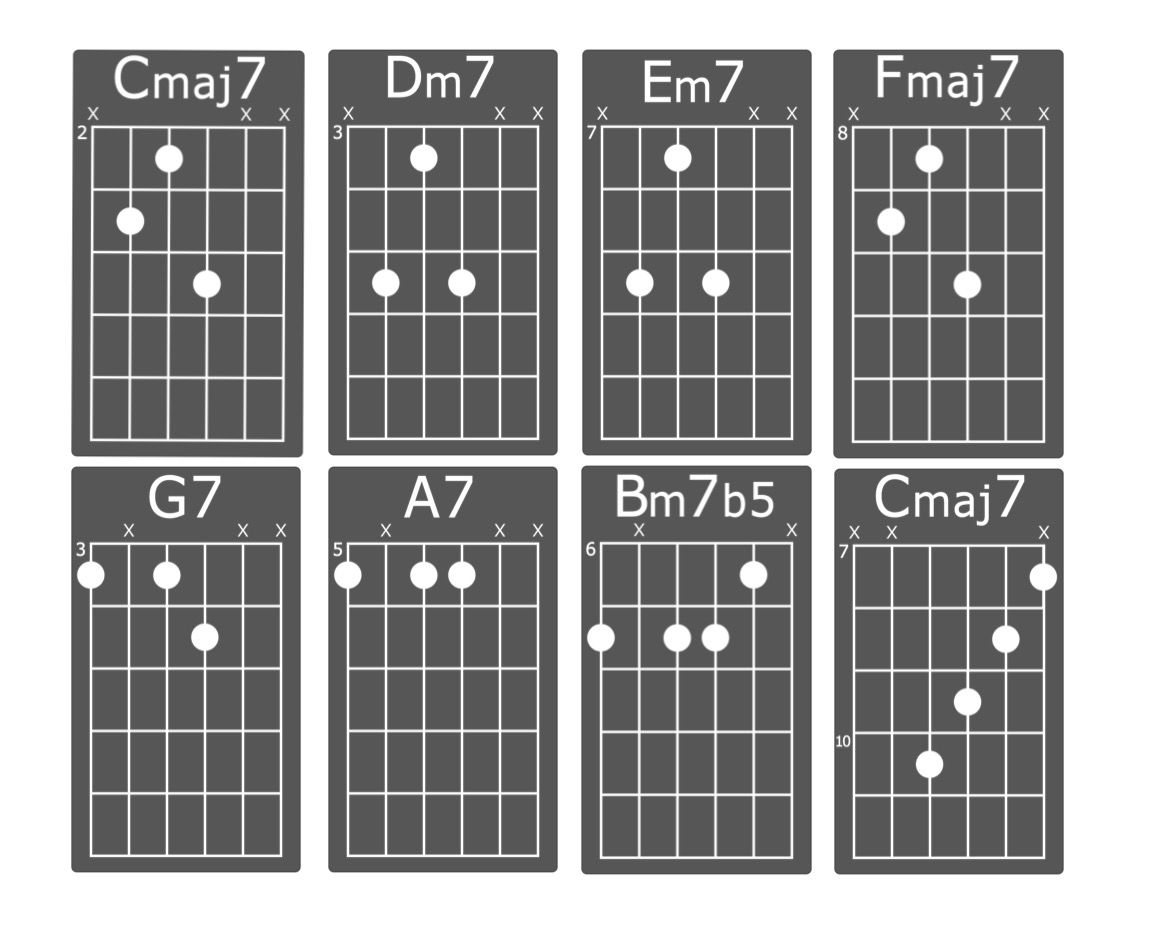
In the image above there a two different Cmaj7 chords, one shape of which we use as an arpeggio.
If you've ever wondered WHY we use arpeggios, then hopefully this C chord/arpeggio shape should highlight nicely just how closely linked Lead and Rhythm playing can be. As once we start to associate our lead playing with chord tones (notes inside the chord!), arpeggios become our number 1 tool to use.