
String Bending (whole & ½ step)
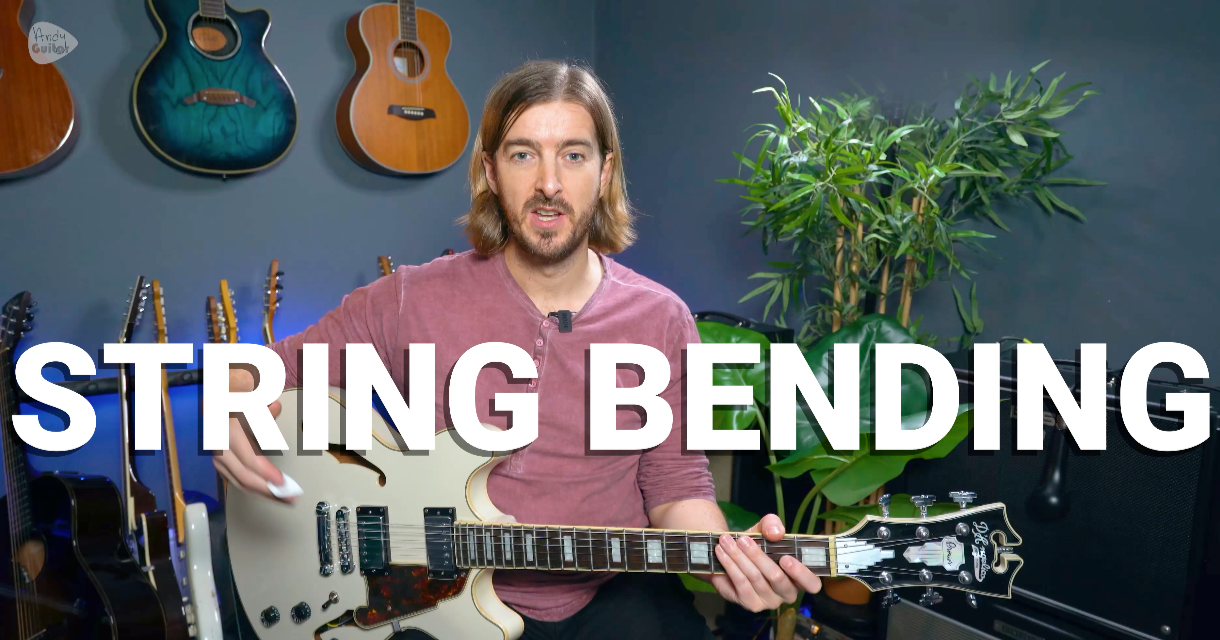
In this video
String bending is one of the most expressive techniques in lead guitar. While it was introduced in Beginner Electric Level 8, it's a skill that requires constant refinement and improvement. Even experienced players revisit bending technique regularly to keep it sharp.
What You'll Learn:
The three essential bends: whole-step, half-step, and blues curl
Proper wrist pivot technique - moving the wrist, not the fingers
The "handshake grip" approach to string bending
The "one giant finger" concept - supporting with three fingers
How to bend a whole step (two frets) accurately
How to bend a half step (one fret) accurately
What good intonation means and how to achieve it
The blues curl with the inside of the first finger
How to pull down vs push up on different strings
The "snapback" technique for returning from a blues curl
The Three Essential Bends
Every bend falls into one of three categories: the whole-step bend (two frets worth of pitch), the half-step bend (one fret), or the blues curl (a subtle bend that doesn't reach a full pitch). Knowing which bend you're aiming for is the first step to playing in tune.
Wrist Pivot, Not Finger Strength
The secret to good bending is using the wrist, not the fingers. The hand should approach the neck like a handshake, and the wrist pivots to push the string up (or pull it down). The fingers stay relatively still - they're just the connection point between the wrist and the string. When players try to bend with finger strength alone, the bends sound weak and often go out of tune.
The One Giant Finger
When bending with the third (ring) finger, the index and middle fingers should support it from behind. Paul Gilbert calls this "one giant finger" - all three fingers work together as a single unit. This support gives you the strength to push the string up a full two frets while maintaining control.
Hitting the Target
Good intonation means your bends land exactly in tune with the target note. For example, bending the 8th fret up two frets should sound identical to simply playing the 10th fret. Training your ear to recognize when you've hit the target is just as important as the physical technique.
The Blues Curl
The blues curl is played with the inside (pad side) of the first finger rather than the fingertip. It's a partial bend that doesn't quite reach the major third - staying somewhere in between the minor and major sound. The technique requires pulling the string down toward the floor on the higher strings, or pushing up on the lower strings. The curl should rise gradually then snap back quickly when it releases, like pulling an elastic band and letting go.
Direction Matters
On the higher strings (strings 1-3), pulling down keeps the string from sliding off the fretboard edge. On the lower strings (4-6), pushing up is the only option. Both directions use the same wrist pivot motion, just in opposite directions.
Intermediate Electric Level 2
Recommended Songs
Enjoying this course? Want to test out your new skills? Find out my recommended song tutorials that accompany this course and get total access to the site by signing up today!