
Major Pentatonic Shape 5 - 2 Octaves and Extensions
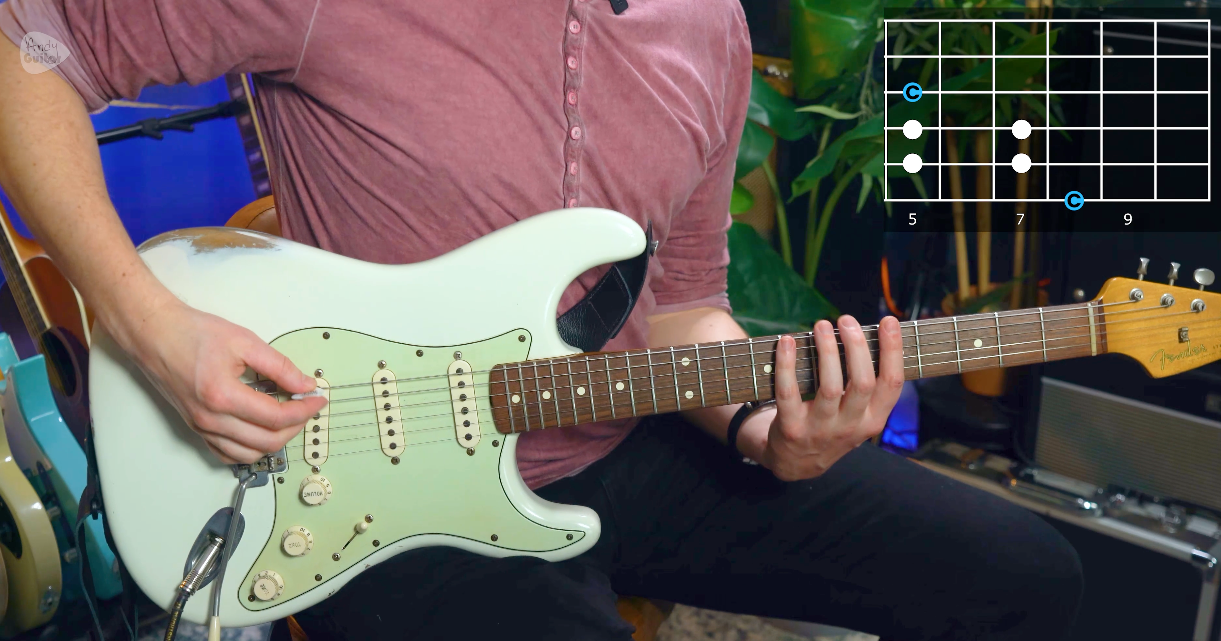
In this video
C major pentatonic is a five-note reduced major scale that uses the exact same notes as A minor pentatonic. This lesson explores that relationship while teaching you shape 5 of the major pentatonic - the most common shape for major-key soloing.
What You'll Learn:
What C major pentatonic is and how it relates to A minor pentatonic
The four essential songs that use this scale
Why you start with the little finger (making it shape 5)
How to play from C to C (one full octave)
The ascending pattern: 8, 5, 7, 5, 7, 5, 7, 5, 8, 5, 8
The descending pattern and how to practice it
Why it's called "shape 5" instead of shape 1
The goal of playing four times through without mistakes
Proper muting technique to prevent unwanted string noise
How relative major and minor are always four frets (or three steps) apart
Essential Song References
"My Girl" by The Temptations is the most obvious example of this scale in action. "No Woman No Cry," "Don't Look Back in Anger," and "Let It Be" all feature solos built on this scale. Listening to these songs shows you how the scale sounds in real musical contexts, which is far more valuable than just running exercises.
Why Shape 5?
The scale starts with the little finger on the root note C at the 8th fret of the low E string. Because the root note is on string 6 and played with the little finger, this is shape 5 of the major pentatonic. Shape 1 would have the root note played with the first or second finger on string 6. This numbering system helps you navigate the fretboard by tracking which finger plays the root note.
The Scale Pattern
From C to C covers one octave: 8-5-7-5-7-5 (pause), then continue with 7-5-8-5-8. The full two-octave pattern goes from the lowest C to the highest C available in this position. Practicing both ascending and descending helps build muscle memory in both directions.
Four Times Through
The practice goal for any new scale is to play it four times through (down and back up four times) without making a note mistake. This builds confidence and fluency. The notes should flow smoothly with no gaps, one note ringing out at a time.
Muting is Essential
With overdrive or distortion, unwanted strings ring out easily. The thumb should follow behind your fretting fingers, muting the string you just left. The other fingers can also touch adjacent strings to keep them quiet. Only one note should sound at a time - this control is what separates clean technique from sloppy playing.
The Relative Major/Minor Relationship
C major and A minor are "relative" scales - they share all the same notes. The relationship is always four frets (or three scale steps) apart. C major pentatonic uses the same notes as A minor pentatonic, G major uses the same notes as E minor, D major shares notes with B minor, and so on. What changes is which note you emphasize as the root - that determines whether it sounds major or minor.
Moving to Other Keys
Once you know the shape in C major, you can move it anywhere on the neck. E minor pentatonic at the 12th fret becomes G major pentatonic when you start on the little finger. This portability is one of the most powerful aspects of understanding scale shapes.
Intermediate Electric Level 2
Recommended Songs
Enjoying this course? Want to test out your new skills? Find out my recommended song tutorials that accompany this course and get total access to the site by signing up today!