
In this video
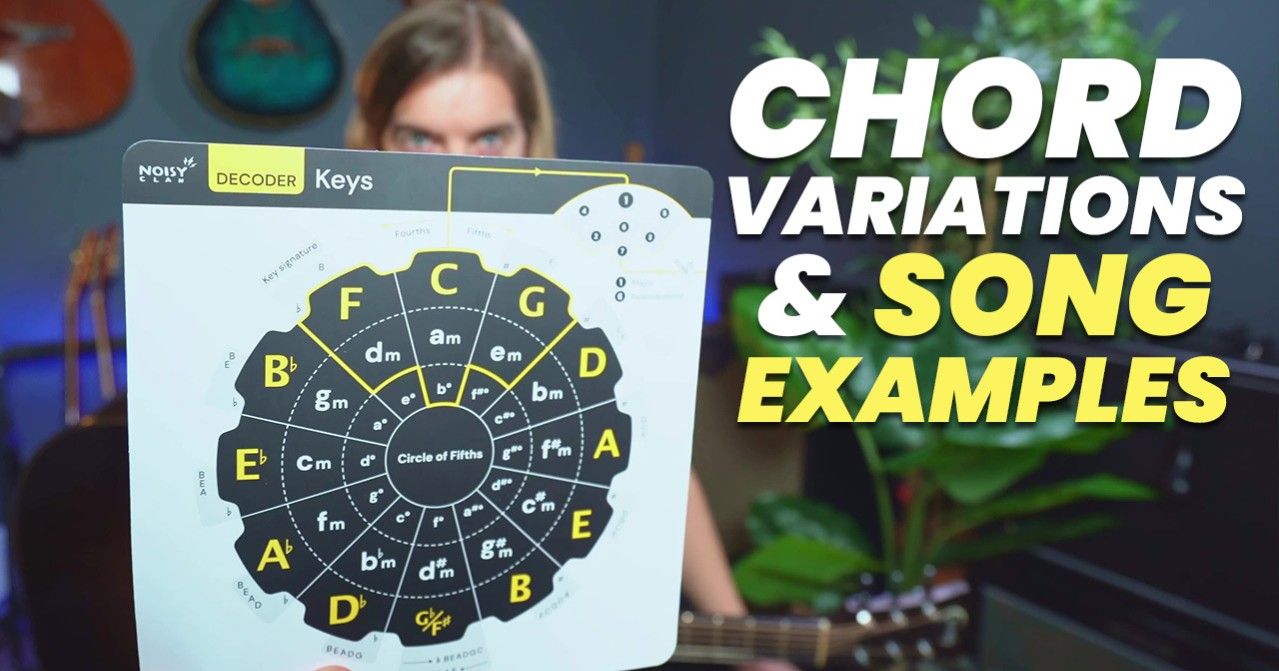
This live stream was about acoustic chord embellishments, working through chords systematically using the circle of fifths - starting with C major, then G, then D. I demonstrated how to transform basic open chords into more sophisticated sounds using extensions, scale patterns, and different voicings across the neck.
For C major, I covered the crucial difference between C major seven (classy, pop sound like "Don't Get Me Wrong" by The Pretenders) and C dominant seven (bluesy sound). Sus four chords create entire songs like "Laid" by James, while Cadd9 is essential for countless hit songs including Oasis's "Roll With It." I showed the C9 shape (without the "add") that John Mayer uses in "Every Day I Have the Blues" - root, third, dominant seventh, ninth with no fifth.
I demonstrated C major scale patterns while holding down the root note, explaining how this works in songs like "Falling Slowly." The C/G chord (C major with G in the bass) is what Scotty Moore played in "Hound Dog" to give it more punch. I covered all the essential chord types within an octave: major, sus2, sus4, major seventh, dominant seventh, minor seventh, and diminished.
For D major, I showed embellishments from "Wonderwall," "Summer of '69," Katie Tunstall's "Black Horse and the Cherry Tree," and "Crazy Little Thing Called Love." The D/F# chord appears in "Highway to Hell," while the D major scale creates riffs in Led Zeppelin's "Over the Hills and Far Away" and Stone Roses' "Waterfall."
The key breakthrough here is Mixolydian mode - the major scale with a flat seventh. This is what creates the D-C-G progression in "Norwegian Wood," and it's absolutely essential for The Cult's sound. "She Sells Sanctuary," "Fire Woman," and "Love Removal Machine" all use this D-C-G Mixolydian progression with that crucial C natural instead of C#.
We finished up with drop D tuning, demonstrating how keeping that low D pedal tone while playing the major scale creates the sound of late 90s/2000s rock and "Kashmir" by Led Zeppelin. Drop D makes the chord ambiguous between major and minor because of string bends.

Enjoying this video?
Try this course - Chord Explorer
Master chord embellishments, key relationships and essential progressions across the five main guitar keys, from beginner open chords to intermediate lead and blues.