
In this video
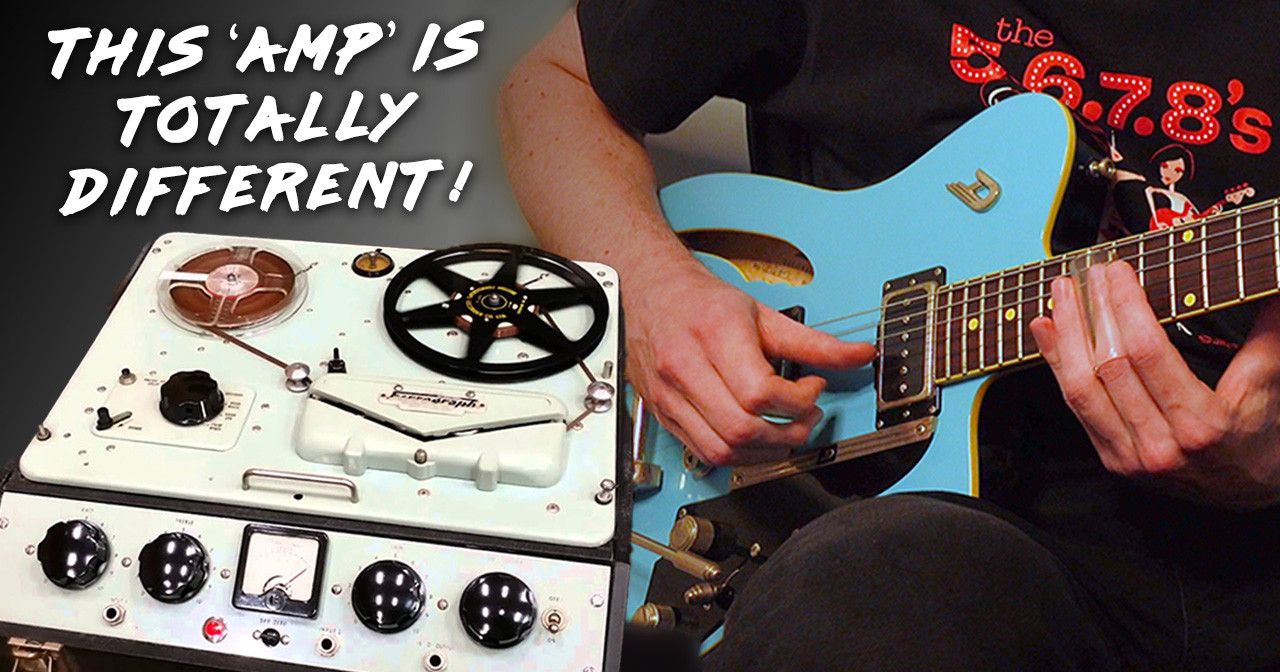
In this one I'm introducing a brand new piece of kit I've picked up — a genuine reel-to-reel recorder from the mid-1950s that doubles up as a beautifully warm tube amp. We start by jamming along to Life by the Drop, using it as a chance to talk about picking speed: why your up strums matter just as much as your downs, how hammer-ons can boost your speed without you even realising it, and the trick of keeping your pick attack light so the hammer-on itself does the work.
From there we go full vintage and dig into some classic 50s guitar lines through the old ferrograph amp. I play through Johnny B. Goode by Chuck Berry, showing off just how clean this amp really is (clean enough to play Wonderwall on, believe it or not), then bring in a cheap tremolo pedal for some proper rockabilly wobble. We talk about how the electric guitar itself was still being invented around this era, and how amps like this one show that evolution in real time.
We also break down La Bamba, focusing on the strumming pattern and how the upstrokes line up with the chord changes, plus a look at the C to F to G progression and how adding a dominant seventh resolves things beautifully. I cover double stops, a Chuck Berry signature technique, and why Johnny B. Goode in B flat is such a great one to learn if you're stuck always playing in A.
Then we move into the 60s: Satisfaction by the Rolling Stones and the fuzz tone that defined it, You Really Got Me by the Kinks and that broken-speaker sound, People Are Strange by the Doors, and a few other riffs that all live around the same part of the neck. We close out with Revolution by the Beatles and a nod to I Can See for Miles by the Who, tracing the line from Buddy Holly's earliest distorted tones right through to where rock and roll guitar really took off.