Basic Country Rhythm Guitar with G, C & D
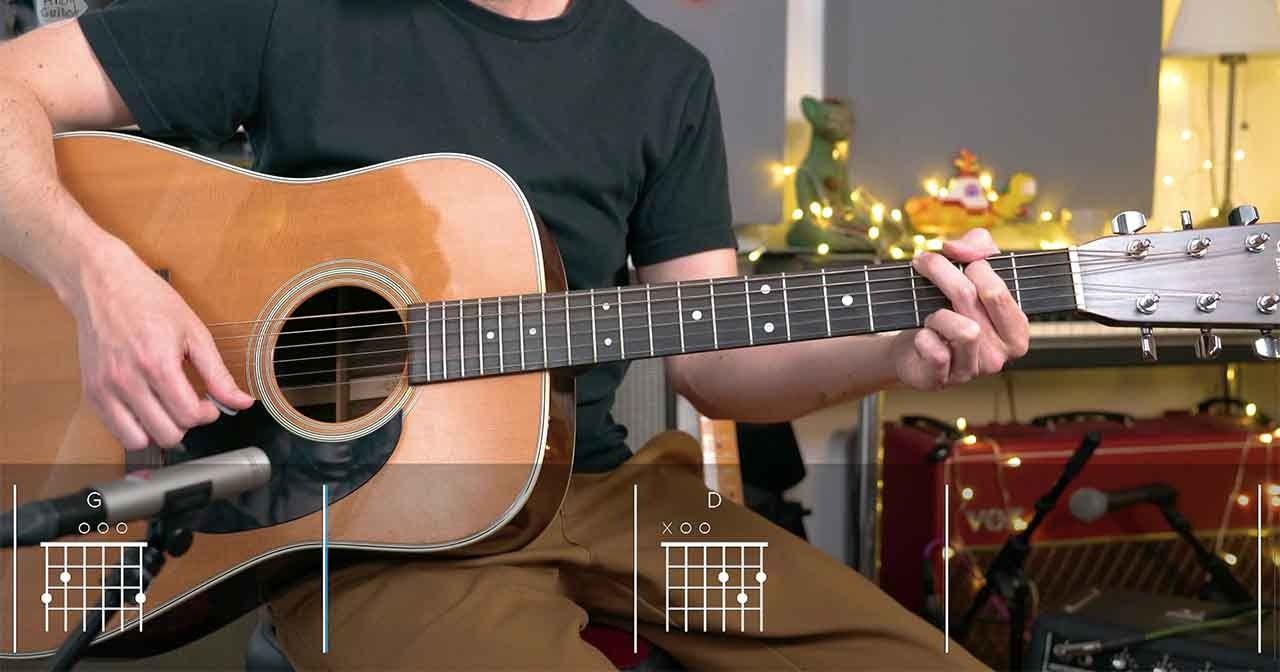
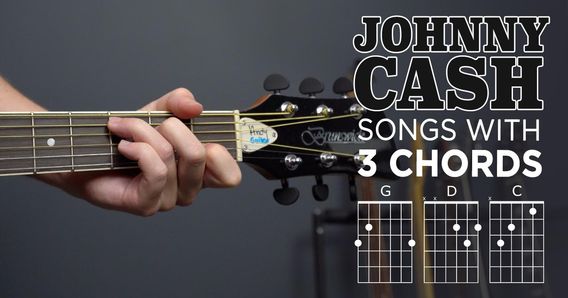
Lesson one, let's get started right away, and the way this course is structured, we're dealing with the same chord progression, the same backing track for the first half of this course, the 1st 6 or so videos. So I think a sensible place to start would be just to look at this chord progression, and we're in the key of G. We're dealing with just 3 chords, a lot of country songs are actually very simple in terms of the harmony, so we've got G. We've got C. And then We've got D, so key of G, which means G is our home chord, that's kind of the musical centre of gravity of the chord progression, if you like, the tonal centre, and then we've got two other chords. And a very common thing to do is to number the chords in a chord progression, so the, the key centre, the G chord is the one chord, and then we've got the 4 chord and the 5 chord, and that just refers to their position in the key. So if you count up from G upper G scale or a G major scale, G, A, B, C, C is gonna be our 4 chord, and then G, A, B, C, D, D. Is gonna be our 5 chord, so you can talk about a 145 chord progression and uh uh sometimes this is referred to as the Nashville numbers system in in country circles, and it's just a really good way to understand chord progressions, it's great for communicating with other musicians, it's also great if you need to change the key of a chord progression for any reason. So as far as the progression itself goes, we're starting on the one chord, starting on G. And we've got 2 bars on the G, so. 4 counts in each bar. Then we're changing to the 4 chord, which is C. 2 more bars. And back to G for 2 more bars. And then we've got D, the 5 chord, for 2 bars. That's the first half of the progression. Then we go round again, back to G. Two bars C. And then we've got G. Just for one bar, D for one bar. And then back home to G, and you can have a quick C. And back to G again, so just at the very end, the last bar, just 2 beats. On each of those chords, or just the C chord rather is on, on two beats, so 1234, back to G for 4 beats. So that's our call progression. Lots of country songs will have been written using this chord progression or something very similar, that could be a verse or a chorus to a typical country track. So let me move on to some rhythm guitar approaches, and I would suggest just starting very simply if you've not been playing for very long, if you're just a beginner, there's nothing at all wrong with just strumming through that chord progression with down strokes, 4 strums per bar in a very simple kind of a way, much as I just did, so. And I just threw in a D7 there at the end, that's a, a variation. Instead of D, you could always just throw in a, a D7 for a bit of extra colour on the 5 chord, that works particularly well. And they're just focusing on just solid strumming, so just strumming all of the strings pretty evenly there, nice smooth chord changes, and it's gonna sound pretty good, there's nothing wrong with taking a very simple approach like that. But once you can do that, I would suggest spicing things up a little bit and adding a little bit more rhythm, I think is a good place to start. So I was just playing with all downstrokes there. What if we throw in some upstrokes as well, so a good starting point might be to play something like this. It's a very useful country guitar strumming pattern, so that was just down, down, up, down, down, up, down, down, up, down, down, up. And you want to focus on just staying nice and relaxed with that, so notice how my strumming hand is just moving in a very relaxed way. The strumming motion for me, it's coming, it's a little bit from the elbow, it's a little bit from the wrist as well. You just want to stay nice and loose and steady with all of those strums, and you've got a choice if you want to add a little bit of a swing to it. So on the backing track, there is a bit of a swing implied in the drum feel, so rather than just playing. That kind of square, straight feel you could play like this. Uh, it's best if you feel this swing, I think, rather than analysing it too much in theoretical terms, but basically what we're doing is just delaying that upstrum, that upstrum slightly, which is what gives you that swing feel. And then you can take that through the chord progression as well. And noticed that I was probably just throwing in some little variations as well, so when you're playing through a song, you can have a fixed strumming pattern or you can vary it a little bit. So I think occasionally I was just strumming. Down, down, up, down, up, down, up, so throwing a few more up strums in there, and there are lots of variations you can find on these basic strumming patterns. The key thing with strumming and with most rhythm guitar styles generally is just to keep your strumming hand moving. Notice how my strumming hand is always just moving up and down. Like a pendulum, then you've always got the groove happening in your strumming hand, and you can choose when you hit the strings and the kind of emphasis you give on each of the strums as well. I think another really effective thing is to give some of these strums a bit more emphasis and a little bit of an accent, so a common thing to do would be to accent beats to. And 4, much as a drummer would play the snare drum on beats 2 and 4, so you'd be playing 1234123. And hear how that comes to life much more than if I were just playing all of the strums with exactly the same level of intensity. Sounds a little bit flat like that. So try and inject a little bit of dynamic, throw some accents in there, and it will start to sound really good. Another really common country rhythm guitar approach sounds something like this. So notice there how I'm alternating between playing single bass notes and then strumming the upper part of the chord, so some people will refer to this as boom chick or boom chucka, and it's that kind of sound, you've got the bass note, the boom, and then the, the chick playing on the higher strings. So, uh, on a uh a G chord, that would work like this, you're playing the lowest note in the chord, which is generally gonna be the root note of the chord, so this is a G note. Here just playing that on its own and then. Gonna strum the higher part of the chord, and you don't need to be super precise with this, I'm just aiming for the top 3, maybe 4 strings. So you've got 1234. You know, instantly that sounds like a country tune, I think when you use this rhythm pattern. And then you can take it through the other chords in the progression when you go to the C chord. You're playing the C note as the lowest note in the chord, so this is the 5th string, so a root note. And then the higher part of that chord. Moving to the C chord, you're gonna do a similar kind of thing, you're just gonna play. So here we're playing the 5th string, this is the root note of the C chord, it's the, the lowest note in this chord, so. And similarly with the D chord, our root note here is actually. This note here, the 4th string is our D note, so that's gonna be the bass note. And then play the higher notes in that chord. And you can take that very simple pattern through the chord progression, you can always make that a bit more interesting by throwing in some ups drums as well, so a good one is this. So I'm playing the bass note, and then I'm playing a down and an up on the higher strings. Again, I've got that swing in there. See, Claude. And D So that's a very effective pattern. A further variation would be to alternate the bass notes, so on our G chord we could go. So I'm playing the 6th string, and then I'm strumming. And then I'm playing the 4th string. And strumming, so there's a bit more variation to the sound there. On the C chord, I can do 5th string. And then 4th string. Or alternatively, you could go. That, that sounds very cool as well, so the 5th string, and I'm moving my 3rd finger over to play this lower bass note. So, no real rules about which bass notes you play. Usually you start with the route and then you can either go higher or you can go down lower on the D chord, you could go. So my bass note is moving from the 4th string down to the 5th string. And of course you can throw some up strums in there as well if you want to have a bit more movement in the pattern. And how about introducing some hammer-ons, this is something I like to do a lot, and again, it just adds a little bit more movement to these patterns, so on the G chord, we could. Introduce a hammer on here on the 5th string, so if you're fingering your G chord like this, just lifting up my 1st finger. And then hammering down at the 2nd fret. So I'm doing the alternating bass here from strings 6 to 5, so 6 strum, and then 5. And I've got the hammer on in there. And on the C chord And there I've got the hammer on, on the 4th string. And on the decor there, it's quite nice to. To hammer on with the open 3rd string, and then bring the 1st finger down at the 2nd fret. So quite a few rhythm guitar options there, they're all gonna sound good, I think, and which one you choose really depends on the context. So if you're playing a song, how busy do you want it to be, what kind of feel do you want, so it's important to work on all of these patterns and. And you can always mix and match some of these approaches as well. You might use one of these approaches or patterns for the verse, and then on the chorus you might move on to something else. So what I'm gonna do now is put the backing track on and just play along through the entire chord progression and try and get a few of these rhythm guitar approaches in there. And then it's gonna be over to you. I suggest spending a little bit of time with each of these patterns, making sure everything is. Sounding nice and steady and in time and then when you're ready, you can put the backing track on and have some fun playing along with the bass and drums.
In this video
1 Country Track 1 In G Major - No Acoustic
Welcome to the first lesson in this Country Guitar Bootcamp! We are diving into the core elements that define the sound of country music with rhythm guitar; focusing on three essential chords: G, C, and D. These chords are the backbone of countless country songs, and understanding how to play and then embellish them in many ways is key to developing your country guitar skills.
Chord Progression
We’ll be working with the G, C, and D chords, which correspond to the 1, 4, and 5 chords in the Nashville Number System. Many country songs are 3 chord songs and their harmony tends to be simple but that makes the sound resonate with so many of us!
This progression is typical in country music, so once you get comfortable with it, you'll start to recognise the sound in many of your favourite songs.
Rhythm and Strumming Patterns
We can start with simple downstrokes on each beat to lock in the rhythm. However, to really capture that authentic country feel, we’ll introduce some more interesting strumming pattern elements that add more flavour:

Boom-Chika Technique
This technique captures the iconic Country sound which can be applied both on acoustic and electric for rhythm or lead players!
- Boom-Chika, Boom-Chika - Repeat and try with alternating bass notes too (e.g., on an open C chord, alternate between the root C and G bass note, 3rd fret string 6)

This technique will give your playing that unmistakable country sound and help you get comfortable with alternating bass notes, which adds great variety to your playing.
Embellishments
Finally, to add some spice to your playing, we can explore chord embellishments. Commonly, this is lifting off a finger to an open string and hammering it back on (2nd fret on A to open A for the G major chord!) to create a dynamic and more interesting sound while you play. It’s all about finding the right balance though — sometimes, less is more!

By the end of this lesson, you'll have a solid chord foundation under your fingers which is very 'Country' and lays a bed for lead parts and solos for the next 5 lessons in this course!
Now you can confidently play through the chord progression, integrate strumming patterns, and add techniques that are essential to the Country rhythm guitar sound, check out lesson 2!
Country Guitar Bootcamp with Adrian
Recommended Songs
Enjoying this course? Want to test out your new skills? Find out my recommended song tutorials that accompany this course and get total access to the site by signing up today!