
Bonus Video 1 - Beatles Style Parallel 10th Intervals

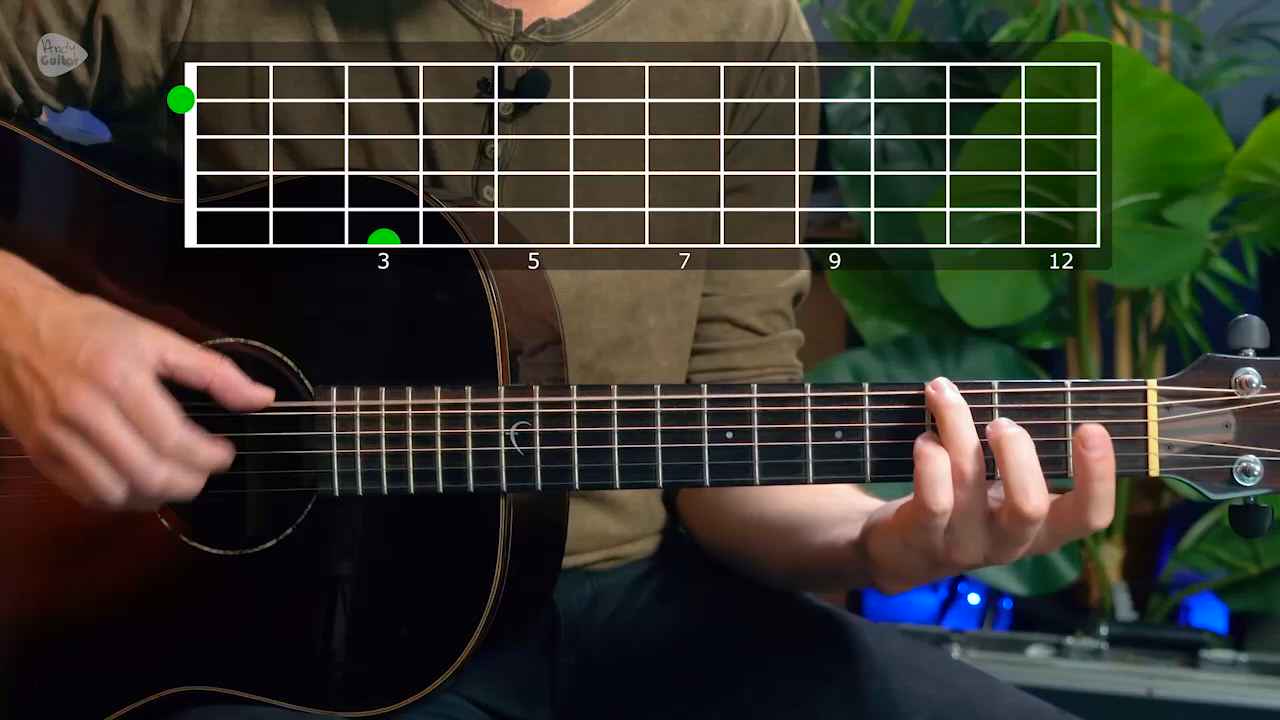
In this video we're gonna take a look at the singer-songwriter technique that has been used in classic songs such as Blackbird by The Beatles, Fast Car by Tracy Chapman, and something that's been used by countless singer-songwriters since, such as James Bay in Hold Back the River, and even in songs such as Sting's Shape of My Heart. So I'm sure you're aware of the song Blackbird by The Beatles. Starting with this. Kind of progression. But you may also have heard that in other places as well. And what I want to encourage is for you guys to play around with these fretboard locations, kind of treat them like a chord progression and see what riffs you can come up with using these same techniques, inspired by these classic songs, but also being aware that all these are doing is implying chords with something called parallel 10th. So what we're actually playing here is the root note of a G, and everything we'll look at here is in the key of G. And then the major third above the octave of G. And if the octave is the eighth note in a major scale, then the major third is the 10th, 89, 10. And we play the root note or the 1 with the 10th interval of a major scale. And we walk up that G major scale in this case. Keeping the notes parallel to each other, which is how we get the parallel 10th name, and that's how these classic songs. Are written, and this then implies the chords in the key of G major, which would be G. A minor. B minor, those are two notes out of a B minor. C Major D major. E minor F diminished And G So rather than playing The kind of cowboy chords version of this, or even any kind of. Other versions of these chords that you may be aware of, especially with that G note acting as a pedal note. This is something to play around with. And to inspire you guys, I'm gonna break this down further, but just to inspire you guys, I kind of came up with my own, which I'd like to share with you now, and I'd like to encourage you to have a go at this yourself. If this is light years ahead of where you feel with your playing at the moment, then Perfect by Ed Sheeran does something very similar with that kind of um open string. Ringing out and it's much easier than all this, but Love Yourself, um, the Ed Sheeran written song, even though it's by Justin Bieber does a very similar thing, and you'll hear similar kind of ideas in songs such as hey there Delilah, er, Tears in Heaven uses a lot of this. Techniques, Skinny Love, Shape of My Heart, and even songs such as Falling Slowly, I, I love Falling Slowly, uh, the song by Glenn Hansard um from the movie Once. That's this sort of singer-songwriter thing that I want you to be inspired by. Um, but here's the one that I came up with, just a simple little riff using these techniques, but we're starting off in this case on the E minor and the one I came up with is. So that's starting off on E minor, going down to D, C, G over B, using a slightly different technique here of this little hammer on. Finishing on a D major chord, that's my little composition of what's possible with this, but have a play with this, experiment with it, and anytime you know a song uses just the chords G, A minor, C, and D, you could start to imply, Those chords With other techniques, primarily these singer-songwriter parallel 10ths. In an earlier video in my intermediate course as well, we looked at how to play the major scale on one string. Which is a crucial lesson to look at before really digging into this stuff because we're essentially doing the same thing. So for those of you that want to experiment with this, let's break this down further. What we want to do first of all, if this is totally new to you, is play the G major scale. Starting on the G note. And then going along just the B string, so this is from fret 30. 2 Thret 3, threat 5, fret 7, threat 9, and then 10. And get very comfortable walking up and down those notes, it uses all the dots. And a couple of the spaces, but if you memorise that this mostly uses the dots. And we can even number those just 12345678. And think about this from an intervals point of view. But then we want to be able to play that as well from the open G, 12, and then go to the open B string, 3. 1st fret, stay on the dots after that, 5678, and we even need 9, 10. All these are tabbed out for you in the description below. Because the only ones we actually play are from the 3, so 123, which is actually 89, 10, if we start off from 123456789, 10. And just play that G major scale. And keep going up, and then we play them together with a thumb and a middle finger. We can play the middle finger and thumb together itself, and then pluck. The G string, the 3rd string as a pedal note, or even strum it with a down, little strum with the 1st finger, with the nail of the 1st finger. That's the DC. You can imply a C minor, which is what McCartney does in Blackbird. Or we can do a pluck. And then my let her off again. Something to play around with, as I say, I just encourage you to know the mechanics under the songs that you're learning so that you can then start to improvise and come up with your own ideas and create music rather than just recreating music. Give that a go, let me know how you get on with it.
In this video
Check out this video from my Intermediate Acoustic Course for free! In it, we look at a brilliant approach to playing guitar that I'm calling a Singer-songwriter trick as it's just used in so many classic songs!
A great place to start to inspire us is to see what inspired the best...
Parallel 10ths
Blackbird and it's Origins
Inspired by Johann Sebastian Bach's Bourrée in E minor, a well-known lute piece, often played on the classical guitar. As teenagers, he and George Harrison tried to learn Bourrée as a "show off" piece. The Bourrée is distinguished by melody and bass notes played simultaneously on the upper and lower strings. McCartney said that he adapted a segment of the Bourrée (reharmonised into the original's relative major key of G) as the opening of "Blackbird", and carried the musical idea throughout the song. The first three notes of the song, which then transitioned into the opening guitar riff, were inspired from Bach.
Other great song examples include
Fast Car (Tracey Chapman)
Hold Back The River (James Bay)
Love Yourself (Ed Sheeran written)
Perfect - Ed Sheeran - in (G) very simple version
Beatles song example - Blackbird tutorial
Other Keys to Explore
Hey there Delilah - Plain White T's (D) lesson link
Tears in Heaven - Clapton (A) lesson link
Falling Slowly by Glen Hansard (C) lesson link
10 Day Beatles Guitar
Recommended Songs
Enjoying this course? Want to test out your new skills? Find out my recommended song tutorials that accompany this course and get total access to the site by signing up today!
