
Bonus Video 2 - The Gateway Fingerstyle Pattern, Inside-out outside-in

OK, so in a previous video we've looked at this inside out picking pattern or finger picking pattern. Uh, but we looked at it in the key of C major and we looked at this. And we said this was one of the most crucial fingerpicking patterns to learn to bring your finger style forward, essentially a great gateway into Travis picking and this melodic finger style. Uh, but we've only really looked at it in the key of C, and I wanted to address the key of G here. Because a lot of things that we'll look at uh around this level are in the key of G major, which means we use the chords primarily G, C, and D, as I'm sure you're aware. But I want to encourage that we look at this way of playing a G major. The fingerstyle G or the George Harrison G, cos he used to use it a lot. And uh we can then move to a C major very easily and it doesn't hamper us with the D major. It is a slightly trickier change between D major back to G though, but the reason we can do this is so that we can play notes from the G major scale. And we can treat those notes as a melody, but still have fingers left to play the chords underneath. Like this, this is something that I call uh an introduction to rudiments of finger style when we look at this, we'll cover that more in depth a little later. But that is something I want to introduce at this level. So we can have the G major, but then just for example, play the root note of a G and the open third string. First finger can play that 2nd note, that A at the 2nd fret of string 3. Open 3rd string First fret, that's the C note. Little finger can play the D. Open E, F. And G, and we can keep both the 3rd and um middle finger there. And you can even strum every string, but if you strum it, try and finish your strum. And that is how we're able to play and also sometimes just imply a melody while keeping the chords going, um, as well. We can do that same thing, stick to the G major scale, but we can do that same thing with the C chords. Still playing the notes from the G major scale. And of course the simplest ones. And on the B string here. Or with finger style we can start to miss out that B string because we need, we can't have this finger here and here, so the C chord, you know, we have to make a decision like that. But with finger style. If we were doing something like. We can make a decision to miss that B string, for example, uh, we'll cover that in a second, but we can also do that same thing on a, on a D. With something like this, so there's our D chord, but played with fingers 23 and 4. A D7, but that's just plain a note of the G major scale again. And then back to G. And the other thing we wanna make sure we can do is just play that standard inside out pattern. So thumb on route 6, and then going to the open 4th string. So G to D or the route to 5. First finger in between that to middle finger. So first finger middle. Inside out pattern. When we change to the C chord, the root note. We could have a walking. Pattern there, and then when we go to the D, go string 5 to 4. Or 6 to 4 with the thumb. And then we can add a melody So little finger on the D, C, and E. To see me. We can keep the same thing going on a D. Something to play around with, and it's all born out of two things, inside out pattern. In the key of G for G, C, and D. With the different root note options. And something that I term rudiments of finger style, which is playing those same chords like G, uh, D and C, but with the G major scale. And the root notes or the lower notes. Even going to the highest notes. For all The common chords In the common keys like G major, there'll be more help below to pick apart the little parts that we've looked at and so you can come back to this video and kind of go through this step by step incrementally. Something great to play about with, especially for you fingerstyle players and to be able to do this next jam track.
In this video
This video is from my Intermediate Acoustic Course. In it, we check out the Inside Out Pattern, in the Key of G.
Key points:
G major chord with different fingering and pattern including the 6th string
Free fingers to add melody - G major scale
Emphasis on melodic fingerstyle
Finger picking pattern help below!
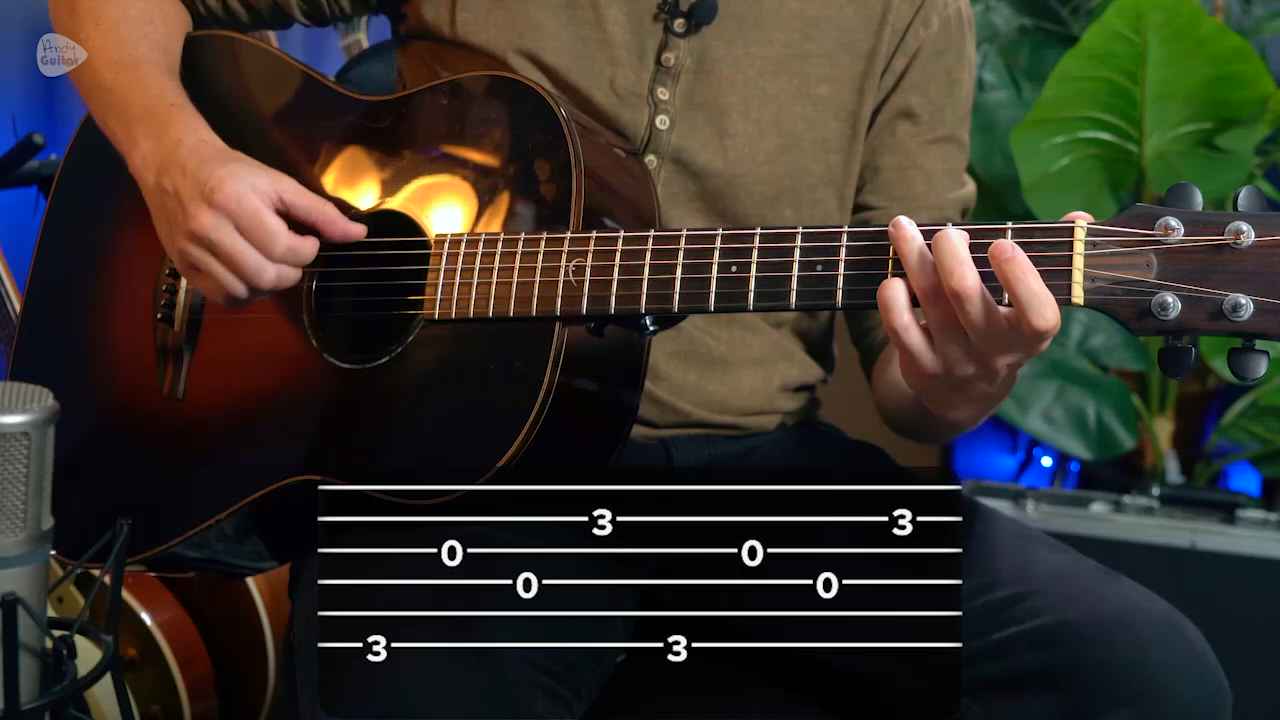
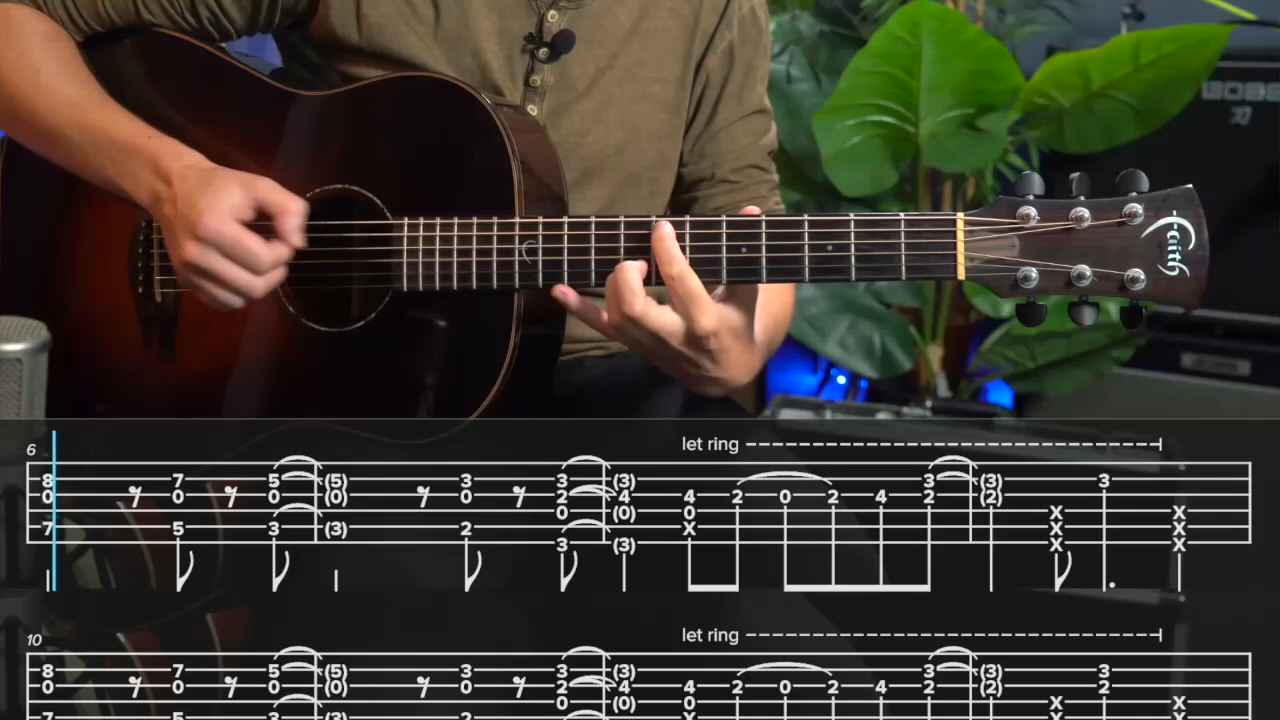
Here's the a full jam track combining the techniques from bonus lessons 1 and 2, in the singer-songwriter style popularised by The Beatles in the 60s.
Get more of this in my full Intermediate Acoustic course, Level 5 for example features this jam track and lessons.
Jamtrack for bonus lessons 1 and 2
10 Day Beatles Guitar
Recommended Songs
Enjoying this course? Want to test out your new skills? Find out my recommended song tutorials that accompany this course and get total access to the site by signing up today!
