
Chris Woods on Percussive Acoustic Guitar, Heavy Music and Why People Quit
Cos the the last time we did this was, was it actually the first time that we met when I was doing this music education podcast, Jesus. And that was like sort of pandemic times, wasn't it? Um. Yes, I, maybe 2021, which was all still, it's ridiculous that it's, we always think 0 2020 was uh a thing wasn't it? No it was, it was 2021 that was brutal cos we were like still? Yeah, yeah, still. And uh so yeah the the um that was the first time we uh chatted and that was, that was to be honest when I first became aware of you, I think I'd seen you before on the uh onlines but um you're one of those people that does a lot of videos for boss or different people, right, so I, I, I wasn't aware of like your channel or what you did. So knowing that you were so heavily involved in the education side as well as. Um, you know, the books that you've made, for example, uh, as well as being a fantastic player and being a product demoer, was, uh, this is an excellent start to a podcast. Genuinely true though, um, I'm in mate, I'm in a good position where um I don't have to do a lot of what I don't want to do unless it comes down to, you know, admin and stuff. I still do all my own admin as, as I think everyone should, but um when it comes to, you know, we, we spoke briefly about the festival interviews I've been doing and um, you know, a more variety of, of stuff rather than just me talking to a camera, claiming I know it all. Um, I, that does make it more enjoyable, so I only go on this sort of thing when, uh, when I'm enjoying it, but it's nice to be on the other side for a while. I, I'm scared I'm gonna go into interviewer mode myself, so I'm gonna let you talk. No, that's fine, mate, that's fine. Do it, you'll, you'll do a significantly better job. Um, yeah, it's, it's, it's cool though, I think you've got a really good way of, uh, chatting to people and the people that you're talking to. I don't know, I was about to say they're all quite young bands, but I don't know if that just reveals that I'm really old and out of touch, but quite a lot of the people you talk to at the moment, I'm like, oh, that's cool. I didn't know who they were. There might be newer bands. But no, you're not out of touch. I think it's just with the reality of what it looks like, um, a lot of the newer bands I'm talking to are at least have been a band for 5 years, if not 10 or 15. Um, but they've maybe just been, there's a big, been a big resurgence of heavy music in general since the, uh, pandemic. I think a lot because of TikTok, but um, I mean, if you look at, I mean Slipknot have just announced, um, uh, Wembley Stadium, uh, System of a Down have just played Tottenham Arena, Tottenham Stadium, sorry, Tottenham Hotspurs, like huge but these people were playing, you know, an arena at best, not, not maybe multiple nights in a stadium. Is that because they're bands for like, you know, I liked Slipknot, well System I particularly liked, but is that because we're now the generation who. Have a mortgage and some disposable well, some of us have some disposable income, not after you've brought there's that, but, there's that and they've got their kids or nieces and nephews onto it, from playing it in the car and then TikTok's boosted it because it appeals to. You know, 40, 50 year olds and their teenagers, um, it does get, cos it's exciting music and it is the OG and I think there's maybe a lot of people that are, um, a lot of young people that are a bit suspicious of new music now because they think it's all AI made, so it's really cool. And it's introduced me to one to get us onto acoustic guitar is uh the Scratch because they play metal on acoustic guitars. Oh wow. So purely acoustic guitar of, of the body and it is, you know, it has an acoustic pickup in it, but it's also got a humbucker in it. And these people are like shredding and going a bit. It's very Irish, um they're, they're Irish guys, but it's very Irish as in sort of Irish folk kind of. They, they, yeah, it has a lot of that Celtic um scales and, and influence in it and then goes fully slipknot, um, those, those guys are fab. Yeah, cool, I'm just looking them up. Oh right, yeah, and steel, steel string acoustics. And they have the technology sorted where there's a trick to it as well which your acoustic followers might really like cos I wanna get this set up where the um the output, and this is the trick to any, uh, this is what I learnt from John Garm and all all these guys who are able to get wonderful variety of sounds from their acoustics, multiple outputs. And have those outputs on, for example, a volume pedal. So you can be playing an acoustic chord, and it sounds fully acoustic and you can have whatever effects on it that you want, but then you can bring in the humbucker that goes straight to, say, a martial amp on a volume pedal and you get this wonderful swell, which with Irish um Irish music, you know, as a, as an influence to that as well. Really magic. Listen to the scratch. That's super cool. I really, I haven't, have you, have you released an interview with them already then, have you, do you know if I just missed it? Yes, I interviewed them, uh, this summer at my favourite festival in the world, 2000 Trees. 2000 Trees, ah, I've heard of that in the Cotswolds. Why, why is it your favourite? What's the? Uh, it's the right size and run by the right, it's about 15,000 capacity. And it's run by people who. I just, there's no one more in depth knowing of this scene or what a festival should involve, and therefore it's just attracted the right bands and uh the right crowd, very family friendly, um they have a lot of stuff for, for, for children, there's a lot of um older locals like turn up just to have a nose of what's happening and and get involved, so very welcoming, very accepting. And you say scene, is it a type of sort of what well it's a. It is, it's all alternative rock you would say, but that encapsulates a lot of acoustic music. There's a, there's a stand-up tent, uh, there's stand up that clashes with the headliners, for example, because if you're not into that, there's always something for you. It's a wonderful weekend. Frank Skinner goes to it every year. And uh my, my highlight of the year is probably watching England win stood behind Frank Skinner who was sat in front of me. Oh really? Yeah, he was there mate, it's mad. Oh, that's some kind of strange, I don't know what that is. Is that a meme? It was surreal because I know, I know egg. I go cause it, cause it, cause it's not, it doesn't always clash with the football, it only clashes with the football every 2 or normally every 4 years because of World Cup clashes more with the World Cup, so, um, yeah, really bizarre, but, um, but a wonderful thing. I, I love having seen this especially with um. The slappy tappy music that uh that's using your phrase by the way, doing that, that has so much more impact when you see it live, I think um that's why it's taken off a bit on, on, on YouTube, it's a very visual thing, but it does, it's a shame it doesn't always pop more on just recording or you know, even on Spotify playlists because um it's such a visual thing. Um, I suppose it's all visually exciting isn't it? But that, but it sounds great too. But it is this is really interesting you talking about. The acoustic thing naturally leading into more band stuff like indie and rock and cos there is that whole sort of element of acoustic that is um not just we're an acoustic band or I'm an acoustic artist, it's the, you know, I don't know, MTV Unplugged even. You know it's that sort of this whole realm of uh even more electric based bands doing something acoustic that it becomes something really special on its own, um, like I don't know, Nirvana, I, I'm, I really, really love Nirvana. Yeah, um, but actually probably MTV Unplugged is my favourite Nirvana album which is probably sacrilegious to some people. As it is for most people, in fact, I've seen that very guitar. I've stood a couple of, couple of feet from it. It was behind glass. But uh yeah, and his actual pick that apparently he used, he used really thin uh Dunlop picks, just really really standard ones, but they were, they were that that had like a volume on the like elec an electrical element to it, didn't it? Did that have a bit Beatlesy, yeah, a bit like the John Lennon, I forget, is it the epiphone that had the like a big volume knob on it, yeah, he's had a big um obvious pick up on it. Don't particularly know why, um. Yeah, no, I, I, I was hoping to learn more about like why that guitar, why another one. I think in Man Who Soaked the World, there's that solo and he has some overdrive on it with that bum note in it, with that bum note that's been left in it because I, I saved it. Yes, no, but I've taught it so many times and I'm like. Here's the bum note actually teaching the bum note because it's such a, it's actually possibly one of the most significant features of the entire solo as well cos it is just proves he's human. Yeah, yeah. And he, and I think that's what people really like about um Nirvana, that humanness, you're like there's no way. It's, it's so gritty but also melodic, joyous but dark and that antithesis is very uh it's a very human thing, just like you've said, you know, you love acoustic music and you love heavy music, and I think that's very uh, everyone starts a bit in the middle. You know, everyone maybe starts with pop music or something, even film music was big for me, but because I was watching these big John Williams scored films as a kid, all the Spielberg stuff. Ah. And then the more you go down the worm and the more your ears get attuned to it. The more you can handle a lot more acousticy uh stuff and a lot heavier stuff, and they're quite similar interviews I found. Um, they, they, they speak very well about the instrument, they know what scales they're playing, they have to really work on that, they're almost like talking to athletes. Um, contrast that with, you know, an indie band who is the type of music I grew up with in the noughties, you know, the Arctic Monkeys and The Strokes, they couldn't tell you what, they couldn't tell you one scale, they couldn't tell you what you're using the like, no, it's all vibe, man. And uh for acoustic or heavy electric, it really isn't all vibe, you've you've gotta match that with technical capability. Hm. Yeah, that's interesting. OK, so yeah, heavy, heavy and acoustic seem to go very well together. Very similar, literally physical technique, you know, a lot more of uh vertical on the, on the fretboard rather than the bluesy style. You know, indie guys don't have to worry too much about the technique at all, just, just try and pick the right notes, you know, there's no vibrato in indie, there's not too much technical playing really other than kind of fasting bar chords. I suppose thinking about it. As well, if I think of the more Britpoppy like Oasis, for example, everything was very cordial, so that's translated nicely. But then, yeah, maybe like The Strokes or go well the Arctic Monkeys, I will point out more because I maybe learned a couple of songs. It's, it's very riffy, it's not sort of if you play that riff on an acoustic, it doesn't really sing in the same way. Absolutely, it's funny that you mention chordal though cos I've had it from me playing a lot more acoustic and a lot less riffs um over the last month or so, I've really rediscovered how much I bloody love a good chord progression. Right, and how it's actually all there and I think a lot um can I play a couple of things cos I don't want to. Do, no, do, the more, the more the better. Let's make it not um even in my. Interviews, my things having guitar in hand, um, can we play any copyrighted stuff or do I have to keep this like, OK, so you get to the 5 chord and play a 4 or something, yeah, we'll get, we'll get around that, it'll be fine. So there's um, there's, there's a Radiohead song, I won't even mention which one it is, uh, so we don't flag anything, but I will just play the um, the E major chord to an A major chord. E7. To A minor And if I play that in a way that's um. Oh, I went 7 there, I thought it would work, it didn't just a minor, is the way that works. And a certain guitar player in that band, who we won't name, but we know he is, plays them more up here. Yeah. Oh, and that's on, that has so many effects on it, on the original, it sounds nothing like that, but that's, that's what he's playing, these kind of Keith Richards. Yeah, it's like the D over A shape. That sounds so much more lush out there, doesn't it? I really, I really. I, I like higher fretted notes with um with open strings. It's just always that. I think there's a slight clash of, you know, them being a bit out of tune or a bit like this very dull fretted note with a very bright open. Yeah, it does, and when everything's like perfectly um. Uh, Uh, quantized and even auto-tuned for a harmony, it kills it. You need the slight dissonance to make it just, to make it fatter. Um, that's a John Frashanti trick, isn't it? He de-tuned like the B string on one song and it just, it literally works better. Um, that reminds me of another one, it's again the same kind of shape. Um, there's a certain Led Zeppelin song, which I won't name, not, not the one everyone's thinking of, but there's a deeper cut that uses that same, uh, chord shape, but it kinda, it's kinda like an A major 7 moved up one fret, and it creates this. Which again gives it kind of that 1 to the minor 4 sound, but it's so much. I mean that's just two chords and there's so much bloody emotion in it and um and and complex emotion as well, isn't it, it's like and I I can't well maybe I'm just not very good at articulating myself, but I can't articulate what emotion that is. yeah it's it's a longing, it's a longing, isn't it? It's a, it's unsettled and it's, it's reaching. Both are all of those chord and they're all variations on what it's pretty much how can we do it when I wake up actually, that's yeah, yeah, oh God, not again. But that's the same up here as well, and again I loved how um kind of alien this sounded. And we all think we've gotta do this, you know, I'm playing minor chords, I'm playing funny shapes there, but um another Radiohead, these are both the first two songs, by the way, of two of the greatest albums of all time, to tell you which Radiohead songs those actually are, um. Um, you can do this just with basic cowboy chords and major chords. If I played an F and then an A. That kind of, there's something about that has a real otherworldly um. And it's just two major chords that everyone knows, but suddenly it's, you know, it's not CF and G, it's not the 14, 5, it's doing something, um, way more complex but actually just, just cowboy chords. And that's what I love about a bloody good chord progression. Mm. Oh, amen, man. Those, yeah. Yeah, I tend to, I think when I noodle, I tend to um just play one or two chords. Well, actually, before we started, I had my guitar in my hands and I was playing one chord and just picking around, just vibing. Yeah. Because if you play one chord for long enough I get and then change one note. You know. Like one note is a. Yeah. You've got a big change, and you've really established your harmonic foundation on that, what is an Achord. And it's um yeah it's a big Beatles trick. Like stay on one chord and then change one note, I've I've again all of them are Led Zeppelin, you know, stay on one chord and then change another note and then keep it going down like that's it, it's um the er Oasis song I've probably taught more than any other does the same thing. Again A minor and just move. That one knows. Yeah, you know, we all know which one that is. I feel um from Oasis, well and several other band, well that famous Green Day song as well with uh G and is it CA 9 or C9? I think it's a 9 rather than C9, isn't it? C9 would be the 7 or whatever. But yes, um, that sound between those two chords is like the sound of. A, a decade, isn't it, basically. It is, and I think, well it's funny you were talking earlier about, you know, MTV Unplugged and all this, perhaps all this starting with folk music really, um, actually very British in Irish folk music cos in America it was more country and blues. Um, then going through kind of amplifiers being a thing, but then MTV unplugged. I've made a note that kind of the looping thing is probably the acoustic sound of the 2000s to 2010. You don't see too much of it anymore, but it was looping was everything. And I think it's cos, you know, if you loop, you just sound like Ed Sheeran, but it was Katie Tunsil who, who popularised it first. Amen. Um. And now we're very much in the, I I say percussive finger style, Andy McKee, all, all of that of the 2010s when, when it became visual. And I kind of wanted to ask you what like where do you see acoustic guitar actually is now and, and, and where's it going? And one thought is making the most of like multiple outputs of your acoustic to be able to create, you know, have some of it. Um, with big effects or big distortion, but not, not compromising all of the acoustic sounds, being able to blend the two however you like, that's what I see band's like the Scratch doing, um, yeah, I see that to be a much bigger thing. If you put it in the hands of an acoustic singer-songwriter with big. Uh, popular, wonderful voice, big popular sensibilities, uh, you know, Katie Tunstall of, of today, but you give her that, I think we're gonna see a real explosion of it all over again. Especially cos you can sound like a whole band but on your own. And that's what bands are needing to do these days because it's so expensive to tour. I, I agree, man, and same as you, um, I learned about the sort of two source pickup from John Gon. Interestingly, I talked to him. Uh, what we twice, um, on the podcast actually, but in the last episode, and he was talking about how he got it from the Michael Hedges. He, Michael Hedges had a book basically that detailed all his tech stuff and that's where he got it from. But I, I think what's particularly exciting at this point in time. Is so why why I recently started working with Ibanez was because of this pickup problem cos I don't know if you remember when I came to you. I had like a very boutiquey pickup made by a gentleman in the Outer Hebrides. I don't even remember if we sort of talked about it cos we we talked about tech and videos I'm sure. Um and uh anyway, called Mike Vanden who's an absolute gentleman and a genius. But this pickup that I've been using for like 15 years needed a bit of maintenance. He told me he had stopped making them sadly because of Brexit complications. And he pointed me in the direction of Ibanez who are now putting in a lot of acoustic guitars, including the one that I play, a dual pickup system where you've got the mic. On one and you've got the Piso and they're coming out separately or they can be put together, and that's the affordability element, so that's like but previously I was playing a 500 quid guitar with a 500 quid pickup, which is the right way round by the way. I think, I think it kind of is, but now it's like, and now that it's affordable cos I said the instrument that I play is 500 quid. But it also has a dual pickup in it and it's like yes, that could change um the yeah the technology, the access the technology's always been there obviously to do that but the affordability, putting that in younger, well no it doesn't have to be younger people but yeah people who are delving into music um and creating something original. There there's new possibilities isn't there? Massively, um, but look at what what you've just said about John Gomm, you know. I know his dream guitar was always in Ibanez. And, but I think of Ibanez as shred guitars. They're the flat fretboard, they're that kind of thing, and yet they do, they create, um, they have amazing acoustic guitars. And these acous these amazing acoustic guitarists want Ibanez guitars. And it's just funny how there's this twinage of um, you know, heavy music being also acoustic isn't it, and it's not, it's not in the middle, it's not, they, they, they consciously stay away from a lot of the CA 9 to G stuff that um that we do. And one way they do that I did notice is um alternative tunings because, um, John Gomm in particular, I know he first explored alternate tunings because everything he was playing it was, it sounded too predictable. And he wanted to hear more surprise in his music and um and explore more, more things, and that's exactly the same as um heavier music who all tune down to at least drop D if if not drop C and and going down even lower, as low as you wanna go, because if they stay in standard in my opinion, it sounds a bit too classic rock. It sounds like it's all been done before and the only thing left to do is kind of go lower. And the technology is there in that we can record it and the PAs are good enough that you can hear it live um well enough, you know, it's gonna be transferred, it's gonna hit you like, like dance music hits you in the belly. It will properly, the sub will hit you in the, in the, in the chest um of a live band really tuning down, but you'll be able to hear it and on record. And in the 70s, you couldn't have done that. You know, people, everyone tuned down in the, in the 70s, that's um that's Tony Iommi's thing of uh the um masters of reality tuning. He's the first, one of the first ones to really popularise C standard, which is what all that album's in and most of them since. But it didn't sound like it does now, it sounds still very classic rock cos it's all just mids. Yeah, what you mean because of what people were listening, listening to it on. No, I mean literally because of. Literally cos of the technology at the time, the um records were mixed to sound good on vinyl, which has a wonderful like low end but a rounded low end that's in the low mids rather than, it doesn't really have sub. Subs are very um digital music and, and, you know, digital speakers um creation I think. That's very interesting. Yes, that link of technology completely changing music and in acoustic. It's the acoustic electronic sort of evolution, isn't it? I think so. And people are sort of, I, I find the Piso thing quite interesting and um not to bring it to Ibanez for sponsorship reasons by any means, but just because it's just so relevant. So the um Piso thing that the Tim Henson. Um, nylon, Piezo, guitar, um, which is the FRH, um, are really, really cool and unique, but interestingly. Sonically, I think that Pisso sound was something that maybe we've always been trying to actually actively move away from and create a natural sound. But what's so amazing is this guy um has gone, well that's cool, that's that's got an electric quality to it, but it's got an acoustic quality. I'm gonna double down on that and make it into. A new, a new aesthetic, a new sort of sound. I think that's, that's actually a good example of that sort of. Um, and yeah, I suppose that's new technology to some degree as well. Um, yeah, but I think that, that is exactly, I, I think there's a few other brands that are, that are looking at doing that now, cos the problem is we all know what an acoustic sounds like in the room, and as soon as you put it through anything, it really changes it. Um, one thing I'd definitely say to anyone listening that hasn't done it yet, make sure you do try um. Some way of hearing reverb and compression on your guitar, be it one of those, um, is it a toneward device that you put on the back and it comes out of your, your speaker or just, you know, a little. I mean you could probably even do it with a spa camp these days, like plug into a spa camp, there's probably some acoustic setting on there, but just to be able to get some effect because it changes how you play, because you'll react to it like a like a guitarist would act to a screamingly uh loud and overdriven martial stack, uh it really changes how you play, but it can make you a lot softer and it can make your tone a lot better, and when you're literally. You know, just acoustic, I think we all play a bit too heavy, and when it suddenly becomes amplified, you just don't need to, you can be quiet as anything. Mhm. Yeah, I sound shit with that reverb, that's basically it. Wow. Is that your, that's only your opinion, but it's wonderful to, literally wonderful insight to hear you say it. Like, oh God, I hate that, cos you know what it's like, I mean you've played through even the uh the boss cube, right, any uh any variation of that amp, the busker's amp, um. But man, it's, it's honestly like, yeah, take, take all the guitarists, uh, electric guitarists' effects boards, all their pedals off them, and they go, I don't like this, you can hear what my fingers are doing now, it's like, yeah, and it, and both are important, hearing what's actually, I think that's the appeal of acoustic, you can always strip it back to just here's, here's what I can actually do. It's that human element coming through. Yeah, maybe without getting too sort of philosophical about it, maybe. In this sort of very AIE time, it's that uh it's people wanting some kind of authenticity to come through and that's it that that is possible with acoustic, even if you're messing with it in a very electronic way, you know, huge reverbs or distortion, but actually hearing that it's like a real thing, it's a real. Mhm. But I'd love to talk about how um. You know, the average guitar player, which I'd probably put myself in that category for sure I think, um, can like aspire to add anything of a John Gomm or an Andy McKee or anything of that. Um, more advanced yet very melodic kind of style, and, and that's why, um, I literally go back to, um, John Martin, as I mentioned before, as soon as I've gone too heavy, too modern, or, or need to go back to something, um, you know, just remind myself what that human quality is. He's one that I always stick on. And I think it does start from, you know, just stick it on, just listen to it in the car. Uninterrupted, listen to it on headphones on a walk, put it on while you're doing something else, and just, like literally bathe in it a little bit, cos it, you do need to soak it up, you wanna, you wanna try and get some of that in your bones when you're doing some of this stuff, and more modern production goes very against all of that. As we've said, more sub, more louder, more effects or just like everything on the red line, and he's all about draw you in. Yeah, I'm interested by how he does it, how do you think he sort of does that and what? Oh, he was a very, he was a Peter Green type, I think, he was a very sensitive individual and uh that's the only way he could do it. And I think we've lost a lot of that because all the uh all the people that make it these days are a bit more savvy and they're um they know how to. Put get the, get a similar effect but also put it on socials and I don't think, you know, Peter Green or or John Martin could have, could have done that, but that, that's the thing we all going back 20 or 30 years or 50 years even, you do get those people that were A&R in a good way. But he was, he was a broken soul, right, he was a. Well, I, I wouldn't, I, I wouldn't put it that way, but I can, I can it's not for any of us to say, but I've, I would just hear the pain. I can hear. There was a tragedy there, there's, there's tragedy there in this story for sure, um, but. There's there's a bit of that in all of us and it reminds me of it, but also technique wise, literally if you start off with the, Like kind of pluck pluck and tap and get that sweet percussive thing. Um, in good songwriting, I'd love to ask cos the only other person I can think of that's like an entryway into that is a couple of the, uh, um, John Mayer songs. Mm. You know, Your Body Is a Wonderland or something, well, Stop This Train's a little bit more advanced, same technique, but Your Body Is a Wonderland is literally my, you know, 101 song for someone wanting to get into that kind of thumb tap thing. Um, cause it sounds like if not two guitars, one guitarist and some percussion. Hm. Yeah, it's interesting with like really modern examples of that. I mean Ed Sheeran obviously uses, um, string slaps quite a lot and I used to use, um, Jack Johnson and um. Oh my God, I've completely forgotten his name. He was a lap slide player as well, super cool, um, at sort of same sort of time as Jack Johnson, um. Did Damien Rice comes to mind, did Damien Rice do tapping? Oh yeah, I think he did sort of slap about a bit, didn't he, and Again, it's soft, it's um it, it's trying to avoid using a pick and then just bringing a lot more of that human element in. Um, in fact, I, I believe that's why, uh, Brian May plays with a coin with a sixpence. Right, mostly because it's really, it's a, it's got no give and therefore he's essentially using a pick, so something hard, but he's got that direct con uh contact with the strings. Really sort of feeling it. There's nothing, there's nothing giving in between that and the other thing is the serration, so you get loads of harmonics from the uh from the thinner strings when you're really like great against the string rather than striking it. Um, that's how you get that under pressure kind of tone at the start of that song, wonderful. Mhm. Yeah. Bloody love John Min though, really, yeah. Who else comes to mind when I mention him like from that, from a similar era then that's right, well Nick Drake is the main well and that's solid air is about him, um, but yeah I I adore Nick Drake and his tunings and I think, I think for me Nick Drake it's his rhythms in his cos even though he doesn't. Um, I think he does string slap maybe sometimes, but it's his picking is just like a, it's, it's very loopy actually. I'd say loop station, you know, it's real. Here's the rhythm and, uh, and then what's always fascinating is his vocals quite often are going somewhere completely differently rhythmic. Counterpoint, right? Yeah, in a really difficult way to, to sing. Um, yeah, I particularly enjoy. Enjoy him and quite, yeah, there's there's all yeah British guys like Bert Jansch, um David Donovan maybe. Yeah, I don't really know Donovan's playing so much, what does he sort of, what, how does he? I only know it because everyone that I've taught that's mentioned the, the people you've just mentioned always mention Donovan as well, but I, I don't know him too well, but they. That's another one that's kind of on the John Martin list that I need to. I tell you what I did get the other day was a Cat Stevens album, um, oh yeah, and I, I, what, what I'll just have a look at what it is actually, which one, what's it called? So he's just pure songs, uh, I wouldn't say there's too much, um, guitar technique per se. There's a, I mean, there's, I always think Wild Worlds is my best C major scale example. Um, Teaser and Fire Cat, right, is the album that I got, I got it for a quid, um, on vinyl the other day, and I don't know if you've listened to that one, but what I, I didn't really know Cat Stevens's music in a big way. I knew and heard him many times, but there's a crazy acoustic groove percussion thing going on of like really heavy strumming mixed with um. Drums and bass in a, you know, they're moving like one unit and in this fluidity and a real sort of alive groove. I think, I think quite a lot of this actually maybe comes from a metronomic thing because I, I doubt, and I can't, I'm just guessing here. Similar to when I said John Martin was a broken soul. I don't know that. I don't know. Same as I don't know whether he used metronomes or not, but you know when I hear him and Danny Thompson playing, it feels alive and that gives you that, as you say, sort of draws you in. Nick Drake as well, it even though it's so, it's so rhythmic, but there's this, there's more fluidity to it. Same as this Cat Stevens thing, it's sort of, it's there's a, a a a human. Uh, elements, whereas I reckon so much more, well, I personally, I I've often used metronomes in recording so much more in that striving for perfection, um, and I think maybe there's just more of everything's much more metronomic, isn't it? I guess so, but it's again it's fascinating to hear you say how much you focused on rhythm. On purely acoustic music cos that's the same as a lot of the heavier guys as well, it's all about the the attack well what either either that or just. Yeah, it's it's rarely about the, the note choices are a lot more um. A lot less important than the rhythm is the surprising thing. Even if it's melodic, often the hook is actually the rhythm, it's yeah, in the melodics, but I actually feel that, I actually feel. That rhythm, you know, melody can't exist without rhythm, but rhythm can exist without melody. cos I always used to get really sort of wound up, like I think it's maybe a bit of a generational thing to some degree, but often I'd be sort of my criticism from people listening to me, so they would shout from the audience, oi, where's the tune? Um, you know, it would sort of like wind me up a little bit because I think. I think um yeah a lot of more modern music tends to be rhythm is king rather than the idea of a tune, I feel is more of a a sort of yeah an older thing I reckon. Yeah, no, no one's saying where, where's the tune on a really repetitive dance track that that they're they're loving. Um, but I think, I think it's, I think it's not the tune. I, I, I, I wanted to, I hoped this would come up because I'm like. I'll put it this way, I interviewed um Joe Satriani, and he was uh just, just over Zoom like this, but really fantastic to get half an hour with him. And one thing I asked him was, you, you have a knack for um making a very niche style of music, you know, instrumental heavy guitar music. Really catchy and like really mainstream. And the only other person that's really come close in my opinion is Van Halen with, you know, Eruption. It's the only other name people would probably know for purely instrumental. I'm like, how do you do it? Um, and you can, you can put other names in there as well, but he's, I think he's about as catchy as it was, and he says he was the youngest of like about 8 siblings, and he was, uh, made to listen because of that to a lot of different styles, and he saw the effect that different bits of music had on the people around him, and he's always been very aware of that from having so many siblings and such a big family. And it's like cause, it's all about cause and effect for everything. Um, and I think someone in the audience that's saying where's the tune, I don't think they're actually saying where's the tune, cos I think if the right vibe came on they'd love it. Um, you know, hip hop, no one's saying where's the tune. Because it's not, it's, it's not a tune, it's, it's a totally different idea of doing it, but it's, it was one of the biggest popular styles of the last 30 years, so what was it? And I think there's just a lot more, it's, it's vibe, you, you've got the vibe when you're doing your acoustic stuff for example, but if it's not hitting with an audience, then they're not hearing the cause and effect of it. And I think there are different ways to get that than just. The old grey whistle test. Um, I mean yeah maybe it's a language thing and then just the word gets thrown around. The word's the tune or yeah I like a tune, and it's like no, no it's not, that's not actually what, what you want sort of thing. Well I'm a, I'm a devil for not listening to the lyrics when I first, well, when I first hear something, when I hear something over and over again, I still don't pay attention. Attention to singing the lyrics to those songs. Oh yeah, some of my favourite songs of all time from bands that I've seen like 10 times. I'm like, I don't know what he's saying, I just like, I get the vibe, I get one word. Yeah, I don't know, and it, but if anyone's ever struggling to get into a band or a style of music, read the lyrics along with, um, while you're listening to it. And I think that's what we miss about vinyl, that having the, having the lyrics really big and having it not just on a screen but with the artwork next to it. I think that's a real lost thing and it but it's clearly coming back hugely. But actively reading lyrics along to it, my my partner does it all the time when we listen to music on long car journeys up north from where we are now in Brighton. I've got family all in Yorkshire, so it's a good 56 hour journey. And I've appreciated so much more music because she's been next to me like reading the lyrics but actually going, oh that's what he says. And I'm like that's brilliant. And then or it's about what? Well, just like the turn of phrase or the things that you'd totally miss. Um, and it's, it's not just about, yeah, catchy has a lot more than just a melody. Um, Amen. So Andy, in your acoustic teaching and your courses and uh uh cos you've got this really unique insight into what is popular because you are so popular. Um, I'm interested by what it is that you think. People want to learn at the moment, and you've been doing it a a fairly long time as well, has that changed? And in, in acoustic realm and the people playing acoustic even, do you know what I mean, picking it up is their sort of. I'm not sure, what do you think? What I've, I, I first started 17 years ago. Jesus. And um the surprise when I first started teaching was just how many, the variety of people I were going from all different walks of life, different ages who were all saying teach me how to play this thing because I'd like to, but I don't know how. I've, I need a, I need a guide. And um. I was that what I thought your first video was as well 17 years ago. Um, yeah, that's, that's when I 1st, 2009 was when I started Andyguitar.co.uk and I wanted to be a 1 to 1 teacher in Leeds, teaching from home and travelling to certain students' homes or teaching in after school classes. And that's what I did for like the next 10 years. Um, along with a lot of other things, but that was. That was always the actual goal, that was my dream job. And I only made YouTube videos to um as a, a way of putting videos on the internet that didn't cost me anything, it didn't cost video hosting, so that I could put those videos on my website and that people would find me and it was all about ranking on Google and that kind of thing. um and. A good thing is that got me very good at teaching total beginners, but it has been a big question for me always, like what keeps people learning and why do if all this is so good, why do people quit? Uh, for example, that's a good question. Because it really is that good. Why do you stop? Why do, why do people stop? And what I found out that I spoke to a fascinating guy at a guitar show this year who said, oh, big fan of your channel, can I ask you something? I've been playing guitar 30 years, he might have said 40, but let's say 30, um. And he says, but I'm still a beginner. And he, and I was like, OK, let's talk about that, what, what, what are you doing? Um, how are you learning, what, what are you into, what's your thing? And he said I always found myself in a pattern of. Picking up the guitar on a Monday, having another go on Tuesday, getting really frustrated by Wednesday and then I won't touch it for two months. And he said, rinse and repeat for 20 years or 30 years. And I went, well that's, I went, well, well that's your issue, um, so easy, easy peasy, that's the problem. Now what's the problem behind the problem? And he, he just seemed like, and I had, I, I told him this in the nicest possible way cos it is a compliment, but he seemed like quite a high achieving individual. Right, good manner about him, well spoken, um, so I'm like, OK, this, you're, you're not stupid, so you, you know there's an issue here and I think you know what it is, but I think it's an uncomfortableness with um not being a beginner as an adult feels rubbish. And we want, we, and as an adult we spend, you know, 9 to 5, Monday to Friday, hopefully being good at our job and maybe ending up being a manager and working up the ranks and learning, learning all these other bits of life, learning what we like, learning what we don't like. And then there's certain things of that just fall down the wayside that we think we should be good at, but we've never quite had the knack for it, and we just get frustrated we just can't handle that feeling of of being a beginner again. And I get I, I have the um. Uh, I, I'm pretty humble with this stuff because I know how much I suck at foreign languages, and I, I often teach guitar how I want someone to teach me Spanish and Portuguese, cause I have a Brazilian partner. She speaks so many, I think English is a 4th language, but she's still fluent in that. She's got Catalan, Spanish, and, uh, Brazilian PPortuguese above that. And even, you know, she does Duolingo for fun. Because she's, she's just got the talent for it, she, she was learning multiple languages from age 6, and it changes your brain. Just like if you pick up any instrument at age 6 and stick with it a bit, it does kind of change your brain, and if you've not got that knack, it feels really uncomfortable. But like I want someone to teach me Portuguese, I'm like, man, just drill the basics with me, cos it goes in one ear and out the other. And I, and I can't, I really struggle to retain words a lot. I'm like tell me that word again, I've lost it, or, or it takes me a lot longer to get it. But if someone drills me on it, I get it. It's, it's all it takes, it is just repetition. And I do wonder about talent. I do wonder if it's more, does talent exist or is it just an aptitude to be more happy with that uncomfortable feeling of sucking for a long time but you just put the time in. Um, and I, one thing I do know when it comes to talent is it ain't my hands that are talented. The, the, these, these suck as much as anyone's, you know, sucks when I was first playing a C chord or finding a melody. Um, but, but melodies stick, song songs tend to stick, stick. Um, I can, um, imagine a song, especially ones I know well, almost start to finish. Like pressing play on, on a CD or pressing play on Spotify. And That's a real talent because that allows me to make a lot of minute adjustments when I'm learning a song, going oh it's not quite like that, but I don't judge myself for it. I'm just trying to course correct and stay closer to what I know it sounds like. And a lot of the people that struggle most, especially with songs, like learning songs and remembering songs, I find that's the skill that they haven't um. Uh, acquired as well as what worked for me, and it's a great, it's an easy thing to practise, but you have to, you have to practise it, you, you listen to music on headphones is a great thing, really immerse yourself in it. Uh, stick it on in the car, spend a long time listening to music, but don't let it wash over you, analyse it. Think about what are the. What are the rhythms, what are the note choices, what are the um intervals, everything's intervals basically when it comes down to learning something. But even you know, if, if you haven't got the music playing, can you essentially press play on one of your favourite songs in your mind and imagine the whole song, a bit like an F1 driver, they close their eyes and imagine themselves going round the whole track, right? That's how they practise when they're not in the car, and they're like, to me it's the same, I can tell you every bump in the road, I can tell you, and that's that's the same as me listening to a song. So, that's, that is something that I think if more people practise that. We'd get less people quitting guitar, cos I do think they practise the wrong things. So almost like as to simply sort of put it into a paragraph, it's um practising with your mind a little bit. Sorry, practising with your mind rather than your fingers essentially. Yeah, because when we say ear training, you're not training your ears at all, you can't, you can't train your ear, you can only train your brain to interpret better what your ear's getting. But you can't improve your ear at all. There's actually, I don't know if there's any way you can improve your hearing. If you get tinnitus or you have bad hearing, like there's, there's, you're gonna get a hearing aid, there's, there's no other way to work on your hearing or practise your ear training. It's mind training, it's um your that sort of like, yeah, yeah, music, improve your musical memory and just be curious, as I say, if you wanna get into this. Uh, John Gomm, Andy McKee, John Martin stuff that's a lot more percussive and you might not be familiar with, just put it on. Sick like start with that, make that the, make that the homework and um make showing up the success. Is the other one that I've I've made a video on it recently, so it's quite fresh in my memory, with the, the person that gets frustrated expects something that they've imagined to be happening and it's not happening, and therefore they judge themselves and they stop, cos it feels bad and they can't see the end goal. And sometimes you have to really like decide on an end goal as a as a a direction, but then really forget about it and just the showing up is the. Is the success. It's all it is. It's, it's almost the Alcoholics Anonymous thing, one day at a time, right? But it's just you've gotta build habits. Yeah, yeah, yeah, yeah, totally. And and music is absolutely an addiction for a lot of people. Um, we miss it, it's a huge dopamine rush. In fact, the best dopamine rush I think I get from music is, is when you first think of a song or when I'm first working out a song by ear, because I can just tell the neurons in my brain are firing like fireworks. And I get way more of a rush than that than I even have done, you know, doing gigs. Um, when a real, it's much more of a pure, um, high, and yeah, it's addictive, so try and stop yourself once you've felt that a few times. What about um what people are learning song wise and genre wise from you cos it ask people still really, particularly on the acoustic front obviously, but interested to know anyway just from all songs because you must, I presume, look at, you know, you're making intentional content. I, I would have thought, yeah, I, I imagine when at your level you don't just go, woo hey, put that up, see what happens. Uh, do you know what, um, I, I, if you do enough you can do a balance of that cos I do here's, here's a big thing that's changed in that you did ask like what's changed in the last 10 to 15 years since I've been doing it. And if you put up a, a YouTube video teaching any song, uh, 15 years ago. But if people liked it, they kind of if they liked the song people supported it. Mhm. Um, they just went, oh great, oh that's cool, or you know that they, you know what there there was a lot, I remember the comments being a lot more, oh here's the thing, that's cool, cos it was a new thing. Whereas now, this, this year more than any, I get a lot more wrong comments. That's not how you play it, um, just becoming more negative. Well, it's not particularly more negative, more that they've they've literally seen it online a lot because we're teaching a lot of popular songs perhaps, you know, which ones am I teaching, yes, a lot of the classic, or the more niche stuff where it gets pushed, that video gets pushed to big fans of that style of music. And uh they're like oh wrong and sometimes um it's a simplified version cos I teach a lot of beginners, so uh yes it's not capo 3 cos this is how you do it to avoid bar chords, for example. Yeah. Um sometimes it's as it's played but again, some of the twiddly bits taken out or sometimes. And that this is exactly how it's played, but it's just how I can play it. There's certain players like, um, you know, Mark Knofler, Pete Townsend, you name it what, even they can't play like they have done on certain recordings, you know, is, does it sound a little bit different to the original? Yeah, check out any version of Johnny B Good played live by Chuck Berry. Not one of them sounds like the original. Really, but, but again, like it, it is in particular for sure, but the you can take that for the Rolling Stones, they play it a lot different. They do the guitar weaving thing where they're kind of still writing a lot of the songs and uh sharing lead duties. They're, they're never trying to do a faithful interpretation of the original. But what people really want is tend to really want to nail songs like the original recording. To a fault in my opinion. And what I think um John Gumm does, and I've seen you do and a lot of my favourite guys do, especially on acoustic, is do versions of songs. And again it's one of my favourite things to do. Um, a recent one that I've worked out is no one will know it, but Priorities by Don Broco. Big kind of heavy thing or uh drop D tuning and lots of funny kind of choppy riffs. And I noticed that after the drop reriff at de riff at the start, it's cowboy chords, it's A minor, F and C. I was like what? So we're doing it and and then I'm like, oh wow, now that's one I can have in my back pocket for open mic nights or. We do open night Sundays on my er Discord. There's been a wonderful thing about having the er Andy Utah membership, not just adding courses, but making it a proper community, and we, we do that on Discord sort of rocks up and does a tune and. Yeah, so they film themselves and they tend to film themselves, you know. Time throughout the week and uh pick the best one, but we encourage that people post on a Sunday as a reminder that, you know, once a week, have you post something. And then we have a theme, it used to be once a month, but we've done it so long now that we've gone uh every other month because people are taking on more challenging stuff and it does take them a couple of months to learn it. So we've had like uh Amy Winehouse was one theme, uh songs of the seventies, uh mod songs, and you know for some people they've never even heard, Americans, they're not as aware of mod, like, or even me, I was like I need to do a deep root cos it's just the Kinks to me and maybe Paul Weller. Um, so I learned a lot about Steve Marriott going down that wormhole and I'm like oh he's bloody brilliant, OK. Um, and he just gives us a topic every couple of months to do it on and that's a. That sense of community is a a really big thing that I think stops people quitting. I think uh what's the old saying, if you, if you wanna go fast, go alone, if you wanna go far, go together. And if you've been playing guitar more than a year, you need some kind of community that's more than just Instagram in my opinion. It wants to be. People who are in a similar situation to you that you do connect with but that you can properly check in with and ideally, yeah, jam with or go to gigs with. Otherwise, you will stop or you'll, you'll stop because you're looking for that community as a core need, and you find it somewhere else, you find it from going to the football or uh you find it from going to the pub, pub quiz on a Tuesday, you know. I've got a guy who watches, I think it's Bob watches every Monday, and he, we, we're at 6 p.m. UK time, and he always has to check out at 7 cos he's doing poker every night, uh, you know, every Monday. And I'm like, see you later, Bob, um. But that weekly habit. Means that he'll always tune in to the live stream on a Monday, cos it's now his habit that he does it before poker. And I said Glenn, a great tip to be able to practise guitar more, tie it into something that you know you're doing anyway, like make it a thing after you've, for example, after you've had your evening meal with your family, you've checked in with your wife, your kids are good. Um, or maybe it's after the kids have gone to bed or something. Like that's your time to have half an hour. You know, on headphones with an electric guitar, so you're not gonna keep anyone awake or even like the silent acoustic, the Yamaha silent acoustic's great, I'm sure there's loads of other brands, but there's loads of silent ways to practise guitar these days, um, if you have to do it. I mean I live in a terraced house, so I know how noisy it can be. I'm, I'm very aware of the noise that I make at all hours, but um. That's the best way to tie it into a daily habit, um, tie it into something you know you're gonna do anyway. I used to teach a lot of Americans over Skype, um, I mean that dates it, you know, that's about 2015 because we all use Zoom these days. But, uh, in the morning, cos the time difference would really work, so they'd, it'd be 7:30 their time, you know, they'd have breakfast, they'd do half an hour or an hour with me guitar lesson, and then they'd go to work. And for me the time difference worked out at about 1:30, 2:3030, so before the peak time which was always the evenings teaching 1 to 1. Ah, interesting. Amazing. So what about yourself? Why do you, why do you think people quit guitar and what we can do about I wanna, I wanna hear your thoughts. Well, I think they're all just perfect points. I definitely think that sort of attitude thing. You're talking about um. Uh, why? It's always finding what works for the individual, but that's why I'm interested to hear what you have, cos we all, we all have different reference points. Yeah, and and that community thing, that sort of learning guitar in a vacuum where you're just. You've done some group stuff, right, in uh like in person into something? Yeah, yeah, yeah, putting guitar sort of ensembles together. Yeah, that's it, the ensemble thing. That's a thing for a while and that, and I, and that gave me a hell of a lot of energy and. And joy and the people who did it would always come away going, well that was, that was really special, do you know what I mean, that sort of the the. I, I, I, I couldn't agree more and anything that uh when you feel more, even though it takes energy to do these things, when you feel more energised from doing it, oh yeah, you know you're onto the right lines, and that might not happen the first time. But yeah, but that's what can really happen with community because you, you feed off other people's energy. And um it does sometimes make me um. Some of the other, I've, I don't currently do any kind of group lessons or anything in person. I'll do the odd one little bit, but I, I, I had to stop because I was doing so much and I found by the end of it I felt like a squeezed prune. Well, cos cos of the amount of time and energy. Well, well, because you're, um, because you are, people are asking you things and you've had to plan for it. So it would be an evening or a day or a week of like just outputting every everything you possibly know about guitar, and I think that was more an error of how I was doing it. I think we could have made some of them, you know, less guitar theory and more of a guitar holiday. But there's, there's a lot in it though, man, in, in energy and input amounts and I, well I do a lot of, I have a yearly guitar retreat and I, I teach on other ones as well. And in all honesty, for and I think this applies to everything like live music, whether it's creating digital content or etc. etc. The effort that goes into that yearly retreat. Yeah is far, far greater than goes into, I don't know, creating something online, um. And not that I'm complaining about how much I get paid for the, the retreat or or or a gig, but yeah, a gig, a gig as well, man. It's like uh financially, I don't think unless of course you are, you know, interstellar, it, it's, there's so much energy, more energy involved in output in doing those real-time things, um that won't be necessarily matched. In the financial sense, so that, but there is this return that is genuinely magical that I think we forget a lot. I think even with companies and stuff, I think, you know, companies, it's, they see, OK, should I put 1000 pounds into an Instagram ad uh and reach 100,000 people, or shall I put 1000 pounds into put a. Branded gig on or something, do you know what I mean? And it's like, well, only 50 people come to the gig or 100 people come to the gig, but you know, it's um, but there's, but there is more value, there's still, yeah, there is more value in that that interaction. Even I find doing this man, I do, you know, podcast wise, it's um not um you know as many. Views or interactions as, you know, short form content, but I, I feel a more of an energy exchange, you know, I've really enjoyed talking to you, I will think for several days about the things that you've said. I will, you know, I've connected with a human being and I think people listening to it get more of a buy into it and a and and value out of it. But to to pull it back to the why people give up, I think it's because they often we don't see the value in that human element maybe and just. Or there's just easier ways to, to get it for some people like um. Uh, a great thing about the guitar Weekends was it, um, and it, it was one of the things that got my partner, uh, singing. I just, just because she joined me, so in Italy we, we, someone, um, chose What's Up by Four Non-blondes. And they needed a singer and and the guy was like if I have to do it I'll sing it, but do you wanna do it Andy? And I went, actually that that's my partner's like karaoke song. But you know she, it might be a, it'll be a big step for her to do it cos she's never sung in front of a band before. Very different to karaoke. So I was like leave it with me and I sort of teased it over the next day or so to her. And by the end of the weekend I was coaching my partner as much as I was coaching anything else, you know. But did she then perform it to a supportive environment of people who were like, God, you know it, man, in fact, in my workshops, this is for guitar breaks, which is a brilliant, a brilliant thing, they're still doing loads. I, I don't currently have any booked, but it's definitely something I'll go back to. It's just for now and we're putting more energy into the band interviews and stuff, which is again something that my partner's highly involved with, like doing the booking and we go to festivals together. So it just lines up to more stuff for the current thing. But um, I for guitar breaks there's always a gig at the end of the week or at the end of the event, and most time and most of those events, not everyone gets up. There's always someone who's too shy or too, and everyone I've ever done, I've never had anyone that's that's not got up. Everyone eventually does it and enjoys it a lot more. Um, but it really does take uh, it takes a pretty strong effort to make that happen and a hell of a lot of patience. So, um. I there's no that like that's what the whole week leads up to for and that's where the in-person stuff just has that experience that can then lead on to people being up for. Joining a band, uh, you know, playing at barbecues, playing at the friend's party and going, attending an open mic night, but uh if you wanna go to open mic nights, don't expect or have that expectation of the first one being everything you ever dreamed of because they're not all creative equal. In fact myself in Brighton these days there's so many open mic nights but they're such high level musicians like gypsy jazz stuff or very commercial cos it's a very touristy town. I haven't found one I love yet, I haven't found one I wanna go to every week. Yeah, it's been a been a funny one but you know, we see a lot of gigs and we're, I have enough music in my life, so don't worry, I'm playing all the time and to be honest, yeah, the open mic Sundays thing we do. It makes sure I just play a play a song for fun as if it's a a performance so my skills are still sharp when I do do it. Well, that's, I think that's the thing, the online thing, it's not that it's necessarily in person, in person, but it's that human contact, isn't it? It's that sort of direct involvement rather than you just learning in a vacuum. But hey man, I've taken loads of your time. I'm gonna do ade. I'm gonna do a in the style of Anti guitar lesson. And I feel like that wonderful stuff you were talking about at the beginning with. Kind of what, taking two chords and adding something or taking one chord and adding something and then using open strings and high chords, do you think that would be your sort of your acoustic. I don't know, acoustic fingerprint, the the thing that you you'll go to sort of acoustic. Oh yeah, I do bloody, I do bloody love that, um, yeah, change, change one note and keep going, um, either up or down has a very uh good, in fact I over rely on it, I'd I'd say yeah, with songwriting and stuff rather than um. And I, I think I need to, I, I think um. Yeah, bloody love that kind of thing, but there's so much you can get from it. Hm. There's a lot of Radiohead style songs, there's a lot of, uh, a lot of very melodic, very, it, it keeps you away from the 145, it keeps you away from CF and G. Yeah, it takes you out of the box basically, doesn't it? Yeah, it doesn't it, and it's sort of. I think if I combined that more with with more alternate tunings from a just a writing and creating exercise, I think that would probably be the thing that if I put time into it would get me songwriting again properly rather than just noodling and practising. Fruitful Amazing mate, that was a joy.
In this video
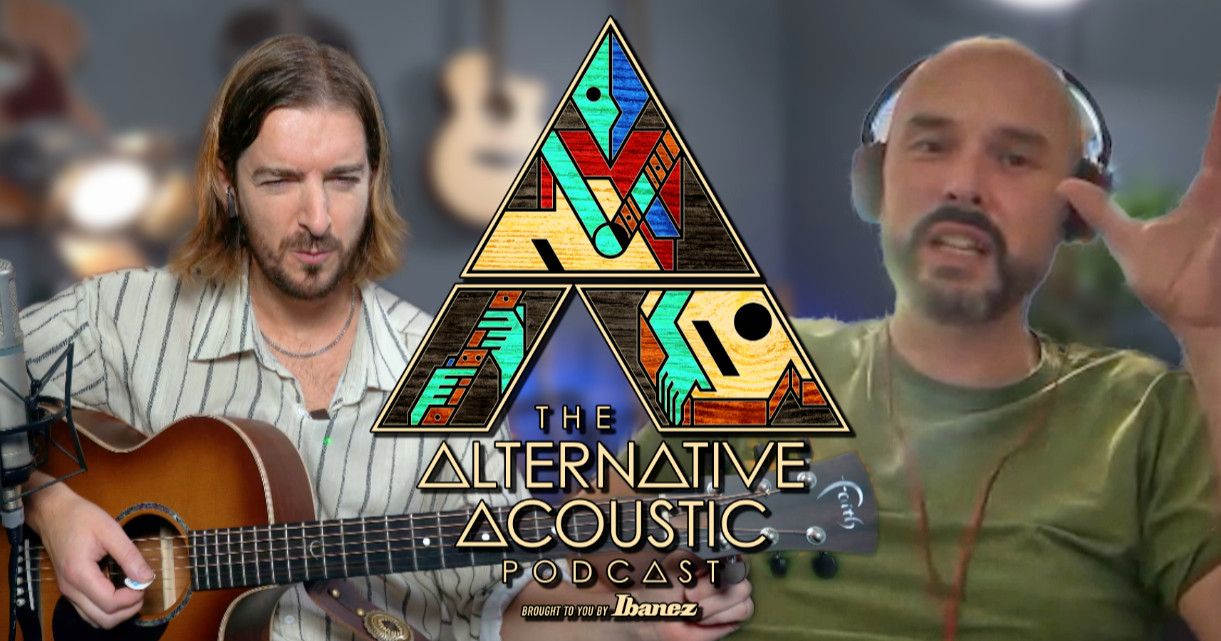
I sat down with percussive acoustic guitarist and educator Chris Woods for a wide-ranging conversation about the guitar world as it stands right now. We got into the resurgence of heavy music, the evolution of acoustic guitar from folk and MTV Unplugged through to looping and percussive fingerstyle, and why so many players end up quitting before they find their groove.
Along the way we talked about the role community plays in keeping people motivated, how listening more actively can change the way you play, and I even picked up the guitar mid-conversation to demonstrate a few chord movements I've been enjoying lately.
If you've ever wondered where acoustic guitar is heading, or just want an honest conversation about the joy and frustration of playing, this one's for you.
Watch our previous series of chats/ lessons here.
And see Chris' fantastic full Percussive Fingerstyle course here.

Enjoying this video?
Try this course - Percussive Fingerstyle with Chris Woods
Learn to make the acoustic guitar sound like a full band with one of the top percussive fingerstyle guitarists in the world.