
Electric Guitar Anatomy & Common Shapes
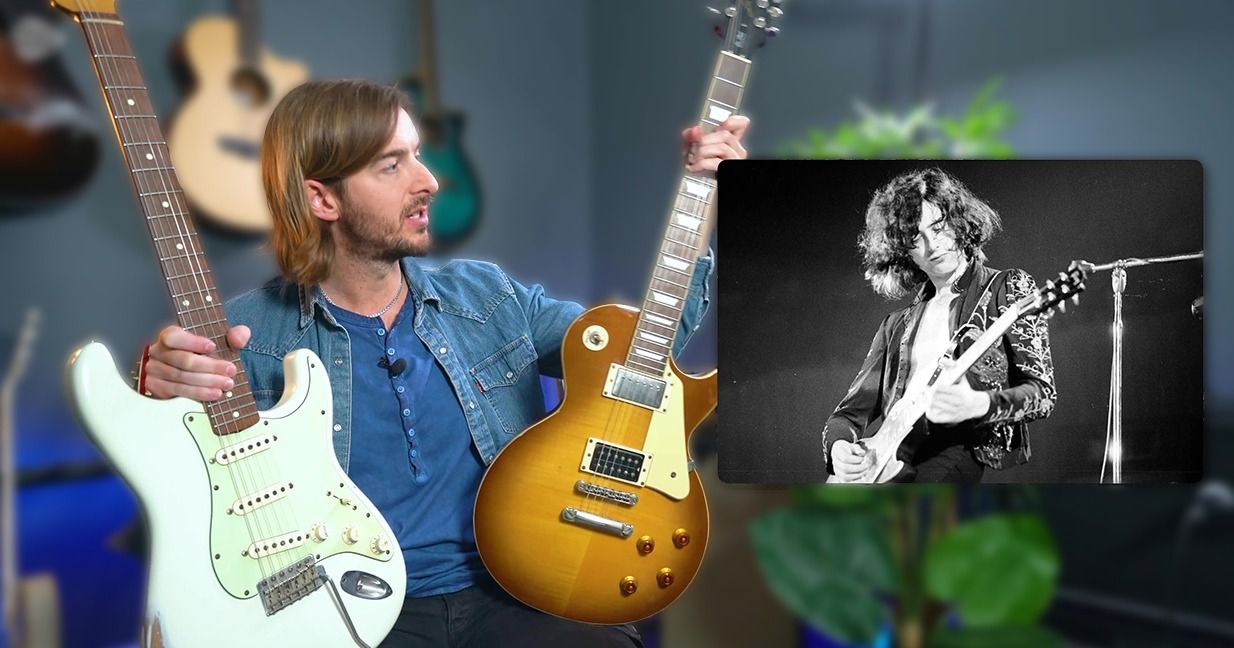
In this video, I want to talk you through common electric guitar types. This can be useful, especially if you haven't bought an electric guitar yet and you're wondering which one's right for you, at least which type of guitar is right for you. Or if you happen to have a guitar that's similar to one that I'll show in this video, you can learn more about it so that you can get the right tone and the right sound for what you're going for, so that you have. Control over the sounds you're making from it and you know what that guitar was designed for and what it's capable of. If you want to just get plain right away, feel free to skip on to the next video. But in this video I want to show you my main guitar, which is the main guitar I'll be using in this course and my favourite, my personal favourite. This is a D'Angelio Premier DC it's based on an E. Sy, so the semi-hollow body. Hollow body means that we have these kind of F holes and it's actually hollow in the middle of it, it makes the guitar a little lighter and gives it a certain warm tone to it, but the middle of the guitar has a centre block, so it's not a full hollow body. It is a semi-hollow body causes half of it is um solid. And you can see this is relatively similar. To the guitar that started it all for me, my Epiphone Les Paul, uh this is a Epiphone Les Paul Plus, it's a little bit longer than a standard. Um, but it is an Epiphone Les Paul standard plus, and I've changed the pickup here, which is why this one looks different, and it's really that that governs the sound. So both of these guitars, they're a similar shape and they have very similar looking pickups, and it is those pickups that are gonna give us most of the sound. These are called humbuckers. So the idea of that is they buck the hum or stop the hum, which means when we. Add more gain or distortion or play anything that's kind of heavier or more saturated. These pickups don't make as much noise as other types of pickups, like single coils. Single coil pickups look like this one, this is my Fender Stratocaster, it's a Mexican Fender, it's not super expensive, but it is uh a bit more premium than the entry level stuff, it's a good solid mid-range. Um, electric guitar, as is this one, this is kind of low mid range, but I've gigged with this plenty, and, um, you know, brand wise, either of these two brands or, or the ones that are equivalent price values, they're, they're gonna be ones that will see, they're not beginner guitars per se, they're, they're gonna stand you in good stead no matter what you're playing. But it's the pickups themselves that are going to govern the sound. That comes out of these, and whenever you have one like single pickup or a single coil, or anything that looks like two single coils together like this, these ones are gonna be for the heavier genres or are going to take more gain or overdrive without being noisy. And the single coils give a sweeter, brighter, cleaner sound. So with the single coil Stratocaster sound, you're certainly thinking of people like er Mark Knopfler from Dire Straits, especially in songs like Sultans of Swing. You're thinking of Jimi Hendrix with songs like Hey Joe or perhaps Little Wing. And with Les Paul's, you're thinking more the Jimmy Page sounder. Of Whole Lotta Love and Rock and roll and those songs, or Slash from Guns N Roses, of course, with songs like Sweet Child O Mine and November Rain and and uh what's another heavier one, and Paradise City. But let's have a listen to what these sound like because there's not a huge difference between different types of guitar. When we say one is cleaner than the other. It's given us that final 10%, it's the amplifier that's really gonna govern 90% of the sound, and then when we're saying strats have a certain sound or um Les Pauls have a certain sound, or these pickups have a certain sound, we're really talking about small tonal qualities rather than the big broad strokes or. Colours that uh something like the amount of gain or overdrive will give to us. So let's start off with the clean tones of this and then I'll demo this compared to the Les Paul and other things. So clean channel and the amplifier, everything to fall, and and the pickup selector down, which selects this pickup, will give us the loudest, brightest sound, but on a clean sound. That's what it sounds like, unless we change the amplifier to the crunch setting, in which case we get. Something a bit more rocky, or we can even move this pickup selector, for example, to pick up 4, which is here, and this just moves it from like here to here to here to here to here's the 5 settings. We put it to here and we get kind of the Mark Knopfler. Even on the crunch setting. Certainly different tone. So you can see the pickup selector and that single coil. It's really governing the sound, and if I go as heavy as this amp will give me. Kind of a Hendrixy thing there. A Les Paul or any humbucker type guitar. He's gonna give you a slightly heavier sound, that is with that crunch overdrive setting and even on the clean sound. It doesn't sound quite as crisp or as sharp as the Fender Stratocaster because of the Humbucker pickups. It sounds a bit more rounded, a bit more warm. Certainly a lot more low end and middle end and less high frequency. We can compensate with the EQ, but we can't really EQ a Les Paul to sound 100% like a Stratocaster, because we're not putting the same thing into it, and that's the key with any amps or guitar tone, you get out of them what you put into them via the signal chain, via the cable, and anytime you're thinking, what can I improve or what can I use. To get closer to a certain sound, look at what these icons are using, you know, whether it's Kurt Cobain from Nirvana, whether it's Slash, whether it's John Lennon, whoever it is, and copy their signal train, that type of guitar going into that type of amplifier with any of their pedals that they're using, and that's how you can recreate it. The great thing about guitar gear is you can actually buy. This stuff. If I wanna sing like Robert Plant or like Axl Rose, I will never actually recreate exactly what they sound like, because I don't have the same anatomy. And with actual guitar gear, you can get pretty close, if you learn your skills as well, you have to be able to play something like what they play like. But if I play an E-chord or one of the wrists that I like. Through a similar type of guitar, I'm gonna get a lot closer than I am with something like the Voice, for example, so we can take advantage of that, so long as we get the right guitar type. Now my favourite and my go to guitar is this one, it's based on the Gibson ES type of guitar, but this is a DAngeico. The ES type I believe stands for electric. Spanish, so it's kind of based on a Spanish body, but they uh electrified it, I guess. And semi-hollow body, which means that the middle part of this is actually um not hollow, the hollow parts are just at the edge. Of course you're thinking of people like Dave Grohl, like uh Noel Gallagher, even, you know, Marty McFly played a something that looked like a. One of, one of these right. The great thing is they're a little bit in between, a very heavy Les Paul that gives a kind of heavy sound and a low bottom end, and the very uh lighter Stratocaster with a very low output and cleaner sound. This one kind of does a bit of both is, is why I like them. It is lighter, I do like the bigger body, and at the end of the day, if they. There is one of these guitars that kind of speaks to you more, that you just like more than others, then that's the right one for you. There's really no other way around it. You've got to like any guitar from an aesthetic point of view and a cool point of view to want to play it. Pick the guitar that makes you want to pick it up and makes you wanna play it. Now when it comes to price points, let's be honest, brands do matter and something. That says Gibson on the headstock is normally going to cost more than something that says Epiphone on the headstock, just like any brands do in other walks of life, no matter what it is. But even with a very different shape guitar, the primary thing you're looking for, for the sound of it is actually just the pickups. That's gonna govern the sound most of all. And then after that, a thicker body. Like this Les Paul, is a lot heavier and he's sometimes a bit more cumbersome to like get around the neck and things like that, and a thinner body, like this SG, especially one with two cutaways, simply allows easier access to the higher part of the neck, what we often call the dusty part of the neck, especially as guitar teachers, because beginners certainly don't play very hard. High up the neck at all, we're mostly staying down here. So it really doesn't matter, it's just aesthetics, it's just which one do you like the look of more? Do you like the Gibson style, the Fender style or something in between the two, or something wildly pointier or crazier than the two. But rest assured that no matter what guitar you actually plug into, you're still very. Much in control of the sound through the amplifier, any guitar is gonna give you 90% of what that amplifier can actually give you, and it's that final 10%, that final uh tonal quality that is coming from the pickups and the body of the guitar and how it plays and things like that. So I hope that was helpful, I hope that answered a few questions, but you're obviously. We're Going to have more, and we're going to answer those questions at the right time throughout this course, alongside the jam tracks, the song tutorials, and the exercises that we look at. So let's make a start with playing now, let's get onto the next video and learn our first chords, riffs, get some songs under our belt, and get us playing some stuff on these fabulous electric guitars.
In this video
Here is an overview of common electric guitar types, including their anatomy, sounds, and how they differ.
We'll look at popular guitar models like the Fender Stratocaster, Epiphone Les Paul, and my D’Angelico Premier DC, comparing their tones and explaining the impact of pickups and amp settings.
Whether you’re buying your first guitar or learning more about the one you have, this guide will help you make more informed choices
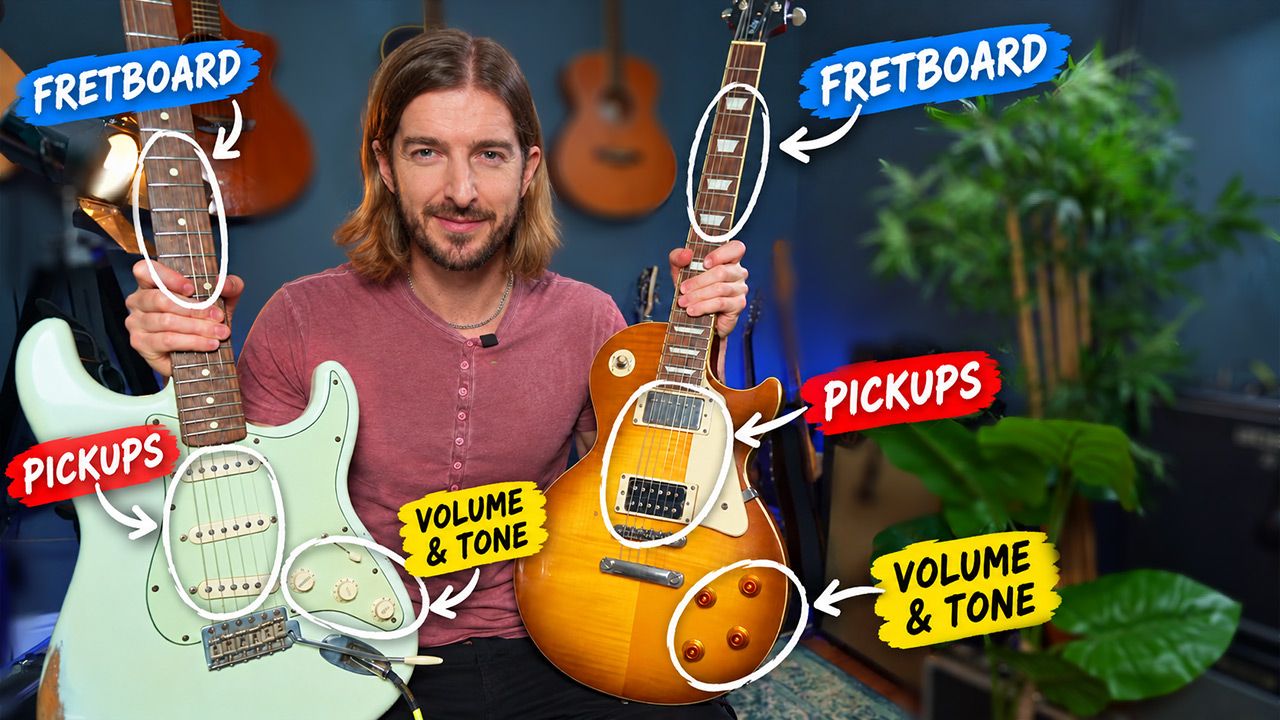
Guitar parts and controls
Watch a much more in-depth guitar tone video here
Key Points:
Guitar Types Covered:
D’Angelico Premier DC: Semi-hollow body; warm tone, good for versatile styles
Epiphone Les Paul: Solid body; heavier tone, great for rock
Fender Stratocaster: Solid body with single coils; bright, crisp, clean tones
Pickups Overview:
Humbuckers: Reduce noise, handle distortion well, suited for heavier genres
Single Coils: Brighter, cleaner, more dynamic but noisier with gain
Tone & Sounds
Pickups shape the guitar’s character but amplifier settings account for 90% of tone
Pickup selector positions adjust tonal variety, e.g., bright bridge vs warm neck tones
EQ can tweak tone, but can’t fully replicate another guitar’s inherent character
Artist Tone References:
Stratocaster: Mark Knopfler, Jimi Hendrix
Les Paul: Slash, Jimmy Page
Semi-hollow: Dave Grohl, Noel Gallagher, Marty McFly (visual reference)
Choosing a Guitar:
Match sound preferences to pickup type and body style
Comfort, aesthetics, and personal appeal matter—if it speaks to you, it’s the right one
Pro Tip:
To replicate a famous tone, copy their signal chain: guitar type → amp → effects
Beginner Electric Level 1
Recommended Songs
Enjoying this course? Want to test out your new skills? Find out my recommended song tutorials that accompany this course and get total access to the site by signing up today!