How to Improve TONE On The Guitar Itself
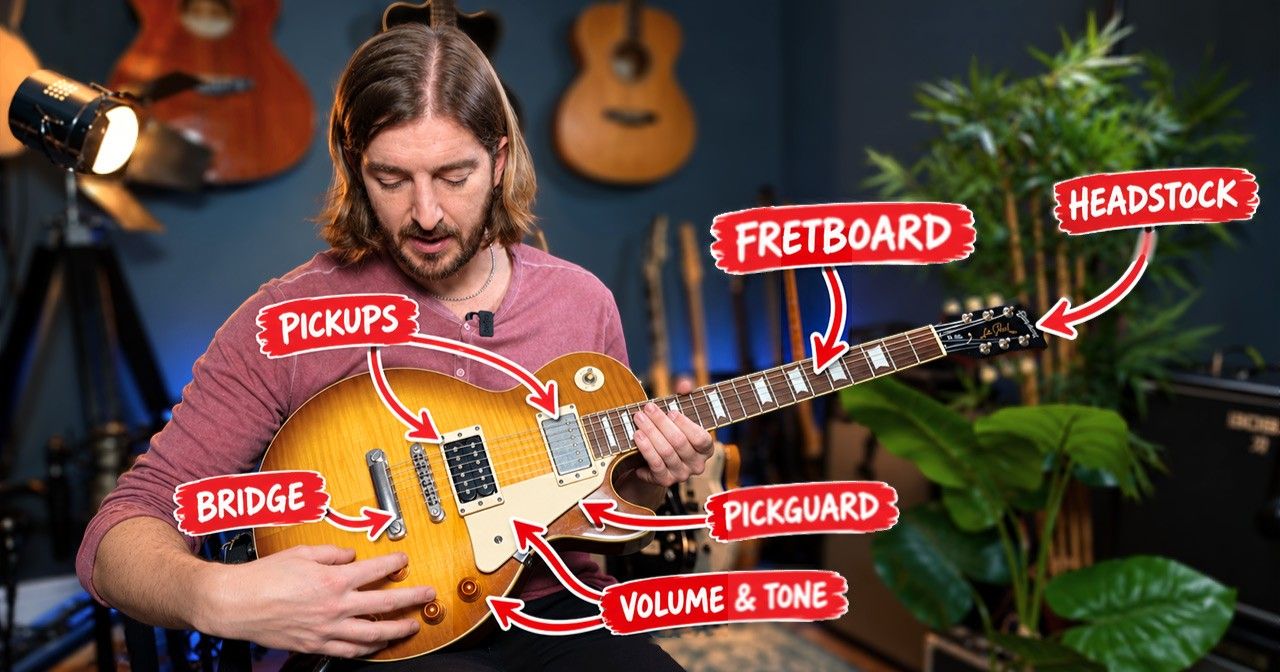
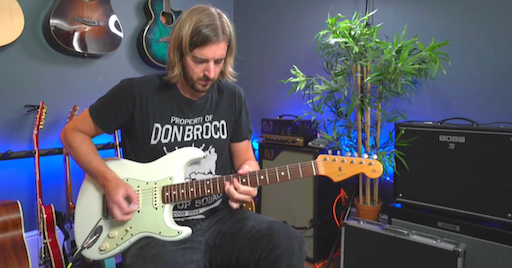
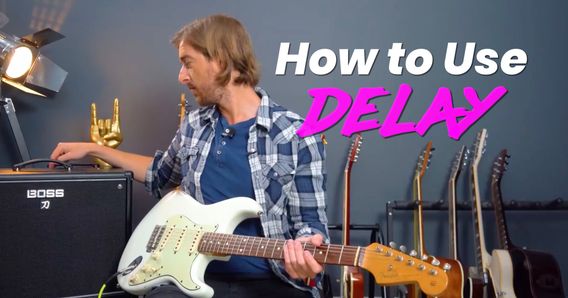
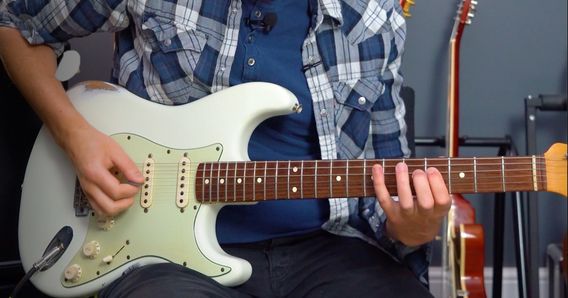
At an intermediate level, it is essential to make sure you can produce a good guitar tone, no matter what you're hoping to play. Now, in this video, we're gonna be starting off with looking at this guitar, this Fender Stratocaster, and also my Epiphone Les Paul, cos they're two good ends of the spectrum to start. To look at, we're gonna be comparing everything on the guitar that influences our tone. However, I wanna let you know that the best way to think about improving your guitar tone, no matter what gear you're using, be it all pedals, amp a pedals, or just amp, is actually to think about signal chain. And the signal chain does start with your fingers. Because this Weender Stratocaster, while it has a certain sound and is known for being used by many fantastic players, some of the best of all time like Jimi Hendrix or perhaps Mark Knopfler, the sound without someone playing it is nothing. We do have to actually play these things and the first part of the signal change. Is your fingers, of course, but beyond that, in this first video, we are looking at that first part of the signal chain, which is everything to do with the guitar. And I wanna start with the fretboard itself, because that's the only part of a guitar that your fingers, if you're using a pick. It's the only part of the guitar that you're actually touching that's influencing the tone. We have a pick in between the strings and the fingers at this side, so the fretboard is the thing that's making most of the difference, and the strings itself, which is my second point. But I wanna make you aware that not all fretboards are the same. We have something called scale length, which is literally the length of the fretboard. There's width as well, which tends to be relatively similar on most uh electric guitars. There's not too much variation, there is much more on acoustic. And then perhaps the biggest thing which is fretboard radius, which is how much of a curve or how flat your fretboard is. For example, this Epiphone Les Paul was my second Les Paul and one that I. I grew up playing lead guitar on. It is, it is the guitar that my bones grew around and one that I even went into play in many bands with. It has a particularly slim neck, so not fat like a baseball bat, it's very slim. And it has a very flat fretboard, especially when compared to this Fender Stratocaster, which is very rounded, or it has a smaller radius. This one has, I mean, it's virtually flat, so it would have a very big radius if you think of. How big a ball would have to be or how big a sphere would have to be or a circle to have a very flat outside, whereas a very small radius or very small ball would have a very, a very rounded edge, right, that's the idea of radius, that's how it's measured. And from a playing point of view, what that means is, this way of playing a bar chord. Is much easier than on this Les Paul because of the radius specifically. This way of playing a barcode was really hard for me when I was learning guitar, and it was this way, especially like this, which became more natural to me. And that is becoming the same now as I still use both of these guitars all the time. Uh, for lead guitar, I find this really inhibiting, and it's why I prefer my, my D'Angelios, to be honest with you. That, that's my preference for just my go to Les Paul type guitar is actually my Premier DC and XL DC, my, my D'Angelios. And a lot of that is to do with the fretboard radius for rhythm. Guitar, this is pretty great for all your AC DC and Led Zeppelin stuff, this is great. Until you're wanting to play the solos, I find a flatter fretboard much harder to play than a very rounded fretboard, and for example, a very expressive uh lead guitar player, Brian May. His red special guitar, very small radius, so very curved fretboard, and that helps him get all that nuance in his lead guitar playing. So it's a big factor, and also, for example, when you're learning your first guitar chords, or you're trying to play anything on guitar, playing for example a C chord, this next. Or this guitar has a longer scale length than this epiphone Les Paul, so a C chord is literally easier on this guitar than it is this one. It's kind of mad, but I just wanna make you aware that not all fretboards are the same. Beyond that, strings, that's the thing we're actually touching. Uh, you wanna know what gauge means and experiment with different gauges. Now, I'm an Ernie Ball artist, so I recommend Ernie Ball strings, I think they're great. I do like the coated ones. And that is these, these are the Ernie Ball coated strings. You can see I've actually got an open set here cos I've actually uh used them to replace one. String today, first of all, string gauge, string gauge is the thickness of string, which we tend to summarise, I'll quickly say what it is by whatever the first number is, which is 000 something of an inch. So 89 and 10 are the most common, 11 would be something like 11 to 52. 9s is 9 to 42. Uh, and I've actually got 8s here as well, uh, 8 to 38. 9s and 8s are the gauges that I use, cos it is far easier to bend strings, be more expressive as a player, and it's just easier, it's just easier on your fingers. All guitars come with 10s, so 10 to 46 gauge. When I was first learning guitar and uh well, first joining a band and things like that. I wanted to sound as heavy as possible from the strings, so I used a heavier gauge. I used slinky top, heavy bottom, so gauge 10. But the thickest string was 52, I believe, 52 or 56. Coated strings, in my opinion, are absolutely worth the money. I have a lot of guitars. The absolute faff is having to change strings when you have more than one guitar for sure. Having more doesn't make that easier. Coated strings, it just makes them last longer, especially now that I'm not. Gigging a lot, the sweat and the humidity of a gigging environment, of a pub or a club, uh, that makes your strings corrode much quicker than they would in a studio environment like this. So, uh, coated in my opinion is really worth it for the home player because it will last 6 months to 1 year or 18 months between having to use. Strings. If you're gigging a lot, you might wanna change your strings more frequently anyway, in case you break one, so that's really can be worth just getting normal strings and just changing them more often. The choice is yours, it works out about the same cost wise, so a coated string just means that hopefully you won't have to change them as often cos they don't rust or corrode as quickly. After the strings, the biggest difference between these two guitars is the pickup. You might think that it's the body or the shape or the colour and stuff like that, but none of that really impacts the sound, or if it does, it's a low percentage, maybe 5%. Arguably 10% something like that, but most of it beyond just the player, everything else being like for like, it's the pickups. And it's not just humbuckers versus single coils, as I taught in my beginner's course. Um, it is the type of humbucker and the type of single coils, they're not all the same, but to be aware of what they actually. They're basically microphones for your guitar, but they work with magnets with a coil of wire around them, and that makes, that's kind of magic, isn't it, but it's, that's, that's how they basically work. These pickups are both humbuckers, this one just has a cover over it, cause that's how it came. This one is uncovered, you could make these two look exactly the same. Uh, but this is an SH1 Seymour Duncan, which is a PAF or PA style pickup. Improving the pickup and my preference is that PAF style or PA style. I've even had those put, uh, the pickup's upgraded in my D'Angelio's just to get exactly the ones that I want. That's the best place to spend your money. A new pickup could be, I don't know what they are these days, to be honest, it's been a while, but 80 pounds, 100 pounds, maybe a really expensive 1, 100 and something pounds, like 120 pounds, maybe $150. Sometimes you can get upgraded pickups, the pair of them for maybe $150. Nowhere near the cost of like a 1000 pounds guitar, and the thing that I'm finding is a. A lot of people, a lot of pro guitar players spend 12 $3000 or 1000 pounds and still upgrade the pickups because they want a certain sound with it. And the more expensive guitars tend to have better playability, but they don't automatically have better hardware, better pickups. Um, that is something you have control over, and it's the most, uh, it's the reason why I've kept this like absolute budget Epiphone Les Paul. Um, because that pickup sounds great and this plays great, and I kind of want to inspire you guys to have a similar mentality, especially if money's a little bit tight, that is the thing. Um, money not no object, you can have a row of Gibson Les Paul's all you want, like you're in the Gibson guitar store or something. But you might still want to upgrade the pickups or just have your preference of pickup in them. I recently, at the time of filming, interviewed Zach Wilde, and he's an EMG guy. He swears by EMGs cause he uh was able to try them out at one point, and he preferred EMG pickups to PAF pickups, hands down. Personal preference, so they're still Les Paul's, he'd, he'd still play humbuckers, but the pickups are a huge part of his sound. Exactly the same with single coils though, this one is uh stock single coils in this Fender. 2008 Mexican made. I'm trying to think of all the things in it. Road worn in Olympic white, that's it, that's this one. I got this off reverb for a, for a, from a fan actually. He knew my stuff, he knew my lessons, and again, no reason to upgrade beyond this, it's. It's a fab guitar, does everything I need it to do, and these are the two ends of the spectrum for most people. Make this more metal with EMG pickups or the like in it, which are used by Zach Wild, Metallica, and the like. No matter what guitar you have, it will have volume and tone controls. These two are volume. These two atone for each pickup and perhaps the combination of pickup. That's the pickup selector here. This one does this neck, the down position or the treble position does the bridge only, in between, it uses a mix of both. Different songs require you to be on the correct pickup or pickup configuration to be able to sound right. For example, something that's kind of super bright would be all your Led Zeppelin AC DC stuff. That's just the crunch setting, all EQ's gonna be neutral for all of these videos, just to show you it's not too much about EQ when it comes to tone until we get to certain little bits which we'll talk about. Clean tone Heavier sound, the brown sound. That's all your typical. Chug's always treble pick up, really bright. All that, always trouble pick up everything up to full. Why would you ever go here? You'd go here for stuff like sweet child of mine. All the solos. Hm. However, a big test of a good guitar, good pickups, and a great amplifier is, does it clean up well when from everything being on full, you back off the volume and you back off the tone control. There didn't used to be pedals and channel changing amplifiers back in like the 60s and somewhat even in the 70s and 80s, people used to have one main sound, you know, everything on full. Clean sound or their clean tone. Would be something more like that, and you can often pick quieter as well. A great example is Under Pressure, especially any live versions of that, um by Queen, those intro chords. Pick lightly, turn the volume down. And that's more accurate to that tone than. Of course we have the luxury of going to what I'm on now, the cleaner setting, but it's more authentic to do volume control. Especially cos there's more harmonics, and again a good test of a good amp, does it clean up well? And are you happy with that sound, and then when you crank it. Are you happy with that sound? The other thing which we've been talking about loads on recent live lessons is uh tone control. I for years, until literally the last year, was an advocate of everything to full, maybe a little bit of volume control. However, since experimenting and teaching a lot of classic solos, um, that are maybe. You know, that's the tone, everything on full. Especially on the neck pickup. That would be this tone control, experiment with turning it all the way down. Maybe having it on one and things like er November Rain or perhaps knocking on heaven's door. And this is famously known as the woman tone, this is um. Woo. This is the Eric Captain kind of cream woman tone, basically, everything's up to full, but on this pick up this tone control. Is all the way down. Another famous song that turns down the tone control on the treble pickup, so the bridge pickup, which on this guitar would be this one, would be Get Back by The Beatles. This is John Lennon's lead lines, and to get all of that tone, if it's all the way up. That's not actually the sound. I'm gonna turn it all the way down and put it on maybe 2. 2 or 3, something like that, and that gives me. Will they ride down Now sometimes you have to compensate a bit on the amp or with your pedal, if it's really dull, turn the treble up a bit on the amp or the pedal and that that compensates for it. But it's a real thing that to be able to play most of the best solos ever, you have to have the right pickup configuration and maybe turn down the tone control, maybe the volume as well. Though we tend to have volume on full for solos, maybe turn it down in the verses, for example. Second to last, we have the wiring that's actually involved in here and between here as well. Um, I've often known these kind of fail on kind of any guitar. We'll talk a bit about the jack input in one second. I've never had reason to upgrade my wiring in any of my guitars, though I've been advised that would be the next upgrade, for example, if I was dead set on this being my main guitar forever and it. The wiring would be the next thing to upgrade. Um, it's only, if you're having problems with it, sometimes dust gets in here and you turn them and you can hear it kind of crackling. That's just a dust issue typically, though it is an option. I've never gone for it myself, you guys take your choice with that. I think that would be the very last upgrade I'd do cos it's, it's very faffy. But finally, and perhaps most importantly, the dam jack input. You'll see that this is not the uh regular jack input that's on a Les Paul, it's a metal one. That's because it cracked, it broke. This is the bit that gets used all the time, and it's the bit that fails the most. The biggest thing. I can advise on this, is whenever your jack input becomes loose, don't just tighten it. I really, especially if you have a good guitar and you're really, especially if it's come quite loose, get something called uh or the equivalent of Jack the gripper. Because if you just tighten this screw and the inside happens to turn, which it probably will cause you can't hold the inside of it, it's gonna twist the wiring and at some point you'll probably, uh, the wire will come loose, it will need re-soldering, which is a much bigger job than just tightening this. So I highly recommend something that's the equivalent of, or perhaps Jack the gripper. Because I came across it in the research for this video and I'm like, oh man, that's what I've been looking for. I'm, I've literally got one on order at the moment, it just hasn't arrived yet. But if you just turn the outside and you know, I've got a lot of guitars and I've I've spent quite a bit of money over the years, it's, it's always the bit that's the most likely to go first or be faffy. But you do need to look after it as well, and one of the best ways you can look after it is make sure it's tight, but also get a device like Jack the Gripper just to make sure it's as tight as it will go without twisting the wire on the inside, really, really important. I really wish I'd have known that years and years ago. And thankfully through being a teacher and through experience I've learnt this stuff and I wanna share it with you guys. And that is most stuff that we can talk about on the guitars itself. We do have the odd things like whammy bars or an extra pickup, but that they're all kind of song specific or guitar specific. These guitars do have different bridges, one isn't better than the other, they are just the two contrasting designs for how to get the same thing really. All personal preference, all song style preference and a player preference really beyond that. There's nothing else I can tell you other than play as many different guitars as you can, really be aware of the neck radius and things like that, and really be aware of pickups and possibly. Pick up upgrades or pick up changing because that might be the key to a better tone, keeping everything else you have the same. It can be cheaper than a new pedal or anything like that. But let's crack on with this course and I will see you in the next video for more fun.
In this video
Starting the signal chain with the guitar itself - the foundation of your tone before any amp or pedal. At intermediate level, understanding what influences guitar tone is essential for playing any style.
Fretboard basics: Not all fretboards are the same. Scale length (the length of the fretboard) and radius (how curved or flat it is) dramatically affect playability. A Stratocaster has a very rounded/small radius fretboard, while a Les Paul is much flatter with a larger radius. This affects bar chords - the curved Strat fretboard makes traditional bar chords easier, while the flat Les Paul suits the thumb-over-top method. For lead guitar, Brian May's Red Special uses a very small radius (curved) for expressive playing with lots of nuance.
String gauge matters: Most guitars come with 10-46 gauge, but 9s (9-42) and 8s (8-38) are easier to bend and more comfortable. Heavier gauges like "slinky top heavy bottom" (10 with 52 thickest string) create heavier sounds but are harder to play. Coated strings from Ernie Ball last 6-18 months versus regular strings, making them worth the investment for home players who aren't gigging frequently.
Pickups are everything: Beyond your playing, pickups make the biggest tonal difference - not the body shape or color. Humbuckers versus single coils is just the start; the type of humbucker matters. PAF-style pickups (like Seymour Duncan SH-1) are a popular upgrade. EMG pickups are preferred by players like Zakk Wylde and Metallica. Upgrading pickups (£80-150) is the best investment you can make - far cheaper than a new guitar and often done even on expensive instruments.
Volume and tone controls: Different songs require different pickup positions. Led Zeppelin and AC/DC use the bright bridge pickup for classic rock crunch. "Sweet Child O' Mine" uses the neck pickup for that warm solo tone. The real test of a good guitar and amp is whether it cleans up well when you roll back the volume and tone from everything at full.
The "woman tone": Turn the tone control all the way down on the neck pickup - this is Eric Clapton's cream-era sound. John Lennon's "Get Back" lead lines use tone rolled down to 2-3 on the bridge pickup. Most classic solos require the right pickup configuration plus adjusted tone controls, not everything at full.
Maintenance: The jack input fails most often. When it becomes loose, don't just tighten the outside screw - use a tool like "Jack the Gripper" to hold the inside while tightening. Otherwise you'll twist the internal wiring, requiring resoldering.