
Grease - Summer Nights

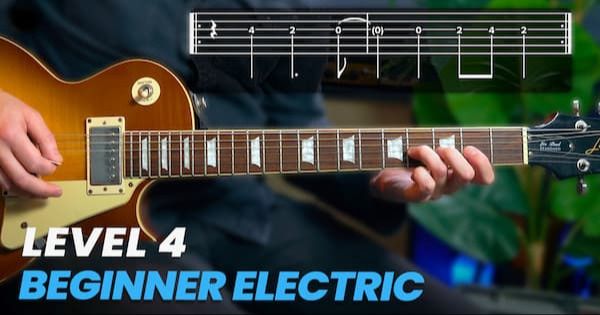
This is the bass line that starts off summer nights uh from Greece. This is a song and a riff that I want to use as a vehicle to learn the neck a little bit more and connecting some of the open strings to stuff that's happening uh up the dusty end, as we call it when I teach 1 to 1, because this part of the neck at the moment might not be getting used too much in your guitar. So let's, let's cure that. But we're gonna start off on the open 4th string, which is a D. We play this twice, we're then gonna hit the index finger, same string 4 all along string 4 at fret 5. And then we're gonna play that note again. Third finger then at threat 7. We then go between 5 and 7. And And then we have that recognisable riff. Challenge one, make it sound like that riff when you play it, including the pauses. Everyone knows how this riff goes and song goes, if you don't, I will leave a link to it below, we'll put the video down there, but. Those silences are just as important as the notes that we play. Play a note and then palm mute at this side and hold with your fingers here, just touching lightly. And when we fret notes at 5 and 7. And there'd be no spaces or no gaps, so not. Hear the difference? I was putting all the spaces in between every note, and that's not how the riff goes. So let's just have a recap with the fret numbers and the spacers. So 0. 05. 57 7, now from 575. Let each note ring out. When you've got it, it couldn't be simpler. That takes a little bit longer, have a rewatch and take your time to make sure that's right. Once you've got it, that open D string. String 4 is the exact same note and at the same pitch as 10th fret on the E string. But we can hear the open string has so much more twang to it. And the thicker string, because it's thicker. It sounds lower and bassier. But the same notes at the same pitch. Exist here too. Bit of fretboard navigation before we go deeper into that. The open E-string. And then the double dot at the 12th fret. They're both E notes, and those are an octave apart, which means 8 notes of the major scale. We'll cover this a little later. 567, 80. Paso la ti do, that kind of thing, right? 10th rep is a D, and that's the same. Open D-string. Huge thing to have in your mind when you're navigating around the fretboard. Finding the same notes all around the fretboard is like how we learn the neck, basically, to give you a window into intermediate course stuff. So, 10th fret. Then a string down. Is how we played this riff, but before we even cover that in depth, I want to cover this rolling technique. And especially when we come back. This is how we've changed codes and notes really quickly with one finger, basically starting off on the tip. And then just rolling it flat, rather than lifting it and moving like this, which is slow. And means that open strings and noise will inevitably happen. Start off on the tip. Roll to the flat part of the finger. That is a lot less noisy than. It's just a lot better. I use that with the index finger, sometimes the 3rd. That's the idea between, you know, So we're freeing up fingers so that we can Sort out a technique to play much better guitar. So this is 10. And then flatten off to go to 10, a string down. 3rd finger at 12, then. Back to Let's do that through 3 times together, ready, 12123, and. Small emotion as possible when you're picking. I am using alternate picking there as well. So no matter what note I'm picking, whether there's a gap or not, I'm just using a down pick, then an up pick, no matter what the rhythm is repeated, down, up, down, up, so down. And From there, I'm not thinking about it too much, to be honest, I'm just trying to keep the motion as small as possible. And that's all we're gonna cover today. Just get that little technique down of the smaller picking. Be aware that 10th fret is the D note and the open D string, and they're the same pitch, but at thicker strings, it will sound bassier. And open strings will always have more of a twang to them, so you can start to spot that when you listen to songs, if it's really twangy, probably more open strings. More rounded and bassier, thicker strings, and that gives you a window into some of the things that we'll be looking at further in this course. Add that to your practise routine for this week, and I'll see you in the next video.
In this video
Here's how to play the intro bass line of Summer Nights from the movie Grease on guitar.
This sin\t a full song tutorial. Instead, we're using this song as a vehicle to learn the neck, increasing our fretboard knowledge so beginners can have a bit more competence playing "up the dusty end"!
Enjoying this video?
Try this course - Easy Lead Guitar & Rhythm Consolidation
As we approach the halfway point of the Beginner Electric Guitar Course, this level focuses on expanding your chord and rhythm skills.