How To Tune Your Guitar
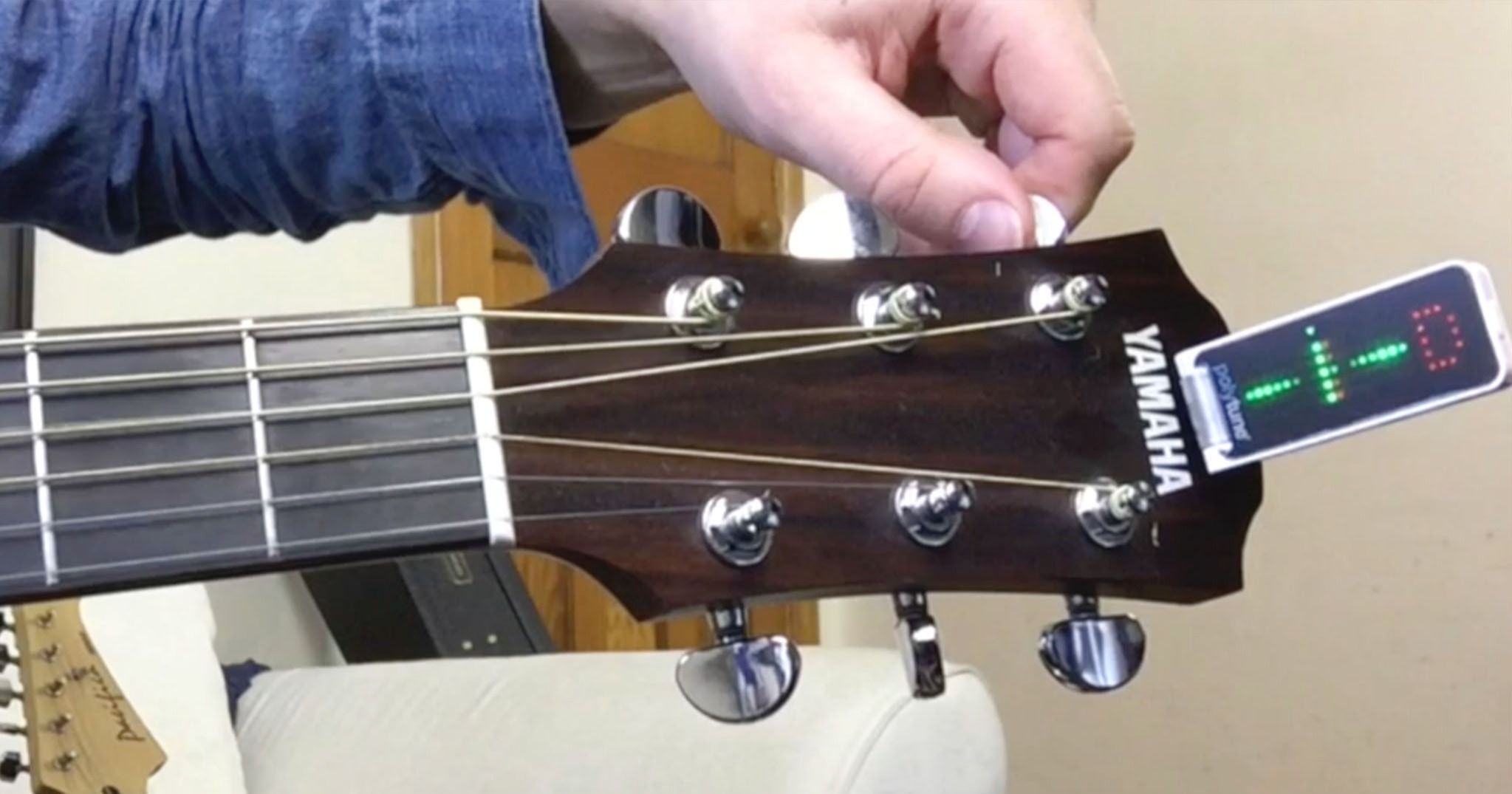
Hi guys, my name's Andy, and in this lesson I'm showing you how to tune any guitar, be it acoustic or electric. Now anyone who wants to get their guitar in tune accurately needs a guitar tuner. Now be this a clip-on tuner like the one that I have here or a tuner as part of a guitar pedal, which is better for playing live or band practises. Or of course these days there are guitar tuner apps. Now I particularly prefer myself the guitar tuner app, which is free, it's great for getting your guitar in standard tuning, I have no. affiliation with them, that's just the one that I've personally used to great effect. Whichever tuner that you use, we need to know the names of our open strings which are E A D G B E, and that was covered in the previous lesson in this series of sort of beginner basics videos for beginner guitarists. So I'm gonna presume that you know the names of your open strings already, but I will give you some prompts as we go and we're gonna go ahead and get your guitar in tune. So some guitar headstocks are different from others. The main type is this type where we have 3 on one side, 3 on the other. We can also have this type of headstock where we have all 6 in a line. The golden rule with either of those is that anti-clockwise increases the pitch and clockwise decreases the pitch so it makes it lower. And typically. You're gonna be turning your tuning pegs anti-clockwise to increase the pitch because it's not often that guitars make themselves higher but they can sometimes make themselves lower. Now on my acoustic guitar I've de-tuned a couple of the strings intentionally, so see if you can notice which ones those are, but we're gonna make a start by picking your thickest Estring. And you want to pick around one a second to get a consistent note and that will give an accurate reading on the tuner itself. So here's my TC Electronic Polytune tuner. It looks to me an awful lot like Kit from uh Knight Rider, but let's see what it reads when I pick the thickest Estring. So there we've got the letter E and we can see that it's all green, which means that that note is in tune or that string is in tune because we want this to be the E string. If I purposely de-tune this a little bit and see what happens. It's gone, it looks like it's gone up, but the letter has gone to the D, and that little light there says that's a D sharp, so we're gonna increase that, there we go, it's gone onto the E range, but it's gonna increase. Keep going and and you can see it's all red now, but we're getting hints of green, I'm going to keep turning it. And there you can see that we have all green, which means that note is in tune to an E, which is what we want. So let's take a look at the next string, this should read an A. And it does, but you can see that we've got a red line on there which means it's a little bit too high, so I'm gonna take it anti-clockwise. And we're getting more green. And that's pretty much perfect and it's on the ear. Now the next one, string 4, so 1234, we're expecting to be a D, let's have a look at what it is. Now that's come up as a B, so that is a fair way out of tune and we're gonna have to tighten it by screwing it anti-clockwise a fair bit because that's the one that I de-tuned earlier. So it's now gone to see, even just by turning it that little bit, keep going anticlockwise, and we need to go right up. That little dot at the side of the C means that it's gone to C and we need to keep going past that and here we are onto D, still red. And there we are, we're getting all green and that line in the middle. And if I just de-tune it slightly, that is a D note. And that's perfectly in tune. Third string next, so we go around the outside. That is showing a G which is correct. And you can see that it is All green, which is exactly what we want. The next string is the 2nd string, and that's this tuning peg. Now that is also reading a G, which is not good, we want that to read a B, so I'm gonna have to turn this. To a higher pitch, and if I keep pick picking and listen. You can hear it keeps going up. We're on the bee. And there we go. That note is in tune. Now if I'd have kept turning there, the note would have gone higher and higher and eventually it will get so high that the string is going to break. So it's really important you know exactly what note you're going for and some tuners allow you to hear the note that you're tuning to. But also on my website where this video is embedded, you will hear the tuner notes as well so that you can hear string 6 and string 5 so you can try and tell yourself whether you're getting closer to the note or further away from it. So let's have a go for the thinner string now. This should read an E and it does, but it's a little bit low. So I'm making a couple of millimetre adjustment there and that put it perfectly in tune and if I go for our first chord in this beginner's course. A major chord. That now sounds correct when I play all six strings, but when I play a chord, you can get inaccurate readings, so your tuner will only work when you're playing one string or only one sound is heard. So a couple of common mistakes are picking a different string to the one that you're turning. Now it's quite weird at first to be picking something over here. And turning and looking at your screen on the the tuner, um but you will get used to it over time. This is an essential skill because you really should check that your guitar's in tune every time you pick it up, though it tends to really only go out of tune when you maybe put it in a case or don't play it for a while. So if you're picking it up every other day, uh it should. Be fairly in tune, but if it's sounding a bit wrong, check it and make sure that you're tuning your guitar so that you know you're tuning to the right notes. Now while we're on the subject of tuning your guitar, there is a quick uh 5th fret tuning trick that you can check your guitar is in tune, which means that the 5th fret on the thickest Estring. Is an A note, and that should be the same as the open string 5. You can hear that they're the same note, and that is the same at 5th fret of every string apart from one. So there we can hear, this is a D note and the open E string is a D as well. This should be a G and it is in tune with the string that is underneath it. Now then it changes and we can't play the fifth fret on the G because that would be a C note and it's not in tune with the other other B note. So we need to move it down by a fret. And you can hear that those notes are in tune, and then finally, 5th fret on the B. Is the same as the open string. So that's a great way to check that you're in tune just nice and quickly and if you know that your thickest string is in tune, you can learn to tune your guitar yourself by ear, which is a great skill to develop over the coming months. So that's it for this tuning lesson, join me in the next basic skills lesson where I'll be talking you through what a pick is and how to use it. I hope to see you there. Bye for now.
In this video
Andy Guitar Beginners Course eBook 2016 - 2nd Edition
Every time you pickup your guitar, before you start playing, you need to tune your guitar.
There are many free apps available that can listen to each string and enable you to tune your guitar. I prefer to use a clip on tuner like the TC Electronic clip on tuner in this video to get the guitar in tune as quickly as possible.
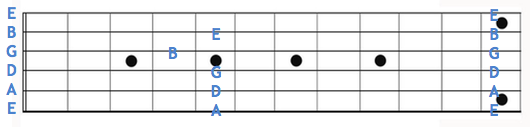
5th fret tuning trick - tune your guitar by ear!

The notes at 5th fret can be used to check the tuning of your instrument, providing you know the first note is an E.
This is a very handy trick if you suspect that your guitar might have gone out of tune and want to check quickly! N.B. The only note that isn't at 5th fret is the B, which is at 4th simply because of how a guitar is tuned.