
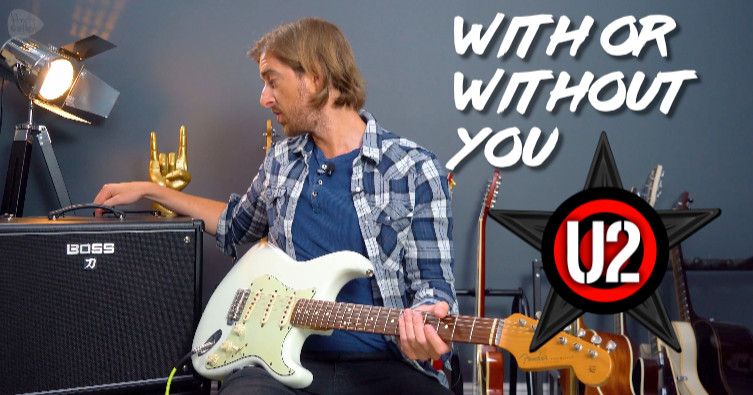
In this video
I'm using the delay built into the Boss Katana, and the biggest thing we need is a tap delay function which allows us to set the length of the delay. The classic example of the shortest delay is a slapback delay where we hear it straight away, giving us this surf guitar sound. We can only really hear the delay when we play something short and sharp that we mute.
Triplet Delay
The delay I want to focus on is this triplet delay, which was made famous and is the signature sound of The Edge from U2. For that, we need to get our heads around what's commonly known as the dancehall rhythm - think of Ed Sheeran's rhythm patterns. That marimba rhythm is very famous and we need to be able to get our heads around it so we can put the tap tempo right. We need to be able to tap that down to the BPM of the song we're playing. Once we tap it in, the delay plays it for us, enabling us to get these crazy effects.
The Riff
We're playing the open D string with palm muting - resting the outside of the palm of your hand on the strings. We're going to play open, fourth fret with first finger, fifth fret, then seventh fret. Here I want to be aware of intervals - we're playing the first, third, fourth and fifth intervals of a major scale. The only one we're missing is the second at the second fret. This is another major scale bass melody using these same intervals.
Creating the Effect
We need to play these with palm muting in a loop. It really doesn't sound like much on its own, but when we add the delay and turn the effect up volume-wise, it creates this iconic lead line. The downside is when we play it slow we can't really have the delay on because it's not going to create the right effect. But we want to gradually speed up to find that sweet spot. This has been used by so many guitarists since.
Enjoying this video?
Try this course - Solid Intermediate Guitar
Level 6 completes Grade 4 — legato speed licks, major seventh chords, the Hendrix and Frusciante rhythm-lead style, and triads on the top three strings: the skills that finally let you see the whole neck.