
Wonderful Tonight (intro) - Eric Clapton
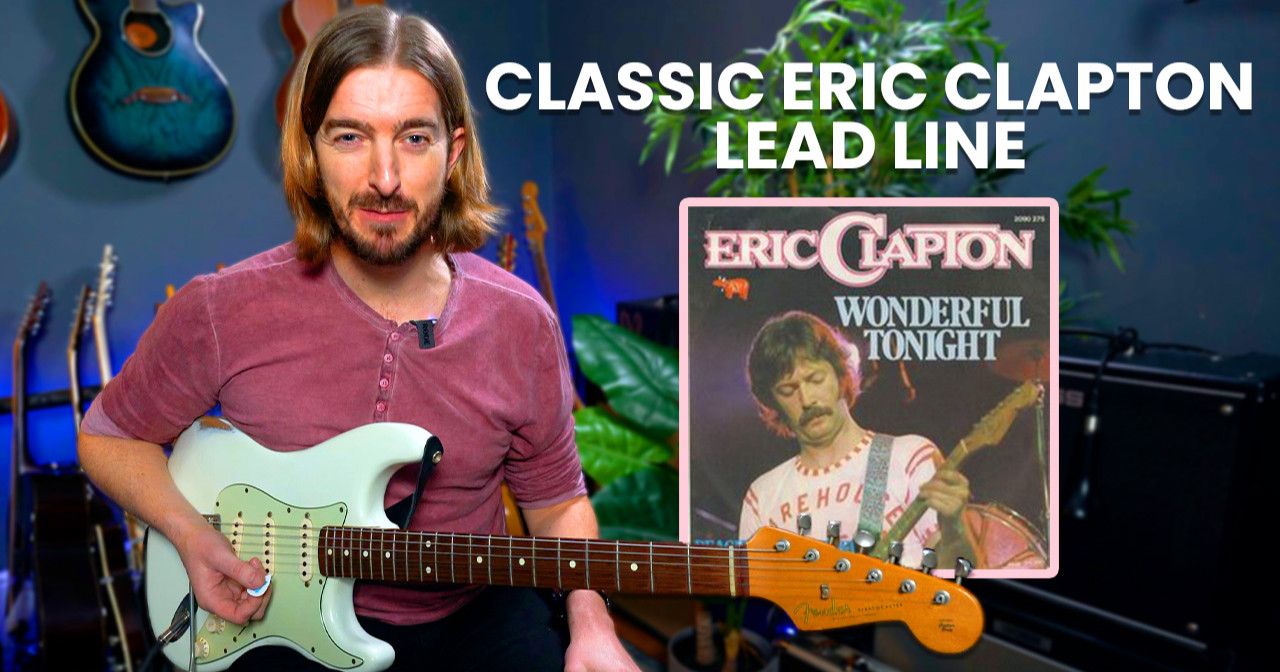
Wonderful tonight, let's have a look at this one, we're gonna mostly focus on the intro lead line, which is a fantastic one for any early intermediate players to get. But then we're gonna look at how to play the verses and also the lead line, uh, variations that happen a little later in the song. I'll link to the tab that I'm using down below. But this uses the G major scale, but starting off on the position where we will play. The G scale, the G major scale from the G note. Here, this is at the 8th fret on string 2. And there's our 12345, or G, A, B, C, D. Of the G major scale here. And that is at 8, 1012, 13, and 15 frets. The position we're gonna start off in to play the intro bend which we need to do. Handshake into the back of the net, bend the fingers and move the wrist like this. Uh try and keep your fingers still once they're in this position basically, and that's how we do a good string bend. Ca we need a whole to bend. Like that, now I have a tube screaming on my sound, here's my clean tone. pick up just here. Which would be fine, but I to simulate. The original recording, I've got my tube screamer on, everything in the middle, everything at 12 o'clock on the tube screamer, but that just gives it more sustain. That squiggly line over the tab. They're the notes to add vibrato to. And that's the first part of it, so 10, bend up. Armbend, 8, 10. 10 bend up. 89 And we're getting 2 notes out of that 10 front bend, remember, we're getting the bend up. And then just back down without having to pick it again. That will get us up to bar 4. Also a little bit of reverb. On my sound, just from the Boscatana, and then the second line. Starts off the same. But then we have 10, slide to 12. Slide to 13. Slide to 17 from 15. And then 15 with some vibrato which you could use. A whammy bar 4, and that's the main thing that we wanna make sure. So pick lightly is a great tip here, have a little bit more game perhaps than uh you might think. And then you get the sustain and the mid-range. But pick super light, experiment with that. Works great on a strap, but you could use any guitar for this, just neck pick up. And these slides. And vibrato with the inside of that first finger or with a whammy bar. Or trem arm like this, they're the things to be practising on this. Beyond that, we actually have a lot of triad shapes, um, just to talk you through the verses real quick. So the chords are G major, D and back to C and D. So which to put in my loop pedal to give me something to play over. If I turned the tube screamer off, I played this. And then we'd have as many. Tonight, which you can learn more in my acoustic tutorial. In this electric tutorial, we're gonna cover the the G chord can be played with this D major shaped G major triad. More on triads coming later in the course, but this is a great example. As to why you should learn them because we can go. 787. 577 to play a D chord, basically the top part. Of a D triad. And then see. But to D. And when I'm picking. Like this, that's what we're, that's the underlying thing that's happening here. The other thing that will happen in the chorus is I'll use this as an E minor. And uh but the actual star licks, it kind of goes. The actual first lick starts off 555. Save Which is quite unclear that he's playing over the D chord. But then when we, we, we finish on a C note. Because that's the sea chord underneath. See And then into decore position, detrier position. To G major. With a D shape. Same thing again. Sometimes doing the sus 2 and C sus 2 chords like this. And then she asked me. And then we have G D. E minor. And then I say yes. Oh, tonight. So And then she asked me. All right. And I say yes. You look wonderful Hit your looper, or sorry, tube skiing pedal, wonderful tonight. Now that is the lead line variation that finishes the song, the very end of the song, uh, bar number 77, outro section on the tab. So this is where we do a full bend up, we start off the same as the normal solo. Then we go 10, bend up. Little finger on 10, unbent. Hit 10 unbent, and then we're at bar 79. 898. 15th fret, still on B string. 15. To 17. Bend up 15. 1517, 15. Let's go from uh bar 80 again. Now I would do that as a hammer on in all honesty, this 15 to 17. That was a hammer on. Let's do all that again. 3412. And then finish as normal. Then we have one other kind of solo section just to get us into the um. Of it all is that you just don't realise that part which is. All G major pentatonic, we're gonna cover a 32. Method in a module very soon, and this uses exactly that. This goes from 8, 10, slide to 1210, hammer on 1210. 1210, 8. And then we have. This section, OK, we'd have from the bridge, from bar 43, 8797, bend 5 up a whole step, full bend. So D triad, G triad. E minor triad, and the wonder of it all, 897. Desis 2. 555. 55 And That takes you through most of the things you need to be able to play this song. Let's have a clip of that beginning again. Lots of little details in that, they do stay mostly the same, but there are some small variations. The biggest things to take away from this video and this lesson, absolutely all the phrasing and feel. And tone that Clapton's able to do with that intro. And the triad section. In the verses and indeed the chorus. And then the variations on the lead part, especially the last one, Especially that one, but also. The one just before and the wonder of it all, just before the bridge section. Really, really cool licks, really cool song, we'll leave more help on the page down below, including that full ted up tab that I've been using here. Best of luck with that one. It's a grade 3 song all in all, so a great one to get under your belt if you're looking at the Andy guitar Intermediate Electric course.
In this video
"Wonderful Tonight" is a grade three song that showcases all the essential phrasing techniques for ballad-style lead guitar. This lesson focuses primarily on the intro lead line, which is a perfect study piece for intermediate players, along with the triad-based verse accompaniment and lead variations throughout the song.
Tone and Setup
The sound uses the neck pickup with a Tube Screamer set to neutral (everything at 12 o'clock) for added sustain and midrange. A clean tone works fine, but the slight overdrive helps the notes sing and sustain like the original recording. A touch of reverb completes the tone. The key is picking lightly - let the amp and pedal do the work rather than attacking the strings hard.
The G Major Scale Position
The intro uses G major scale starting from the G note at the 8th fret on the second string. The scale runs through frets 8-10-12-13-15, giving you the five notes (G-A-B-C-D) needed for the melodic lines. This position becomes the foundation for all the lead work in the song.
The Intro Bend
The intro opens with a whole-tone bend at the 10th fret. Proper technique requires the handshake grip into the neck, bending with the wrist rather than the fingers. The bend goes up, then unbends without re-picking - you get two notes from one pick. The phrase continues: 10 bend up, unbend, 8, 10, 10 bend up, 8, 9. Adding vibrato to sustained notes (marked with the squiggly line in tab) brings the line to life.
Slides and Phrasing
The second phrase starts the same but then features a series of slides: 10 slide to 12, slide to 13, slide to 17 from 15, finishing on 15 with vibrato. You can use a whammy bar for that final vibrato if your guitar has one. These slides need to be smooth and deliberate - they're not quick position shifts but part of the melodic expression. Vibrato comes from the inside of the first finger, moving the wrist to create that singing quality.
Triad-Based Verse Accompaniment
The verses use G-D-C-D chord changes, but rather than full open chords, the accompaniment uses triad shapes higher up the neck. The G chord becomes a D-shaped G major triad at frets 7-8-7. The D chord uses frets 5-7-7 (the top part of a D triad), and the C chord sits at frets 5-5-5. These compact shapes allow for smooth voice leading and create that sophisticated, upper-register sound. Individual string picking within these triads adds detail and movement.
Sus2 Variations
Throughout the verses and chorus, sus2 chords (D sus2 and C sus2) add color to the basic triads. These suspended chords create tension and release, adding emotional depth to the accompaniment.
The Bridge Section
The bridge ("And the wonder of it all") uses G major pentatonic with a descending pattern: 9-8-10, slide to 12-10, hammer-on 12-10-12-10-12-10-8. This section introduces the three-note pattern concept that appears throughout intermediate lead playing. A whole-tone bend at the 7th fret (bend up five full steps) adds intensity before returning to the triad shapes.
Outro Lead Variation
The final solo at the end of the song starts like the normal intro but then varies: 10 bend up, little finger on 10 unbent, hit 10 unbent again, then 9-8-9-8, jumping to 15th fret, 15 to 17 bend up, 15-15-17-15. Using a hammer-on for the 15 to 17 helps the phrase flow smoothly. This variation shows how Clapton develops the original theme while keeping the emotional character consistent.
The Essential Takeaway
The biggest lesson from this song is all about phrasing, feel, and tone. It's not just hitting the right notes - it's how you bend them, when you add vibrato, how long you let notes sustain, and how you shape the slides. The triad sections in the verses and chorus demonstrate sophisticated chord voicings that go beyond basic open position playing. Getting all these details right is what defines grade three proficiency and separates technical ability from musical expression.
Enjoying this video?
Try this course - Lead Guitar Foundations
In this level we cover the building blocks of lead guitar playing.