
Learn the neck with these two HENDRIX songs
In this video
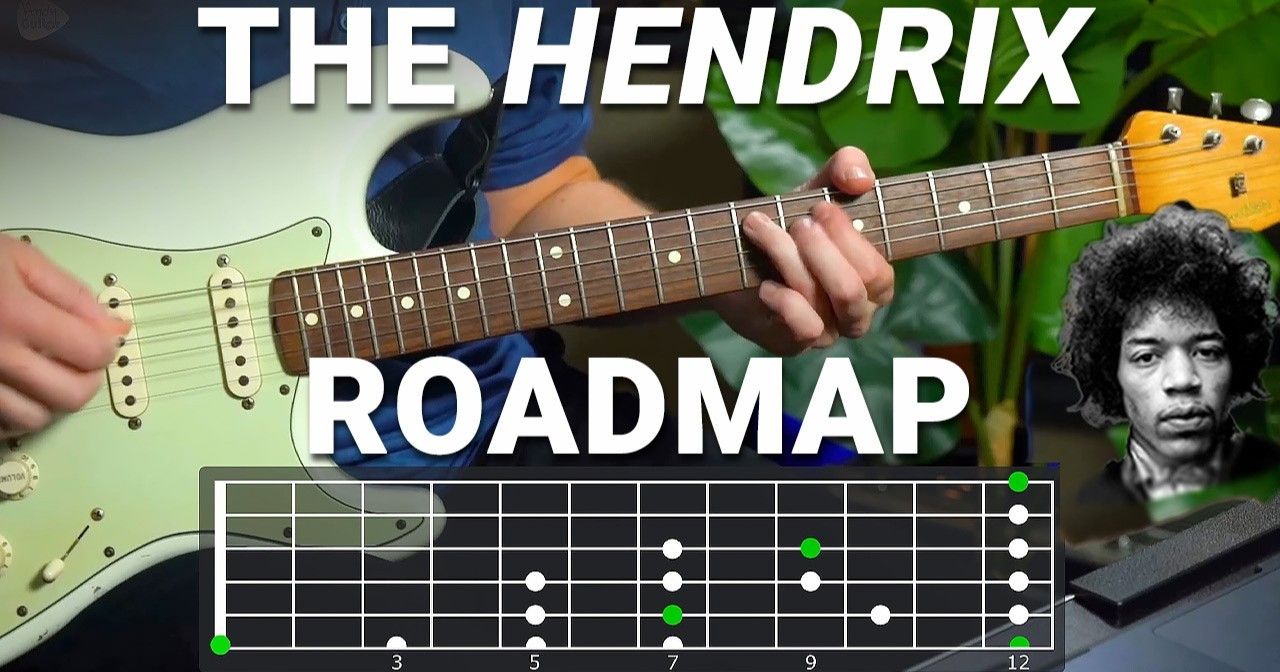
Breaking down "Purple Haze" and "Voodoo Child" by Jimi Hendrix - two songs that use shapes three and four of the E minor pentatonic scale, the middle part of the neck that nobody ever plays when they're in the key of E. Most guitarists learn shape one at the open position, maybe move it up to shape two for "Paranoid," or get really good up high for other songs, but the middle positions rarely get attention.
You've probably heard about the "E minor pentatonic superhighway" connecting all the shapes up the neck, but there aren't many actual songs that use the middle positions except Hendrix. This is the gateway to really understanding these shapes in a practical, musical way.
Shape four starts on string five at the E note (seventh fret) - play the same shape you know from the open position but starting there. The main "Purple Haze" riff uses this position with an E minor 7 or E dominant 7 triad on those notes, creating that characteristic sound. The pattern goes 9-7-9-7-5-7, which does the same thing as the main riff but in a different position with a different vibe.
The opening notes use the blues scale note - the tritone or "devil's note" - that shouldn't work over the E but sounds awesome. This is fundamental to the Hendrix sound. The riff connects shape four to shape three, moving through positions: shape four at frets 7-9, shape three lower down, back to shape one at the open position.
"Voodoo Child" uses the same shapes three and four of E minor pentatonic - the scale everybody learns but Hendrix made so musical. You need neck pickup with lots of gain, maybe a boost or fuzz pedal if you have one. These songs aren't just about playing the notes; there's so much to learn just from the rhythm guitar parts before you even tackle the solos.
Everyone has to study Hendrix at some point to really level up at electric guitar, even if it's not your primary style. The website has full Hendrix player studies - one for clean stuff, one for the heavier distorted material covering chord voicings all over the neck and connecting pentatonic shapes practically. Not just jumping from shape one to shape one 12 frets up (which is cheating and misses all the good stuff in between), but actually using those middle positions musically. Hendrix is the huge gateway to unlocking the fretboard.