Introduction to the CAGED system for Lead Guitar
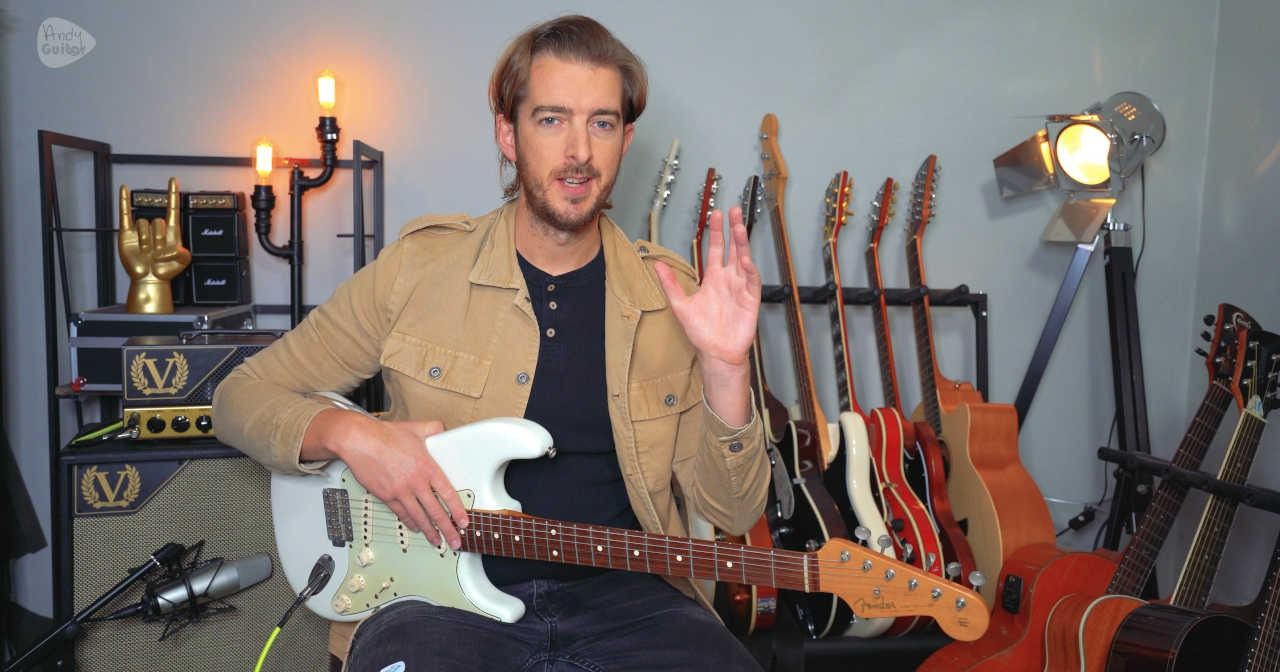
Welcome to this module on the cage system, which is essentially a roadmap for how we can play rhythm and lead guitar at the same time in the clean style of players such as Jimi Hendrix, Stevie Ray Vaughan, John Frascanti, and John Mayer. This is a roadmap for how we can do those sorts of. Of riffs and licks, while also learning how we can play any chord, anywhere on the fretboard. This is our roadmap to do it, and this is the caged system. So what is it? Well, that word caged essentially stands for uh the chord shapes that we're gonna be using as our roadmap. Those chord shapes are C. A G. E and D. But we're going to be playing those chord shapes, or just some notes from those chord shapes all over the neck to be able to play the same chords anywhere that we want, and any chord anywhere that we want. In this video, I'm using my Fender Stratocaster and I'm on the uh neck pickup here. And I've got a very clean guitar sound, kind of jangly, um, no effects, but you could add reverb, that would be very applicable. um, but really what we're looking for is that single coil sound or a very clean sound. Um, and that this whole sound was one of the reasons that I bought this, uh, Fender Stratocaster, uh, because we need that Strat style thing to be able to emulate the, the tone of these players or get as close as we can. Uh, in this sort of style of playing. So this first video is gonna be an overview, just in case that you guys don't know, but I think, uh, even players who've been studying the cage system for quite a while, may learn something new from every video in this, uh, little module. So let's have a look at this. We're going to begin with C because that makes the most sense for those that are new to the cage system. And this is just a C major chord played in the open position, so this is a C chord played with a C shape on the fretboard. Super simple. The next shape in our caged system is the A shape, CA. And this is our A major chord shape, which we can also play like this, and this is in the position of a C major chord. So we've played the same C major chord using an A major shape. There's our A major, and we're just using the first finger to bar. And in this case, we're gonna be using all notes here. The next letter in caged is G, and this would be our G major shape, but this way of playing it is pretty academic, it's very rarely used in this style, and what is far more common. It's just this, which is the 7th fret, 5th fret, and 5th fret on string 34 and 5. We'll be covering more on that as we go in this video, but that is one way that we can use this G shape. The next one would be an E shape, but that's rarely played like this, it's generally played like this. In this sort of clean, Hendrix, John Mayer, John Fashanti style, where we have the thumb on the root note of that uh essentially uh E major shape. And then we have the 3rd finger, middle finger and 1st finger playing the triad. So the root, the 3rd and the 5th. The thumb mutes string 5, and the first finger is also muting string 1, but it could also press it down as well. The next shape is a D shape, and we would have our D triad here. Triads in particular are something which is a great topic to cover before going too in-depth with the cage system itself, and I covered triads in depth in my intermediate course, and this is where we can play, essentially this uh D major ship, but we're moving it, if we moved it up 12 frets, it would be at uh 14 and 15 here. But if we move that back by 2, so 12, that is a C major chord played with a D major shape. Now the way that this is generally played in this sort of style, so you know, the Little Wing style and the John Mayer style is typically more like this. So there's our D root notes. Which is really just a D5, there's no major or minor. Note there, that would be there, and you could play it like this, but again, very rare, practically. That is what we want to be playing. Finally, we would then have a repetition of the C shape because we've gone through each of the letters C A G E D. So after that D shape, we actually repeat the C shape, but 12 frets up. So here, just for academic purposes really, just just for demonstration purposes, I'm using my first finger at the 12 fret to show um uh almost like a capo really, and then you can see that this is just a C major shape, so kind of like this, and I could even just play a C major shape. With the open strings, which is just the C major moved hook, 12 frets. That's a very good thing to kind of demonstrate this concept. In the cage shapes that we'll be looking at more in-depth, we will study that this is very rarely played and what's actually more common. It's just this little triad here. Not including the root note here, but including the root note on top. And that is barring the 12th fret, 13th fret, and 14th fret here. So if you're new to this, that can be an awful lot of information. The crucial thing is I was always playing the same C major chord there. We're just using these shapes that we've learned, so this, and those shapes are specific to the guitar to be able to play that chord anywhere that we want. And we're limited sometimes with how a guitar's tuned or the key that we're in. With how useful a lot of these are, so that's what we're gonna be focusing on in all the other videos in this module. We're gonna be focusing on uh the most useful shapes, but also covering the other ones so that you can see how we can connect the dots and also uh how we can do this in other keys. We're not just gonna be covering the key of C, but we're gonna be using that as our bedrock and getting some real. Cool licks uh with all of these ships. The final lesson will also cover how we can do this with minor cage shapes, which is something that's not often covered, but I think it's so useful, and it's not just academic cos therefore we can play any chords, um, at all on the guitar, major or minor, using these cage shapes and get these cool kind of. Uh, Jimi Hendrix influenced licks there. This goes in accordance with the player studies that you'll also find in this lead guitar course, and I really hope this is something that you study and that you dig, and whatever knowledge you come to this, uh, lesson with, I hope we take you on from there and really get you playing some cool rhythm and lead guitar all at the same time. So I hope you'll join me in the other videos in this cage system module.
In this video
Welcome to this module on the CAGED system!
The CAGED system is one of the best methods to learn the fretboard. It enables us to use familiar chord shapes to know the note names, scale positions and intervals all over the neck.
We'll learn how to move between CAGED shapes in every key, starting with the C chord, but then moving this knowledge to all 12 keys and even the minor CAGED shapes.
To give maximum impact to the content in this module, we'll look at all of this through the lens of players such as Jimi Hendrix, John Mayer and John Frusciante of RHCP.
Overview Of All CAGED shapes
See all 5 CAGED shapes below, using the C major chord as our first example. The shapes are based on the open chord shapes C, A, G, E and D, which we can move on the neck in this order to, in this case, give us the C chord and C triad notes all over the neck.

- Blue= C shape
- Green = A shape
- Yellow = G shape
- Orange = E shape
- Red = D shape
Watch the other videos in this module for more detail of how each shape is practically used in the context of the awesome players mentioned above so you can add these skills into your own playing!
Lead Guitar Level 8
Recommended Songs
Enjoying this course? Want to test out your new skills? Find out my recommended song tutorials that accompany this course and get total access to the site by signing up today!