
Elvis Presley - Heartbreak Hotel (Chords + Solo)
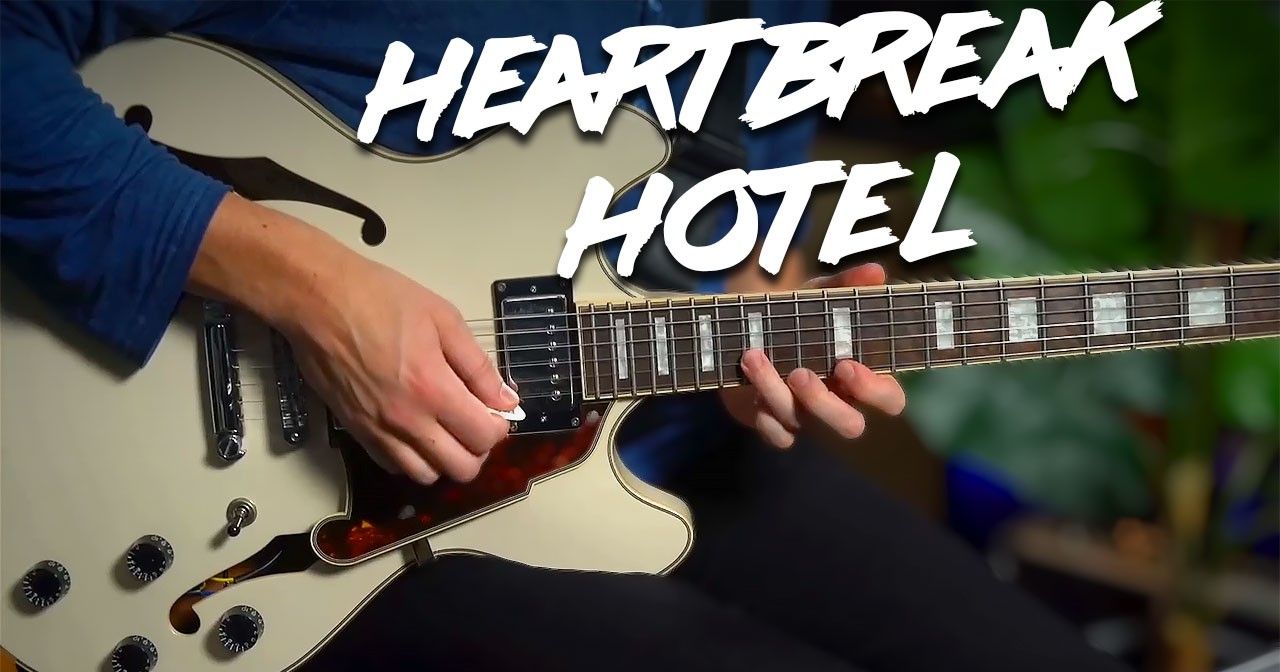
Why would I say Heartbreak Hotel is a great solo for everyone to learn? Well, it's E minor pentatonic. It's up here. And That pretty much covers all the essentials of lead guitar playing, especially from a beginner point of view. It also gets you out of the kind of bad habit when you're practising single note stuff and, and scales of always starting from string 6. You know, starting like this and then eventually going up to the thinnest strings, cos all the stuff happens, all the good stuff happens on the thinnest couple of strings. Alright, so that is Heartbreak Hotel using the E minor pentatonic scale, but actually using. The B note at the 12th fret on the B string. A D And then an E, 1215, 12. Starting off though with a flat first finger, 1234. And then 123. And then 12:15. And that's a slide down, again, a great technique to learn for beginners. Not actually hearing. An end note. This sort of throwaway, I love these kind of slide downs. Really, really cool um to be able to add those as a beginner. The 3rd time through is the same as the 1st 1. And then the final time for a, a real beginner of electric guitar, I'd probably encourage just going 12 and 12 and going 1 and 2 and 3 and 4 and uh. But the actual way of doing it. And I'd encourage a whole step bend. A unison bend this is called, where we bend. The D note up to the pitch of E. And we kind of 1 and a 2 and a 3 and a 4 and a. Now this is how I've seen Angus Young do string bends. Because he Is kind of a small chap, so he's probably got small hands, and I think he learned to use his little finger supported by the 3rd finger to do any bends on the B string. Moving up to like the octave of that key. And that's something I'd encourage you to have a go at. If you have really chunky fingers and chunky hands, you may prefer doing that with the 3rd finger. And I've even seen people do this with their middle finger. So you use kind of whichever feels most comfortable, middle, 3rd, or pinky, but if you're using the 3rd or pinky, support the bend, doing what Paul Gilbert calls the giant 1st finger or the giant finger. Cause you can really push up with the third finger far easier than you can with any single finger, but I have to admit so many of my favourite guitar players like Dan Hawkins of the Darkness for instance, or uh I believe Slash often does these, these bands with the middle finger, kind of. Those kind of things. He'll often use the middle finger, cos he's probably got really strong fingers, really strong hands, but whatever you do, don't push up directly, don't push up vertically. You want to move on an angle going in the guitar neck like you're going in for a handshake with your fretting hand and pivot around the wrist, it's the wrist that moves up no matter which finger you're using. And the fingers really don't move, whether it's the middle finger, the 3rd finger and middle together. Or the little finger. Third and middle together. The, the fingers don't move, it's the wrist pivoting, er and that's the biggest lead guitar technique, and this is a great place to learn it. And you're really making sure that that bend is in tune, and this is a two-step or whole step bend, so I. 2 fret bend. And we're bending D up to the pitch of E, which is also the same pitch here. And if you go too far, It sounds kind of like that, and if you don't go far enough. It sounds like that. This is called intonation or bending in tune, and it's the most important thing to get when we're doing. A simple solo like that. Now if there's a, if they're a little bit out. Like that It still sounds good, there's a tension there that's really cool, especially when we kinda. And we have all this tear that happens between the two pictures getting closer and closer. And then evening nap. That sounds really cool, what doesn't sound good is going past it. Or not getting anywhere near it. That sounds bad, but if we get kind of close. It really works and in fact it's a real uh recording technique for each note to be a little bit out of tune from standard tuning, so it, so the harmonic's kind of er er even more harsh or more pleasant. And this can be really practised here. So a recap over the full uh solo and let's look at this in context, so we kind of have, well since my baby left me. And 12:12 dragged down, I'll find a new place to dwell. Well, it's down at the end of Lonely Street. 7 code. Breaker, I've just realised why do I have chorus on my sound? Where did that come from? Uh, there really shouldn't be a chorus there. Honestly, not a clue. Bugs in the system today, it's all good. There's a bug in my system too. So E7 Heartbreak Hotel and then it's ace uh a power chord. to And that would repeat until we get there solo. And we can do little things like. A 7 with the little finger. And then finishing on. To E7 as a very standard. Kind of blues ending, and that would be Heartbreak Hotel, really cool one to get under your fingers, not only for the string bending techniques, but also just, All that part as well. Little slide downs, simple, done well.
In this video
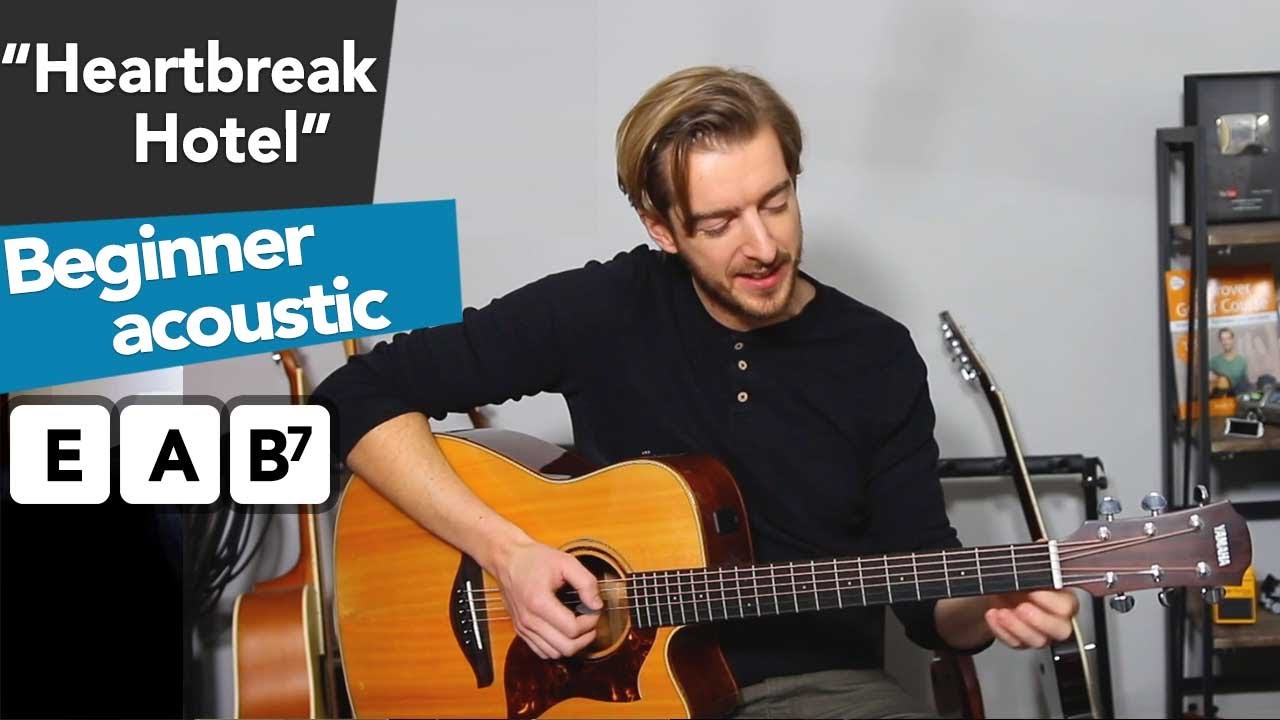
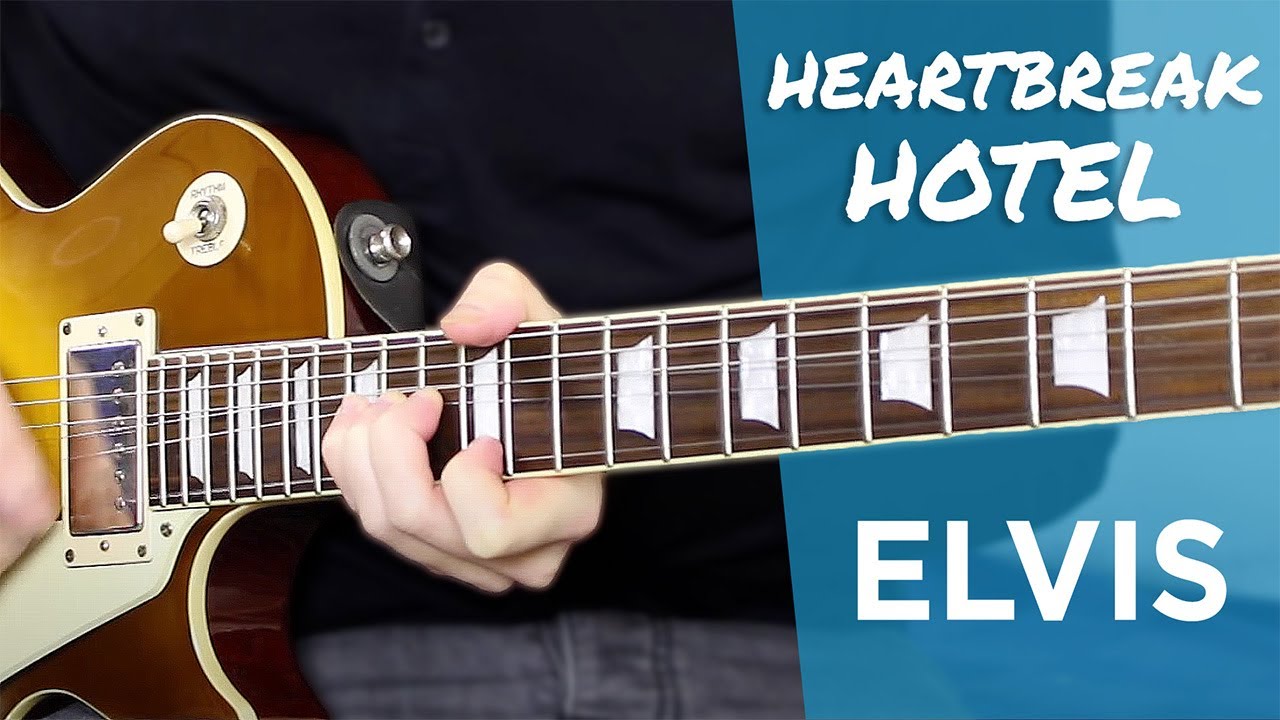
An easy beginners guitar lesson where we learn to play 'Heartbreak Hotel' by Elvis. I also show you how to play the most common blues guitar riff EVER, aka a blues shuffle (or the ‘status quo’ riff as my Dad called it.
Great for anyone wanting to get started learning to play blues rhythm guitar! You can also scroll down to see the tutorial for the easy solo.
Heartbreak Hotel - Lead guitar solo
Enjoying this video?
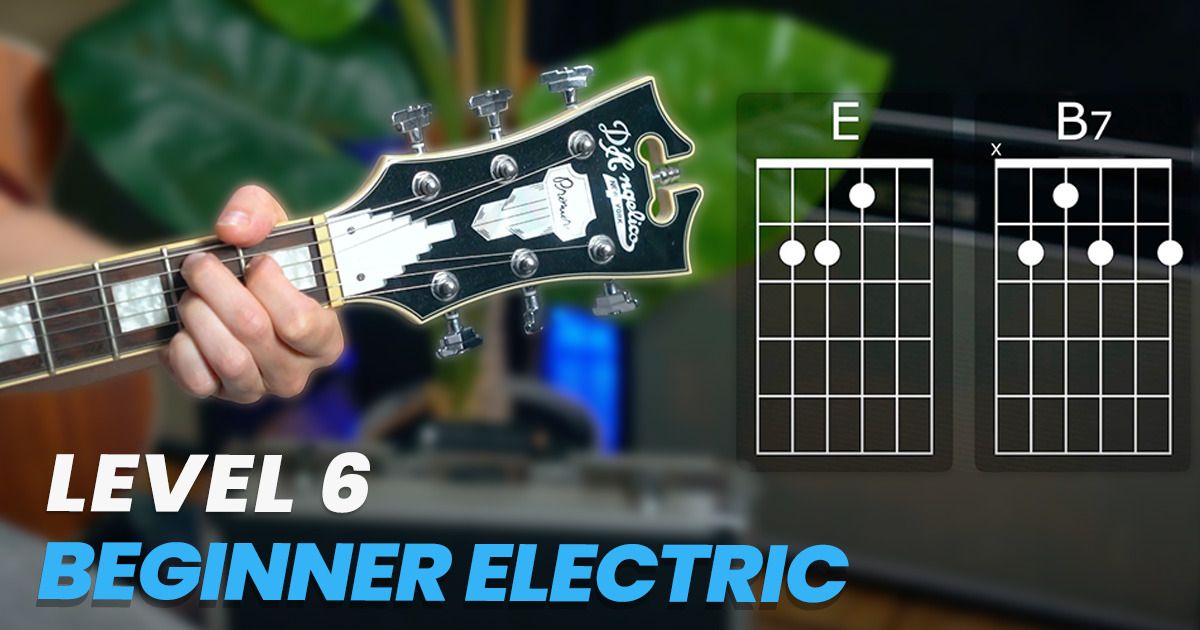
Try this course - Beginner Electric Blues & Chord Embellishments
This level introduces you to the exciting world of blues-inspired guitar techniques and chord variations. From Texas-style blues to Clapton-inspired open string techniques, this level will broaden your musical horizons.