Creating Basic Kick and Snare Sounds
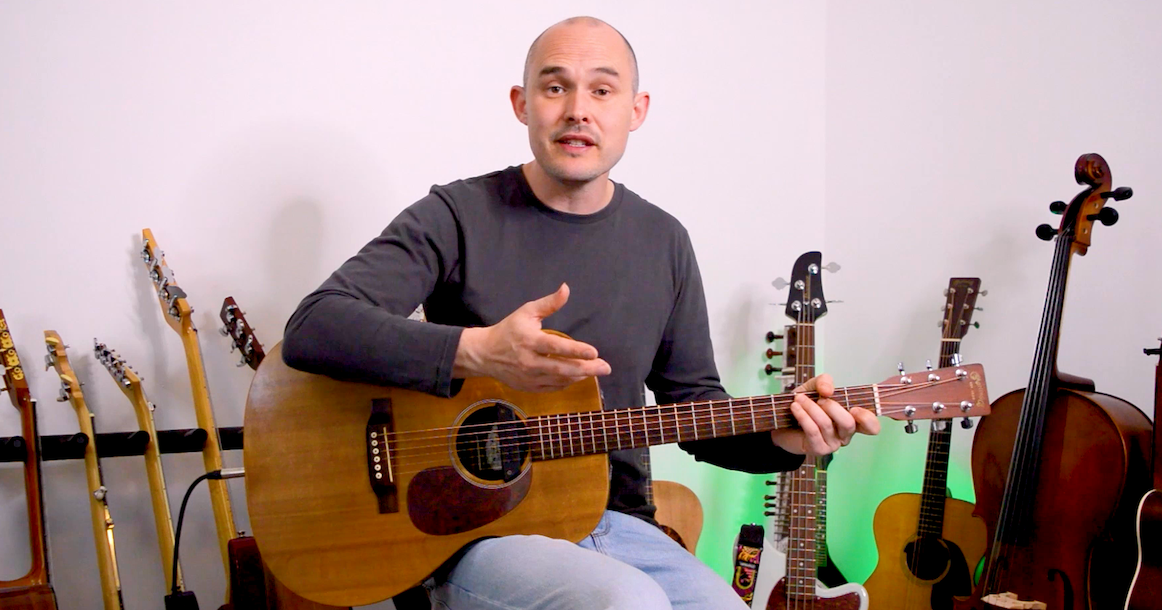
Hi there, in this video lesson, I'm gonna be teaching you how to do a kick drum sound, a snare drum sound. And a kick and a snare drum at the end of the guitar here. Now we're gonna learn these sounds in isolation so that we can really hone in and focus on them and perfect them, so that you're really comfortable with playing these sounds or making these sounds when we move into the further lessons. So first off, we're gonna look at the most familiar sound and movement to us, which is. This snare drum sound by slapping the strings, OK. What happens here is we turn our wrist. That's why I say it's the most familiar, because that movement of turning our wrist is something we do day to day all the time, but also in guitar all the time. So most of our movements in our strumming or picking hand are based around a down. Stroke or an upstroke. And we do that by actually turning our wrist. So this string slap here for our snare drum is essentially a downstroke, cos we're turning our wrist out like this and our thumb comes round and clicks against the lower strings. We don't have to be super accurate, we're just aiming for the EAD kind of area and using the side of our thumb, probably the joint, just to make a clicking sound. Now it's really worth spending time doing this, even once you've made that sound. Try and hone how you control the dynamics of it, because we want to be able to be consistent and dynamic with playing the sound, we want to be able to play it loud, quiet, or just consistent all the time. So take some time to get. Control of that sound and my advice is that actually, most of that control will come from being aware that the movement is coming from your wrist and not your thumb. Your thumb and your fingers are just kind of loosely sat there as we turn our wrist. So once you're comfortable with that sound, we're gonna look at playing our percussive beats back down here on the end of the guitar, and we're gonna use the same ideas in movement here, where we're doing downstrokes and upstrokes. So they should be familiar movements, but probably playing around here on the guitar might be new to you. So that bit will be a little bit. Of a challenge, but actually the movement is something that you will do every time you pick up the guitar. So, holding your wrist out, turning your wrist this way or that way, you're either doing a downstroke or an upstroke. And down on here on the guitar, we're gonna do a downstroke, hitting our thumb against the belly of the guitar, and we're gonna do an upstroke, hitting our fingers on the side of the guitar. Now crucially, I'm not doing this super hard, I'm actually trying to be as light as possible and giving it a little bit of bounce to the motion because that means the guitar can have room to vibrate and actually sort of shift some air and make some sound. Crucially though, we don't want to break or crack the top of our guitar, so it is important to be light as well. So as soon as you start doing this, try and bring back the volume. As low as you can possibly stand. Always remembering that we're turning our wrist, it's just the same as a down or an upstroke. Now, the final movement is our kick drum above the sound hole. Now this is going to be very, very tricky. Whatever level of guitar playing you're doing, it's very likely that you would have never ever done this movement at all. It doesn't relate to a downstroke or an upstroke or even tapping on the neck. What we're doing is we're moving the heel of our hand down. But leaving our fingers and our elbow where they are. In fact, we don't really do this motion in any movements in day to day life either, so it really pays to spend some time focusing in on this. And please accept and remember that it might take several weeks to get comfortable with this, just from repeating it on occasion, maybe every couple of days, just going back, just until you can get used to the motion. So talking you through it, if you can hold your arm out like this and you're gonna move the heel of your hand down, but crucially, as I mentioned, fingers and elbow stay as exactly in position as you can anyway. So heel of the hand goes down. And these stay the same. The idea is that the heel of the hand is going to make contact above the sound hole somewhere, really don't have to be super precise, you can find where the best place is on your guitar and it's gonna make a kick drum sound. And then after making that sound you're going to move back, as I was talking about. Around here, if we can sort of bounce, it gives the guitar room to breathe and vibrate. So, holding your arm as you would when you're normally strumming or picking, let your hand sort of relax, and then we're gonna do that motion where the heel of the hand hits against the body of the guitar, but our fingers and elbows stay as sort of similar to where they are as possible and then the heel of our hand returns. Now just with the other motions as well, you want to start gentle. In fact, just making a sound that's barely audible is a really great place to be because we don't want it to necessarily be louder than our chords, it's complementing what we're doing. So play gently, don't split that top of that guitar, just keep it really, really light. And also. Keep the sound as consistent as possible, once you've found a volume that's comfortable. So if you're doing it super loud, then first of all, you want to bring it down in volume, and once you're there, it's not injuring, it's not hurting you at all, then just take some time to keep it nice and consistent and think about where the motion is coming from. We don't want the motion to come from our arm. We want the motion to come from the heel of our hand and the wrist moving against the body as the rest of our fingers and arms stay in the same place. Cool, so that's our main sort of 4 percussive or body percussion movements. And in the following videos, we're gonna apply these sounds into our playing, but it's really. Worth just spending some time honing your skills on these individual sounds cos they're really, really important and everything's gonna come to life if these sounds sound as good as your chords or your picking that you've spent so long working on already.
In this video
In lesson 1 we are focussing on the very basic percussive sounds we can achieve on the acoustic guitar. In three different areas on the guitar body, we can create the three key percussive sounds;
Kick drum sound
Snare sound on the strings
Kick and snare beat at the end of the guitar
These sounds are relatively easy to produce but the trick really is in the consistency and dynamics of the sounds produced (loud or quiet). This is how we can be more expressive in our playing.
Exercise 1 - Snare tap on the strings
Use the side/joint of the thumb to produce a 'slapping' or 'clicking' sound
Use the twist in the wrist, like a 'downstroke' when strumming
Aim roughly for the E, A and D strings over the sound hole
Work on producing some dynamics (loud/soft) and as much consistency of the sound as possible
Exercise 2 - Kick and snare on the end of the guitar
Similar to upstrokes and downstrokes when strumming, we use the twist in the wrist to make percussive sounds
'Downstroke' hit with the thumb on the belly of the guitar
'Upstroke' tap with the fingers on the side of the guitar
Tap and hit lightly with a little bounce in the action, to allow the body to vibrate for good sound
Exercise 3 - Kick drum over sound hole
The heel of the hand moves independently for this technique
Keep the elbow and fingers level so that the heel can work independently
Aim roughly above the sound hole (and strings), but find the best placed area for your guitar's sound
Start gentle and build the volume to a suitable and consistent level
Repeat and try to get used to the motion as you build muscle memory
Percussive Fingerstyle with Chris Woods
Recommended Songs
Enjoying this course? Want to test out your new skills? Find out my recommended song tutorials that accompany this course and get total access to the site by signing up today!