
Song requests from every cover band's Set List! - Live Replay with Fraser
Yeah, how's it going, Bob? Hello to you. Hi Heather. How's it going this week guys, it was good to see you last week, so it's good to check in on you again. Pretty sweet. Just testing all my volumes. I've just been tuning to E flat tuning. So rather than E being. He would sound like. Uh Hi Capillar, hello, um good to talk to you. er I'm Frasier if you haven't er seen me before. er I took last week's live session, which was pretty sweet. Um, and today I'm also taking this one, which is cool. Uh, I'm just checking in. Checking in. So it's looking like, ah it's looking like unfortunately, I don't know if I can catch up on who's actually joining the live stream today because er I believe we've had some tech updates on the live page. Uh, Ah yes, and uh yeah, Andy is away at the moment, um I was looking in the wrong place there. Uh I've got another laptop so there. Andy's away at the moment, he's been um away, he's been in Mexico actually, um, as far as the last I heard from him. Uh, so he's actually back very, very soon, he'll be back for next Monday's live session. So, and he'll be back with all the usual stuff. Um. Last week we covered some sort of, you know, some sort of funk er guitar. Um, and it was all, it's all quite technical and, uh, a bit sort of, yeah, a bit technique based, we were looking at sort of. Looking at some funky strumming, which is pretty cool. We talked about 16th rhythms quite a lot. Um, but this week we're just gonna kind of, er. Yeah, yeah, that's right, covering the, covering the slot. er so it's cool. um yeah, just do them every so often and then Andy will be back with the usual. Ah, I've got 7 people watching, fantastic. Good to talk to you all. I think we've got Tanya and Martin as well, I can see you've joined as well, which is awesome, good to see you again. And Martin, uh, which is cool. And we've got Trevor as well. Hi Trevor, if we haven't chatted before, it's good to good to have you in. Yeah, so, um, I was checking in on the Discord, er, and I was looking, and I was liking a lot of, um, a lot of the posts from your er open mic Sunday sessions, which I thought was awesome. It looked like you were covering The Cure, which was pretty cool. Um, I saw a couple of Fridays I'm in Love. Helps if you're in tune. So I tuned down to E flat a bit ago. Uh hi Trevor by the way, hi, hi mate. You alright? Um, yeah, I, I tuned down to E flat because a lot of the times when you're in a band or something like that, we tend to choose to E flat tune to E flat, but I guess we'll talk about that a bit more in a minute. Um, yeah, uh, Capella, I hope I'm, I hope I'm pronouncing that correctly as well. Um, yeah, you're learning fingerpicking. Cool. Also like to learn playing without a pick. Of course, yes, fingerpicking, very good. Yeah, cool. Let me see if Checking my tune in there. Yeah, oh, so it was, ah cool, Heather, thank you. It was Cure or mostly, yeah, mostly Cure, but there were some Smiths in there as well. Yeah, cool. I think I saw um I saw one Smiths um video. Um oh it's a shame I can't mention who it was actually cos I didn't take note, but I was, I, I really was impressed by ah especially quite a lot of um really good examples of really good strumming and bar chords going on, which was pretty sweet. Um, yeah, who did I really like? I think Heather actually, it might have been, if this is the same Heather, which I assume it is. I really liked your video, Heather. Um, I thought that was really good. That was Friday I'm in Love, wasn't it? That was really good, wow, you're honestly so impressed, like the, um, I know that, yeah, that B minor chord. In that particular song. I think getting that strumming down is just really, really good. um and there is all those embellishments, isn't there, but um. Yeah, yeah, the B minor chord. Um, I read, I just looked, um, I was on Facebook earlier and I saw someone talking about, and basically it was a picture from. Sort of their, their point of view, looking at the fretboards or looking down at their hands. And someone mentioned, they were using a a a minor barcode as an example, so really similar to that B minor chord. And they kind of mentioned something about twist this, they called it a twisting technique. So they had two pictures side by side. One of them was just how they normally do that chord, and then they sort of mentioned about a twisting. And I think what they were getting at was um making room for the fingers and and what it really was, was I don't know if you ever noticed Andy talking about your elbow. So when you might, if you first started doing a barcode, you might stick your elbow out here, like under here, and you might be a bit like that. You can already see and kind of started creating a lot of tension, but if you bring that that elbow in. And I think this is what this person on Facebook was referring to, they were referring to this, cause then what happens is you, these fingers kind of start going on a bit of an angle. And I think that can, cos I went, ah, so you see, I can see my own arm moving. When I'm on the D here, my arm's tucked in nicely, but when I naturally extend there, it starts to come out a bit more so. It's quite nice to try and get that in. So it's out at the moment See it moving? Cos I think with the, with the normal open chords, um yeah your your elbow can kind of come out a little bit um just by it's natural, natural, isn't it, but then, yeah, that naturally tucks in there. Yeah, really er yeah, interesting, and I think um that can be some of the help. The other tip that I saw people in the comments section of this Facebook post that I was reading through, um someone was mentioning about, about this first finger pos positioning as well. And I think what I was getting from that was when you bring your elbow in. You might naturally start to come onto this part of your finger, so like you might the outer part of your fingers are not in the grooves. Whereas you might think you need to be flat like this. You, you sort of you your finger sort of starts starts to come on a bit of an angle. You start using the harder part of your knuckle a little bit more. You might start feeling your knuckle, making the contact there, and that's what gets those strings to come out. Literally my knuckle is touching that high. And that's my elbow in there. Kind of twisting, yeah, yes, but I can, yeah, it's uh really interesting, um, but yeah, the twisting, I'm doing, keeping the elbow in, this is Trevor, yeah, learning, learning Sultan's a swing, so funnily enough I was in the D minor position. And it's like my elbow's tucked in nicely here, um, yeah, I think that's, uh, quite a good, I think that's maybe two top tips there for the barcards, I think it's uh, it's good and like and like Capila said, you know, learning fingerpicking. I think Sutland's a swing, funnily enough. It's quite a good one cos obviously he might not fly. It's very fingerpicky. Kind of a, yeah, pretty cool, good song to check out but er yeah and so Trevor, is it, I hope it's helping with the barcs, that particular song, I think that's a great one. I don't know if you just picked up there. So I was doing a bit of finger picking there, I was doing a bit of a, a sort of a roll. Which is just something you, oh I love work, I, I remember working on that technique a lot when I was quite young, like a bit younger. I've kind of got out of, out of the practise, but er one thing I did with that intro um or with the verses. See, rather than doing. Those really full barcodes. Stretching, really stretching, you can just bar part of that chord, can't you? So like. That's the sea. That's the B flat. And then that's the A. Following that A back basically. Yeah, well, cos you don't always have to do those bar cards, but it is obviously we want to get them down, don't we, and that is a great, a great example of it actually, Trevor, um. I do hope it's going well, um. But yeah, Martin, awesome, I'm just looking at the comments, he's started learning the piano from last week. Fabulous, um, bought myself a storage piano a storage piano, a stage piano. Yeah, so guitar and piano, that's really cool. Um, ah, really funnily enough, I went to see a band last Wednesday, um, bit niche, they're not very, very well known, but they're called Three Trapped Tigers. And they have a drummer who. Just went on tour with um. Uh, the Pink Floyd guitar guitarist whose name escapes me, um. Uh, David Gilmour, David Gilmour, um, just went on, so the, the drummer of Tree Trapped Tigers went on tour with him. Uh, they have a guitar player who is incredible, uh, just on another world, and then they have a keyboard player. And they're very synth based, and it, it made me want to, um, buy a, buy a keyboard actually and maybe play a bit more keys, um, I think it. From, from my point of view, uh, with like songwriting or something, I quite like the idea of visualising chords, uh, in front of you like this rather than always like this. Obviously the guitar has a very certain shape, um, but I think the keys, you know, you get to see what note you're playing and work on your hearing and er with the like with your note detection and er you, I don't even know what do you call it, um. Oh, my brain's not working today, but um. That kind of thing, yeah, just uh. Your ear, your ear training, ear training is what I'm trying to say, but yeah. I hope it's going well. What, what have you been learning um on the guitar and the piano, uh Martin? Um, anything we can look at today would be cool, um, I would like to check up on that, but um. Yeah, anyone else been working on anything kind of cool? Who else, who else posted, who was brave enough to post in the um open mic Sunday? What else, what was another one a good one I saw. Um, as always, I really enjoyed. Really enjoyed Steve's um. And also, uh, Leanne as well, um, shout out to you. It might be Leanne Marie as well, like, uh, I thought that was really good, you, that there's some tricky changes in that particular song. What song was that? Um, that was a Smith song, wasn't it? Hand in glove. Yeah, how many? How many changes, so many car changes, I might have to have a look at that. Um I do drunk text by. OK, drunk text, cool. Never heard of that. Um, yeah, cos I thought today we could, uh, definitely jump into some, um, some requests and some songs that, you know, I always like to look at, uh, different songs that I've never even heard of. I mean, Drunk Text. I've Definitely never heard of that, um, Henry Moody. I love um I love it how um so many people's er music tastes sends them in so many interesting directions. And it's really, it's why it's really nice to look at these songs, to be honest, um. Let me see. I'm gonna get a bit of Spotify up cos I want to, I wanna have a listen to this. Drunk text. By Henry Moody 5th of That But Nice. Do you You probably E minor. the sparks in the sky. Is. Very nice, I really like this. That's um lovely, lovely, just a lovely vibe to it that I really like it. I bet that's, I bet that's a great one for um the piano actually, cos they're quite good chords. Um. See how well I can figure out what chord progression that is. So it's in C. Um, We've got the Got the 3rd there, that's cool. We've got the, I'm going down the C major scale, C, C, starting with C. And we got the 3rd And the egg Minus 6, of course, this is how I, I mean I don't tend to work out songs like this, but I'm just thinking of it. Lovely cards, I love that kind, I love that those cards, it's kind of got a bit of a 6. I Um, yeah. I, I think of that song as having, um. A 6/8. 0 yeah, so you were doing it in D minor. OK, cool. Yeah, I think that that particular song, that Drunk Text, it's got um a 6/8 feel. Uh and it's like 123456123456123456. And the only way I can ever really figure that out is even if I, if I kind of go. It's got like do do do and I think of it as a drummer cause I used to play drums a bit when I was a bit younger and it's, it's got that kind of 123456123, and you can imagine ride cymbal. Bass drum boop and then snare and that's kind of how I come up with the, this is how you know it's 6/8 basically um which is really nice um. Yeah, I used to do Trevor, yeah, drunk text, I think we've all done a, a drunk text or two. Yeah, Capillar, yeah, can you show how to start playing without a pick? I kind of you to playing with fingers. Yeah. What um particular song have you been working on? Or, or I'll look at Sultan's of Swing for as an example, or um I'll think of something in a second, uh. Yeah, we can have a look at something finger style. What's uh. What's a very, we'll have to look at what's the most common sort of finger style tune and then we'll have, we'll have a little go, but um. Yeah, so Martin, that's interesting, playing the guitar helps a lot for playing the piano, chords wise. OK, God, yeah. That's interesting, so that, that, yeah, I mean I guess they work hand in hand in the terms of if you can learn one card on something you can learn a card on the other, but um yeah. It's kind of funny, I think of it the other way, I think the piano would really help with the guitar, but I suppose it's er vice versa. Um, Heather, this week I've been working on triads and cage system, playing chords in different places of the neck. That's really cool from the intermediate course as well, that's awesome, yeah. Triads and cage system, so important, um. Let's er let's have a little look then um. House of the Rising Sun, I agree. Capella, that's cool, so let's just do this in order. Let's do a bit of House of the Rising Sun. Uh, I really like that drunk Text, um, tune by Henry Moody, that was really, really nice. Um, I can, if I, if I actually do pick up some piano at some point, I'd really like to just learn some, get those chords down as basic as possible, doesn't really matter, does it? I don't think. Um, House of the Reds, and, let's have a little look. I'm gonna do, I'm gonna have to tune up, back up in a minute, I think. Ah. Nice. Um, for those who are just wondering, I'm just gonna tune up now, um, to be in tune. Uh, but I've just got my note there. That was definitely in tune, and sometimes this might be a way you've never seen anyone tune the guitar, I don't know, but some people tune it like this. Which is a great way, but you can also listen to the notes just like this. If I can hear that's a 4th, and then. That one's slightly harder. Tune up to a power card. I miss you. So yeah, House of the House of the Rising Sun, so. Yeah, I'm trying to think, uh, I'm just gonna have a look at what might be. Most common finger style. So Um, Cuz I think there's some really key. Key kind of ideas. See, fast car, fast car is a good one, But I think, just thinking technique wise, if you're where you wanna start. It's just literally, you've got your cards, whatever card, we can just start. So Capila, if you, I think if you wanted to start um and I hope I've got this right, yeah, um. Start playing without a pick, yeah. The way I would do it just to start out, which you, which you definitely would have been taught is assign some strings to some finger signs, yeah, well strings to fingers, fingers to strings, it doesn't really matter. Your thumb is always gonna do the bass note. So if I was doing House of the Rising Sun, for example. Um, yeah. I would literally, that's my first note there, that's the A, cos I'm playing an A minor chord. And what I've done there is just played it, but I'm gonna use my thumb on this bottom note and maybe even the next note below. So that's got them covered. Then, 2nd most dominant finger, I'm gonna be using this. Kind of a, that's on the G-string. Which is this 3rd note in this card. So we've got 2 fingers there doing quite a lot of work already. You can kind of get through it. Then you've got your middle finger as well, also absolutely useful cos then you could go. get that next note. That's just me using my. Middle finger comes in quite early there, so it's thumb. Finger on, thumb on the bottom note. Next string. It's my index finger. And then I'm literally using the next one. But what I think is really important is you can kind of learn. Like a pattern, like this. So you might go thumb, thumb, first finger, middle, thumb thumb, first finger, like that. Maybe just start like that. Then you can come back up the way, you can go middle, middle, first finger, and then thumb. That kind of thing. I think that's quite a nice place to start and that uh I think that'll get you through anything that's really doom doom doom doom doom. Well, actually that's 68. 1234561. 456. But quite a lot of songs. A lot of songs will kind of be built in that way and especially finger style stuff um. Yeah, I don't know, just kind of, I'm trying to think if there's anything more I can give there, but just based on. That kind of thing, I think you just really do want to start with assigning your fingers to some strings. Cause then even with Sultan's of swing, you might wanna play some chords, but if we maybe take a D minor chord. Just to keep it with open cards. What I would do if I was playing cards, same thing, thumb's always gonna play the lower note. In this case, that's a D because we're playing a D minor chord. Then what I do quite a lot is group these three fingers together. These 3, these 3, like this, and then I'll. That'll kind of give me a lot of. They can do so much, so, a lot of quite a lot of control. That kind of thing. I think that's quite a good, you could literally, you could go. And just play it on the beat. 2 and 3. For band and really get that motion down, cos then when you go to learn a song, you can apply, it's the same with strumming patterns, you might play along, you might play along to a song, but you might just be doing single strums at first when you're first learning how to play guitar, you might just be. You know? Um, I'm trying to think of a song example. Yeah, dunno, um, just trying, trying to think of something random, but I think it applies to the same thing because you're just playing like that 11 song per bar, keep it as simple as that. You might even wanna just do it like that. 234. 234, and just have your fingers doing that kind of thing. Um And Bob, thank you. Of course, er yeah, absolutely, I think um I think the fingerstyle course is so and this course is amazing because it not only will show you patterns and things like that, but there is also a section where there's single note melodies as well. You know, which I think is kind of cool because um that just gets you used to actually using your fingers. So follow some of those melodies, why not, um. I can't remember, there was a really specific example I had but I can't think. But um yeah, I think it just, it literally just gets you used in using your fingers, you might want to start out with your thumb and play something like that, you know. Yeah. So Bob, yeah, Bob, I mean, uh it sounds like you know the course really well, which is really cool. I think I, I definitely remember you mentioning it in the past that you've been working through, which is really good. Um, and I think there's so much more to cover in the fingerstyle course as well, we could, you know, go on, go on forever and er. Um, but yeah, do check it out, at Capillar, please do, that'd be so cool. Um, and then check in on check in with Andy next time, next week, uh, in the coming weeks and see how you get on with that, and any feedback would be awesome as well, because I'm sure there'll be more, uh, fingerstyle content coming soon, if not a new course at some point. Uh, because I think it could, there's so many, the styles are always evolving and the way you want to teach them, um, I think are also, it changes along with the times, um. Yeah, there will be, yeah. Absolutely, Bob. Yeah, get through the site, check out the technique Tuesdays, we've got there's all sorts of stuff on there. How to bend strings, how to play with your fingers, stretching your fingers. That kind of thing. Have you guys ever booked a function band or anything like that, um, to maybe your wedding or your party or anything like that, um, like just last er weekend I played. Um, a 50th birthday party in Yorkshire, up, up where I live. Um, and I was really interested to see if you've ever, um, basically if you've ever booked one or if you've ever seen, you know, what kind of function bands have you seen as well. Um, so if you've ever hired a live band, I would be quite interested. Um, cos like I say, the, um. The, this, it's kind of done now, I've kind of finished my last gig, which was quite nice, um, now I'm, I'm off for Christmas, which is kind of cool. Um, and do you have, does anyone have any, um, sort of desires to get involved with, um, a band or a function band or anything like that, even a, a pub band as well, of course. So pubs, you know, weddings and parties. And obviously charity events as well, cos charity events, um, I played quite a few gigs, um, like with for charitable causes, um, where I've just got a band together, um. Where we've done it for fun really, when you know obviously we haven't got, we haven't got paid for it and it's been a good way to get, like I could have even like played drums or something like that because it's not my main instrument. It's a good opportunity er to get involved if there's anything like that, um. In your area or something like that, you never know. But I'd be quite curious, um. But yeah, and I was thinking er with our with our wedding band um I thought we could look at some of the some of the set, the set lists basically, which I thought was quite interesting. And Yeah, and like when you play in a wedding band, the ultimate goal is to keep people on the dance floor. OK, so we, we sometimes will have a set list. Sorry it's a bit chewed up. Uh, this is me standing on it all set. But we'll sometimes have, I'm glad I've got a paper version now because the, the technology isn't working. But yeah, um this is like our set two basically, we have a set 1 and a set 2. And um. We basically build our um setlist to, you know, sort of keep people on the dance floor, so we think about which song should come after the other. So you might be thinking, and it'd be interesting to hear your thoughts on this um. How would you build a setlist? Would you? Open with a uh open with a big song to get people's attention, cos sometimes that's what we do. Uh well, so for example, I played a, a gig this year, we started with I'm a Believer. So if you can imagine, after um after our first dance as well, we played a first dance for someone for the bride and groom to dance to. And that was the You and Me song. You and me. Always. And that was after that, so we went from. Let me get a call. I played it the gig a bit ago, so let me see if I can. Um, Trying to think how it by the Wanna Dies, Wanna Dies, which I thought was cool, um. Yeah, that, that's the chords, yeah, G. So this is kind of a cool um it kind of starts with this nice er these kind of chords. That's a lovely song. Great song. So we went from literally that, so it was in D. Which I thought was kind of cool, and then we'd go into. And it's just to keep that energy up, so our first song was I'm a Believer, which is pretty cool. Uh, so it's quite an interesting, quite an interesting topic in a way, isn't it? Um, but that's a good one to learn actually. If you haven't heard that. Oi, and we always do, um, again, in, in your bands and stuff, you're always trying to interact with the audience, so I. Hey, and we always do a little shout. I saw her And one thing I do in this, so I'm not the singer in our band, um, and we also have a keys player. And just thinking about this first song from a band perspective. I'm not always playing the chords like this, so Heather, I think you mentioned about your cage system. OK, this is where if you think about um in a band, cos the keys players playing and and Martin as well um if you're playing the keys. The keys has the option to have like a bass in the left hand and then a full kind of chord, you know, so it'll be quite a full chord, unless they're just playing a single hand, but they'll probably play quite a full chord. So as a guitarist, you have an option here. You might not follow them. Otherwise, the mix kind of becomes a bit too full. So what you can do sometimes, and we have this awesome opportunity, we can do it as simply as this as well, so a caged example would be if you want to play a G chord, you can play a D chord like this. OK? But if you move it down, starting at the 7th threat. Not the day. That that same shape is a G card. So you could go. Fairy tal And you've got that, and it sounds a bit less. You might do that if you were um playing like a an open mic or something, but you've got that option there. But what I do is I also play it at a bar at the 12th fret. You can hear that sound the same? That's an option, cos that's just your that's just your A bar, a a er open card. We'll play it down here, that's a G. And then you can do this kind of um Brian May-esque. So I just use those kind of chords just to, just to break it up. Um, so it's quite an interesting one. But obviously that's got quite a good groove to it as well, and I think that's number one on the list to sort of, we've started off fairly high energy, um, and we're trying to keep people on the dance floor. Um, not an easy task, um, unfortunately. Cos, uh, as you can imagine everyone's like eating the wedding breakfast or we're eating the food and, um, and they're just not ready to dance yet. Uh, so, but sometimes I've, sometimes people are always up for it from the, the moment the word go, but um. Yes, er Bob, yes, I'm just gonna catch, catch up on the comments. Um, Bob, you say I was at a party in my local last night. Sweet. With a band, yeah, with a local band, cool. Yeah, this is the kind of thing, so um. Was it in a pub or was it at, yeah, was it at a function, function kind of thing? It was interesting to see 4 or 5 of their songs I knew and could play and would have played myself if I'd been playing. So it's really interesting that um like you're saying that Bob, because I was wondering this myself. There's so many songs that we might play semi-professionally or professionally if you're in like a function band or a or even a pub band, you know, and you're playing very, very regularly. There's so many songs which we know to play. That we know you will like, that are also. A song that you would learn if you were first learning the guitar, um, and this could be er Don't Look Back in Anger. So it's the simplicity of that, it's like massive songs. It just because you're playing professionally doesn't mean you're playing complicated songs. So if you ever have ambitions of playing in a band, it kind of shows that like, you can get there relatively fast because you, you know, you obviously need to practise, but um yeah, it's just er it's quite interesting, but. In our, yeah, let's just see, see what other song I mean, I mean we go from I'm a Believer to we've got Breakfast at Tiffany's, which is pretty cool. Even stuff like Shotgun by George Ezra, Pretty nice, um, she's electric. So I saw a band, I went to a beer festival in Manchester like a couple of er. A couple of weeks ago, and uh and as you can imagine being Manchester and Oasis, Oasis are still kind of everywhere, aren't they? This is a perfect one for I guess to play in a in a band. But also if you were just on your own as well, like as a cover. That thing I don't know if you noticed there, but a classic thing. I totally, I stayed on the ecord too long there, she. And I think that's like um one thing I was thinking about recently is that when we learn songs, and I, I sometimes think I notice it in the open mic, open mic Sundays. So if you're learning a song and you're recording it, you obviously, you know, we're we're we're striving to, to really get it to that point where we've we've essentially learned it perfectly. But sometimes when you make mistakes and stuff, like yeah, it's like, it's, I, I see a lot of us doing it as well where we just, we do plough through and that is the best, that is absolutely the best way, isn't it, you know. Doesn't matter if it goes wrong. You've gotta keep going And the amount of times I miss a chord and or a trick that if I'm playing live to get out of it, I'd just mute my string. I would, I will do this and it's such a, it's such a, I don't know, maybe a bit of a cop out, but um. If I did, if I forgot the card, I'd just do this. Ah, there we are. And er just kind of gets you through doesn't it? Never stop, never stop playing. Um but yeah, I think some of the open mic Sundays that this, this time round were really, really good. Um lots of tricky stuff but yeah um. This is funny, um, I'm just seeing what you guys are saying about um Trevor's uncle. I think Trevor, I, I think I might have seen er a couple of videos of your uncle. Um, he's a very good player, is he playing a lot of electric guitar? I think I, did I see him maybe I saw someone on on the Discord taking the mick out of like um. Uh, like me like metal music or like hair metal, like eighties metal, and someone playing, I thought it was proper funny. I don't know if that was, if that was your uncle, but that was, it was very funny. Um, You'll need 60 years until you get on stage. Trevor, no way. But yeah, but your uncle's been on, he's been on stage for 60 years. Incredible. Yeah. Pretty cool. I did a gig recently where I depped, I depped for someone, which means, you know, to sort of stand in and basically um uh it it's one guy who then gets other musicians. And we were just a three piece, so it's just guitar, bass and drums. And uh he kind of. Taught me something pretty cool, which was just about how you um how you set up your setlist, which I thought was pretty cool in terms of like the energy. So at the moment we've had I'm a Believer, Breakfast at Tiffany's in this particular set. Shotgun, She's Electric, Friday I'm in Love. Crazy Little Thing called Love. Which was cool. Uh, I think that's how you play it. I hope so. The er solo's proper, proper cool, um, which you can't. OK I remember it. It's got a, it starts a little bit like that I think, which was er that was a tricky one to learn. But then he goes into Brown Eyed Girl, which the first kind of audience participation a little bit I think other than she's Electric, um. Yeah, and that's a tricky one as well, that's a that's another good example of like triads. And I've been caught out on a lot that on a lot of that before, or you could play it up here. Oh, whatever that one is. But that's uh, they're, they're 6th, cos they're 1/6 apart. And if you had a, if you had a go at Adrian's country course. You'll have come across a lot of them, or you can do thirds. Again, this is his kind of cage system. It's quite difficult to get that life as well, it's uh definitely a bit of a challenge. Um, yeah, so it kind of picks up. Um, and that's got the er halalazs, isn't it, it doesn't it, which is nice. And to have this so early in the set, literally the sort of 7th song in already, uh, it's quite like, right, get everyone singing, get key people on that dance floor. A bit of a classic. I don't know if you guys have ever had a, had a chance to halala along with the band, but it's uh quite a good one. And then Proud Mary, again, Proud Mary quite early on. In my, in my band, we finished with this song, so quite interesting. Amin I Yeah, that's a, that's a good one. people love that song, don't they? Um, if you haven't learned Proud Mary, that's another one that's in a, in a setlist. Um, literally every setlist, every time I play live, we will get this proud, a bit of Proud Mary. I see. Yeah, great one, but that we did the Creedence version actually. Creedence Clearwater Revival, which uh bit, bit slower. Yeah, Something like that, pretty cool, um, yeah, I do love a bit of Creedence Clearwater Revival. Really good. Um, another one which you might imagine to pop up quite a lot, and this is um a really good version of this song. I don't know if you've ever learned the, the seven Nation Army riff. Um. A great sing single note riff. That's a, that's a great one to learn actually as well. And this can kind of go back to what we were saying as well, because with finger style playing. Introduce your finger here and literally like maybe your thumb. Get used to your thumb there. Switch fingers maybe. And what you can start to do is go. Introduce a bit of percussion. And do that if you want. er but that's quite a good example, isn't it, but this particular version is by um. Ben I uncle, I don't know, er but it's a Ben, Ben something um but it's more like this. And it's just highlighting the chords in that riff. So mostly just minus. Ba ba ba ba. Ina. And then like offbeat rhythm. If you wanna get practising your offbeats. 1 and 2 hold me back. Try to do this as well. time. for. And you can see how. It all starts to come together. So, extremely popular song, but that can be put into so many different styles, so that's quite a popular one I think to er to make its way into a a setlist, um. Yeah, and it uh. What was my other, yeah, so it's uh yeah, so my other question is just sort of why do some songs sort of stay ever present? I don't know if you've ever noticed this. Um like a Mr. Bright Side. Uh, why is that song just so, so, so popular? It makes me laugh. Um, chuck some comments in, by the way, if you can, because I don't know if the comments section's working. Oh no, scary, cos if the comments section's broken. I've broken everything. Um, but yeah, songs, songs like Mr. Bright Side or Dakota, um, you can find on every setlist in every band. But obviously they are, they're great ones to learn on the guitar, which I find quite, quite interesting, um. Sex on Fire. You know, so that. Thank you Martin, absolutely. Martin, not Martin, apologies. Uh, Martin, yeah, Sweet Caroline, yeah, I, um, we lit, we actually had someone on Saturday night, um, on my last gig. We had, um, someone request to sing Sweet Caroline, um, because our singer knew, uh, the people that, um, whose 50th birthday it was, we were like, OK, we'll let, we'll let you do this one, because usually it's not a good idea to sort of let people who might have been. Having a few drinks, come on stage and start spilling everywhere, um. I wonder if uh. Yeah, it's not a great idea, but yeah, Sweet Caroline. again I Uh Oh, I know it's growing strong. I mean, it is, it is a good one. And then sweet. Good, so good. But when you actually look at it as a song, it does actually, it is a lovely song, um, I guess cause it's a crowd pleaser and we hear it so much, a little bit like Seven Nation Army as well. Um, but it's a great one to end on, isn't it, because that's how you would make your setlist, isn't it? You would sort of start with your I'm a Believers and um, you know, maybe some Oasis tunes or something like that, and then you just build up, build up and up and up and up. Um, on this set lists we, we end with I Want You Back, 500 miles as well. No no that that doesn't get talked about enough, 500 miles. Oh are Uh, how do you play the minus? But, um, yeah, that's, uh, 500 miles, just a three chord song, that's just absolutely huge, um, but a great one to end on because you sort of, um, you've built up to this point, um. And it's quite a nice one, Yeah, what, what's another, yeah, I think Sex on Fire is a massive one. I, I don't know if you've ever guys have ever heard like a band play Sex on Fire, it always, it always works, um. Yes Gareth, awesome. I'm doing 6 X songs at our X party. Any advice in which order? OK, nice. This is really cool Gareth, I've, I think I've noticed you. I don't know if it was you that maybe did the um when it was Paddy, Saint Paddy's Day as well, I think I remember you uh doing some Irish tunes as well, which is pretty awesome. So which order of the songs, yeah. And ah funnily enough I was thinking about, I tried to find what key we did our Christmas medley in, cos we did a we did a sort of Christmas medley. I couldn't find out what key it was, um, we did I Wish, I Wish It Could Be Christmas and then the Mariah Carey one, all in like one song kind of thing. Uh, but I couldn't remember the key and I couldn't remember how to play it, which was really annoying, cos we're not doing any Christmas gigs, but, um, the songs are Last Christmas, OK. Uh, kind of Butchering that one. Last Christmas, we've done that a few times, I can never remember how I play that either, cause they kind of go in my ear and then come out the other side and I forget them. Rocking Around the Christmas Tree. OK, yeah. A version of 12 Days of Christmas. Um, I think you've got to end with. End with a version of 12 Days of Christmas, surely, um, cos that's a bit part partition, you know, like everyone will get involved with that one. Um, you know what, I don't know if I know war is over at all. Call me crazy. I don't know why I don't know it. Um, how does that even go? Um, Happy Christmas, Kil Some whispering, this is Christmas. Oh. Oh yeah, Fairy tale of New York. Oh yeah. Pub. Ah this is a good one, this is good actually. I did, I didn't know this is. Nice. Oh surely, I think that's what you start with. Or, or you start with um last Christmas. Maybe last, last Christmas in the middle, so I, I'd go, war is over. Rocking Around the Christmas Tree. Then Last Christmas in the middle, because I think it's like slower but you kind of, I think it's kind of, we're going for this, we're going for a setlist which is a bit of a rollercoaster. Um, Slade, second to the penultimate to 12 Days of Christmas, I reckon. But I do think like I've become, I'm becoming a fan of building up slowly, um. But what I'm really used to doing is making it a bit of a rollercoaster, kind of going right we're up here and then we're down here, cos then it, you've got this idea that you're probably keeping people er keeping the people's attention by kind of going up and down, but maybe maybe a slow build. Maybe um maybe a war is over, last Christmas. Slade, Rocking Around the Christmas Tree, then 12 Days of Christmas. So you've got your options. Either slow build or sort of, I don't know. Uh yeah, that's interesting. Oh I can't, I can't even remember our Christmas medley, which is really frustrating, but yeah, Fairy tale of New York, that's a good 10, so that's, that's also chucked in there as well. That's another one I'm at, um. I'm not super familiar with. I've never had to play many Christmas songs. But I do, I do know this On It's great. I've got Ah. My, my favourite Christmas song is by, by the Dinner lady, what are they called the Dinner ladies or what are they called? I can't remember the song, um, but it's one of my favourites that, but um I can't remember. Uh yeah, uh yeah, what about fairy tale, yeah, I think you just have to like weave, weave them in and out and get some kind of, uh, get it kind of going, or um just go for the slow build, Gareth. I'm sure you'll nail it. Are you playing guitar while, uh, are you bringing your guitar along to work, cos that is, that is really cool. Thank you, Martin, waitresses. Not dinner ladies. I don't know why I thought it was a dinner ladies. That's proper funny. Oh God. The waitresses, yeah. Is it this one? From those trees. I just need to catch my breath. I can tell an A chord in any song. I knew that was an A. I just knew it. Yeah, I could hear the A major there, you could tell that was a major. Major 3rd, root. To the 2nd. Ah, that's a great one, thank you. Yeah, Gareth, uh, good luck, I really, it sounds, it sounds really cool, the three of you, the three wise men. Yeah, that'll be really cool. Um, yeah, yeah, so, um, oh, guys, thanks for sticking with me, I kind of did my classic waff waffling on a little bit, but um I really wanted to show you the list, um, of what I got, but the, the, um, the software that I'm using was having a bit of a, a bit of a nightmare. Cause I really wanted to show you all the, all the ones, but. From uh where I from where I left off with Proud Mary, then we had Seven Nation Army, then we had Teenage Kicks. Good one for the B minor barcode. But then we went into You Really Got Me. Which I think worked quite well. And then song two, which I've never played, I've never done this before. Into twist and Shout. Which is a great one, Town Called Malice, that Town Called Malice is an interesting one cos that always, even though that's not particularly um got any, I know it's not particularly wedding-y, but that always seems to pop up in people's setlists. I reckon I, I recommend that one for the kind of the strumming. We've got kind of offbeats there. Yeah But it's a great one, yeah, um, but yeah, uh, really cool, um, but this is my last, uh, live stream, obviously, um, er, before Christmas, er, and it was kind of cool to have a little bit of Christmas chat there, um. But yeah, I hope you, cos I might not see you, but I'll, I'll be checking in on the Discord, um, and just, uh, yeah, keep up with it and be checking out your stuff for all the open mic night, er, open mic Sunday stuff. Um, yeah, and um keep an eye out for some new. Uh, Things coming onto the website, uh, we're gonna have a, some new, really exciting stuff. I don't know if Andy, Andy's mentioned it to you yet, so, uh, we'll, I'll keep you, I'll string you along there and Andy can tell you next week or whenever. But, um, yeah, have a have a fantastic Christmas. I think we're there yet, aren't we? Hm, maybe not, maybe a bit early for that, but from me to you, er, I hope you have a good one. Yeah, thank you. Yeah, uh thank you, er yeah, really lots of fun as always, um nice to just have the acoustic out and just play some tunes. Um yeah and hopefully I'll see you in January really I I reckon, cos I've I've got a couple, couple in there. Um, which will be really fun. Uh, yeah, no problem guys, uh, good to meet you, Capillar as well. I hope to see you on the next one, and Gareth, have a great, uh, time at work, playing all the Christmas tunes. Get people going. Yeah, thank you very much Colin and Glenn and Bob. And, uh, yeah, awesome, thank you Heather. Yeah, keep it going man, uh keep it going guys, I keep playing and uh yeah just uh I'll look forward to catching up and. Uh, seeing what you get up to over the Christmas period, so I'll see you in January at some point. But I'll, I'll speak to you before then. OK, that's enough from me, so see you later guys. Bye bye.
In this video
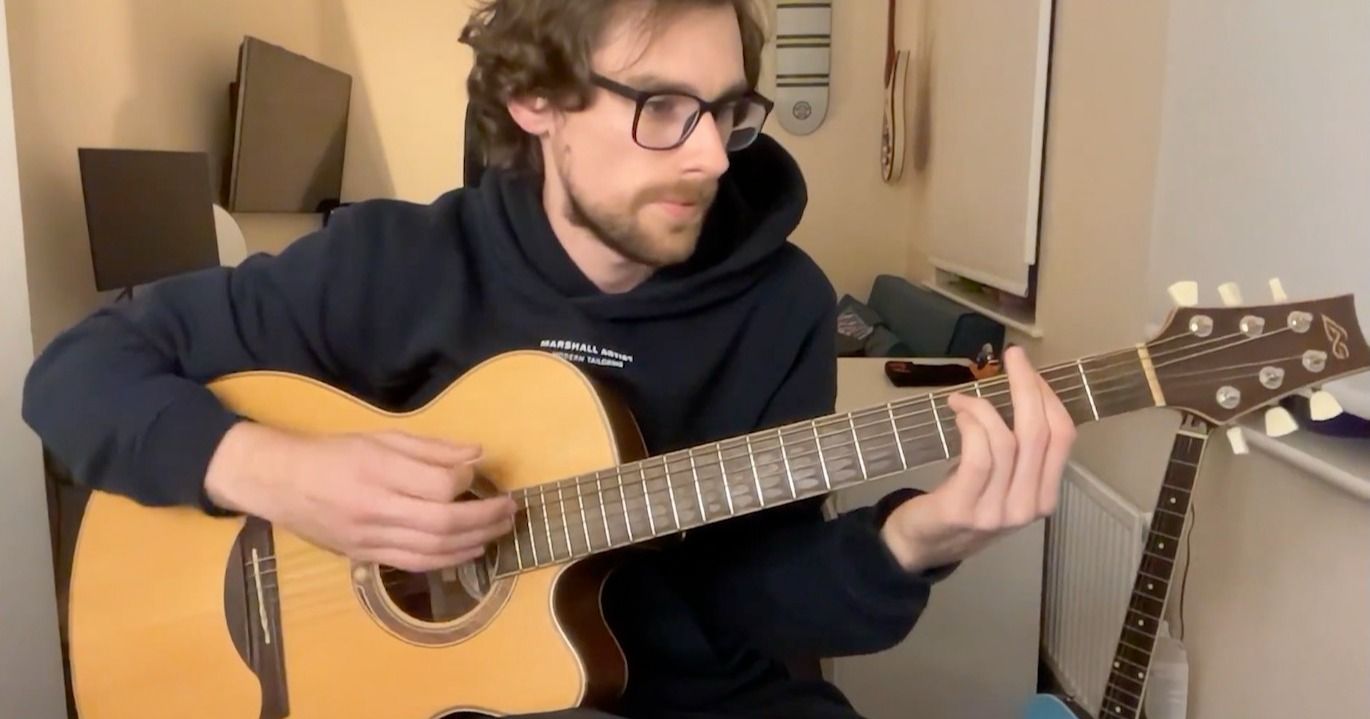
Live session with guest teacher, Fraser looking at technique tips and song requests!
Connect with Andy and other AAA members between live sessions with the Andy Guitar AAA Discord community - the link is on the membership page here.
Join me here on the website for weekly live sessions where we can work directly on your playing & give the feedback needed for you to move forward and get inspired!
Every week we cover topics such as;
How to make the most of your practice time
Songs and exercises at your level and based on your music taste
How you can stay motivated and maximise your progress
You can also request a tutorial for a song YOU want to learn and Andy will teach it during the session live! Each live stream is automatically available as a replay so you can catch up anytime and never miss a beat!