
The Secret John Fogerty Tuning - Creedence Clearwater Revival
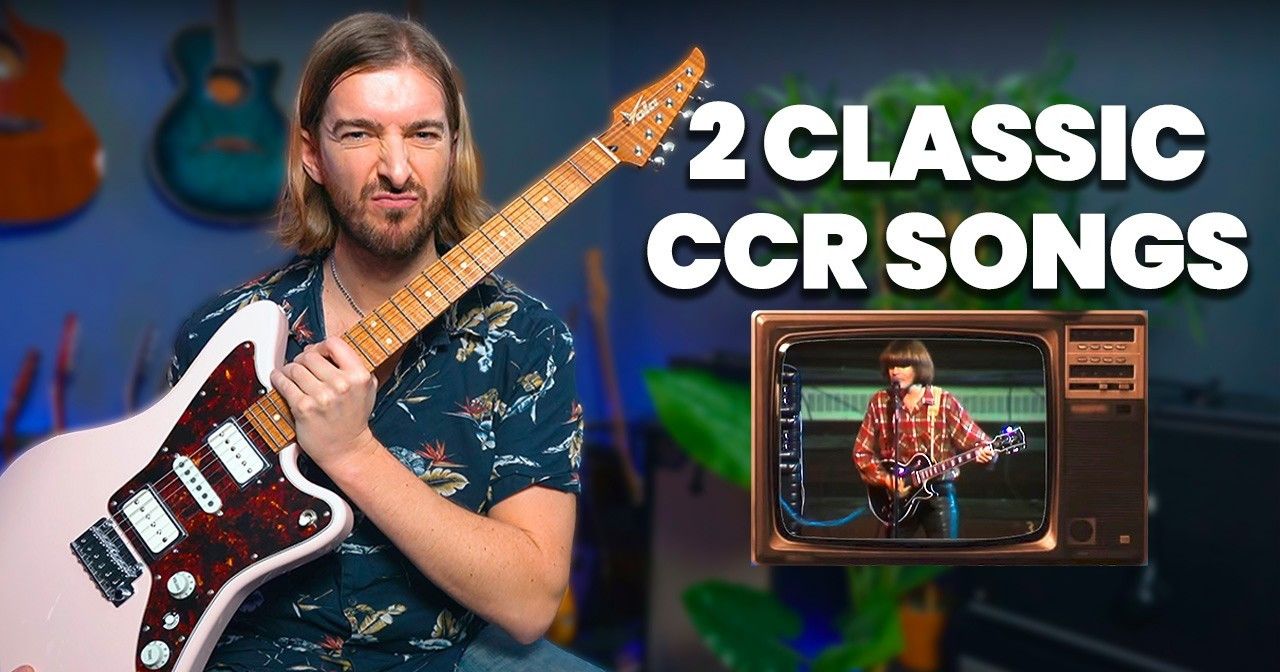
In this video
Ever played a Creedence Clearwater Revival song and thought... "That sounds close... but it's not quite the record." There's a good reason for that! In this lesson we're looking at D Standard tuning, one of John Fogerty's secret weapons for getting that unmistakable CCR sound.
We'll look at:
Why D Standard changes everything
Bad Moon Rising
Fortunate Son
Signature John Fogerty licks
Authentic chord shapes
Triads, slides and classic rock techniques
Plus I'll show you why learning songs in their original tuning is one of the biggest steps you can take as an intermediate guitarist.
Bad Moon Rising: Uses E-shaped bar chords (E, B, A) but sounds like D, A, G because we're tuned down. The signature lick goes E to E6 (the Beatles chord) then minor to major movement. The E major bar chord gets that really low depth similar to drop D. Working through the triads and solo section becomes more authentic - using one-finger major triads and the A to A6 movement prepares you for jump band licks.
Fortunate Son: Key of A major in D standard (sounds like G). Verse uses A5 power chord to G power chord to D power chord. The signature slides are crucial - bass plays 9 to 11, you can add the guitar part doing the same thing. Goes 9-11, down to 10, then 7-9, then 5-7. Uses CAGED system - that's an A chord using a C shape moved around the neck. The pedal tone lick (playing the same note while chords change underneath) is a great practice technique you can't quite get in standard tuning.
Bonus songs in D standard: "Come As You Are" by Nirvana - beginner classic but you can't play along to the original unless you're in D standard. Same with "Lithium" - another Nirvana track that needs this tuning.
If you've got several guitars, leaving certain ones in different tunings is a great idea so they're ready to grab and play. For more open tunings and alternate tuning stuff, check out my Play Guitar Like The Rolling Stones in 10 Days course - day three is where the open tuning content starts.