
Ode To Joy
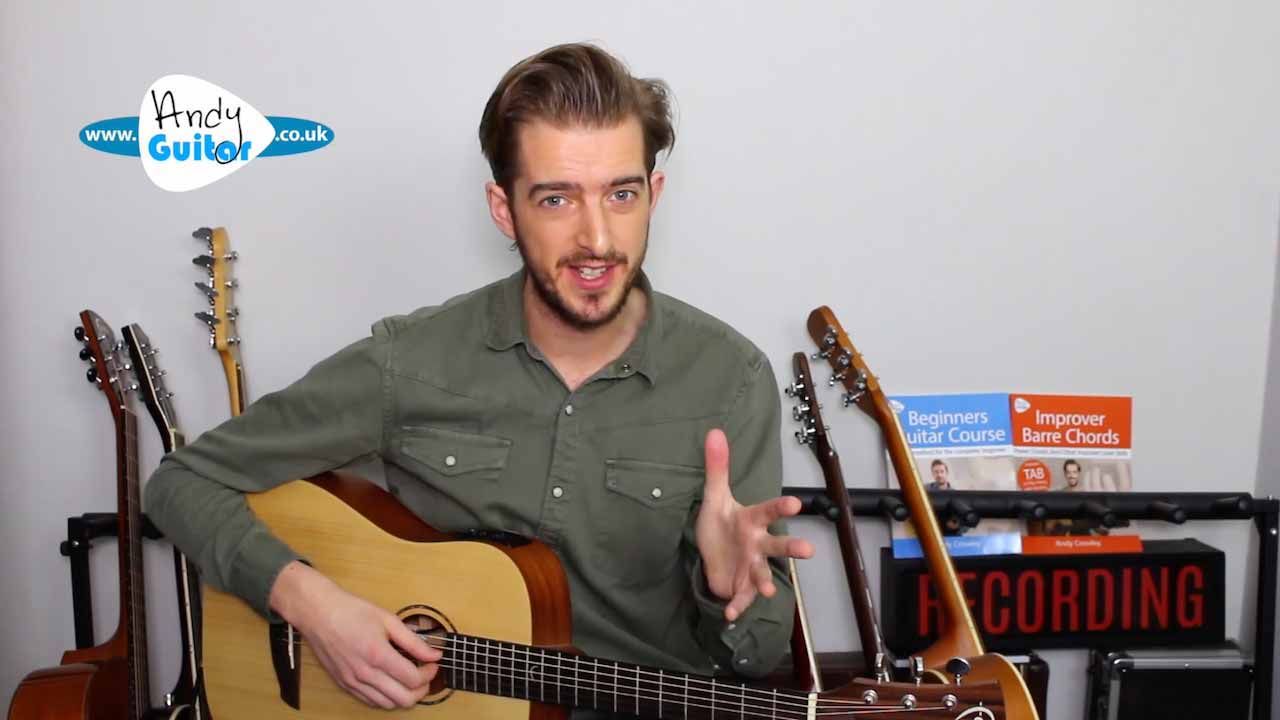
Ode to Joy, one of the most recognisable melodies all around the world. And this uses uh notes from the C major scale, which, as I say, has covered a level 5 of my beginner's course in full. Um, that scale here we're mainly using. The notes from the higher 5 from the second octave, so from C, D. Those notes there. And we're starting with the 3rd finger playing the thinnest string. Remember we're being vigilant now with which fingers we're plucking each string with so that we can make sure that we're we're progressing our our technique as as well as just learning a melody. And we start 0013. Whichever fret number we play, that's what finger we use, so finger 1 for fret 1, finger 3 for fret 3. And everything for the 1st 8 bars until we're halfway through. Everything's just on the beat. 1. 234 Then we walked down a major scale. Which is GF. D. See. And that takes us through the 1st 2 bars. And 3 lines out of the 4 here are the are basically the same as as that top line, OK? So these two bars are gonna happen again exactly the same. Let's make sure we work through them properly. From the beginning again. 234. From there, And this is bar 3. 130033. From bar 3 again. 34. 3. Second line is exactly the same, uh, apart from the last bar, apart from bar eight. So, uh begins exactly the same, 34. Just bar 8, this last one, it goes 311. So here's where you really need to put the time into learning and working through those 1st 4 bars, and then you have 75% of this entire thing just from learning that first line. The ending, bar 83, 11. That was the difference. Until then it was exactly the same. Let's therefore go through those first two lines together from the start, so bars 1 to 8 together. In. 1234. Second line, same again at the at the beginning. This time ending 3, 11. This is another one where I've written the chords in as well because we're going to be looking at the chord melody arrangement in the follow-up course to this one. And. C And OK, so you've got those chords, so you, so you can hopefully begin to see how this melody's working with the chords and playing some notes from the chords when you're on that one. but we're gonna move on now and do the much trickier third line. This is going from bar 9, and we start with the 3rd finger, 3rd fret of string 2. So play string 2 with your middle finger here. We play that note twice. So 3301. And this again, this is like going from a G chord to. record The only note we had to be able to play that melody. Here it is added at bar 10. 0101 And that's the only notes that that are a bit quicker, they're they're eighth notes. So we're on the beat. Same thing And then at bar 12. 3 And then at bar 11. And then the final line is exactly the same as the first line. So let's get this this third line practised a little bit more from the 3rd note here, the 3rd fret. 234. Final line is the same as the first, but let's practise it again. 34. And then finishing on a C chord, and it's a strum. Just of a normal C chord. We could have just finished on the single note. But a strum of the C chord even with the thumb. Or the first finger. Makes the song sound finished cause that is the key of this song and this melody. We in the key of C, using the C major scale. Let's go from the top, but it's the joins that are gonna be trickier, so make sure you get that ending sorted. Uh, really from halfway through, from, from bar um from bar 9. I have a couple of playthroughs of that, but here's an example of how the full thing sounds from the top, and I will again indicate when we're on a new line in the tap. 234. Second line. Third line. 4th line. And a swim of sea And that's our end there. It should be noted, uh, we're playing on the thinnest two strings so much in this song that I did most, most of the way through this have my palm on the thicker strings just because they can ring out. When we're just playing that thinner string. If I start that finished string now. We do, we do get other strings ringing out unless we have our palm on them. I don't want to over encourage that technique, it's just if you're getting those extra sounds that put you off, you can dampen them with with the palm of your hand just like this uh while playing. That thin string, totally fine. And that's how to play Ode to Joy, another one that we'll be learning the the chords for in the follow-up to this course. Um and that's the end of this video, let's get onto our next melody.
In this video
Ode To Joy is one of the most recognisable melodies in the world. Here, we’ll learn the simply melody. In the follow on to this course, we’ll look at how to add chords to this melody along with simple Travis Picking!
Song 06 - Ode To Joy
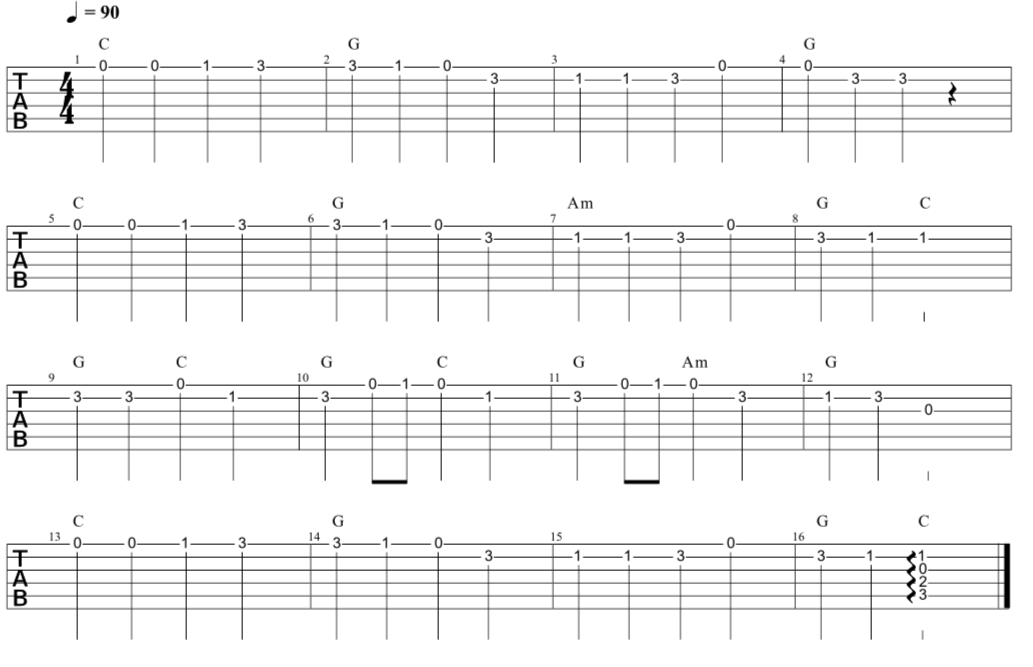
Chord symbols
The chords are written above each bar. This allows you to strum a simple version of this song and sing along if you wish. We’ll learn how to play these same chords with the melody at the same time with Travis Picking in my Intermediate Fingerstyle Course, which is the follow on from this!
Get the songbook!
Get the TAB for every song in this course in a beautifully printed full colour songbook along with more help and guidance from Andy.
Ideal for those who like to have the TAB in a book open in front of them while watching the videos on full screen!
Available on Amazon.co.uk and Amazon.com only.
Fingerstyle Starter Course
Recommended Songs
Enjoying this course? Want to test out your new skills? Find out my recommended song tutorials that accompany this course and get total access to the site by signing up today!