
A A Williams - ATG 2026
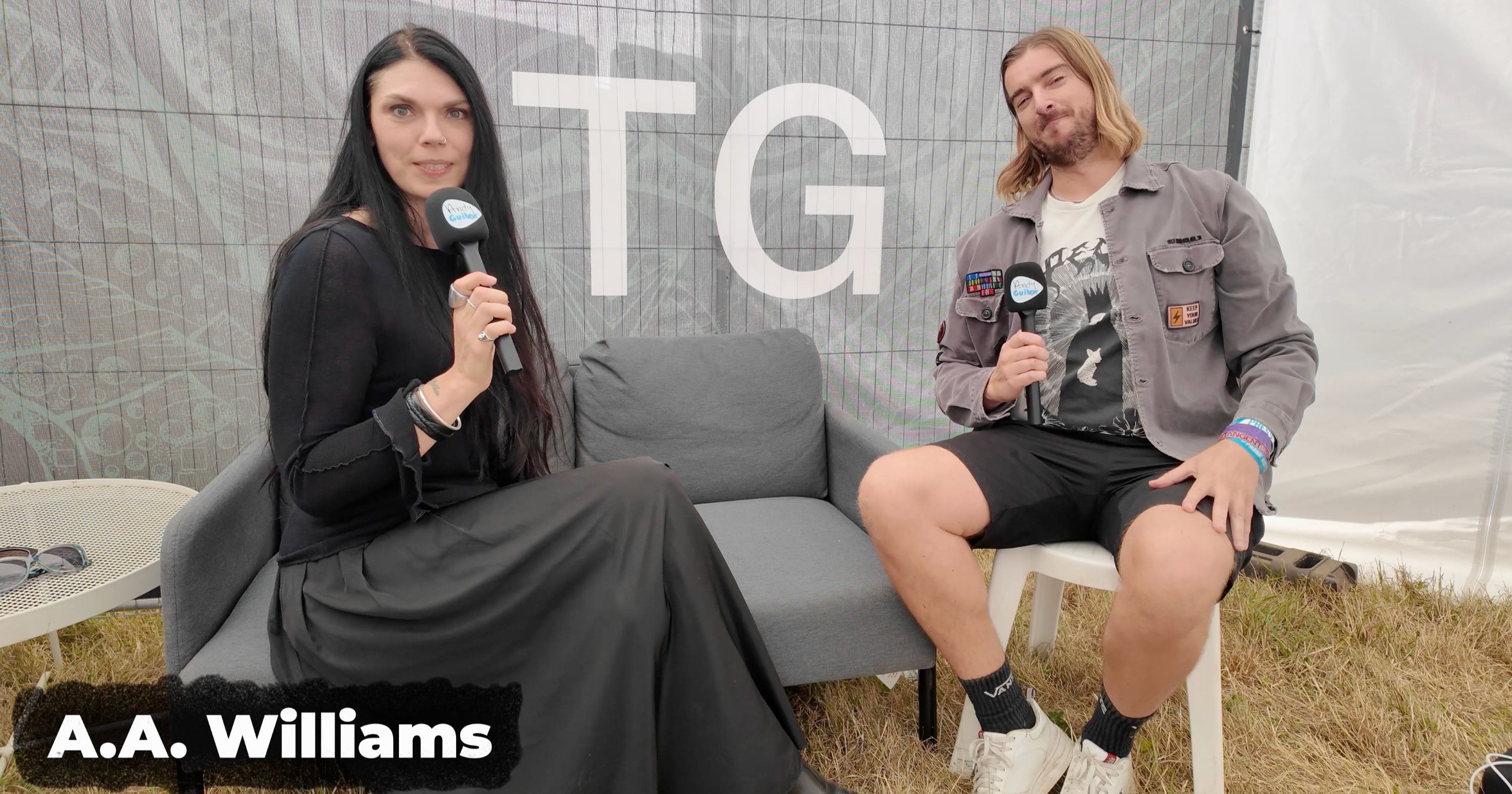
Hi, my name is AA Williams. And we're the Art Tangent Festival and you'll play later on tonight. We're very excited for it. Um, where do we find you in your kind of summer because we had a new album released not long ago. So how's the, how's it been since then, since the release? So yes, the, uh, the album came out bang at the front of festival season, which in hindsight was. Tricky. Um, just because there's so much that goes into the release of a record, and I'm working with a new label now. And so it was a first for a lot of the things that we were doing. And you know, lots of lots of logistics behind the scenes that nobody really ever thinks about. And to try and do that while you're on travel days and travelling between countries and no bad internet and stuff. It was a bit of a stress, I have to say, but set up in a hotel room. In Gdansk, staring at my computer waiting for it to get to midnight on the day. Just I just wanted to make sure everything was OK. You know what, you know, you never completely know. And I just, I'm not one of these people who just goes, OK, someone else is sorting out it's fine. Like I need to know that it is fine because I need to be able to text someone at one minute past midnight, go, where is it? What's happened? Do you know what I mean? I need to be that detailed guy. So it's been a little stressful, but in the sense So it just having a lot to do. You know, none of it's bad. It's just a lot. Yes. And so we are right now kind of at the tail end of festival season. I've got this one and I've got one in Maastricht next week. And then that's it for a little while of live shows and for releases. And then I can kind of just settle down and look at how the reception to sourcesin because I've seen, you know, a few reviews I get tagged in and stuff. Um, but it's been quite hard to compute how it's gone down because really I've just been running around doing other stuff too. You know, it's been great and I feel really positive about the release. Um, yeah, I'd like to just take it all in a little bit. That would be nice. Of course, that's what you don't get a chance to do, but a great way to get the music out there. You can actually plays. You know what that is that is this kind of slightly stressful thing about trying to do it as well is that you have to implement new songs in festival sets. And you don't get a chance to rehearse before every festival. Yeah. So we did a bunch of rehearsing before the very first one, implemented all of the new songs before like practise them and stuff. And when it came to the actual festivals, we didn't have a chance to prep before it was just like 20 minute changeover off you go. So I'm on, I'm not even plugged in, but I've got is a new song. Hang on, what are the words? What are the words, the words. There's a lot to a lot to remember, a lot to do. But yeah, feeling really good. They're going down well. I'm feeling positive about playing them and they feel like a good addition to the set stylistically as well. Has there been a favourite from the new album that's been great to play live that you might not have expected? I am going to say that I knew they were going to be fine. Because I think I did. I think you never know which songs are the ones that people are going to latch on to. And at the moment, the ones that are included in sets have been the ones that have been singles. So I haven't had an opportunity to do any kind of deep cuts yet. But that's going to be for kind of headline shows and support shows and stuff and I've got a bit more time to prep. And also for the vibe of the festival, you don't necessarily want to I mean, even at a place like a tangent, where there's a lot of a lot of different genres around here. There's a lot of very open minded audience members as well who are really very happy to listen to anything that you present to them as long as you've, you know, considered it and thought about it. Well, I also don't really want to, well, with a short set. I mean, tonight, it's a headline show on the stage, but it's only 15 minutes, which for me is not that many songs because my songs are long and slow. Um, you know, I don't really have time to do any of that stuff. Um, as you say long and slow, but there's there's a definitely, definitely. It's not just, yeah, 50 minutes of misery. Like there's a lot of dynamic. There's a lot of variation. There's a lot of journey to take people on. It's just that anything super soft. I'm also clashing with high on fire. So I just, I'm going to get drowned out. Exactly. I've got to be a bit mindful of that. Absolutely. So here's the thing I'm most excited to chat to you about because you've come to guitar in a similar way. how I came to it, in my opinion, but you'll tell me about um through other instruments. Yes, absolutely. So which came first? Was it piano came first. It was piano when I was very young. I was 5. Yes. And then I moved into a flute. Uh, I think it was about 7. I saw someone playing the Pink Panther on the flute, and that was it. I was hooked as that. And I was at school and they were doing this, this cute little demo as they do with kids are trying to encourage them to learn stuff and They this lovely kid got up and played the Pink Panther. And at the beginning, they said, now Tim can play the Pink Panther because Tim is grade 4 and we all went like it was the biggest achievement known to man. We had no idea, obviously. Um, but it was like, so everybody's like flute flute for me. So I was very lucky to be able to do that. And they let me do it a little like. They let me do it a year early. And I think it was just because I was a little taller than the kids in my class and frankly I could reach the keys. Um, so that was a nice thing. My piano teacher also taught the cello. So the year later I expressed an interest in that and began playing a string instrument. And that then became the focus for me. So cello became the one. And so I did that through school. I did that through university. I did a couple of degrees. I just kind of focused on that being the thing. And for an awfully long time, I did orchestral playing and the chamber music and session work and I played with bands and stuff, but it was in the capacity of being someone brought in for a special show or recording or something one off. Usually it was rare that I was kind of um frequent part of a particular ensemble in that way. And so yeah, it came from a string playing point of view, which then I think helped in a way because obviously the physicality of it is, you know, the angle is different, but the, the, the kind of physical nature is not a mile away. You're pressing a string down, you know what it should sound like. You have, you know, the theoretical background to understand at least when what you're doing is wrong, which I think is really important because it's about understanding the listening element of learning instrument. Like you know when you're getting it wrong, you know, when you're doing something you shouldn't be. And that helps a lot. Oh yeah, well that's it. You're so used to that and you can get a guitar and you're like, what, it's telling me, well, fine. Yeah, this is easy. So there's that crossover from a music theory point of view, from a knowing when you, you know, your ear training point of view and technically. Where there tends not to be that much of crossover from piano orral instruments to guitar is creating an improvisation and songwriting. Many people learn piano or cello. Yes, reading notes on the page. That's, that's it. I had never tried to write a song before. I picked up the guitar. I found one, as you do. Um, and I didn't know how to play it, but I thought, well, this would be a great opportunity. And I, and this was just the budget squire. Oh yeah, it was an old squire and it was knackered and a friend of mine very kindly is a guitar tech and just took it to bits and basically modded the lot. I don't really think we kept Anything of the original, the body and the neck is great. And then we basically went shopping and bought all of the bits and built it on my kitchen table over the course of a couple of days. And so that was my first guitar. And I, I thought, oh, well, uh, Dad God. Because a 5th at the bottom cello. I thought, well, that sounds like a good place is on the cello. Oh, it's a CGDA. All right. So in the 5th at the bottom, that's the same as the ukulele. Yes, I think so. Also, I think on tenor guitars sometimes in that as well. Oh, I don't know about tenor guitar. I know there's a little 4 string tenor the East would do. And I don't, I've got a feeling there is a cello tuning version of that. Anyway, I thought we'll get the bottom and 5th anyway, because then that's familiar. And it's a wonderful open chord that's it exactly. And I kind of was just playing around with it. I thought, well, I don't know how to play this instrument really. I was again, the physicality, but it's not something I'm really super comfortable with. So I'm just going to try and write some stuff and see what happens. And in the process of that, I ended up kind of singing along and just making up what I was doing and just fiddling around really, and I thought, well, Hm. And do you think that led to more creativity rather than having, well, yeah, absolutely, but it was rather than learning traditional riffs. Oh God, no, I never knew. I never learned anyone's. I was like, I don't want to learn an ACDC riff. What am I doing now? I want to use this as a tool to explore my creativity, not as just replicate other people's things. So I can't play in standard tuning. I've never tried. And at some point I will spend a bit of time and just be like. What is this 3rd in the middle? What? Why are you here? Why are you built like this? I'm sure there's a reason, but I don't get my head around the tuning. And I'm like, there's got to be a reason that this isn't all a bunch of the same interval here. But I'll, I'll, I'll find it. I wish I had a good answer for why standard tuning is, is the one we all stick to. Why is it standard? And I think a lot of things are a lot harder. It's all right. And I just thought, well, I'll stick with that and then um go from there. And I really enjoy working in that tuning and it's suited the kind of music that I wanted to make. And it also worked with that kind of slightly folky element of what I was doing with the open strings ringing out and all that. And it just, I've never felt the need to diversify. And I think part of that is because what I predict what I really do is rhythm a lot and a little bit of twiddly stuff here and there. Do all of the recording of the other stuff too. But when it comes to live, it's just simple. It's under the fingers and I can focus on the singing, which ultimately is a big thing for me to worry about. Um, I didn't sing until I started writing songs either. So that was a brand new thing too. So I was just, just literally sitting on my sofa just noodling away, just just experimenting, making noise, seeing what happens. And it just didn't make sense to write songs for some other imaginary person to sing. And I thought, well, I'll just try, even if this never gets out of my house, I might as well have a go. And here we are a bunch of years later. Yeah. Is, is there one song specifically that would not exist had you not sat down with a guitar as opposed to really persevering with piano Definitely cold, which is from my first EP and it was written. I was sitting in bed. And I was literally strumming the open strings and the daggers were like bang, bing bong bing bloom bling blong bloom. I was just opening string. I was just like, I wonder if that can be a thing. And then I was just like, 01 finger, alright, now I know just like coughing, you know, and I was like, OK. That's a thing we can make this a thing. We can do something with this. And so that song specifically was built around the tuning of that guitar. I had a had a guitar. I had an acoustic guitar, which was basically dagga with the whole step down to sea to see. And um I love writing in that. I love open sea very much. But again, it's a cello thing. It's like that kind of open bottom sea is just a very familiar. Feeling to listen to in a familiar feeling to feel as well that resonance. And it just felt very natural. And yeah, so cold specifically is. Yeah, one of my first singles ever, which wouldn't have existed. I think if I had written that on another instrument, it wouldn't have come out like that. Incredible. And what's your main guitar now? It is a 2001 Gothic Gibson Explorer. Someone somewhere moded the pickups, not me. I got it that way. It has some really hefty EMGs in it. And they have a real clarity for the sounds as well. No, it's a lovely sounding instrument and so. That's been the main, the main ride or die really until, uh, from about 202,020. Uh, before that was a, um, an MIJ uh Fender Jag, which is still used. And a love for writing actually. Um, there is, yeah, the baritone version of that which I've had for years and it's beautiful to watch on. I tend not to play my, my guitar players actually using that live at the moment. Um, and then I have a baritone, which is a Gibson Explorer baritone, which again, I think it's about 2014. Never seen another one. I'm sure they exist somewhere, but they're not a lot of them. And it is like playing a tree trunk. It's which even for me is saying something because I'm quite a tall person. So almost like this thing is massive. It feels bigger than a bait. It feels like it's made of like cricket bat and like chopping board or something. But it looks amazing. And it sounds amazing. It's just quite an undertaking sometimes be like hang on a minute. There we go, you know, are you able to get your um is explorer in C2C OK with like standard explorers on A to A. My friend, well, the Dora, which is that my guitar player affectionately named Dora the Explorer. Yes, I'm sure every other Explorer player has also got an Explorer called Dora. But anyway, Dora is in D2D and then the baritones 8 to 8. So yeah, between the two, if I need to, I use it as Digitech drop just to pop it down one step for some because it's a lot easier and especially in festival changeovers and stuff, you've got a lot of time. So. You know, I don't have a guitar tech to do swaps and stuff with me right now, so just something easy to to kind of save having to switch guitars. And if there was one bit of gear was going to be my question that you couldn't live without, would that be? No, I would say two things. Number one, even tight space. Beautiful, beautiful, beautiful reverb pedal, which I've just programmed in a bunch now that I've been using for years, literally years, and I love very much really creative, interesting reverb, not kind of predictable and also doesn't do the same thing every time, which I love. It's a little bit there's a, there's a kind of a preset called the black hole, which you can use them to modify and manipulate what you're doing. And, you know, they have all the normal ones like hall and plate and blah, blah, blah. And then there's like 3 or 4 really interesting kind of I don't know what you'd call it. It's like the different, all the different models on there, I guess. And like you kind of start with that and then you, and I use it for a song called Melt, and I use it live on a lot of songs. It's kind of, yeah, it's just, it's beautiful and it can be completely bonkers, and it can be very subtle and it's lovely. So that is for soft songs that absolute necessary. The other piece of gear I would say sounds silly, but it's the foot switch from a JVM. Yeah, because I. Only on solstice started using a JVM. It was a JCM 800 up to that point, and someone had lent my producer a JVM to try. And I quickly realised that amp drive is what I really needed to be doing, not using pedal drive, which is what I was doing up at that point. And so because it can add that same flavour to what you're describing the reverb. That's absolutely. And I love how you're playing it really does. And I love that you can kind of it reacts to you and you react to it. And there's a kind of two sided element to this. And I just find it so much more practical as well just have one thing. You know, with this is the first summer I've had that, and it's been a case of, you know, hiring them from all around the place and a lot of emails to kind of backline companies and countries go, please, you must be able to find me one JVM in the whole of Spain. Come on, you can do it. Festival, please do it. And that one turned up like 3 minutes before. changeovers like this is sketchy. No, I haven't got a backup plan. So then now being able to just yeah, I just switched between all 4 all 4 different drives and have it all dialled in and it's just so much easier. But also I think it sounds great. So Istanding. Well, I look forward to hearing it. Thank you so much. Thank you with us. Thank you so much, my friend. I appreciate it.
In this video
Andy speaks to A.A. Williams at ArcTanGent, just as she is catching her breath after a stressful festival season managing a new album release from hotel rooms across Europe. She is candid about the behind-the-scenes logistics of being a detail-focused artist trying to make sure everything goes right while travelling between countries.
Her instrument journey is a fascinating one. Piano at five, flute at seven after being captivated by a kid playing the Pink Panther at school, and then cello which became the focus through school and two university degrees of orchestral and chamber work. Coming to guitar later meant she arrived with fully developed ear training and music theory, which made the transition more natural than expected. Guitar was also the first instrument she used to write her own songs rather than perform other people's music.
Her main guitars are a 2001 Gothic Gibson Explorer (the road warrior nicknamed Dora the Explorer), a Fender Jag baritone used for writing, and a Gibson Explorer baritone she describes as playing like a tree trunk crossed with a cricket bat. Essential gear includes the Eventide Space reverb pedal and a JVM footswitch for amp drive, which she discovered changed everything about her live sound.
Enjoying this video?
Try this course - Metal Lead Guitar
Learn the essential techniques of metal lead guitar - 3-note-per-string scales, legato, and arpeggios - with jam tracks, economy picking, and a simple approach that gets you playing fast and sounding great from day one.