
Chat Pile - ATG 2026
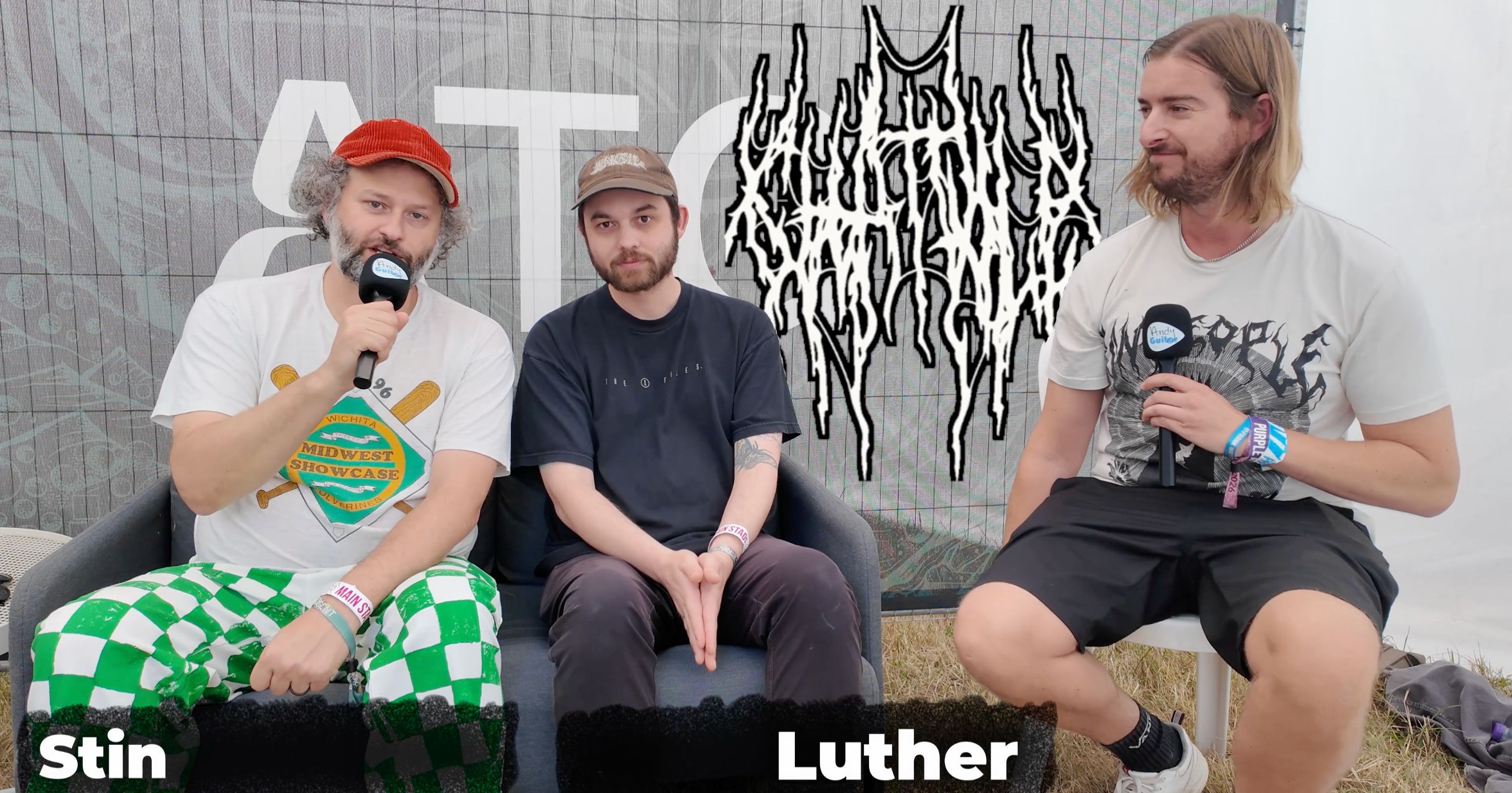
Uh, my name is Stin. I'm Luther, and we are in Chat pile. Absolutely, and you're playing in, uh, about an hour's time. We'll we'll crack on through this. Thank you so much for doing this today, of course. And where do we find you? How's your day going so far? How's the feeling in the camp? Uh, it's good. It's good. We had a really long travel day yesterday, uh, but today we got to go to Stonehenge. Oh, so that's kind of helped set the table a little bit, convene with the druids a little bit, and, uh, yeah, just taking it a little easier today, but we, we have a long weekend because we fly to Belgium tomorrow for a um. Uh, another festival too, and then we go home on Monday. So this is kind of the end of our tour right now. Good man, we're a stone stone's throw from Glastonbury here as well. So these are hallowed grounds for it all. And er well, the crux of all this is I wanna talk to you about um you guys seem to be advocates for um using kind of inexpensive gear and making your sound and your noise and whatever you wanna do on these instruments and sort of feel over theory every time. Can you tell me where, where did that start for you guys? Uh, from a deep sense of laziness, I think. And also not knowing theory. I can't do scales, I can't read music. Uh, I just, I have an ear and, you know, I, I taught myself, here I can say, but I taught myself, you know, with tab and stuff like that, so, uh, yeah, it's kind of just out of just how we play, you know, and it kind of whenever we started the band, it was, it was the two of us that kind of first got together to like say, hey, maybe we should jam or something, and, you know. I'm sure we've all had the experience of even if you know someone who's like good at music, you can hang out with them and maybe it just doesn't click or it's like it doesn't even matter what the skill level is, uh, but it's like I don't know when, uh, Stin and I jammed, it was just like very easy to kind of write together and that's kind of the, especially if you're in a band and you're not just like one person who's writing everything, which that's not the type of band we are. It's, you know, you just, it's more about chemistry rather than technical skill, I feel. It always is, that's why supergroups rarely last for more than a short period of time, right? Um, so tell me, how do your songs generally come about then, and um, one thing I noticed that sometimes they start maybe a bass line or they, they start maybe an unconventional way, but what's, what's the way that songs start with, what's maybe the strangest way a song has started? Well, I don't know. Uh, if there's a lot of strangeness to anything, but usually it's just one of us comes up with a riff, um, or a series of riffs, and then what we do is we'll take that into our practise space, and then, uh, the two of us and then our drummer will just kind of endlessly jam on it into a trillion times basically over and over and over down like you're, you know, sculpting something, yeah, and that's when you say the chemistry in the room kind of dictates where the song goes. Absolutely, and, uh, part of this process too is like we record our albums in the same place where we practise, so we always have, uh, recordings going. So you know we get together on a Tuesday, kind of hobble together a structure of a song, listen to it for a couple of days, come back and be like, all right, we need to change this, change that, do it over, and then you just kind of listen back to it until you're like, you know what, this is a song. Yeah, it's all about just kind of like doing variations of things and just trying stuff and sometimes, you know. Like, as a guitarist, I'll try like a a weird melody line or something and I just like look at the other guys like, is that, is this weird, good weird, bad, corny, cool, you know, it's just like, and it's, it's all just through iteration and stuff. There's very little chat pile stuff that's like fully formed right at the beginning. I mean, uh, you know, sometimes we'll like one of us will have like maybe like 3 riffs that go together, which is, you know, kind of a song more so than just one riff, but. By the time it goes through the, the 3 instrumentalists, it, it changes every time anyways. I mean, it's also about not being too precious with the stuff you bring, like, you can't be too married to anything or else, you know, well, that's how your feelings get hurt and stuff, but it's also like, you know, part of what's cool about being in a band is collaboration and, you know, like I said earlier, we're not a band where one person is just writing everything, so, you know, it's, it's good to have. Other people there to kind of bounce ideas off of and stuff and no solo project, right? Yeah, that's the whole point. Anytime it's been just up to me to do something, so, I've just like never been able to actually put something out or just like, or I just think it sucks, and it's like I just, I'm never able to get over that part where I'm like, OK, now I'm ready to show people this. It's just like just keep going, so it's good to have other people to be like, no, this is good, or, you know, let's move on and stuff like that. So and what's been a favourite song on the set to play on this batch of touring? Maybe the people wouldn't expect you to say which one's just fun to play as the band. Well, I, you know, it's funny because we don't use a setlist ever, so yeah, so we kind of like tend to make up the setlist as we go. But that said, there are certainly, there's a stable of songs that we all like to play that are just fun, you know, they're gonna make, and they just kind of make the set like a because they're crowd pleasers, but b because they're the ones that like just are super fun to play, and I was like. Me, uh, Shame and Frownland are like two of those. It's like just I, I'm always excited when we get to that part of the set. We also have a new song on the album called Penis Mall, uh, and that is on that's of the new batch, one of the, the more fun ones to play too. But yeah, it's usually with our set we kind of just go with how the crowd is. Like if it's seeming like a moshier crowd, then we'll kind of lean into the heavier ones or the, the more high energy songs or. It's also like sometimes if it's really hot, we're like, OK, we need to like play a slower one right here, so like our drummer doesn't die. He wears a hockey jersey when he plays, so it's like we gotta make sure he's not like dying of heat stroke. So it's, it's very just like kind of reactive to what the crowd is giving us and stuff and But yeah, the, I also agree, shame and Frownland and then yeah, Penis Mall, those are just like really they're just always fun to play. tropical beaches too, that one's also really fun to play. Who's calling the shots then with the setlist? It's uh usually us two the two of us. We'll like make a sign and then like sometimes, uh, Ray, our vocalist or, uh, Ron our drummer will veto, but it's usually, you know, we're, it's, it's, that's usually more about like how out of breath you feel or something like that. It's like we're good to go. Yes, yeah, it's like if we, there's a certain. So called like the New World that is like has it has like the most words out of any song so it's like kind of a if it's towards the end of the set and we're like let's do New World maybe Raar about this be like uh maybe maybe not right now, that's gonna be a little tough to do but that's great though, that's listening to yourselves on stage, that's keeping it more like, you know, rehearsal rather than a planned show that will be the same every night, keeps it fresh and alive. Well, that's kind of the whole point is like, uh, you know, no shade to anybody, but it's like I've go to enough shows and enough. Heavy shows to know that for the most part bands have a tendency to come to a city, play the exact same set. They're playing to a click track. The banter is even the same sometimes, and you know, I understand it's show business, but I feel like it's, uh, a bit of a disservice to the audience. Like, well, we wanna bring you some spontaneity. You never know what you're gonna get with us. We might fuck up a song terribly because we haven't practised it enough or whatever, but that's not gonna stop us from playing it. We will attempt it. Yeah, that's because we also take requests a lot, so like sometimes it's like we'll just look at each other and we're like, oh, what do you play? And then like you'll just hear someone in the crowd be like, you know, just yell out a song and we'll just be like, OK, like it, let's, uh, let's just try that one, you know, and are you guys inspired by other arts, like, for example, this reminds me of how a stand-up might have a rough set lists, but when you go down a tangent, we're going down the comedy fans, but comedy. It also just comes from like, even though you wouldn't really hear it in our music, but you know, at least a few of us in the band, like, you know, jam music and stuff like that or just. You know, anything, we just like to keep it loose in general. So it's kind of in all forms of how we make the thing since we record ourselves not to a click track and we record live to then how, you know, no set list to take it away. It's all just kind of in service of just like kind of keeping it loose or like you even said, like kind of spontaneous, but that's also just what feels most we never had like a conversation up top, like we're just never gonna have a setlist or anything. It's just. At first when we were playing shows we only had like, you know, 5 or 6 songs so you just play the songs you have and then as we've written more music and have multiple albums, it's kind of just like we're not, we've never really sat in them and like we have to play these songs every night, you know, there are songs we like to play first and songs we like to play last or whatever, but You know, we just, it's fun to keep it loose. It also keeps it kind of engaging just for us just to like, yeah, just, uh, and we still have few enough songs where we can practise pretty much everything except there's like a few that we don't really bring we're getting, we aren't getting a big enough catalogue now where it's getting harder and harder, but we, you know, sometimes a sound check. We'll maybe run through a couple of deeper cuts just to keep them fresh. Yeah. What, uh, can I ask what guitars you're using? What's your main? Yeah, so my main guitar usually is this, uh, it's a Music Man Axis Super Sport baritone. They did like their BFR series from a few, like, I don't know, I think it's from 2021, which is a really nice guitar, but it's just like. I've, I've used it a lot, but, uh, I have this other guitar by this brand Jericho, that's like a smaller American brand. I think they're made in Korea, uh, but I got that, it's like it's also baritone as well because we play in a drop A tuning and B standard, um, and the Jericho, I don't know, it has the, the Nasgle sentient Seymour Duncan's in it, and it's kind of just like at the beginning of this tour, it's always been my kind of backup guitar. But it's just kind of worked. I don't know. It just sounded better the first night to me. It just cuts through a little more and like I still love the Ernie Ball for, for tracking and for stuff like that, but it's just a, it is a little more voiced for kind of like traditional rock and stuff like that, not as much of the extreme high gain stuff, and so, you know. I mean, I don't have my gain all the way cranked on my pedals, but you know, it's pretty hot, so it's just, uh, yeah, that I've been using the Jericho more this time. That's why I'll be playing tonight first and, uh, if I break a string, I'll, I'll switch to the, the Ernie Ball, but uh. Uh, I exclusively play PBT 40 basses, and I have 3 of them now. I'm trying to collect every colour, and then it's absurd, it's so unnecessary, but then once I have all those, I'm gonna find a junky one, and by God, I will find someone to custom paint it. For me. And I'll have my own custom T40, which those are, you know, also like the T40 and the T60 were kind of traditionally cheaper guitars. They were the first, what, uh, first like CNC factory produced guitars in the world, right back when they debuted in the late 70s and 80s and Uh, so they were always kind of considered like cheaper instruments, and the prices have been going up the past few years. I feel like you used to be able to find them for just a couple of few $100. I'm still able. I've, I've basically, I can find them for about $600 which to me is worth it because they're built like absolute tanks, man. Like they're so heavy, but the hardware on them is like really great. They take to the ultra low tuning really well, and then what I like the most about it is I want. Like a lot of top end in my sound and they have like it it gets clangy in the best possible way so it's, it's perfect instrument for me punk influence, right? What's that? Is that a punk influence? Uh, I don't know what was the question? Is that a punk influence on your sorry I kept kind of playing with a pick. Yeah, yeah, sorry, I kept hearing punk pumpkin. I was like, well, I, yeah, uh, yeah, no, well, um, so yeah, it's. It's actually kind of more inspired by Chris Squire from Yes, um, uh, because I think he's got like a really like it's not clangy, but he's got this really cut cutting punchy tone lead instrument when needed, yeah, yeah, and then like, uh, bands like, like Big Black where like you. The bass is almost inaudible on those records except for the, the pick attack on, on it, right? And, and then of course, uh, corn is like a huge one for me as well. So really it's like players who are adding a slight level of extra percussion through the bass. That's sort of what I'm trying to go for. And we are a very like bass forward band. I mean, I love playing bass too, and it's just like, I mean, I don't play bass in the band, but it's just like. I'm not a guitarist that wants the guitar to be as upfront as possible, like, you know, we all really, everyone in the band is a big like very into rhythm, and like, you know, especially me, like I, you know, I write, uh leads and melodies, but it's like I'm not much of like a soloist and stuff like that, so it's like, I like the bass being audible. I like, you know, and it's nice when it's like rounded and you feel it, but it's like I want it to cut through and it gives me kind of More of a platform to do more texture stuff and like yeah the bass can kind of like kind of yeah like lead the song a little bit in some ways depending on the song but yeah and that's like kind of going back to how we write songs like I would say a good chunk of our songs start with kind of like a bass and drum rhythm and then Luther comes and kind of adds the guitar. The guitar is sort of like what is colouring in kind of like the main like melodic pattern of the song. So, so yeah, the bass needs to kind of be very present and and clear, you know, in what we're doing. And finally, if there's uh one or two songs, you know, for someone watching this video that's a fan of your band, but they've only played, maybe they've just started doing down tuning stuff, but they're new to all this, which songs of your band would you say, I'll start with these, this is a real gateway song to get us. Rainbow Meat probably is a very easy song, that's like. Basically just almost two notes kind of if you want to get into the stin zone, I would say Dallas Beltway is the most like base forward song and then Frownland also, uh, yeah, I'm trying to think of like just in terms of because as our albums have gone on it's not like we're like a prog band, but they've, you know, songs just get more we've just been getting more complicated and and layered and trying different stuff but Pretty much anything off the first two EPs are, you know, pretty just standard songs that are, you know, not, not too brutal play, but yeah, Rainbow Meat kind of sticks out to me. That's like on our first EP and it's like, you know, a 2.5 minute long song that's just. You know, it's almost too stupidly easy, honestly, it's like embarrassing, it is two notes. I, I teach 2 and 3 chord songs on my YouTube channel, and there are a lot of the best songs ever. I mean, even like Tomorrow Never Knows is like basically one chord and it's amazing. And uh sometimes sim simplicity hits best. Absolutely. And it just allows the textures of the ground and the personality of the band to come forward rather than the amount of notes. Well again it's being so rhythm forward, like the way our band is, like you just don't need a tonne of notes for that, you know. But it doesn't stop it being complex either from structure or adding more of these prog elements to like you mentioned, that's really, really cool. Thank you so much for sharing that with us and look forward to seeing you on stage later. Thanks for having us, we appreciate it.
In this video
Andy speaks to Stin (guitar) and Luther (bass) from Chat Pile at ArcTanGent. Both learned their instruments by ear and tab with no music theory background, and are refreshingly honest about it. The conversation quickly gets to the heart of what makes a band work: chemistry over technical skill, which is why they say supergroups rarely last.
Their writing process is a jam-based one. Someone brings a riff, they take it into the practice space with their drummer and play it hundreds of times, always recording so nothing good gets lost. They stress the importance of not being too precious about your own parts. Collaboration is the point.
The bass is central to their sound, influenced by Chris Squire of Yes and Big Black, and a lot of their songs start with bass and drums before the guitar comes in to add texture and colour. They play improvised setlists based on reading the crowd, gear talk covers Jericho guitars and Peavey T40 basses, and Rainbow Meat gets the nod as a beginner-friendly gateway song, described by Luther as embarrassingly easy and essentially two notes.
Enjoying this video?
Try this course - Metal Lead Guitar
Learn the essential techniques of metal lead guitar - 3-note-per-string scales, legato, and arpeggios - with jam tracks, economy picking, and a simple approach that gets you playing fast and sounding great from day one.