
Julie Christmas & Johannes Persson - ATG 2026
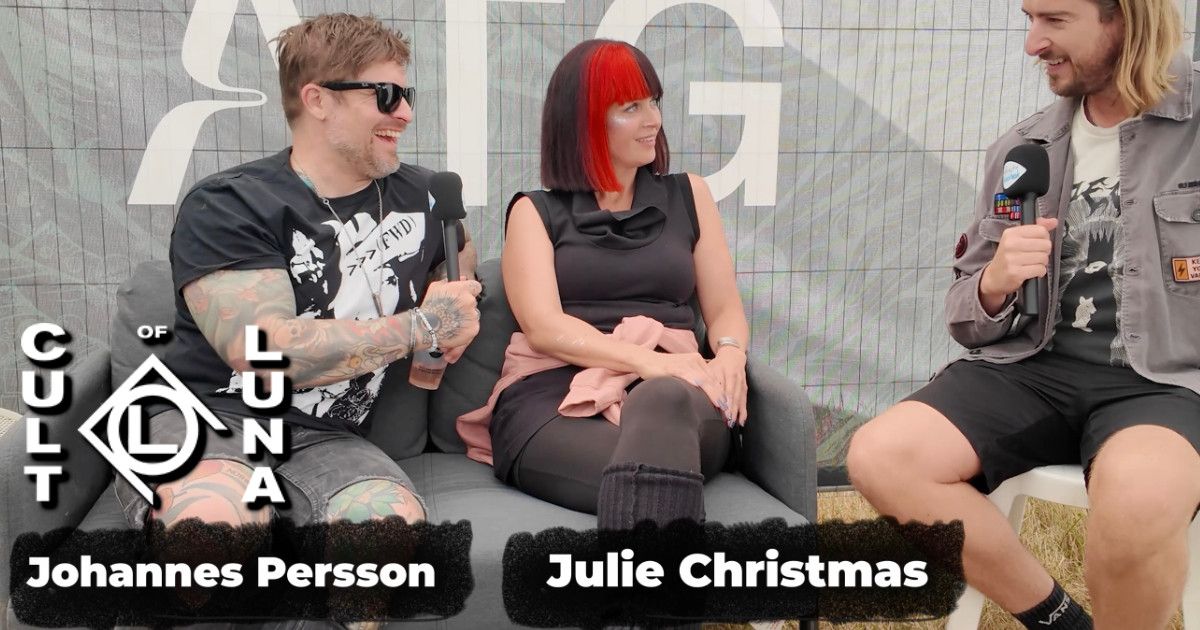
I'm Julie Christmas. I mean, it's passion. And we had an Art tangent festival. And it's very exciting because you are headlining tonight. And if you're one of the events to see this weekend. How's the feeling in the camp so far? I mean, you say you've been here a couple of days, so I think, um, you, you know, there's a lot of excitement here. It's, it seems like a cool place to be. We did this podcast earlier. Everybody's in good mood because it's been raining and now it's sunny, so everybody's out and feeling good with their beer, and, um, it should be good. I'm, I'm excited to be here. Good. And you're gonna be performing this seminal album from 10 years ago in full. And uh what I'm excited to hear about is, you know, 10 years ago or even longer when this first came about, did you think this would still resonate in the same way, 10 years later? It depends, like 10 years is the span of 1 year, it depends on when on that year, yeah. But, uh, look, uh, to make a longer story short. This was an experiment that I was not sure how it would be perceived. I knew that I loved it, and I think, well, I, I started off as a fan of Julie's, just as you, so, so we have that out of the way and just being able to work it in the beginning, right after we started, you weren't, you weren't sure that it was gonna work out. No, no, no, no, of course, no, no, no, he, he's saying he was a fan of you. No, I, I was a fan, he said, he said it worked out, but I, I remember there was some hesitancy from all of us. It was like, oh, this is different, you know, what, no, what, what, what I'm saying is, is that I loved it. However, I, I was, I, I, I just, uh, told the story, uh, to another person here. But, but I remember him standing outside of a pub with the guy that did the artwork. And I don't know if you guys remember, do you, do you remember I'm gonna trash one of the biggest, biggest band in in metal, but do you remember the, the album Lulu that was a collaboration between Metallica and Lou Reed? Oh yes, I do. Yeah, well, not many people do, or maybe they don't want to, but I remember starting with Eric, uh, Eric, the guy that made the artwork. I said, I wonder if we made our Lulu. Yeah, but that was out of, like, not knowing how people, because I, I think that we, uh, Mariner is not only because of Julie's vocals, but it's a bit different than anything that we have done before that. So I knew that I liked it, but I was absolutely not sure how it would be perceived by people outside of the band. Absolutely, but that's, that's the excitement of it, and we've got a, a lot of people watching who will be uh learning musicians or even professional musicians, but any kind of collaboration, there's always apprehension. You never know what's going to happen, right? What do you think has worked here that's er clearly got legs, that's clearly resonated all this time later? I think that, you know, I, I know that I was, when you were saying that about things sounding a little bit different from your records, um, for the Mariner record, I was just wondering for a second in what way, but I can hear it. I mean, I, I've listened to A couple of your other songs, um, but I, I could hear it. It's a little bit more, um, there's more like landscaping in some parts, if that's the right way to put it, and, um, I think that I, I, I honestly, I, I said this earlier, it's like, um, it's, it's, it was the, the, what I bring to it is, is already there. It's just a, it's just a new avenue, right? So it's like, I think, you know, maybe, maybe as we were writing because we did it one song at a time, to make sure that everything was OK, and, but, but I think as we were writing, it may be the, I don't think everything was written. When we first started, so I, so I think it was a little bit like the collaboration was really organic, where it was like, uh, they changed their music a little bit. We definitely changed. I definitely tried different things to bring out what was already there, so. You know, that's the spirit of the collaboration is like it was a, a real one. It wasn't like I got all of the files and they were set. It was very much like, um, you weren't just top line in it. It was a true collaboration. Yeah, that's magical. Yeah, so I think that's, it's different. It's, uh, you know, you get a different way to do things and, and, um, you know, these guys are very adventurous songwriters, so it's, they, you know, that I'm sure that that helped, and I tried to things that I would never do, um. So it worked out. It's just a different way to express it, if you have the, if you have a new tool, you use it, not to call myself a tool, but a new option, right? It's a new option you couldn't explore before. So tell me, revisiting this a decade later, what has been some of the challenges of performing this live, even in rehearsals that you couldn't have foreseen cos you didn't plan on playing this live when you wrote it? I can answer. I can answer one. My for me, um, you know, when you make a, a studio record and you never plan on it being live, you have a lot more, you have a lot less, uh, fencing around, you have a lot less limit, you know, so, um, then it came to the point where it was like, oh, somebody wants to see this. We have to actually do this live. And so I tried in the first. The first time we played a live show, it was a fucking recorded, oh, can I say it was a it was a recorded show, that's the one you can hear, uh, and My voice at that time wasn't strong enough to do it. So you can hear or I can hear. I can hear myself like breaking apart in in some of those, in those early recordings and then we did the US and, and, and I had to like adapt what I was doing. Now I can do all of it, no problem, but it was like it was that. Talk about that please. How has your voice evolved? Is there anything? You've purposely done because we have some vocal lessons um by a couple of female teachers actually that um are on the our website, so it's a it's a big thing that we encourage, I'm not just guitar. Please talk about how your voice has developed talk about that. Please, yeah, of course. Because today it's his turn is like. It's been too much. Yes, there's been too much, Julie. No, but, but I, I was actually just talking about this. We were practising yesterday. And I know the song fairly well. It's just the riffs, it's not hard, so I was concentrate, no, I was concentrating on her vocals, and I, I kind of. And, and like, we, we, we've been friends, we've been working fairly close to the last 567 years, uh, but it kind of we fell in love with the way how she handled her voice. Look, you, you can talk vocal range when it comes to tonality and stuff like that. What she brings to the and she. Needs to be remembered as one of the greatest vocalists of all time. No, because the way you use your voice, how it's not, it like we talking about tone like tonal range, that's just one aspect. It's how the intensity and how much you push it, it doesn't have to be exactly like the record. If you miss a beat or two, I'm OK with that, but no, no, I was, no, no, no, no. He's, he's saying that because I fucked up. No, no, no, but, but, but, but, but. The way she used her voice as a real instrument and not just singing, that needs to be, uh, you can take that for granted when you hear the record, but you need to understand the craftsmanship that's behind that, and that's why I thought it was my turn to speak. So I, I think, um, but I think that I wouldn't be able to do that if the, if the landscape were not there, so. That's the spirit of collaboration. So what advice would you give to yourself 10 or even 15 years ago that you now know that you didn't quite have vocally back then? Uh, you know, I learned, um, do you know, um, I learned from a few amazing singers as I was, when I started, when I started touring, I was touring, my first tour ever was with Unsane and Disengaged, and that's like a ridiculous fucking tour to be part of as your first one. and I think, uh, you know, Jason from Disengaged, I know Kristen, I know the, the Unsane guys, but, um, but. You learn over time, like, uh, it's very, it's very, uh, like one thing, Jason's Jason's advice is always drink Jagermeister before you sing. Now, I don't do that, but there's a lot of advice that has come that way, um. Oh my God, what is his name, uh, from Caven. Oh my God, he's so, he's fucking awesome. Um, anyway, 11 other singer, I was freaking out and I couldn't do it because this, when the stages get bigger, you get in your own head and you're not, you're not at the point. Yet where you're ready to perform that, and I remember like those years, like one person was like, eat meat right before and you have to like really get your body ready, like do push-ups and things like that, and I, I, some of, yeah, people do that, but I think that, uh, one thing I have to say to to singers is that you do not skip the warm-up. So if you know you're going to, and it can be difficult for singers because everybody can hear you when you're warming up, and it's usually in a quiet setting, so it can be embarrassing and you can like hold back, but you should not do that. You people are gonna watch you anyway, you need to warm up. And uh the other thing is, um, I always have like throat calm, so you take care of your voice up to the last minute and as soon as you're done. So it's just like, so I like, well, I like sing on stage with a cough drop. Right, OK. I, I mean, I'm like taking care of it the whole time. I think Tom Jones does that. Me and Tom, yeah, it's not all we have in common for him. That's cool. And there, there are silent warm-ups you can do like with the, the straw technique kind of, um, that, that's one tech. It, it doesn't always have to be loud, but everyone's got their own thing they want to do, and it's hard to do at a festival, right? So you've got to put yourself first in that regard, cos this show doesn't happen unless you're performing right up to the top of your ability, right? Right. I mean, I, I am classically, I was classic, I started classically trained and um that's when you get your warm-up. I still use the same one. Is there anything you ignore from your classical training, maybe in terms, in what way? The rest of it. Is that when you, from when you step on stage, is it like any character building, any kind of headspace you have to get into, but what else? I really could have gone that way because I have a really big voice, I could have gone. I could have gone that way into classical music, opera, and um. I can still do it, but I think that, you know, the, the shredding of your own voice is not something that, um, that's in vocal lessons. You know, you're not really supposed to do that, and I don't think I do it properly. I just think I'm like a meathead, and I can like handle the the shred. But you're not really supposed to do that. Well, we're, there's very safe ways to scream and kind of shred your voice, and um there's more there's only recently been more research into that. But one core thing into that um is the way the cult of Luna, you guys repeat riffs a little bit too long almost and let it build. And that allows for these other textures to kind of come along. When do you know you've got a riff that you can just sit on? Talk to me about that. So When I started writing a song. Um I need to find the right groove, something to like, it's like a, I mean, it's we. We write songs linearly, we, we, we, we very rarely do this. You know, pop songs, structural repetition, yeah, so I need to find a groove, something that we can build on, and um when you say repeat the riff a bit too long. I realised very early on, because when I started playing the guitar, I, for two years, I pretty much locked myself um inside my room, just listening to music, listening to music that I like, and I tried to figure out why I like them, uh, and that's great advice. I'm gonna say this, and this is not even false modesty, I'm not a great guitar player. I'm a fairly good songwriter though. Those are two different things. Uh, so the technical aspect of, of, of, of, of the musical technical aspect of the whole thing, uh, uh, that's where I'm lacking, but I'm, I'm kind of compensating with, uh, uh, what my head tells me that the song, yeah, yeah, passionate what what my head tells me that the song needs. So I could, for example, we have this 19 minute song on one of our albums which basically is one, well, not really, but basically is one chord progression in different ways, and I realised what's that one called it's called uh Vicarious Redemption, it's basically the same chords, and we there's a few riffs in there too, but, but, but it's based around very simple 21 half note change. And not for the first time this weekend, that reminds me of film music. The way a 90 minute score that, you know, take over the whole movie might be based on a three note theme. I am actually that recurs and yeah yeah yeah right now I I'm working on a. Scoring projects for the first time, yeah, but I realised that you can play the same riff and just change a little thing. It could be drums. It could be a melody. It could be anything, and you will perceive it as something that has changed so fundamentally that you start off, you have counted to 8. Now you start counting again 8. It's the same thing, but it doesn't, you don't perceive it as the same thing. So yeah, that's why. I need to find a skeleton, and then I, I work with so, well, people that can compensate for my lack of technical ability, they can do, do wonders with what the stupid riffs that I write, and. The difference between being a total, like, writing idiotic riffs and good riffs, that line is that thin, and that comes down to stupid riffs, yeah, I'm really good at writing stupid riffs, but that comes down to that um intentional listening that you've spoke about before. Would you, would you say there's any other way to kind of, cos that's, that's practical. practising taste, and that's the hardest thing really, what should this project be, what should this band be, and having that be instinctive, are there any other ways to kind of cultivate that, the locking yourself away, the only like, it's not that uncommon that I talk to younger people about. How to, cos we all love so much music you wouldn't be hearing I think there's only one way. And that as Julie said, is through passion. I have tried to write commercial music, and I am so happy it didn't work out because I, I could not. That would not, like, I, I would creatively have committed creatively suicide. Um, I don't even know how if those projects would have gone commercially successful and I would have been financially dependent on that, how I would, would have kept it going, yeah, without dying inside I guess my bank account would have loved it, but I know that I am so, so happy. I mean, imagine the Cult of Luna as a band when we started it. Do you think that there was even um. Any Bigger scheme that we would at one point headline a festival, just playing outside of the city was. Like, uh, exciting enough. The kind of music we play, but it's it has always been based on passion. And that's why we've been difficult to work with, but that's, but because we've had a plan, an idea from almost from day one. Yes, when you're young, you make stupid decisions, you say yes, maybe too many times, and you understand if you work in a business sometimes you need to compromise on certain things, but. But at its core, we have always kept true to what we wanted to do and now we are in the fortunate in the fortunate position that that that we not only can do what we like, we won't do anything that we don't like. Wonderful. I don't think we can better that and we've been told we're out of time. Guys, thank you so much for talking with us. I'm so looking forward to your final headline set tonight, it's going to be magical.
In this video
Andy speaks to Julie Christmas (vocals) and Johannes Persson (guitar, Cult of Luna) at ArcTanGent, where they are headlining with a full performance of Mariner a decade after its release. Johannes is honest about his initial uncertainty, comparing the project to Metallica and Lou Reed's Lulu in terms of not knowing how people would receive it. What made it work, both agree, is that it was a genuine collaboration rather than a topline job over finished music.
Julie talks about the challenge of performing the record live when it was never designed to be played that way. Her voice was not strong enough at the first live show and she has had to adapt over time. She is classically trained and could have gone into opera, and still uses the same warm-up from her training today. The conversation about screaming and shredding the voice safely is particularly interesting.
Johannes's approach to songwriting is compelling. He spent two years in a room just listening to music and trying to understand why he liked it. His 19-minute track Vicarious Redemption is essentially one chord progression developed across its entire length. He describes himself as a fairly good songwriter rather than a great guitar player, and talks about how working with musicians who can compensate for his technical limitations is central to how Cult of Luna operates.
Enjoying this video?
Try this course - Metal Lead Guitar
Learn the essential techniques of metal lead guitar - 3-note-per-string scales, legato, and arpeggios - with jam tracks, economy picking, and a simple approach that gets you playing fast and sounding great from day one.