
Sikth - ATG 2026
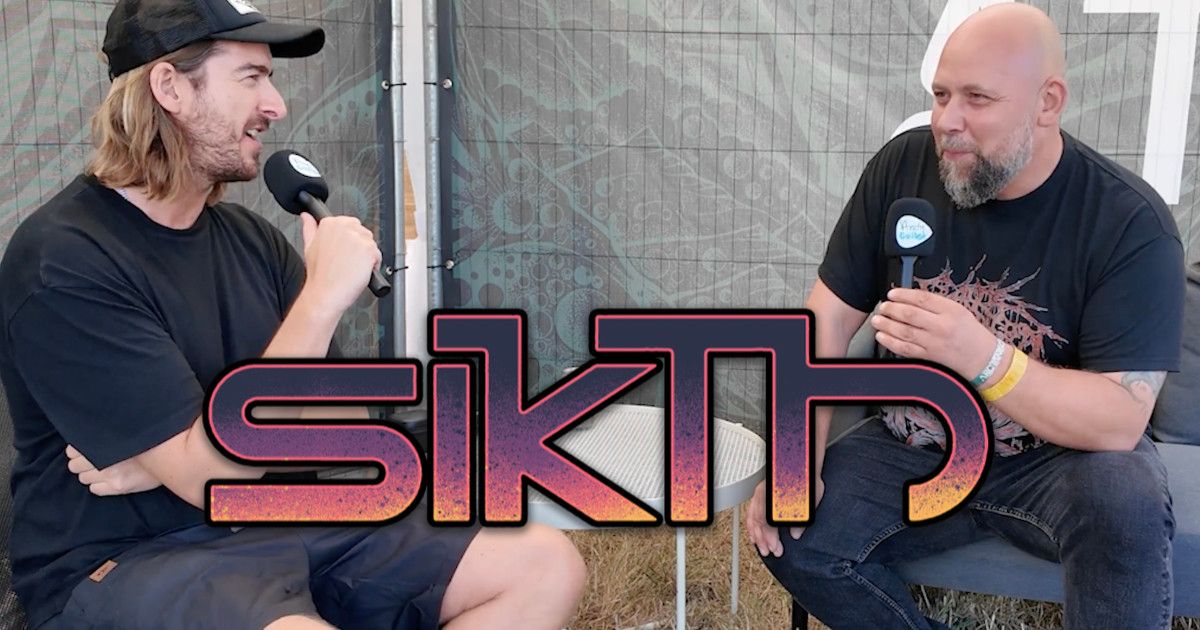
Hi, I'm Pin from 6. I play guitar. Absolutely, and you, we're at ATG. You guys are playing later on tonight. And I'm very excited to chat with you. This has been, this is a 20 year event, it seems, so please tell us about it. Dan and I were basically at school together, so we did high school. This, the, the sort of precursor to 6 started, you know, as kids. We, I'd play guitar pretty much from when I was born for some reason, you know. I was handed one, loved it, did it, Dan. he'd say himself, he's not here, but he would confess that he, uh, he saw me playing guitar, which influenced him to start playing guitar and then we, we had different directions. I grew up in the kind of shredddys Satriani vibe kind of vibe, and he was Hetfield and, you know, Hetfield all the way really. So this is really leads to how we produced our sound. cos in the long run it came to, well, you've got this really tight rhythm and interesting rhythm, you know, tight rhythm playing. And interesting rhythms, but then I like all these lead techniques, but I don't really want to do a shred band. Yes. So how do I incorporate what we, I do with traditional rhythm, metal guitar does, and that's really how the sound was bred. Amazing, is, is he therefore kind of more of a riffs guy and you're more of a, do you have different roles in the band sort of? I don't think we do now. I think initially, yeah, very much, and it's funny sort of even back in the day when we were sort of doing those. Early sort of songs really, we were sort of writing 10 minute epics and it was you know dashing between clean and and heavy songs and we were always creative but we hadn't found it and I suppose I was playing lead more much more lead parts over his feats, but then. Really it became how do we turn the riffs from riffs in the traditional sense of he play into using the techniques, the tapping, the everything else within those riffs and that's, so yeah, now it's become very much. We just both kind of met in the middle to a certain extent and we've, yeah, we very much just sort of end up doing our widdly riffs. That's fascinating though, because you really have pioneered this whole whatever you see as the genre you operate in for the band. It's odd because yeah, sort of it's very, it's you're very proud of the fact that people reference this. but obviously coming from the other side, I'm just writing the music I want to write and it's, but to be an in. Inspiration at any level to anyone is just, yeah, it's just amazing. And speaking of that, I, I, I was lucky enough to talk to Joe Satriani over Zoom earlier this year and he's a primary inspiration for you and also for me. I wanted to know what, what is it about his style of playing and his influence. What was his influence on you? I think again, you know, back in the day, and I, especially if you're flying in the Blue Dreams and earlier. He was experimental, you know, there was lots of changes in tone, the sort of more bluesy end of it has hadn't fully come to the fore, which develops with age and a different style and and he was just very creative, and I, I love that, you know, if we talk music beyond and, and such is, yeah, wicked. I've never really got to meet him, which sucks actually. Of course, no, well I only have a Zoomba and he is really one of the first instrument purely instrumental guitar heroes. I mean, you'd have to say that there's plenty back in the 60s with say the tornadoes and then Van Halen himself with the eruption. But it's a different thing with he's the name and that and that was, that was all he did. Yeah, him and I, I just found you had red guitarists obviously throughout the eighties it was right. It was all this amazing thing and they were very creative, not in the same way. We've obviously moved another 30, 40 years on, but, but. What you had was those they stood out to me because of the composition. It wasn't just a rock band with shredding over it, there was a lot more going on. And it wasn't just impressive, so I, I get a lot of people learning guitar that want their party piece. Yeah. If I could only learn how to shred, I'd be done, I'd probably never play it again other than at parties. And there's clearly a lot more to it than that. Can you speak on that at all? The things that do captivate you about. The arrangements about it being a journey of an instrumental guitar song. I think it's it's interesting because when we, when we write. Yeah, I think things have changed, so in a way this is gonna sound terrible, but you almost don't think like guitar, so I wanna make music. That it has many layers. I, I like to write a song, so there's structure there, whether it's a bizarre structure or not. I want to have this thing, but the listener goes, yeah, it makes sense, it's a cool song. And then I want them to go, listen again, and go, but that bit's weird. So it's almost. You want a surprise. Yeah, so be it tonality, be it anything else that you use, it's or like time signatures, or metres or polymeters or tempo changes, anything that I can think of. And that's the thing. We, we just don't give up on what can I do different, you know, what can I do, how can I, you know, it's a bit like summer Ra we do the slapping and it's like obviously toasting and people nowadays have done it in a different manner to ourselves and that's brilliant. But it's like that thing, why can't make this. Passive sound, you can do it on a bass, why can't I do a guitar? We're not the first people to do it or attempt it, but maybe in a metal band as a song, not an instrumental. I think so it's a kind of, yeah, that reminds me of the things I've seen uh Wolfgang Van Halen do since. Yeah. Kind of a lot of his newer songs with Mammoth are all tapping on a guitar, but, but like the the bass kind of bass kind of slapping and tapping. And just, yeah, I think tapping just gives you access to sort of, you know, that. You know, you can go, obviously we, half our tunings are, you know, we've got the G octave which we stole from Pantera. Yeah, yeah, which, you know, we did that, but it was interesting and inspiring. And then, yeah, being able to tap and play stupidly high notes and chug off off it or whatever else you want to do is, it just opens up. You know, I'm not, we're not the eight finger tapping virtuosos in a certain sense, but we think about it and melodically and what you can do within a riff is just, yeah, limitless effectively. Absolutely. And what guitar are you playing today as your main act? As my main act these days I, I have now, I've now gone with Jackson nowadays, so yeah, and that's that's working out really well. How did that journey go for you? What did you start? When you first, you know, 20 years ago. So 20 years ago, I did start with a Jackson Charvelle. I got you. And then I went for a park of fly time. I remember that. That was the first one I came across that had a battery in the pickup. Yeah, and it was brilliant, but the durability wasn't quite up to our level of energy of that age, you know, that age. And it was then realistically, I think I went through an Ibanez phase. Um, and then, and then Black Machine obviously turned up, which I've, yeah, used and still use, but, but, you know, as it is what it is, I love Doug, I love everything he does, but I, support wise, my guitars are 20 years old. They, they may have some value to them, and I can't just keep throwing them around, so time to have some support realistically, you know, just be. Be able to have access to guitars, if I break one I can speak nicely to them and it does help. No, it does help when you're in different parts of the world, you do need that support and it's wonderful that they do that, yeah, and they're really kind and, Yeah, he's, yeah, they've been brilliant. Iconic guitars as well, but beyond the guitar, what's one bit of gear that is signature to your sound that perhaps we wouldn't guess about? Our tone came from, it developed over the years, like we've, we've had some tone crimes, we're gonna make this longer than you would. No, please do. I remember starting off as sick from, we'd both of us had saved up silly amount of money for, right, we're getting a. 24 by 12s stacked up. I got a marshall DSL I think it was at the time, and then went, it's actually not that gay. I mean we did the tone crime, right, metal zone in front, you know, absolute tone, yeah, it was ridiculous. Sounded like a saw. But I mean we all want to hear it, we all wanna try it. I mean we've all done it and and they sound great at bedroom volume, don't they, and you've got all that. This is the difference and we're down tuning as well. Some apps just dumb pedals just don't handle it. Then we went with, we were with Peay for quite a long time. Iconic amplifiers of that, the 5150. Yeah, but it's hard to answer your thing because I think it's when, when we then went with diesel was when that was when we achieved what our sound was in a box, you know. Gotcha, OK. um, so I've never had anything particularly weird in my setup. We've always had noise suppressor. An amp and then sort of loop looped effects, you know, and just effects no boost for the amp at all. I mean, on occasion I'll throw one in, but it's not been a sort of but it's not a key to the key, yeah. Um, so yeah, really our sound is Verdels and whatever guitar and hopefully a bit of fingers, you know, well, Tony's always in the fingers. I've I've had the good fortune to play a few guitars now that I've, I, I know are played by some fabulous players and I always sound like me, sadly. But you're right, it is. come back guitar set up how you want. I mean, I think over the years I've got fussier now now I haven't really bothered about how it is and that's it. But other than that, give me a guitar and I'll play it and it's kind of indeed. And if there was one, well, I do want to ask you what's one song tonight or on this latest tour that is just the most fun to play, that wouldn't be perhaps at the top of Spotify or anything like that. Yeah, I mean there's a few, so obviously we're on a bit of a death of a dead day sort of 20th year cycle. So now we're playing songs that we haven't really had in a set. So uh the moment's Gone's wicked because it's, it's a proper journey, you know, it's got your sort of jazzy chordy clean stuff. The metric modulations really sort of give me some fun solo changes just to sort of transition and, and it is clean, so there's lots of different sounds within a song, so that's cool. Way beyond the Fonde River's a favourite. I mean, anything you turn a 33-16 into a 4 groove suddenly is really fun to play once you, once it makes sense in your head, you know. So yeah, I mean there's a lot, there's a lot. Was there anything that was particularly difficult to perhaps relearn? Um, what are you practising backstage before you go on? We're always practising. Yeah, you have to, right? I mean I just love it. I feel like an athlete, really. Yeah, but what's the point of being in a band if you. Not playing your instrument, just rocking up and. Well, some do though, there's far too many. There's a lot of vocalists that really have that rock sound and they don't warm up. But what, what, what is one of the more fiddly ones that you have to keep your chops Summer Rain, which is the one I was on about the slap tune. It's just relentless hammer on sort of picking at it and taps tapping in 9 and it's just, yeah, it's it's ridiculous. It's a non. Stop, it's a burner. It's good to hear you say. I mean, again, really the verse of Way Beyond the Funnel River, which is effectively groups of 5s arpeggiated is again. And is that with sweeping or is that with? No, but in a way this was the problem, the 5s, I've I've tried to sweep it. I've tried it, but you just have to alternate. Just pick it that obviously in groups of 5 goes very upset and it's across 4 strings and it's a nightmare. But was there any when you were first learning, because there's plenty of legato playing that I can really know and it's always come easy to me. Just picking everything straight, it's always been an absolute mare for me. I think picking hand does develop afterwards. Anything gateway for that, either songs or. Angle of the pick, anything, something I mean I think I held my pick really bizarrely in the first place. I I'm a, I'm a I'm I'm a one of these, which I think does have its downsides, but it works for me and whenever I've tried to do it. I would never teach it beyond strumming. And then I think Van Halen actually held it, held it with his middle finger, which makes no sense. But, but yeah, I mean in terms of our songs, I mean in terms of picking. Flogging the horses is probably the best one cos it's a straight up rashy, a lot, it's across a lot of strings and it's got some magic moments and variations within it, so it is a, that's a good song if you can, yeah. When we finally release the tabs, which are coming soon, are they? Will they be accurate? Yeah, we we we're, I mean we've got um the sheetstapps, which is a Protest of heroes guys doing doing it, but we're obviously have to go on full approval cos I mean apart from Nolly who's playing with us tonight on bass. Um it's, he's done the most accurate other tabs in the past, but they're not official. Of course, yeah, there's always, there's always those. But no, we're really looking forward to hearing it tonight. We'll get some great footage of you and uh I'm just looking forward to seeing it properly. It's gonna be it's gonna be a good one. Stage is sounding good. Thank you so much for talking with us. Lovely to meet you. Thank you. You too. Cheers buddy.
In this video
Andy speaks to Graham 'Pin' Pinney (guitar) from Sikth at ArcTanGent, where the band are celebrating 20 years of Death of a Dead Day. He and Dan have been playing together since school, with Pin coming from a Satriani-influenced lead background and Dan from a Hetfield rhythm background. That tension between the two approaches is what created the Sikth sound, and over time they have both met somewhere in the middle.
The conversation about Joe Satriani is genuinely interesting. Pin talks about what made his early work stand out, not just the technique but the compositional ambition, the idea that an instrumental guitar record could be a real piece of music rather than a vehicle for showing off. The same philosophy applies to how Sikth write: songs that make sense on first listen but reveal something unexpected the second time around.
Tapping is a big part of the conversation, including how they use it within riffs rather than as isolated solo moments, and what it opens up melodically. On the practical side, he is now playing Jacksons, having moved through Ibanez and Black Machine over the years. The songs he finds hardest to keep in the fingers are Rome (relentless hammer-ons and tapping) and Way Beyond Fondo Rivers (arpeggiated groups of fives across four strings, which he tried to sweep pick and ultimately just had to alternate pick instead).
Enjoying this video?
Try this course - Metal Lead Guitar
Learn the essential techniques of metal lead guitar - 3-note-per-string scales, legato, and arpeggios - with jam tracks, economy picking, and a simple approach that gets you playing fast and sounding great from day one.