
EIVØR - ATG Interview 2026
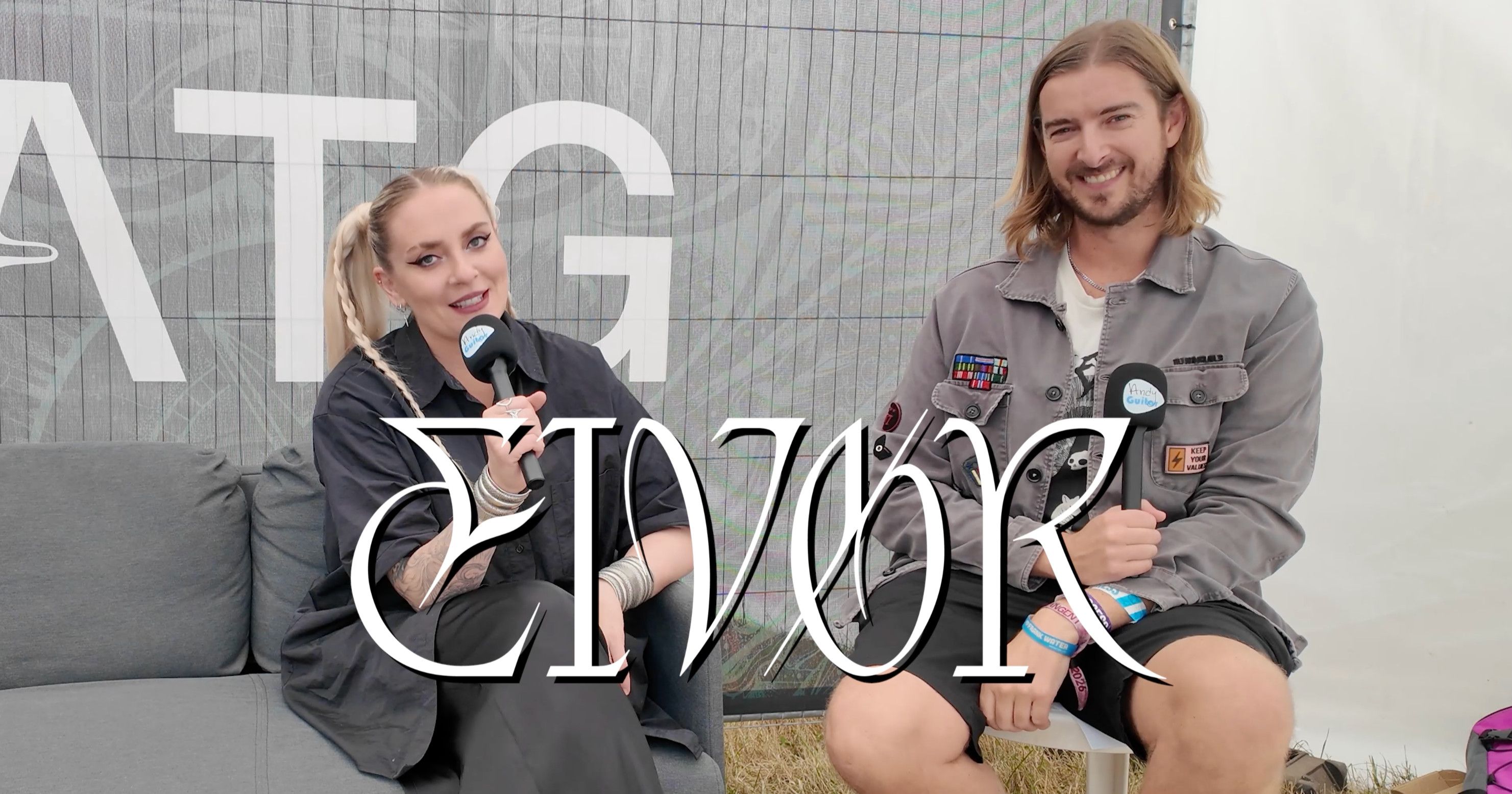
Hello, my name is Iva, and I am an artist from the Faroe Islands. And we're at ATG Festival and uh you're playing a little later. So I'm very excited to see you. And um well, where, where do we find you today? How's your day been so far? It's been great. I just actually just arrived at the festival. I was a bit delayed, so thanks for your patience. Hey, not at all. That's very like, that's festival days, isn't it? Always on a travel day. We, we landed, we flew directly actually from the Faroe Islands to London. Oh wow. And then we drove here and there was a bit of traffic. That's alright, that's understandable, but um I do want to dig into a bit of that cos it seems like a big uh influence on your music, coming from the Faoe Islands, there's a lot of that influence on your music. So what was learning music like, you know, when you were first learning, what was your first instrument? Um, I think music has always been like a part of my life from when I was a child, and it was, I was always so curious about music and I grew up in a family, there were no like professional musicians, but a lot of music. My mom would sing, you know, all day long and kind of, I just had this. Joy of singing also, I got it from her, I guess, um, but there were, there were not many possibilities to like study music in the Faroe Islands, so I kind of had to learn it for myself and from, you know, friends who played music and uh, so it's like that, yeah, it's been a journey and then later on I went to Iceland to obviously study singing, classical singing, but. I think, and I'm still learning, it's like music is like this huge ocean, it's endless. Yes, we, we do as educators, we try and give music levels and an order, but it has no order really, it's not really, no. Especially when you want to be an artist as well and put that first. But let me ask you, you know, you're playing later, what's a favourite song on the set for you typically to perform? Oh. That kind of changes, I think for me from, you know. I, I go through these, these phases always like and then a new song arrives, you know, from a, a newer album and then all of a sudden that's my favourite song to play live and right now it's one of my songs from my latest album called N and the song is the title song, it's called N, and you know, the funny thing is you record music and it has this certain structure and shape and you're satisfied, but then when you take it out live. It kind of changes its shape and because the live moment is just a different moment from the studio moment, so that's always interesting to me, what what happens to the songs when you play them live and that's, that's the song that has kind of surprised me live, so right now is that one. And it seems like you're an artist who embraces that about the surprise and the joy of the live experience rather than being rigid too. You know, the how it was originally. Yeah, I think for me it's super important to kind of keep that kind of keeps my spark going also for my songs, that's kind of um helps me to not get sick of them. Because some of these songs I've played them for like 2020 years, um, so I think it's important both for the song in respect for the songs and for myself to uh to uh to leave some space for, uh, you know, change and let them go somewhere new. And your voice is probably your main instrument, but talk to him about the other instruments that you bring with you, you know, the hand drum and things like that. How does, how does that affect how you perform? What do you, what do you enjoy about that? I've never like seen myself as an instrumentalist, really, but yeah, like you say, my voice has always been like the main instruments and then the other instruments, they just come to me out of curiosity and I love instruments, you know, I, when I see a new instrument, I'm curious to see how it works and, you know, they often inspire me to write new songs, such as my drum. When I bought that drum, I had never in my life played a drum before, but I. Just spoke to me, I was like, I have to have this instrument and I wrote a song that is probably my biggest song today. Um, yeah, it's uh, I just think instruments are, are beautiful to explore with and. And that variety keeps you curious and encourages that spontaneity, right, and whenever anyone is struggling to write or struggling with motivation to practise music at all, they're the first two things to go. You know, people, people are listening to the same things, playing the same things over again, and of course that's boring. So you should encourage those things, right? Different, and you know, different instruments kind of give you different possibilities or even restrictions, you know, when you write a song, when I had only my drum, I don't have a chord progression, I don't, I just have a pulse, and that kind of forces you to write a song in a certain way. Um, because sometimes it's good to kind of limit yourself a bit. Oh yeah, of course. Again that encourages creativity because there's nothing more stifling for creativity. We can do anything. Yeah, exactly. What do we do? We're narrowing it down, OK, we've got to, we've got this one certainty. Now let's break out of that. Yeah, exactly. And rhythm's a great way into that. Can you talk to me of a song of yours that started with the rhythm first? Any, any specific song? Um, I think, uh, quite a lot of my, my newer songs have started with rhythms first. I've been a bit more into that the past few years. Like making beats, even with my drum and with my voice, it starts like with a feel, yeah, and I, I'll sample my own voice and sample my drum and create like a rhythm. Uh, I think that's a fun way to, to build up a track, but, uh, probably my most famous one who is, uh, Tradla Bunden, who is just my voice and the drum, um, is kind of what triggered that, like to start a song up with a rhythm. Yeah, and a lot of my favourite um guitar riffs are actually born out of the the drums as well or the rhythm first. It's just that primal instinct, right? I think I think there's nothing more primal than a vocal and a rhythm. No, I probably came first, right? It's like the heartbeat, right, you kind of connect to it in a certain way. I couldn't agree more. And with your voice, um is there any way you've developed or cultivated that over the years or any advice you would give yourself maybe when you were first starting as to, you know, how to do with your voice what you now do? Um, yeah, I think the voices, it's a very personal instrument, isn't it? It's, um, and it takes a long time to get to know it properly, and I think that it can do so much more than we think, the voice. I think we often, many people are scared of singing, but it's a. It's such a relief, it's such a release to sing because it's a lovely way of expressing yourself. And I remember, uh, that, um, that's what kind of made me want to sing when I was a young teenager, you know, could get rid of all my frustrations and um it is such a cathartic thing. It really is, and it's very, it's an ancient. Way for humans to express themselves, so it's a, um, and for me it's been like a a journey of curiosity, like what, what can, what can I actually do with my voice and I'm always discovering it again, like new sides of myself and it's an exciting. It's an exciting instrument to work with. And what gear or samplers are you using to actually make this happen? What's a bit of gear you couldn't live without? Especially for the live show, cos recreating a lot of this live, that's challenging, you know. You can do anything in the studio, but certain things live, live, yeah. I mean, when I play live, I, I play my electric guitar and I play my drum, and those are like, The two instruments that I mainly play, I have a stump box as well, so I, I have a simple like setup, and then I have a lovely band with me, of course, who that actually reminds me more of a busker setup. Yeah, you know, with a, with a percussion on the one guitar and a voice, you know, you've got the, yeah, yeah, I mean, I was very into, um, like Canadian folk music at one point, and I toured a lot in Canada, played folk folk festivals there, and I saw that all of them had these stump boxes and an acoustic guitar, right? It was just this like a finger picking stump box. So that's kind of where it came from. When I started playing stumpbox many years ago, and now I play a stumpbox where I have sampled like an 808 kind of sound, and that kind of offers new possibilities, like a new, it's more of a. It hits you more in the stomach. Well, it does, especially when you're playing on these big stages, what folk music or any vocal music can lack is just sub. Yeah and I'm seeing more and more acoustic acts actually use, you know, a trigger of a really low sine wave or a sub bass just to make it a hit on a bigger stage, because otherwise it doesn't, you know, you're playing with, you might be playing after a metal band, for example, metal bands. You've got to compete and you've gotta have the tricks, right? Talk to me about your guitar itself, what guitar are you playing today? Um, I have a jazz master, which I've played for many years, and I have a Gibson as well, and um. Yeah, I just, um, I kind of switch mostly between those two, and I also have a custom made one, it's called More Guitars, um, so I kind of switch a little bit between my guitars, um. Yeah, it's fun to change instruments every now and then. Again, I couldn't agree more. I I do think one thing that has kept me playing guitar is being able to play a lot of guitars, you know, acoustic and electric. The different sounds you can make. I don't always want to just rock out, I want to do the atmospheric stuff. I want the simplistic folk stuff. Yeah it's very motivating that it is. And if anyone watching, you know, is more of a bedroom guitar player and wants to play one of your songs, er, what would be a good way in, what would be a song you'd recommend to learn first, for example, on the guitar? On the guitar. Wow, it depends on what kind of song it is because I made so many albums. Um, like, so, and again for someone learning that some of my first albums were more folky, and I used to play my, my first instrument that I got was an acoustic guitar, and, um, so that's kind of my first steps in guitar playing was fingerpicking and all that. So I made quite a few songs like that, and um, so if you're into that kind of stuff, maybe a song like Far Away or Bridges or. Uh, yeah, some of those songs. Are those in standard tuning or have you experimented with other tunings? They're just in standard. I haven't experimented so much with other tunings, I should. Well I've heard it's, it's fun. I, I think you're the only person we've spoken to this weekend that is in, yeah, yeah, I think you're the only one. Well, I do the drop D though, but that doesn't, that doesn't doesn't count. No, it doesn't count. But something for people to experiment with, and I, I think that's fantastic. Thank you so much for talking with us. I'm really looking forward to your set later on was a pleasure. It's gonna be very cool. Thank you.
In this video
Andy speaks to Eivør at ArcTanGent Festival, fresh off a flight from the Faroe Islands. She talks about growing up with no formal music education, learning by curiosity and from friends, and later studying classical singing in Iceland. The idea that music is "an endless ocean" runs through the whole conversation.
The instrument talk is fascinating. Buying a hand drum she had never played before led to her biggest song, and she makes the point that different instruments offer useful creative restrictions, forcing you to write in new ways. Her stomp box setup was inspired by Canadian folk festivals, and she now uses it with a sampled 808 sound to add sub frequencies that help her compete on bigger stages.
Her guitars include a Jazzmaster she has played for years, a Gibson, and a custom More Guitars model. For anyone wanting to learn her songs, she points toward her earlier folk albums and tracks like Far Away and Bridges as good starting points.
Enjoying this video?
Try this course - Metal Lead Guitar
Learn the essential techniques of metal lead guitar - 3-note-per-string scales, legato, and arpeggios - with jam tracks, economy picking, and a simple approach that gets you playing fast and sounding great from day one.