
Picked Arpeggios
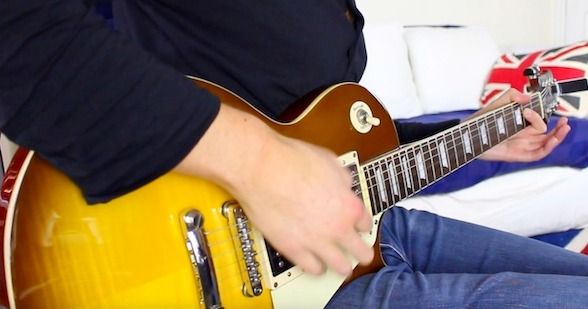
OK guys, so this lesson is based on arpeggios, which for this lesson we're using a C major chord and an arpeggio means rather than strumming a chord and hearing all of these notes together. We play them one at a time. We can play them in any order. And in reverse order. Um, and it's sometimes referred to as picked finger style because it has that, um, finger style kind of ring to it. It typically works better with a cleaner sound, so I'm on the clean channel of my amplifier with a little bit of reverb, which is a simulated room sound, which you can hear if I mute really quickly. And for my example, we're using a C major chord, which is played like this. So 1st finger, 1st fret of the 2nd string, middle finger, 4th string, 2nd fret, and 3rd finger, which can be a bit of a stretch, um, at the 3rd fret of the 5th string, so 1. 2 and 3. And the tip I would definitely give you is have your fingers again on an angle pointing towards your strumming hand shoulder or at least to your eyeline. er if they're more straight like this, this cord is going to be very tricky for you and that's not how I'd recommend it for a rock and pop style. The next chord we're going to change to is the A minor chord, and it's a fairly straightforward change cause the 1st and 2nd finger stay where they are, 3rd finger just goes directly underneath the middle finger. So it's fairly straightforward. Both of these chords are taught in my beginner's course. Uh, A minor is at level 4, the C chord is at level 5. So if there's anything you're struggling with from this lesson onwards, the beginner's course is definitely the place for you, because we are requiring requiring a bit more finger dexterity from here on in and picking hand action. Um, this one is less of a rock one but kind of in the style of House of the Rising Sun or Everybody Hurts. These techniques apply to those couple of songs. Both of those songs are already have video tutorials on the YouTube channel. So we're going to begin. By picking string 5, which is the root note or the bass note. Of a C major chord because it's a C note. We then play each string in turn, going down to string 2, so string 54. 3 And 2. Each one of those in turn, and it's a slow song this one, so. One at a time would be great, but we need them all ringing out and we need the picking to be even timing wise. There's a huge focus on timing in this little er electric guitar course. OK, so we need it to be tick, tick, tick tick, not. You know, nothing random about it, slow. Even And precise is what we're going for. When we get to string 2. We come back on ourselves. And the cycle repeats when we get back to string 4, and essentially all the right hand is going to do, if I just mute each string like this, just by resting my fingers nice and um lightly on the strings, it's going to go 543234, and repeat. You can hear the echo on my sound there, er, which again is just just a short reverb. If we play that on a C chord at the speed we need it at. That is it twice, then we change to the A minor chord and we play the same thing again. And twice And we're going to repeat that for the entire length of the track, which is just a little over a minute. So this is drilling the basics of what we need for this cleaner sort of style. Um, another great example is, um, the start of Knocking on Heaven's Door by Guns N Roses. Salash often uses a cleaner sound in many of his songs, and when he does. We're usually using an arpeggio picking pattern, possibly with some strumming as well, so here we're just drilling. This OK, so let's give it a go together from this C chord, fingers on an angle for the C, right on the tips of your fingers to make sure each single note rings out, look how much my fingers are curled over. For a bit of a claw hand kind of idea for want of a better term, but let's give it a go, picking from 5 to 2 and then back and we'll keep it going in 234. And again. And A minor. And we would repeat from there, but we'll pause for a second just for picking hand technique. I would encourage you to hold your pick between your thumb and the side of your first finger. So if you give me a thumbs up, stick your fingers out a little bit, put the pick on top of it. Your finger here and put your thumb on top and that's how we hold a pick for this sort of dexterity that we require. and I hold my pick like this for everything, doesn't matter whether I'm strumming Wonderwall or hitting a solo. This is how I'm holding my pick, OK? And this naturally creates a very slight angle of the pick like this. OK, so rather than hitting it flat like this and the pick sort of getting, getting caught on the string, it needs to slide over the the uh string like this, and it does so by being on this angle like that, just a slight angle, and that should allow. The technique required to pull off this song. Let's give this one more go and then we'll go along to the backing track. All of these videos and the backing track and the Garageband file for the backing tracks are available from the website, links in the description if you wish to follow up on the things that we're learning here and uh follow the whole course. So from the root notes, let's give it a go together in 2. 34. And again, A minor C Again, A minor And when we finish, We strum a sea, just strum. And that will signify the end of the track. Let's have a listen to the track and I will show you what we're going for. So this is what we're going for. And we have this sway. We have 1 and 2 and a 3 and a 4 and a double. So keep to that rhythm. Keep that good picking technique, and that's nearly to the end now already. Again, I've made every one of these tracks just a little bit over a minute, not too long, um, but enough to drill the techniques that we're going for. Let's play it together in and the count would be one. 23, and a 4 and a start. So 1. 2 3 and a 4 and a. again. So we're halfway We just need 2 more repetitions, A minor. see. End on a strum of a C chord and. That is lesson 4 on arpeggios as part of this rock guitar starter course.
In this video
EGSC Track 04 TABs Arpeggios
EGSC Audio Track 04 Arpeggios
Welcome to Lesson 4 of this Electric Guitar starter course focusing on Rock guitar!
In this lesson, I show you how to pick single strings while playing chords. This techniques is called playing 'arpeggios'.
An arpeggio is like a chord but played one note at a time, usually low to high or high to low.
Lesson 4 - Jam track TAB
Interactive Tab
Become a member to access this interactive tab section.
Chords & tips!
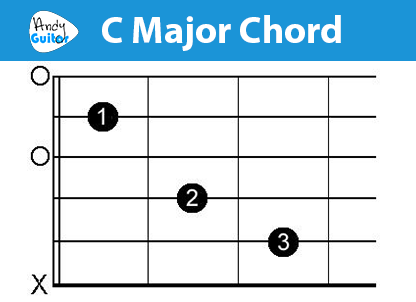
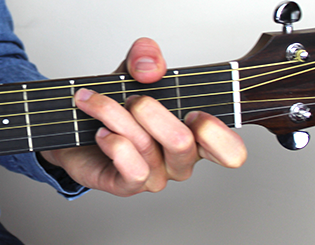
Chord photos from Andy’s Beginners Course Book, available in paperback & to download now!


Are you hold you pick correctly?
Text and video from Andy's Beginners Course.
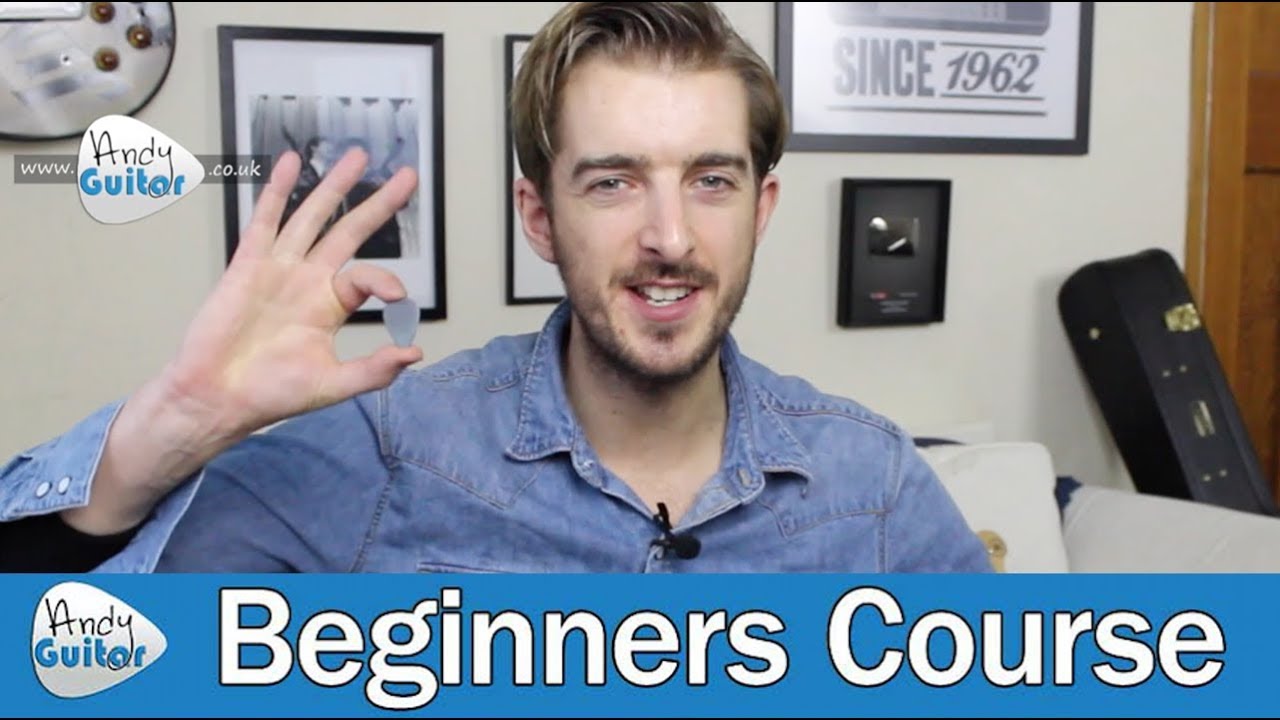

A pick (aka plectrum) is used to get the brightest and best sound from a guitar, especially in Pop and Rock music.
Should I use a pick or just use my Thumb/ fingers?
Some beginners are very reluctant to use a pick. However, ESPECIALLY in the early days, I really recommend persisting no matter how many times it spins around in your hand or how often you drop it. It is simply the easiest way to get the best sound from your guitar for most pop and rock styles. Once you have a solid foundation of chords and rhythm, you can always learn folk ‘finger style’ playing at a later date (just like I did!)
Which size pick should I choose?
First you want to be aware of Gauges (thickness of pick in Millimetres 'mm'): .38, .46, .60, .73, .88, 1.0, etc.
Here's a break down of the most common pick gauges and what they are best for;
0.43mm Thin (light gauge) - ideally for beginners that are new to strumming
0.73mm Medium - suitable for everything
1mm Thick (Heavy Gauge) - Some people find these better for single note lead playing, particularly on electric
Andy Guitar picks!
If you are needing some guitar picks and want to support my work, you can check out my Andy Guitar branded picks here!

Electric Guitar Starter
Recommended Songs
Enjoying this course? Want to test out your new skills? Find out my recommended song tutorials that accompany this course and get total access to the site by signing up today!